NewGet @askthedentist's full report

instagram analytics
Similar Accounts:
instagram analytics
Similar Accounts:
followers
1.28M
impressions
643M
likes
3.53M
comments
1.52M
posts
742
engagement
0.604%
emv
$15.7M
Average per post
867K
Key Metrics
Impressions
monthly
Distributions
Content
25.2M
43.2K
11.8K
7mo ago

askthedentist
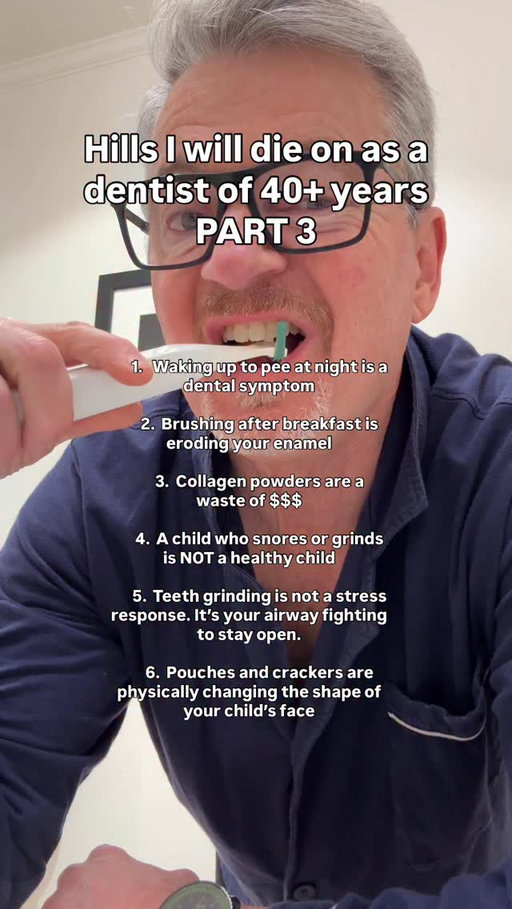
👋 If your dentist doesn’t talk to you about this stuff, comment “NEWSLETTER” below and I’ll send you all the same advice only my patients used to get, free to your email inbox.
By the way…let’s talk about that last one. The jaw develops in direct response to mechanical load. Chewing dense, fibrous foods is how the bone gets the signal to grow wide. A wide jaw means a wide airway. When kids eat a diet of soft, processed food from infancy, the jaw never gets that signal. The airway stays narrow. Then we call it “behavioral issues” and “delayed bedwetting.” Comment AIRWAY if you want to understand what that actually means for your child. -Dr. B
16.4M
63.5K
2.92K
10mo ago
askthedentist
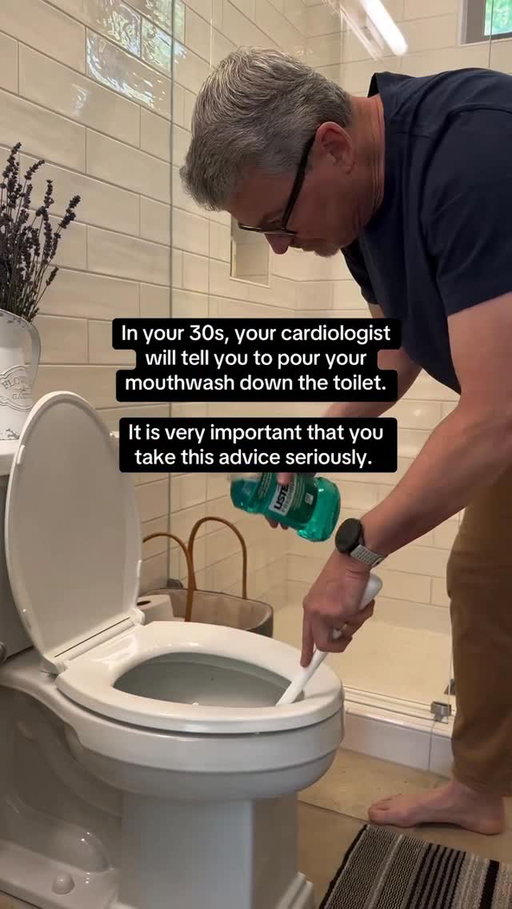
I’m a dentist and I would NEVER use mouthwash twice a day.
Here’s what a 3-year study found:
49% higher diabetes risk
Nearly DOUBLE the risk of high blood pressure
The reason is mouthwash kills the bacteria on your tongue that produce 50% of your body’s nitric oxide—the molecule that keeps blood vessels flexible. No bacteria = no nitric oxide = your blood pressure skyrockets.
If we neglect the mouth - it harms not only the heart but the rest of the body too…
👉Comment “HEARTSAVER” for my blog post on how skipping mouthwash can save your heart. -Dr. B
15.1M
49.4K
4.48K
10mo ago
askthedentist
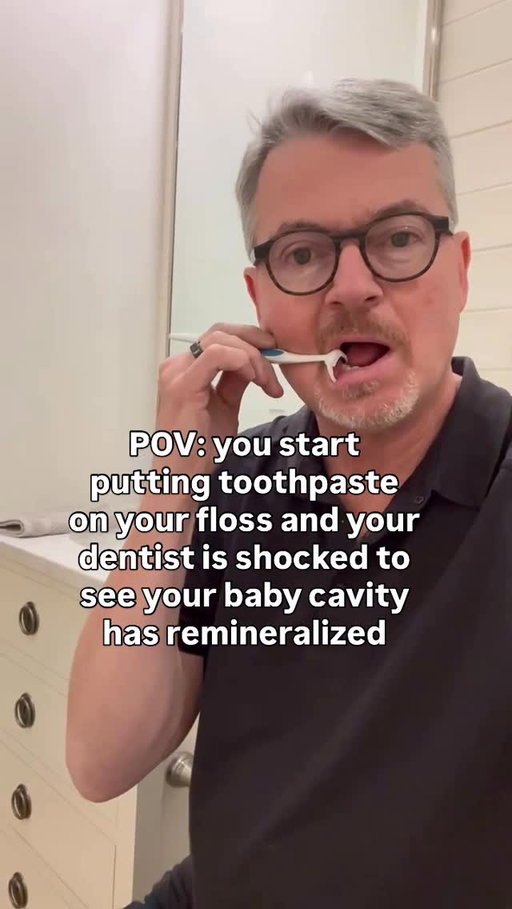
I love this trick, but I wouldn’t use just any toothpaste.
Researchers at the University of Texas found that Fygg toothpaste performed just as well as fluoride toothpaste. Study: PMID: 40744295
Comment TOOTHPASTE and I’ll DM you a link!
Have you tried this trick yet?
11.1M
38.6K
5.89K
11mo ago
askthedentist
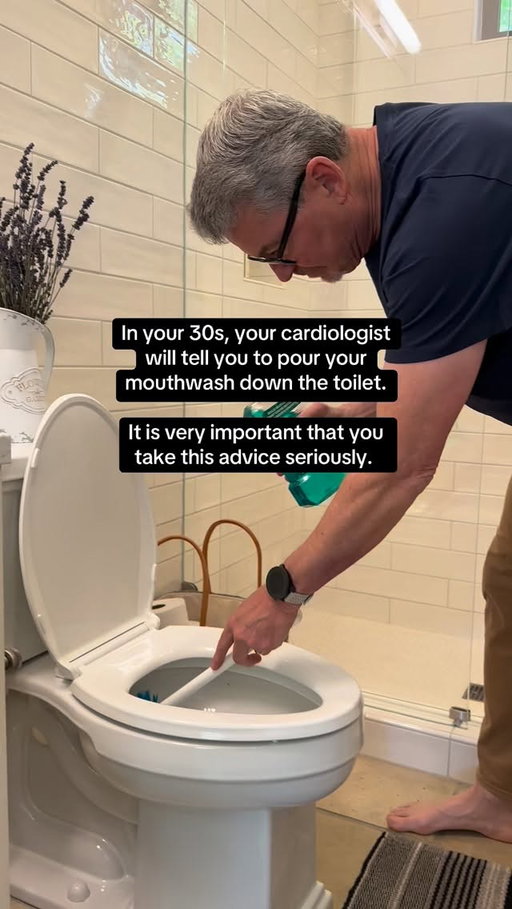
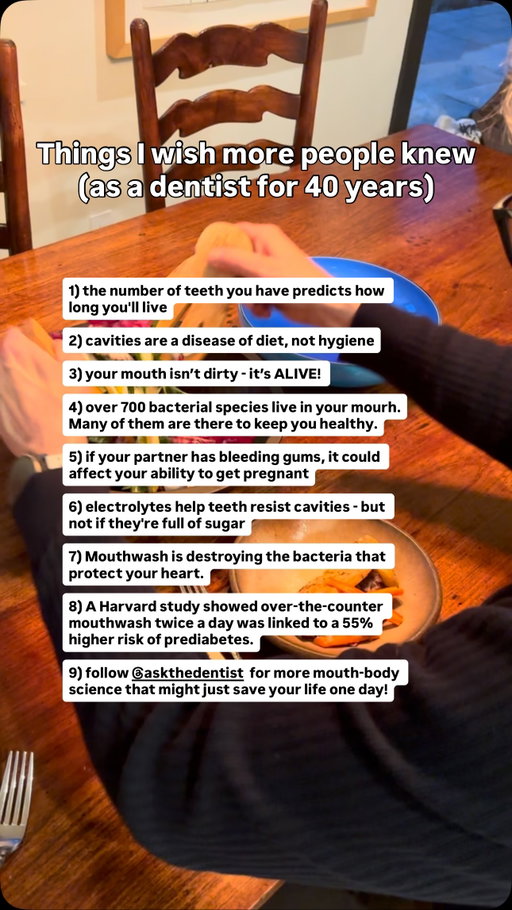
I'm a dentist and I would NEVER use mouthwash twice a day.
Here's what a 3-year study found:
49% higher diabetes risk
Nearly DOUBLE the risk of high blood pressure
The reason is mouthwash kills the bacteria on your tongue that produce 50% of your body's nitric oxide—the molecule that keeps blood vessels flexible.
No bacteria = no nitric oxide = your blood pressure skyrockets.
@drjeremylondon (cardiothoracic surgeon) said on the @dhrupurohit podcast - if he wanted to fast-track heart disease, he'd tell people "don't brush, don't floss." I’d add mouthwash to this list as well, based on the research.
👉Comment "HEARTSAVER" for my blog post on how skipping the rinse can save your heart. -Dr. B
If we neglect the mouth - it harms not only the heart but the rest of the body too…
8.78M
23.5K
706
5mo ago
askthedentist
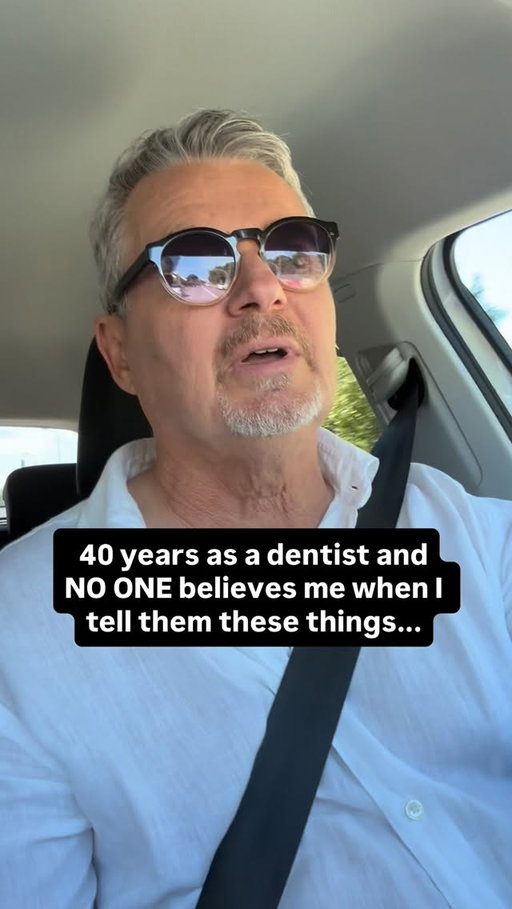
For more mouth-body science, follow + comment NEWSLETTER to join 165,000 others who get it for free every week. -Dr. B
7.69M
32.5K
20.8K
11mo ago
askthedentist
I’ve made a free guide to make sure you and your family NEVER get another cavity.
👉Comment “NEWSLETTER” below and I’ll DM you the link.
7.23M
8.56K
13.5K
8mo ago
askthedentist
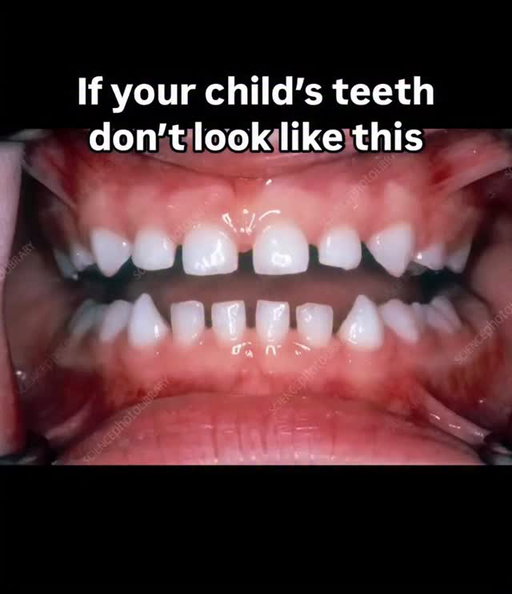
Your child’s baby teeth SHOULD have spaces between them.
If they don’t, that’s not “cute”—it’s a red flag. No spacing = ❌ Jaw isn’t growing wide enough
❌ Not enough room for adult teeth (crowding is coming)
❌ Higher risk of a narrow airway
❌ Possible muscle dysfunction or mouth breathing Yes, spacing matters.
Yes, this shows up early.
Yes, it’s preventable if caught in time.
✅ Spaced baby teeth = a jaw that’s growing forward and wide
✅ Room for adult teeth to erupt naturally
✅ More space for the tongue and a healthier airway
✅ Better breathing, sleeping, and development
You won’t hear this at most dental checkups. But airway dentists look at the whole picture—not just cavities. Want my full Airway Checklist for parents? 👉Follow & comment “AIRWAY” and I’ll DM it to you.
This one’s worth saving—and sharing with anyone raising kids. -Dr. B
6.98M
21.3K
7.52K
6mo ago
askthedentist
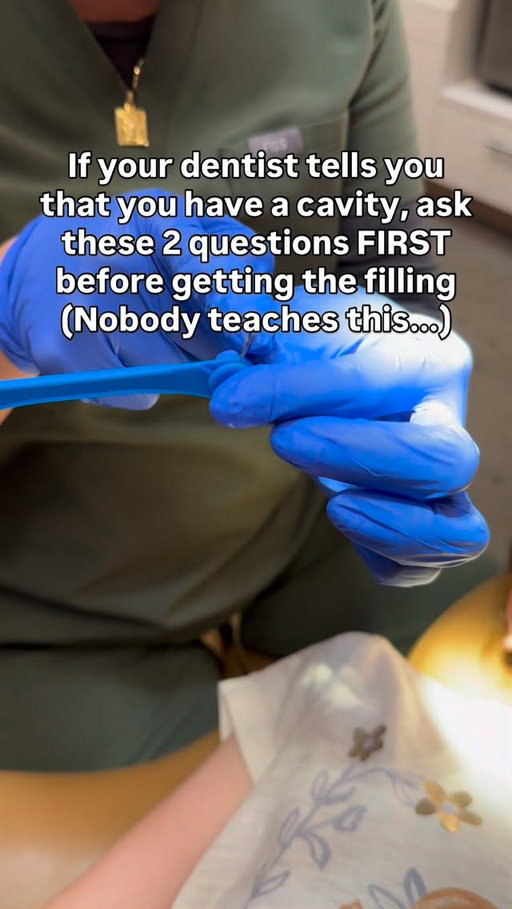
Most people are rushed into fillings for what’s actually called an incipient lesion—the earliest stage of decay.
That’s not a full-blown cavity. It’s a warning sign—and often, it’s reversible.
The 2 questions to ask:
1) Is this an incipient lesion?
2) Can we try remineralization first before drilling? Fygg varnish is excellent for this.
If it’s not cavitated, and there’s still enough enamel, you may not need a filling at all.
Modern dentistry isn’t just “drill, fill, and bill.”
It’s about preserving your natural tooth structure and working with your body-not against it.
And here’s the secret:
The best filling is the one you never need.
Send this to a friend who should hear this before their next dental visit and follow @askthedentist for more tips like this
Comment “REVERSAL” for my free guide to learn more
6.43M
257K
17.1K
7mo ago

askthedentist
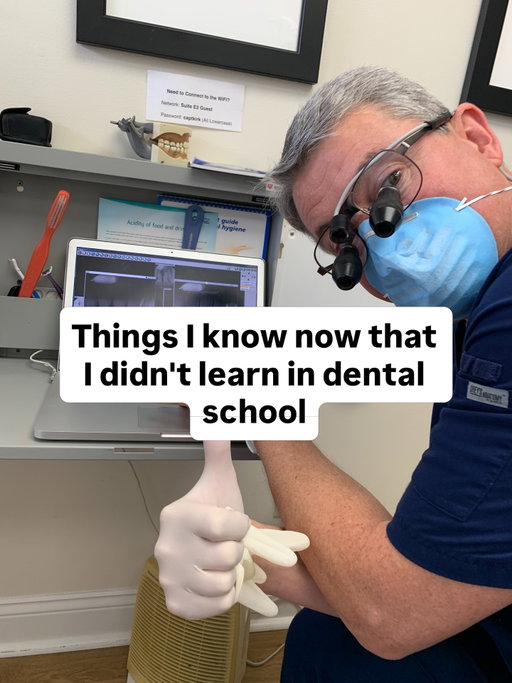
Your mouth is perhaps the most important organ in your body —it determines the health of your heart, brain, immune system, your cancer risk, and so much more.
Want to learn more? Comment NEWSLETTER below. -Dr. B
Are you a dentist connecting the dots for your patients like this? Join us @functionaldentistdirectory
6.22M
11.6K
14.8K
5mo ago
askthedentist
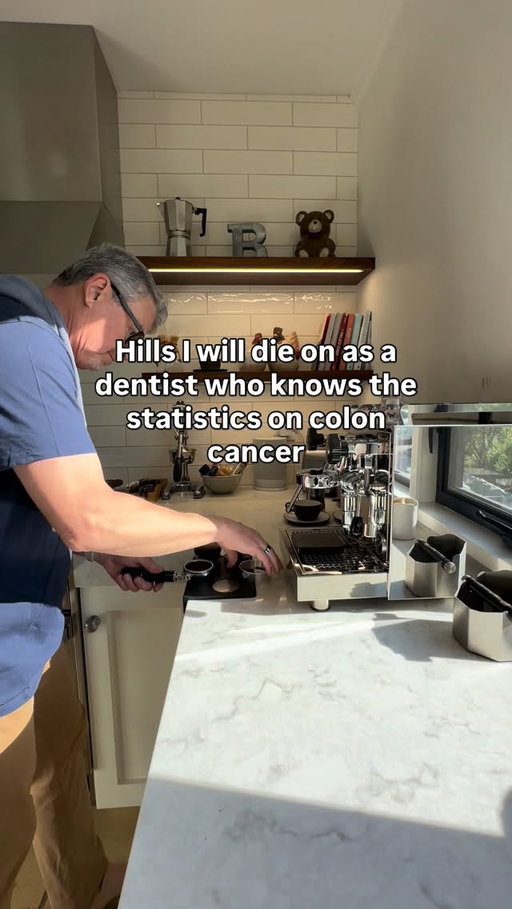
Colorectal cancer is now the #1 cause of cancer death in Americans under 50 — as of 2023. It was fifth in 1990. Every other major cancer in that age group is declining. Breast, lung, leukemia, brain — all going down. This is the only one going the wrong direction.
In more than 40% of colorectal cancer cases studied, the oral bacterium found living inside the tumor was genetically identical to the strain in that same person’s saliva. The same bacterium — Fusobacterium nucleatum — survives stomach acid that kills most other oral bacteria. It navigates the full length of the digestive tract. It hides inside tumor cells. A 2024 meta-analysis of 16.6 million people across 19 studies found a 21% higher colorectal cancer risk in people with periodontal disease.
Twice a year, someone examines your gum tissue in detail. They chart your pockets. They note your bleeding. Almost none of them know they may be looking at one of the earliest warning signals for colon cancer.
The hill I will die on: bleeding gums are not a hygiene problem. They are a broken barrier between your oral microbiome and your bloodstream — aka a highway to the rest of your body.
👉Follow and comment NEWSLETTER from more mouth-body connection science that might just save your life one day. If you want to know the simple spit test I recommend to find out if you have this bacteria, comment SPIT and I’ll send you the link.
-Dr. B
6.16M
13.0K
447
3w ago
askthedentist
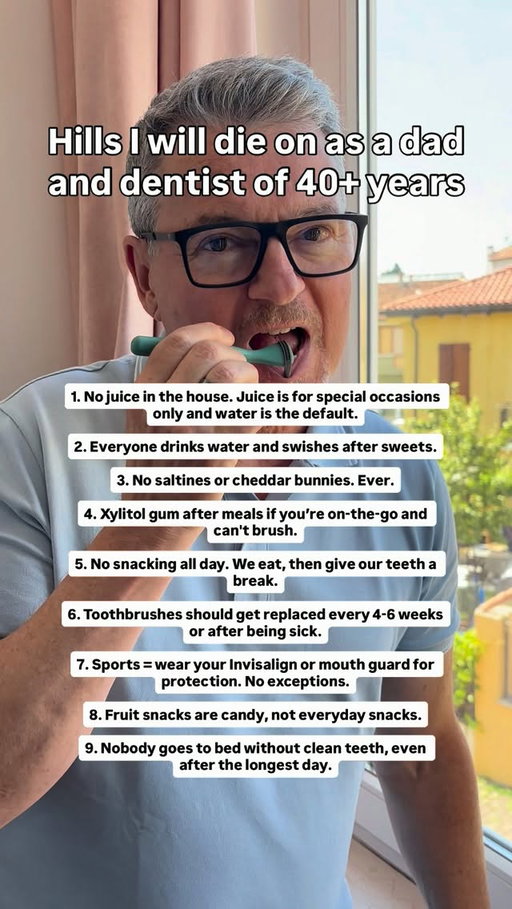
These are some of the little habits that helped my wife and I raise three daughters cavity-free. Follow along for more wisdom from 40 years of dentistry @askthedentist
5.82M
21.7K
7.06K
5mo ago
askthedentist
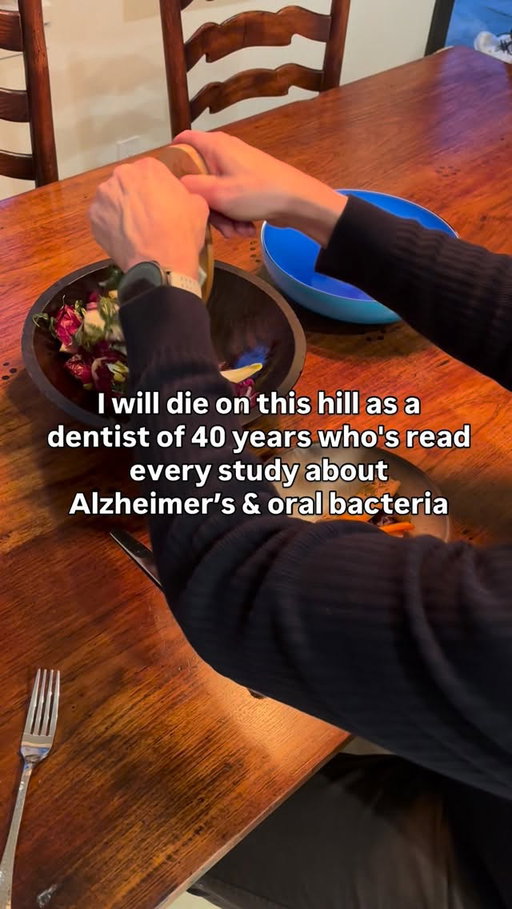
If you want to prevent Alzheimer’s, you better be flossing. Alzheimer’s is now the 6th leading cause of death in America - and the only one in the top 10 with no cure and no proven prevention.
For decades, the connection between oral health and Alzheimer’s was waved off as correlation - sick people have sick mouths, that’s the explanation.
A 2019 paper published in Science Advances broke that frame.
Researchers found gingipains - toxic enzymes produced by Porphyromonas gingivalis, the bacterium behind gum disease - in 96% of Alzheimer’s brain samples examined. They found the bacterium itself in the cerebrospinal fluid of living Alzheimer’s patients. Then they orally infected mice with P. gingivalis.
The bacteria traveled from mouth to the brain. Toxin levels rose. Neurons died. Amyloid beta - the plaque long considered the hallmark of Alzheimer’s - appeared. When researchers blocked the toxin with a drug, the brain damage stopped.
That is not correlation, that is a proposed causal chain.
Twice a year, someone examines your gum tissue in detail. They chart your pockets. They note your bleeding. Almost none of them know they may be looking at one of the earliest warning signals for cognitive decline.
The hill I will die on: bleeding gums are not a hygiene problem. They are a broken barrier between your oral microbiome and your bloodstream - and your bloodstream is a highway straight to your brain.
👉Follow and comment NEWSLETTER for more mouth-body connection science that might just save your life one day.
-Dr. B

5.72M
8.05K
26.3K
8mo ago
askthedentist
Here’s what most American dentists won’t tell you: cavities are a bacterial infection. Starve the bacteria, starve the disease. Xylitol does exactly that — it’s a sugar alcohol that cavity-causing bacteria can’t metabolize. They eat it, they can’t use it, they die.
The countries that treat the CAUSE outperform the countries that treat the SYMPTOM. Every single time.
Comment GUM and I’ll send you a link to my two favorites in my Amazon storefront 👇
4.92M
69.9K
6.21K
11mo ago
askthedentist
I’ve made a free guide to make sure you and your family NEVER get another cavity.
👉Comment “NEWSLETTER” below and I’ll DM you the link.
4.88M
39.3K
16.9K
11mo ago
askthedentist
I’ve made a free guide to make sure you and your family NEVER get another cavity.
👉Comment “NEWSLETTER” below and I’ll DM you the link.
4.80M
26.2K
2.64K
4mo ago
askthedentist
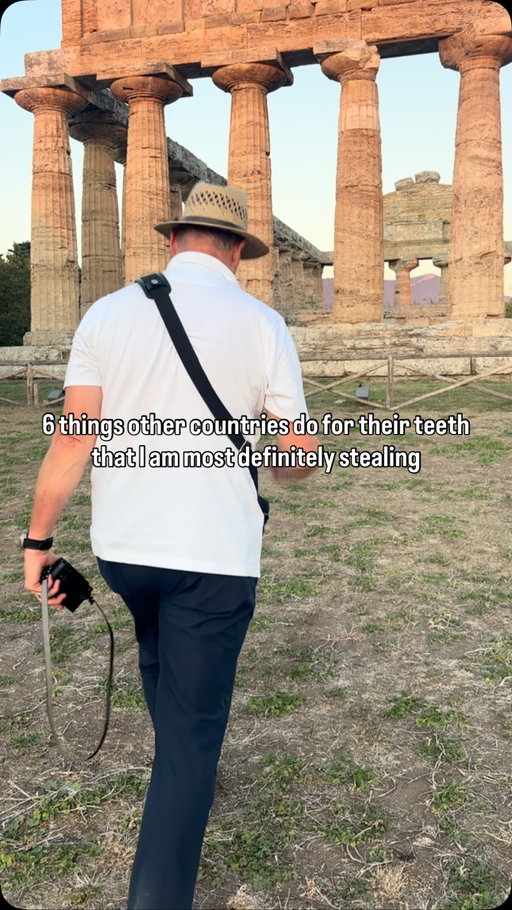
1. They brush with a toothpaste that’s safe to swallow.
In Japan they have brushed with hydroxyapatite for 40 years. It stops cavities as well as fluoride does. The difference is safety. Fluoride toothpaste carries a poison control warning and can cause fluorosis. Hydroxyapatite is the mineral teeth are made of, so it is harmless to swallow.
2. They finish a meal with xylitol, not just a toothbrush.
In Finland, kids chew xylitol gum after meals, sometimes right at school. The bacteria that cause cavities cannot eat xylitol, so they starve. We treat gum like a bad habit and hand kids juice and goldfish crackers instead.
3. They clean the mouth without wiping out the good bacteria.
In India, oil pulling is a morning ritual thousands of years old. You swish a spoonful of oil for a few minutes and it clears the overnight bacteria without nuking the protective ones the way mouthwash does. We kill everything and wonder why the bad breath keeps coming back.
4. They eat at meal time instead of grazing all day.
In Italy and France, people sit down to a meal and then stop. Cavities come less from a missed brushing than from how often your mouth sits in acid, and every sip and snack restarts that clock. Graze less and saliva finally gets time to repair the enamel.
5. They give kids real food to chew, not pouches to suck.
Across much of the world, kids get firm, real food to work on, and a jaw is shaped by use. Real chewing grows it wide enough for straight teeth and an open airway. Years of soft, squeezable food leave the jaw small, the teeth crowded, the airway narrow.
6. They do not fluoridate the drinking water.
In much of Europe, no one drinks fluoridated tap water, and to be clear I mean the water, not your toothpaste. Their cavity rates fell just as far as in fluoridated countries. They declined to medicate the public water supply, and their teeth are fine.
If you found this interesting, it’s just the tip of the iceberg…
Follow me and comment “NEWSLETTER” to get the advice only my patients used to get, but now 180,000 of you do, each week.
4.56M
54.5K
14.7K
11mo ago
askthedentist
I’ve made a free guide to make sure you and your family NEVER get another cavity.
👉Comment “NEWSLETTER” below and I’ll DM you the link.
4.43M
5.54K
862
8mo ago
askthedentist
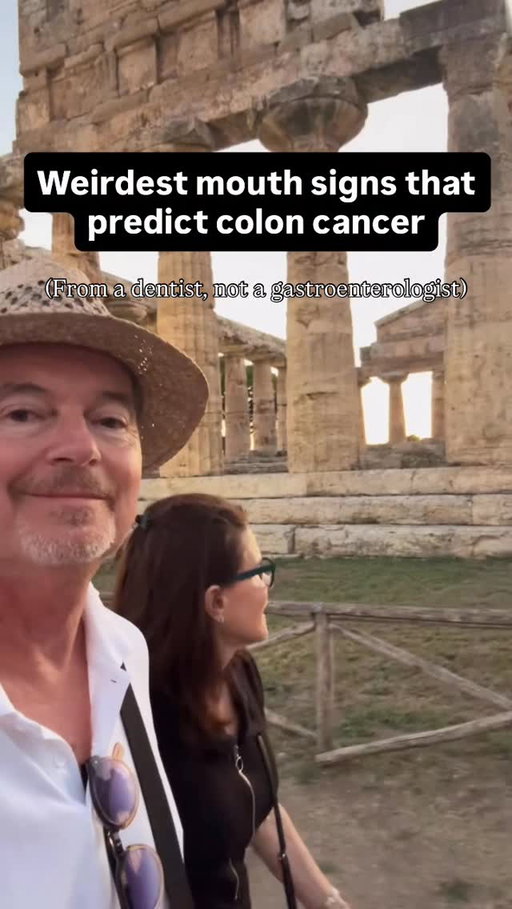
If your dentist only checks for cavities, they’re missing something your gastroenterologist would want to know about.
A 2024 meta-analysis of 16.6 million people found that gum disease is associated with a 21% increased risk of colorectal cancer — consistent across 19 studies.
And we’re starting to understand why. An oral bacterium called Fusobacterium nucleatum, a primary driver of gum disease, has been found living inside colorectal tumors in approximately 50% of cases studied. Researchers believe it travels from the mouth through the stomach to colonize the lower gut.
Your mouth may be the first place this shows up:
1. Bleeding gums — chronic bacterial inflammation now linked to colorectal cancer risk. Not just a dental problem.
2. Persistent bad breath — may signal a bacterial burden that goes well beyond your mouth.
3. Gums that stay inflamed no matter how well you brush — sustained inflammation is the mechanism researchers believe drives the connection.
4. Receding gums — years of microbial imbalance means years of elevated pathogenic bacterial exposure.
5. Heavy tartar buildup — a fortress that protects harmful bacteria from your immune system.
6. A history of aggressive gum disease — if you’ve lost teeth to periodontitis, your systemic exposure has been elevated for years.
7. Any of the above and you’re overdue for a colonoscopy — colon cancer is now the #1 cancer killer in men under 50. This screening conversation needs to happen.
The mouth is the beginning of the digestive tract. What lives there doesn’t always stay there.
Save this and send it to someone overdue for a colonoscopy.
👉 Follow for more secrets I’ve learned from 40 years as a dentist.
4.40M
28.2K
21.0K
3mo ago
askthedentist
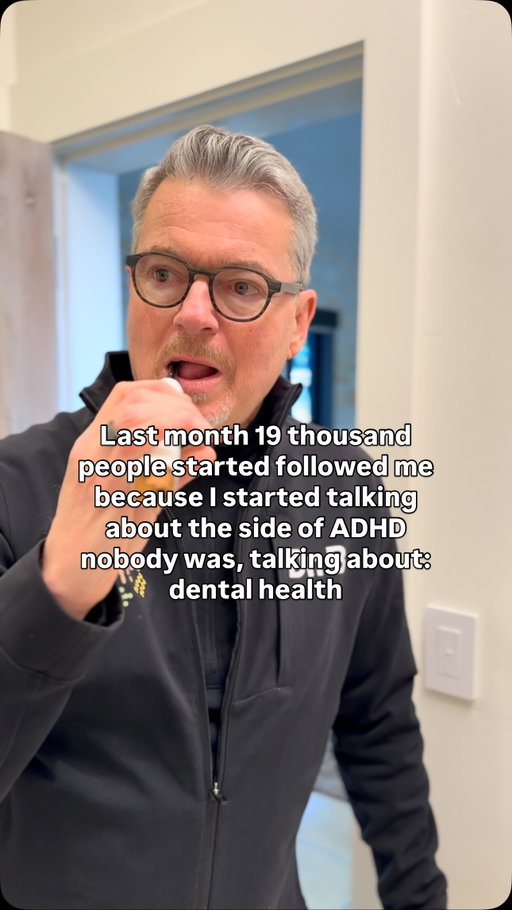
The connection = sleep-disordered breathing.
Kids with narrow palates, tongue ties, enlarged tonsils, or chronic mouth breathing often can’t get enough oxygen during sleep, and their brains respond with micro-arousals all night long.
But instead of looking tired the next day, sleep-deprived kids look hyperactive, impulsive, and inattentive (a near-perfect mimic of ADHD), which is why studies have found that a meaningful share of kids diagnosed with ADHD actually have an underlying airway or sleep problem.
The dental piece is that the mouth is the earliest warning system: a dentist can spot the narrow arch, crowded teeth, high palate, grinding, or scalloped tongue years before anyone thinks to order a sleep study.
Plus, early intervention changes lives …
Research on adenotonsillectomy and palatal expansion has shown that when you fix the airway, “ADHD” symptoms often improve or resolve, yet most kids get a stimulant prescription before anyone ever looks in their mouth.
As a dad with a daughter diagnosed with ADHD in 4th grade, who was diagnosed with sleep disordered breathing in her 20s, I’ve made a FREE checklist for parents with everything I wish I had known decades ago. Make sure you’re following me first and comment “AIRWAY” and the instagram robots will DM it to you. -Dr. B
4.35M
11.0K
1.06K
3mo ago
askthedentist
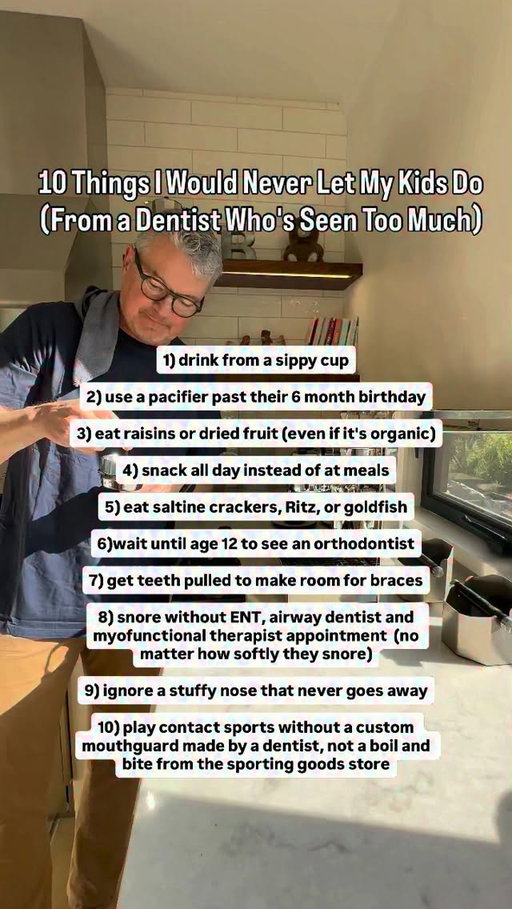
I was a family and cosmetic dentist for 40 years, and I stand by all of these 100%…want more advice like this? Follow me @askthedentist and comment NEWSLETTER for the same advice only my patients used to get (but now you can too!)—Dr. B
Dr. Mark Burhenne | Dentist (@askthedentist) Instagram Stats & Analytics
Dr. Mark Burhenne | Dentist (@askthedentist) has 1.28M Instagram followers with a 0.60% engagement rate over the past 12 months. Across 742 posts, Dr. Mark Burhenne | Dentist received 3.53M total likes and 643M impressions, averaging 4.76K likes per post. This page tracks Dr. Mark Burhenne | Dentist's performance metrics, top content, and engagement trends — updated daily. To benchmark @askthedentist against other accounts, use Socialpruf's Instagram competitor analysis tool.
Dr. Mark Burhenne | Dentist (@askthedentist) Instagram Analytics FAQ
How many Instagram followers does Dr. Mark Burhenne | Dentist have?+
Dr. Mark Burhenne | Dentist (@askthedentist) has 1.28M Instagram followers as of October 2026.
What is Dr. Mark Burhenne | Dentist's Instagram engagement rate?+
Dr. Mark Burhenne | Dentist's Instagram engagement rate is 0.60% over the last 12 months, based on 742 posts.
How many likes does Dr. Mark Burhenne | Dentist get on Instagram?+
Dr. Mark Burhenne | Dentist received 3.53M total likes across 742 posts in the last 12 months, averaging 4.76K likes per post.
How many Instagram impressions does Dr. Mark Burhenne | Dentist get?+
Dr. Mark Burhenne | Dentist's Instagram content generated 643M total impressions over the last 12 months.
Can I compare Dr. Mark Burhenne | Dentist with other Instagram accounts?+
Yes. Add @askthedentist to a competitor set with Socialpruf's Instagram competitor analysis tool and benchmark it side by side with any other public accounts on views, engagement rate and follower growth, with history back to each account's first post.