NewGet @drsaharyousef's full report
instagram analytics
Similar Accounts:
instagram analytics
Similar Accounts:
followers
531K
impressions
58.2M
likes
2.83M
comments
29.0K
posts
150
engagement
5.06%
emv
$1.91M
Average per post
388K
Key Metrics
Impressions
monthly
Distributions
Content
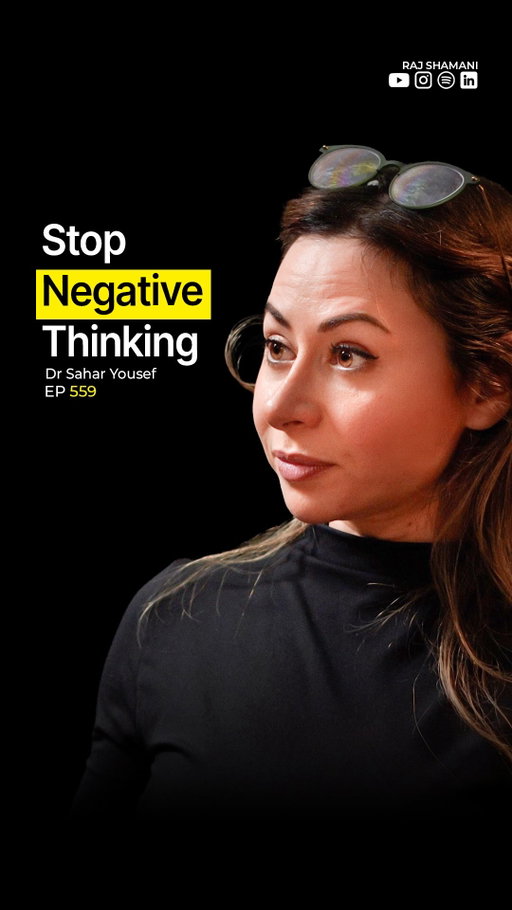
7.26M
571K
792
1mo ago

drsaharyousef
@drsaharyousef is a cognitive neuroscientist and lecturer at the University of California, Berkeley, who studies how the brain affects the way we work, focus, learn, and manage our energy. Her work focuses on translating neuroscience and cognitive science into practical strategies that people can use in their everyday lives.
She is particularly known for exploring productivity, attention, burnout, focus, and the science behind how people perform at their best. Rather than treating productivity as simply doing more, Sahar looks at how understanding the brain can help people work more effectively while protecting their mental energy and ability to recover.
Through her teaching, research, and work with organisations, Sahar helps people understand the science behind distraction, multitasking, breaks, and sustainable performance. Her approach combines neuroscience with practical tools designed to help people build better focus, manage their energy, and create healthier ways of working.
In Today’s Episode, She Talks About How to Train Your Brain To Shut Off Negativity
#neuroscientist #negativity #brainpower #rajshamani #figuringout
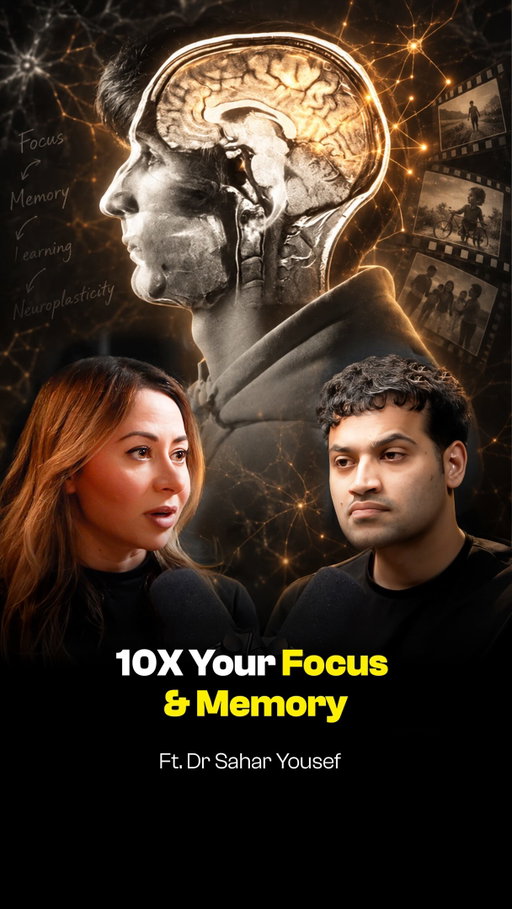
5.56M
235K
2.87K
1mo ago
drsaharyousef
Comment ‘BRAIN’ and we’ll personally DM you the full conversation.
Could you go one full day without checking your phone?
In today’s episode, we sit down with @drsaharyousef cognitive neuroscientist at UC Berkeley for a practical, science-backed conversation on how to train a sharper, calmer, more focused brain.
Here’s what we discussed:
-Why Your Phone Makes You Less Focused: How simply having your phone nearby can affect your attention, even when you aren’t using it.
-The Myth of Multitasking: Why constantly switching between tasks can hurt your focus and productivity.
-Why You’re Always Busy but Never Done: The hidden habits that keep you occupied without helping you make meaningful progress.
-How to Stop Burning Out: Sahar’s 3-break framework for working with your brain instead of constantly pushing against it.
-The Impact of Short-Form Scrolling: How excessive scrolling may affect attention, anxiety, and feelings of loneliness.
Catch the full episode here:
YouTube Channel: Raj Shamani
Spotify Channel: Raj Shamani Figuring Out
Until then, keep figuring out! 🚀
#rajshamani #figuringout

4.22M
288K
603
1mo ago
drsaharyousef
@drsaharyousef is a cognitive neuroscientist and lecturer at the University of California, Berkeley, who studies how the brain affects the way we work, focus, learn, and manage our energy. Her work focuses on translating neuroscience and cognitive science into practical strategies that people can use in their everyday lives.
She is particularly known for exploring productivity, attention, burnout, focus, and the science behind how people perform at their best. Rather than treating productivity as simply doing more, Sahar looks at how understanding the brain can help people work more effectively while protecting their mental energy and ability to recover.
Through her teaching, research, and work with organisations, Sahar helps people understand the science behind distraction, multitasking, breaks, and sustainable performance. Her approach combines neuroscience with practical tools designed to help people build better focus, manage their energy, and create healthier ways of working.
In Today’s Episode, She Talks About What Happened When She Tested Raj’s Brain Focus
#brainfocus #multitasking #neuroscience #rajshamani #figuringout
00752-X/fulltext)
And even a CNN article: https://www.cnn.com/2024/11/12/health/phones-on-toilet-wellness
WE NEED TO DO BETTER!!](https://cdn.socialpruf.com/instagram/thumbnails/3957152698316834471_49398403195?optimizer=image&width=512)
2.54M
70.5K
1.47K
2mo ago
drsaharyousef
Are you watching this on the toilet? I can’t believe I’m typing this, but a 24 year old man scrolled for 30 minutes, stood up, and collapsed. He's now paralyzed!!! Doctors are calling it BATHROOM SCROLL SYNDROME. I can’t make this stuff up. This is ridiculous. Stop taking your phone to the bathroom and SHIT IN PEACE.
Here’s the scientific publication link for the article called: Smartphone use on the toilet and the risk of hemorrhoids
https://pmc.ncbi.nlm.nih.gov/articles/PMC12407481/
And one called: Toilet seat syndrome: renal failure, perineal gangrene, and sciatic neuropathy
[https://www.amjmed.com/article/S0002-9343(00)00752-X/fulltext](https://www.amjmed.com/article/S0002-9343(00)00752-X/fulltext)
And even a CNN article: https://www.cnn.com/2024/11/12/health/phones-on-toilet-wellness
WE NEED TO DO BETTER!!

2.13M
117K
167
1mo ago
drsaharyousef
@drsaharyousef is a cognitive neuroscientist and lecturer at the University of California, Berkeley, who studies how the brain affects the way we work, focus, learn, and manage our energy. Her work focuses on translating neuroscience and cognitive science into practical strategies that people can use in their everyday lives.
She is particularly known for exploring productivity, attention, burnout, focus, and the science behind how people perform at their best. Rather than treating productivity as simply doing more, Sahar looks at how understanding the brain can help people work more effectively while protecting their mental energy and ability to recover.
Through her teaching, research, and work with organisations, Sahar helps people understand the science behind distraction, multitasking, breaks, and sustainable performance. Her approach combines neuroscience with practical tools designed to help people build better focus, manage their energy, and create healthier ways of working.
In Today’s Episode, She Talks About What’s Different Between Your Brain And A Billionaire’s Brain?
#neuroscience #billionairebrain #rajshamani #figuringout #podcast

1.72M
156K
170
1mo ago
drsaharyousef
@drsaharyousef is a cognitive neuroscientist and lecturer at the University of California, Berkeley, who studies how the brain affects the way we work, focus, learn, and manage our energy. Her work focuses on translating neuroscience and cognitive science into practical strategies that people can use in their everyday lives.
She is particularly known for exploring productivity, attention, burnout, focus, and the science behind how people perform at their best. Rather than treating productivity as simply doing more, Sahar looks at how understanding the brain can help people work more effectively while protecting their mental energy and ability to recover.
Through her teaching, research, and work with organizations, Sahar helps people understand the science behind distraction, multitasking, breaks, and sustainable performance. Her approach combines neuroscience with practical tools designed to help people build better focus, manage their energy, and create healthier ways of working.
In Today’s Episode, She Talks About How to Train Your Brain To Shut Off Negativity
#neuroscientist #negativity #rajshamani #rajelevates #brainpower #rajshamani #figuringout

1.69M
85.5K
162
1mo ago
drsaharyousef
@drsaharyousef is a cognitive neuroscientist and lecturer at the University of California, Berkeley, who studies how the brain affects the way we work, focus, learn, and manage our energy. Her work focuses on translating neuroscience and cognitive science into practical strategies that people can use in their everyday lives.
She is particularly known for exploring productivity, attention, burnout, focus, and the science behind how people perform at their best. Rather than treating productivity as simply doing more, Sahar looks at how understanding the brain can help people work more effectively while protecting their mental energy and ability to recover.
Through her teaching, research, and work with organisations, Sahar helps people understand the science behind distraction, multitasking, breaks, and sustainable performance. Her approach combines neuroscience with practical tools designed to help people build better focus, manage their energy, and create healthier ways of working.
In Today’s Episode, She Talks About How To Rewire Your Brain For Self-Belief
#neuroscientist #neuroscience #selfbelief #rajshamani #figuringout

1.68M
62.3K
184
1mo ago
drsaharyousef
Most people think that attentional training or meditation involves having NO thoughts or that the exercise is holding attention the entire time. So the second their mind drifts off to their inbox, or to something someone said, they decide they are “bad at this” and stop.
The REP that makes your attention network STRONGER ISSSS the CATCHING of your attention and then REDIRECTING it back. If you were able to focus the whole time and it was easy, how would you be “training” anything?
Your attention drifts, you notice it drifted, you walk it back. If your mind never wandered, you would not be doing anything at all!! You cannot curl a weight without lowering it first.
So when it wanders forty times in ten seconds, that is forty reps. Congratulations, that was a set!
Pick your thing. Coffee, your breath, a plant. Notice the drift. Walk it back.
I'll see you back here tomorrow.

1.66M
66.4K
243
1mo ago

drsaharyousef
How much content do you consume every day?
10 Reels? 50? 100? Or endless?
Now ask yourself a harder question:
How much of it do you actually remember?
On the podcast, cognitive neuroscientist @drsaharyousef challenged us to remember the last 3 Reels we scrolled.
Most people can’t.
And according to neuroscience, that’s a bigger problem than it sounds.
Because if information doesn’t stay in your memory, it doesn’t become learning.
That’s the trap of endless scrolling.
Every swipe feels productive.
Every Reel feels informative.
Every video feels like you’re gaining knowledge.
But when your attention is constantly jumping from one thing to the next, very little gets stored, retained, or applied.
The result?
You consume more than ever before, yet struggle to remember what actually mattered.
The goal isn’t to watch less content.
The goal is to consume content that stays with you long after you’ve closed the app.
Watch the full conversation with Dr Sahar Yousef here👇

1.54M
71.4K
210
1mo ago
drsaharyousef
Everyone assumes we adapt to screens with practice. The reading research says the opposite has happened.
A meta-analysis in Educational Research Review pooled 54 studies covering 171,055 people, comparing how well the same material was understood on paper versus on a screen. Paper won, which by now is not surprising. What should be surprising is what the authors found when they sorted the studies by publication year: the paper advantage GREW over time rather than shrinking!
It was worse under time pressure, and it showed up for informational and expository text while disappearing for narrative. Stories survive the screen.
Twenge's 2026 analysis of PISA scores across 36 countries found that after 2012, math, reading and science scores fell, and they fell hardest in the countries where students spent the most leisure time on devices during the school day. Loneliness at school climbed on the same map, steeply in the high-device countries and hardly at all in the low-device ones.
But the mechanism underneath all of it is neuroplasticity, and neuroplasticity has no memory of what it did last year. It gives you back whatever you keep asking it for. That's why this is not a life sentence for anyone.
Read one hard thing on paper this week. Under no time pressure. See what happens

1.50M
63.5K
628
1mo ago
drsaharyousef
Some of the most successful people approach obstacles with a very different assumption: there is a way through, and they’re capable of finding it. They WILL find it.
Where someone else sees a reason to stop, they see a problem they can work on.
There’s a concept in psychology called SELF-EFFICACY: your belief in your ability to carry out the actions a particular challenge requires. It helps explain why feeling capable matters for effort and persistence. Bandura, 1977
Think about the difference between approaching a problem with “There’s nothing you can do” versus “There’s something here you can learn to do and you’re going to figure it out.”
The first approach feels like a WALL and the second one gives you a reason to look for a door, build a door, or honestly, BREAK THE F@%CKING WALL.
And this carries into the way you see yourself. When “following through” and PERSISTING is part of who you believe you are, taking the next step becomes a way of living up to that identity. Each time you do it, you give yourself more evidence.
You don’t have to be a billionaire to start approaching challenges this way. You can practice asking what’s possible, what you can learn, and always, “what’s the next step?”
Which is why I keep asking people what story they’re running on. That story can shape what they’re willing to attempt, and how they respond when it gets difficult.
So…who do you think you are?
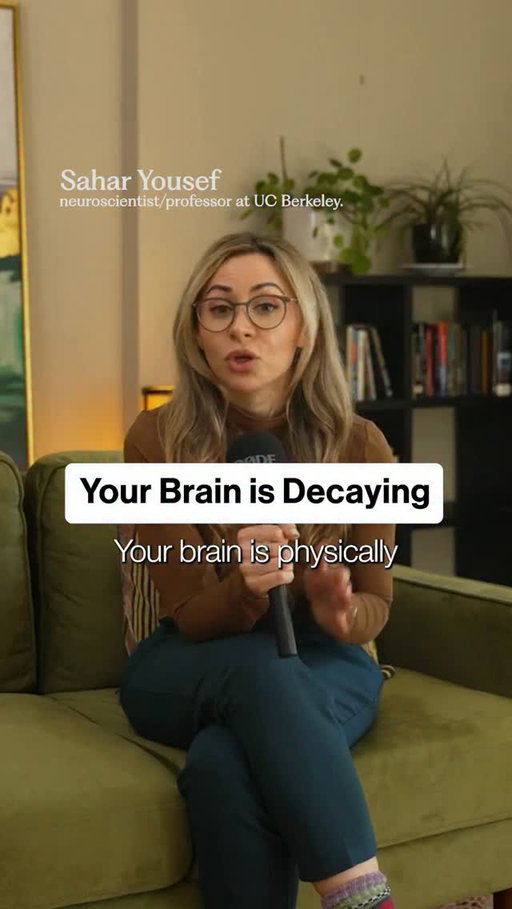
1.49M
66.6K
249
3mo ago
drsaharyousef
Scrolling is producing measurable brain atrophy in areas tied to self-awareness and cognitive control, and the research shows it goes in both directions. Two habits that are actually reversing it: a phone parking lot that keeps the device out of sight for dedicated blocks every day, and finite scrolling sessions that cut the infinite feed off before it cuts into the brain.
#SaharYousef #BecomingSuperhuman #DigitalWellbeing
1.45M
58.1K
137
1mo ago
drsaharyousef
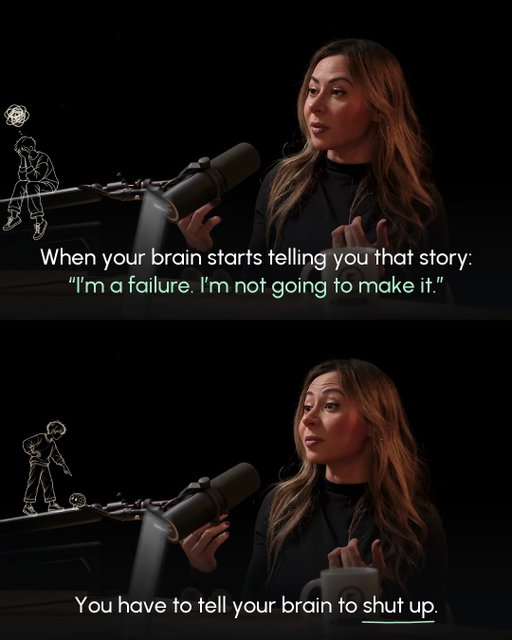
Attentional Redirection: Your brain can tell you all kinds of stories: you’re not good enough, you’re a victim, you’re a failure.
When self-defeating or negative stories are coming up for you, that is when you need to tell your brain to SHUT UP, and then redirect your attention to where YOU want it to be.
Ask yourself:
“What’s the story YOU want to live?”
“Who am I?”
“What’s possible for me?”
MAKE YOUR OWN STORY.
This is something you need to return to every day. Yes, every day. And when you catch yourself back in the negative story, redirect your attention again. Remember, anything is possible.
![Comment “watch” and I’ll personally DM you this podcast!
One phone setting could give you an hour of your day back.
During this conversation, we discussed an experiment where simply changing phone screens to greyscale led people to spend an hour less on their phones each day.
This is Dr Sahar Yousef [@drsaharyousef], a cognitive neuroscientist at UC Berkeley who’s spent over 15 years studying how to improve focus, memory and productivity.
Sahar’s work explores how modern habits often go against the way our brains naturally function and how small changes could help us concentrate better.
With distractions, brain fog and burnout becoming common struggles, this conversation explores what’s happening to our attention and what we can do about it.
We discussed things like:
- Why research suggests we spend just 47 seconds focused on one work screen.
- The phone setting that could save you 7 hours a week.
- Why Sahar believes multitasking makes us less productive.
- How to work with your brain’s natural energy levels.
- Her concerns about AI weakening our ability to think independently.
- Simple changes she recommends to help prevent burnout.
At one point, Sahar demonstrated a multitasking exercise that showed a 60% slowdown when switching between tasks.
She explains how constantly jumping between emails, meetings and notifications affects our focus, and why uninterrupted work matters.
For anyone who feels constantly busy but struggles to get their most important work done, this episode explores how understanding the brain could help us work more effectively.
Out now on all platforms ❤️👊🏾](https://cdn.socialpruf.com/instagram/thumbnails/4008308668105160023_18869810?optimizer=image&width=512)
1.28M
40.5K
8.56K
1w ago
drsaharyousef
Comment “watch” and I’ll personally DM you this podcast!
One phone setting could give you an hour of your day back.
During this conversation, we discussed an experiment where simply changing phone screens to greyscale led people to spend an hour less on their phones each day.
This is Dr Sahar Yousef [@drsaharyousef], a cognitive neuroscientist at UC Berkeley who’s spent over 15 years studying how to improve focus, memory and productivity.
Sahar’s work explores how modern habits often go against the way our brains naturally function and how small changes could help us concentrate better.
With distractions, brain fog and burnout becoming common struggles, this conversation explores what’s happening to our attention and what we can do about it.
We discussed things like:
- Why research suggests we spend just 47 seconds focused on one work screen.
- The phone setting that could save you 7 hours a week.
- Why Sahar believes multitasking makes us less productive.
- How to work with your brain’s natural energy levels.
- Her concerns about AI weakening our ability to think independently.
- Simple changes she recommends to help prevent burnout.
At one point, Sahar demonstrated a multitasking exercise that showed a 60% slowdown when switching between tasks.
She explains how constantly jumping between emails, meetings and notifications affects our focus, and why uninterrupted work matters.
For anyone who feels constantly busy but struggles to get their most important work done, this episode explores how understanding the brain could help us work more effectively.
Out now on all platforms ❤️👊🏾
 (code "drsahar" bypasses the paywall and lets you get it for free)](https://cdn.socialpruf.com/instagram/thumbnails/3982639502534648039_49398403195?optimizer=image&width=512)
1.27M
56.1K
133
1mo ago
drsaharyousef
1. FRICTION. Milyavskaya and Inzlicht followed students across a whole semester with repeated check-ins. Effortful resistance was consistently UNRELATED to whether people hit their goals. What predicted success was running into fewer temptations in the first place. Discipline mostly looks like a life with less to resist in it.
2. INBOX FIRST. Two million standardized tests, 570,000 Danish schoolkids. Every hour later in the day a test was taken cost about 0.9% of a standard deviation in performance. When your brain feels like a clean slate, don't muddy it with other people's noise. Focus on YOUR SIGNAL FIRST.
3. TASK SWITCHING. Sophie Leroy called it ATTENTION RESIDUE. When we switch tasks, part of our attention stays welded to the last thing, and it is worse when you leave it unfinished, which is exactly what every email you read and don't answer is. In a two-week trial, capping email at three checks a day with alerts off took 124 adults from about 12 checks to about 5, and their daily stress dropped.
4. PEAK WINDOW. Researchers tested athletes' endurance at six different times across the day. Performance swung by as much as 26% depending on when they were tested. The single best predictor was hours since their natural wake time. Your peak travels with your biology, not with the office schedule.
You can figure out your chronotype at [www.mychronotype.com](https://www.mychronotype.com/) (code "drsahar" bypasses the paywall and lets you get it for free)

1.14M
50.2K
141
1mo ago
drsaharyousef
The machinery really is the same underneath habits and addictions.
Researchers, Everitt and Robbins, spent decades mapping this, and their model proposed three stages: goal-directed action —> habit —> compulsion / addiction.
Our behaviors begin with prefrontal control then move towards the striatum in the brain, and then there is loss of top-down inhibitory control. This is when a behavior becomes automatic!
So, when something is a habit, WE’RE ON OUR WAY to an automatic behavior (or an addiction). The cue-and-craving loop underneath both really is neutral. It's the same process and the same "wiring" that has someone reaching for a drink at 6pm vs. reaching for their running shoes or a book.
1.09M
49.9K
177
1mo ago
drsaharyousef
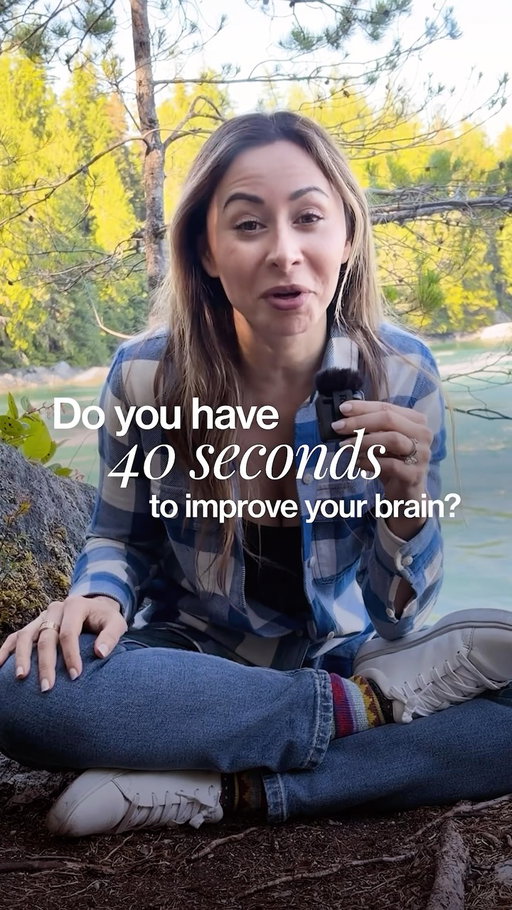
Forty seconds of looking at concrete made them worse.
150 students on a deliberately mind-numbing task, then a 40-second break looking at a picture of a concrete city rooftop.
The other half of the students looked at the SAME rooftop covered in a greenery and flowers.
The concrete group came back about 8% WORSE. The greenery group came back about 6% better.
The only variable was what was the CONTENT in front of their eyes for forty seconds.
It was a photograph, by the way. Nobody went outside. So the version you just did, looking at something green on a phone, is the ACTUAL intervention!
Try to get some nature videos in your scrolling sessions as a starting point.

866K
36.8K
128
1w ago
drsaharyousef
Forty seconds of looking at concrete made them worse.
150 students on a deliberately mind-numbing task, then a 40-second break looking at a picture of a concrete city rooftop.
The other half of the students looked at the SAME rooftop covered in a greenery and flowers.
The concrete group came back about 8% WORSE. The greenery group came back about 6% better.
The only variable was what was the CONTENT in front of their eyes for forty seconds.
It was a photograph, by the way. Nobody went outside. So the version you just did, looking at something green on a phone, is the ACTUAL intervention!
Try to get some nature videos in your scrolling sessions as a starting point.

817K
39.2K
68
1mo ago
drsaharyousef
@drsaharyousef is a cognitive neuroscientist and lecturer at the University of California, Berkeley, who studies how the brain affects the way we work, focus, learn, and manage our energy. Her work focuses on translating neuroscience and cognitive science into practical strategies that people can use in their everyday lives.
She is particularly known for exploring productivity, attention, burnout, focus, and the science behind how people perform at their best. Rather than treating productivity as simply doing more, Sahar looks at how understanding the brain can help people work more effectively while protecting their mental energy and ability to recover.
Through her teaching, research, and work with organisations, Sahar helps people understand the science behind distraction, multitasking, breaks, and sustainable performance. Her approach combines neuroscience with practical tools designed to help people build better focus, manage their energy, and create healthier ways of working.
In Today’s Episode, She Talks About How Your Brain Decides What Opportunities You Notice
#neuroscientist #neuroscience #opportunities #rajshamani #figuringout

792K
30.8K
330
1w ago
drsaharyousef
“Get more work done in less time…”
Cognitive Neuroscientist @drsaharyousef explains why putting a time limit on your tasks could be the key to becoming more productive.
She reveals how deadlines can change the way your brain approaches a task, helping you stay focused, avoid distractions and get things done faster.
The technique can even be used with children to help them concentrate and complete tasks more efficiently.
What if the reason you’re not getting more done is that you’re giving yourself too much time?
Comment “watch” and we’ll personally dm you the link to this episode!!
Sahar Yousef (@drsaharyousef) Instagram Stats & Analytics
Sahar Yousef (@drsaharyousef) has 531K Instagram followers with a 5.06% engagement rate over the past 12 months. Across 150 posts, Sahar Yousef received 2.83M total likes and 58.2M impressions, averaging 18.9K likes per post. This page tracks Sahar Yousef's performance metrics, top content, and engagement trends — updated daily. To benchmark @drsaharyousef against other accounts, use Socialpruf's Instagram competitor analysis tool.
Sahar Yousef (@drsaharyousef) Instagram Analytics FAQ
How many Instagram followers does Sahar Yousef have?+
Sahar Yousef (@drsaharyousef) has 531K Instagram followers as of October 2026.
What is Sahar Yousef's Instagram engagement rate?+
Sahar Yousef's Instagram engagement rate is 5.06% over the last 12 months, based on 150 posts.
How many likes does Sahar Yousef get on Instagram?+
Sahar Yousef received 2.83M total likes across 150 posts in the last 12 months, averaging 18.9K likes per post.
How many Instagram impressions does Sahar Yousef get?+
Sahar Yousef's Instagram content generated 58.2M total impressions over the last 12 months.
Can I compare Sahar Yousef with other Instagram accounts?+
Yes. Add @drsaharyousef to a competitor set with Socialpruf's Instagram competitor analysis tool and benchmark it side by side with any other public accounts on views, engagement rate and follower growth, with history back to each account's first post.