NewGet @patrick_oshag's full report

X analytics
Similar Accounts:
X analytics
Similar Accounts:
followers
365K
impressions
128M
likes
311K
comments
14.0K
posts
1.06K
engagement
0.253%
emv
$2.66M
Average per post
121K
Key Metrics
Impressions
monthly
Distributions
Content
8.22M
9.92K
837
2.10K
10mo ago

patrick_oshag
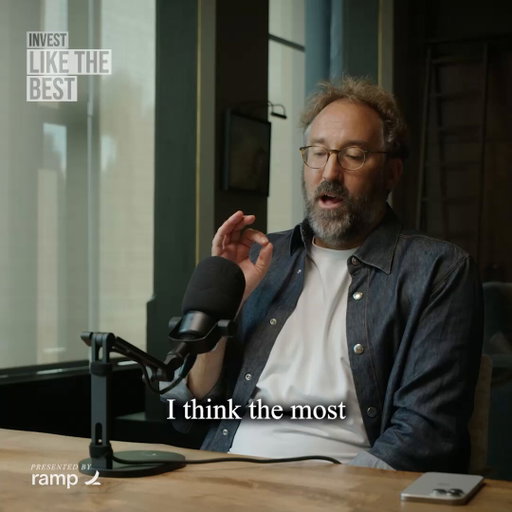
"The most important thing in the next 3-4 years is data centers in space.
In every way, data centers in space, from a first principles perspective, are superior to data centers on earth.
In space, you can keep a satellite in the sun 24 hours a day. The sun is 30% more intense, which results in six times more irradiance than on Earth. So you don't need a battery.
The cooling in these data centers is incredibly complicated. Space cooling is free. You just put a radiator on the dark side of the satellite.
The only thing faster than a laser going through a fiber optic cable is a laser going through absolute vacuum. Link satellites with lasers, and you have a faster and more coherent network than any data center on Earth."
5.64M
10.2K
288
1.90K
6mo ago
patrick_oshag
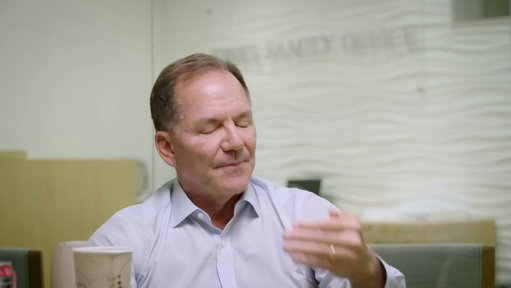
My guest today is Paul Tudor Jones (@ptj_official), one of the greatest macro traders of all time.
He correctly predicted the 1987 stock market crash and shorted the Japanese bubble in 1990. For over 40 years, his flagship fund has had a negative correlation to the S&P 500. 100% of his returns are alpha.
He says today's market has so many similarities to 2000, "the easiest bear market I've ever seen in my whole life."
He makes the case for going long dollar-yen, why Bitcoin beats gold as an inflation hedge, and why he was wrong about Warren Buffett.
But what I'll remember most from this conversation is Paul's zest for life. He's 71 and still wakes at 2:30 every morning to trade the London open. He works out for two hours a day. He walks with his wife every evening. He travels the country chasing peak spring and peak fall. He's so excited about the songs picked for his funeral that he wishes he could be there to hear them.
Paul has lived five lifetimes in one. He's one of the most entertaining and interesting people I've met, and the conversation will leave you searching to be as passionate about what you do as he is about what he does.
Enjoy!
Timestamps:
0:00 Intro
1:00 The Kindest Thing
13:19 Trading vs. Investing
17:33 Lessons from Warren Buffet
22:24 The Existential Risks of AI
29:54 The Nature of Trading
31:46 Bitcoin
35:55 Bubbles
42:08 A Day in the Life of PTJ
46:00 Information Overload
47:07 Passion for Markets
50:49 The Robin Hood Foundation
54:18 The Workless World
56:03 Journalism
1:00:00 Principal Components of a Great Life
1:05:06 Kill Them With Kindness
4.67M
10.4K
145
1.35K
2mo ago
patrick_oshag
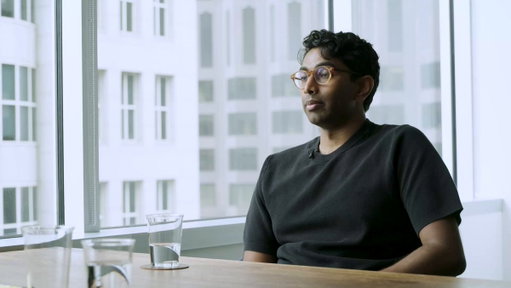
Neil Movva (@neilmovva) started his career at Nvidia, working on GPUs and kernels, and has an unusually deep understanding of inference, from software to chips to power.
We spend a lot of time on each of those layers, how they connect, and where the important tradeoffs are.
What makes this conversation special is how detailed it is (like a 401-level class), yet Neil makes it remarkably clear and easy to follow.
Today he runs Sail Research, a company building infrastructure for agents to make tokens as cheap as possible.
We discuss:
- Latency versus throughput
- Why there are no bad chips, only bad pricing
- The end of kernel engineering
- Buying chips and power no one else wants
- New chip architectures
- Nvidia lore + his contrarian view of the company
- Open source and the frontier labs
I learned a ton. Enjoy!
TIMESTAMPS
0:00 Intro
0:38 Building a “Token Factory”
4:21 The Future of Background Agents
13:09 Nvidia and the GPU Stack
23:27 Chips, Memory, and Transformers
36:14 The Future of AI Training Data
44:32 Chip Scarcity and Compute Arbitrage
52:44 Reinventing the AI Data Center
59:01 Power and the “Scavenger Strategy”
1:10:10 Open vs. Closed AI
3.45M
6.88K
99
921
5mo ago
patrick_oshag
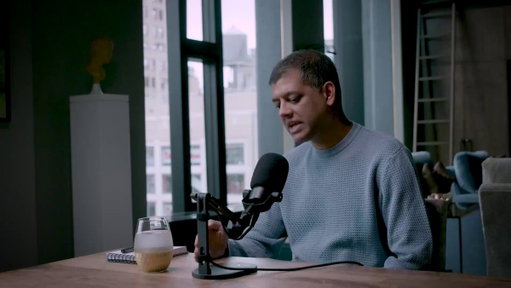
Krishna Rao is the CFO of Anthropic, and this is his first podcast appearance.
He joined the company two years ago when run-rate revenue was about $250M. Today it is $30B. He has helped raise ~$75B and is responsible for the procurement and allocation of compute.
I feel lucky we get to hear what it is like to sit inside a company this consequential at a moment this pivotal.
We discuss:
- The cone of uncertainty
- How he allocates compute across Trainium, TPUs, and GPUs
- What investors misunderstand about model companies
- Why the returns to frontier intelligence keep rising
- Platform vs application and where Anthropic builds its own products
- How Anthropic uses Claude internally
I have asked my closing question about the kindest thing more than 500 times. Krishna's answer is one I have never heard before.
Enjoy!
Timestamps:
0:00 Intro
2:38 The Compute Canvas
6:51 The "Cone of Uncertainty"
11:58 Why the Returns to Frontier Intelligence Are So High
16:45 Recursive Self-Improvement
20:20 Scaling Laws
23:30 Sourcing $100 Billion in Compute
28:05 Platform vs. Application Strategy
32:52 Pricing Dynamics
38:48 How Anthropic’s Finance Team Uses Claude
43:24 Raising Capital & Overcoming Investor Skepticism
52:32 Public Perception, Risks, and Government Regulation
57:25 Mythos Release
1:12:33 What Could Derail the AI Revolution?
1:13:47 Biotech and Healthcare
1:15:31 The Kindest Thing
2.86M
3.48K
130
631
10mo ago
patrick_oshag
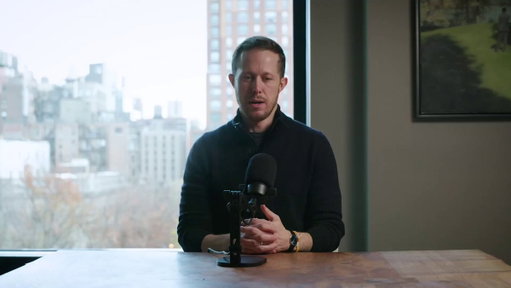
This is my fifth conversation with @GavinSBaker.
Gavin understands semiconductors and AI as well as anyone I know and has a gift for making sense of the industry's complexity and nuance.
We discuss:
- Nvidia vs Google (GPUs + TPUs)
- Scaling laws and reasoning models
- The economics of AI compute
- Why Blackwell's delay mattered
- The bear case on the AI capex buildout
- Data centers in space
- The mistake SaaS companies are making
Few people love investing more than Gavin. His closing answer about why he loves it turned into a full reflection on his investing origin story, which I had never heard before.
Enjoy!
Timestamps:
0:00 Intro
5:03 The Blackwell Transition
23:15 The Prisoner's Dilemma
27:12 The Bear Case: Edge AI
37:19 Meta, Open Source, and Model Depreciation
43:08 Geopolitics and Rare Earths
50:42 Data Centers in Space
56:06 Power Constraints as a Governor
1:11:31 The SaaS Mistake
1:16:17 Nuclear and Quantum
1:22:25 Gavin’s Investing Origins
2.68M
1.20K
57
167
6mo ago
patrick_oshag
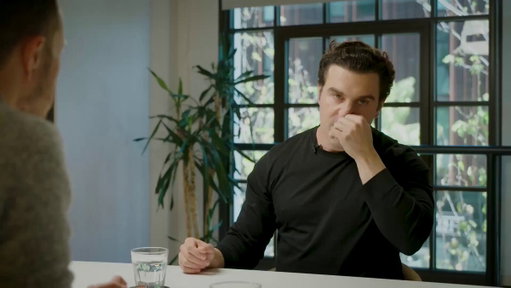
My guest today is Brian Chesky (@bchesky), founder and CEO of Airbnb and one of the great consumer founders of the last 20 years.
Paul Graham coined "founder mode" based on Brian's experience running Airbnb. This conversation is about what comes after it, what he calls AI founder mode, and how it will force founders to focus even more on the details.
We talk about his eleven-star exercise for finding product market fit, why your first hire should be a recruiter, and why Airbnb's $100B IPO became one of the saddest days of his life.
Brian still comes across like the 17 year-old at the Rhode Island School of Design (RISD) who picked to study industrial design. His heroes are all artists. Da Vinci, Van Gogh, Walt Disney, and Steve Jobs, all of whom were working the week they died because they loved what they did.
Rick Rubin taught him that an artist is only an artist when they make things for themselves. Now Brian believes AI is the opportunity for all of us to do the same.
Enjoy!
Timestamps:
1:00 Studying Industrial Design
11:33 AI Founder Mode
17:02 Lack of Consumer AI Companies
22:10 Small Teams and Focused Problems
30:52 The Evolution from Founder to CEO
38:13 The 11-Star Experience
41:07 AI as a Canvas for Creativity
48:17 Detaching from Success
53:12 Founder-Led Moats
58:34 The Next Chapter of Airbnb
1:03:08 What Endures in the Age of AI
1:06:43 Lessons from Bodybuilding
1:10:20 The CEO's No. 1 Job
1:17:01 Activating Talent
1:20:39 The Kindest Thing
2.38M
7.99K
282
1.60K
6mo ago
patrick_oshag
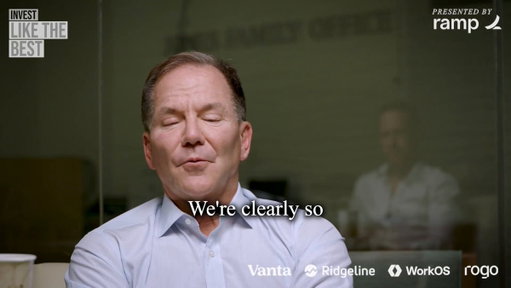
Paul Tudor Jones says the US is more dependent on equity prices than ever, and explains what a 35% correction would trigger in the economy:
"We're 252% of stock market cap to GDP. In 1929 we were 65%. In 1987 we got to ~85-90%. In 2000, 170%.
If you think about the periodicity of significant bear markets. Since 1970, we get a mean reversion about every 10 years.
Let's say mean revert to the past 25 or 30-year PE. That would be a 30, 35% decline. Well, 35% on 250% of GDP is 80, 90% of GDP.
10% of our tax revenues are capital gains, they go to zero. So you can see the budget deficit blowing up. You can see the bond market getting smoked. You can see this kind of negative self-reinforcing effect.
In the stock market, we're over-equitized as a country. We have the highest individual equity weightings in the history of the country.
And then the real problem is if you look at private equity in 2007-2008, that was about 7% of institutional portfolios. Now it's about 16% of the institutional portfolios. We're so much more illiquid than we were in 2008.
The problem is that if you buy the S&P at this current valuation, the 10-year forward return is negative when you buy the S&P with a PE of 22. That's what history shows.
So yes, the S&P is spectacular long-term, if you have a hundred-year view. But that's because that's an average of a hundred years, including times when the S&P 500 PE was 6, 7 and 8, or one third of what it is right now.
Valuation matters a lot, and the stock market's really high and it's gonna be really hard to make money from here with any kind of long-term view."
2.30M
1.09K
56
188
1mo ago
patrick_oshag
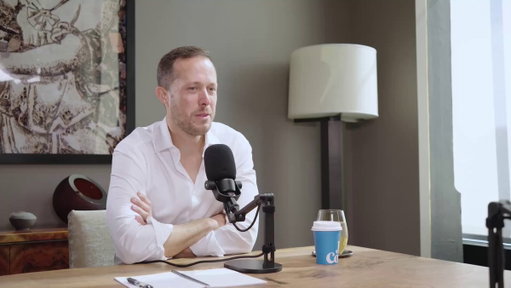
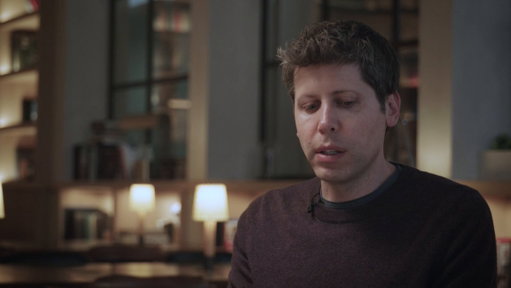
My conversation with Michael Moritz, one of the great venture investors of the last 40 years.
Michael joined Sequoia in 1986 and co-led the firm with Doug Leone (@dougleone) from 1995 to 2012. His investments include Google, Yahoo, PayPal, and Stripe.
His new book, Ausländer, traces his parents' escape from Nazi Germany and helps explain his lifelong interest in what shapes exceptional people.
We discuss:
- The infamous Steve Jobs profile
- Why Don Valentine hired him
- The question he finds most revealing when interviewing people
- Monomania and the cost of greatness
- Why he has never felt good at anything
- Writing, journalism and AI
- What he learned about himself writing Ausländer
I'd recommend watching this one if you can. Michael was incredibly thoughtful and reflective throughout, particularly when talking about his parents, childhood, and the more difficult parts of his personal story.
Enjoy!
TIMESTAMPS
0:00 Intro
0:53 Family History & Identity
7:03 Survival & Outsider Instinct
18:53 Studying Exceptional People
33:50 Self-Doubt & Success
41:17 Steve Jobs & Obsession
52:50 Joining Sequoia
1:03:22 Leadership & Alex Ferguson
1:08:25 Elon Musk & AI
1:17:12 Becoming Who You Are
2.02M
1.84K
92
258
3mo ago
patrick_oshag
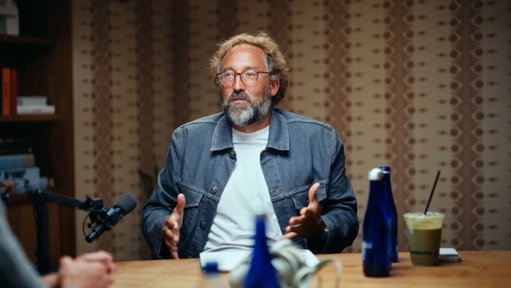
My conversation with Sam Altman (@sama), CEO of OpenAI.
We discuss:
- Kimi, distillation, and open source
- OpenAI's compute bets
- The Hugging Face incident
- What happens after AGI
- Raising kids in an age of abundant intelligence
- And much more
Enjoy!
TIMESTAMPS
0:00 Intro
4:10 The Race for Compute
14:24 A Sci-Fi Cyber Incident
16:14 The Promise and Risks of AGI
23:27 How AI Will Change Jobs
29:38 Sam’s Vision for a Personal AI
35:02 Robotics, ChatGPT, and What Comes Next
44:39 The Weight of Leading OpenAI
51:36 OpenAI’s Biggest Lessons
1.83M
2.11K
92
290
3mo ago
patrick_oshag
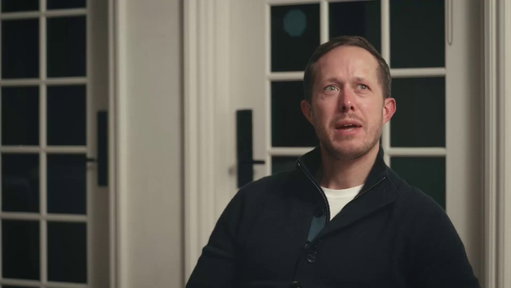
My seventh conversation with @GavinSBaker.
It's about the gap between what the market is doing and what companies are seeing. It's been a tough month or so for public AI names, but there's no sign of a slowdown on the ground in Silicon Valley.
We discuss:
- Why old GPUs are getting more expensive
- Open source vs the frontier
- Claude as Wall Street's Walter Cronkite
- Whether the buildout gets funded out of cash flow or debt
- SpaceX as a data center company
- And more
Enjoy!
TIMESTAMPS
0:00 Intro
1:17 AI Selloff vs. Fundamentals
10:20 Financing the AI Buildout
18:18 GPU Prices Keep Rising
24:23 Claude Moves Markets
29:01 What Could Break the Thesis
36:59 The Memory Supply War
42:08 Nvidia’s New Playbook
50:14 China and Open Source
61:51 Data Centers and Regulation
71:11 SpaceX and Orbital Compute
1.83M
2.37K
150
439
1mo ago
patrick_oshag
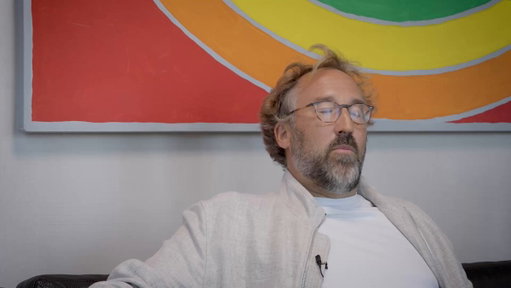
My conversation with Noah Shinn (@noahrshinn), founder of Instinct.
Noah is building a personal AI assistant. It's still invite only, has spent nothing on marketing, and is growing roughly 10% A DAY.
This is his first long conversation about the company.
We discuss:
- Why Instinct doesn't have an app
- Buying compute months ahead of exponential demand
- How users learn to trust it with a credit card
- Safety and security
- Agents coordinating with other people's agents
- Instinct's business model
- Apps built on consumer inertia
- and more
Enjoy!
Timestamps:
0:00 Intro
4:11 What people are using AI agents for
15:07 Rethinking travel, reservations, and the internet
22:43 Trust, privacy, and personal data
27:50 The business model behind Instinct
38:04 How existing businesses will adapt
47:55 Designing a personal assistant people love
53:15 Growth, compute, and competing with Big Tech
1:11:44 What’s next for Instinct and personal AI
1.68M
1.79K
62
248
5mo ago
patrick_oshag
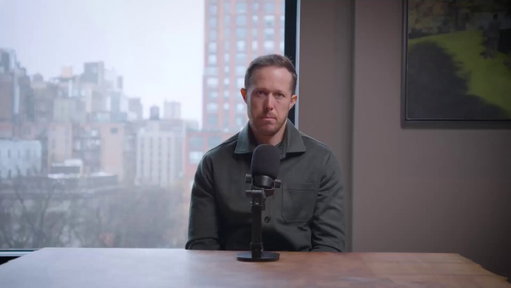
This is my sixth conversation with @GavinSBaker.
As always with Gavin, the conversation covers a lot of ground, but we spend the most time on watts and wafers.
We discuss:
- Why the wafer shortage may prevent an AI bubble
- Data centers in space (reframed)
- Elon's Terafab and the new chip companies challenging Nvidia
- Usage-based pricing
- The disaggregation of GPUs
- DRAM, frontier tokens, and open source
Enjoy!
Timestamps:
0:00 Intro
7:55 Anthropic and OpenAI Valuations
12:58 Watts, Wafers, and Infrastructure
14:39 Orbital Compute and Data Centers in Space
22:49 Avoiding the AI Bubble
28:26 Terafab and the Future of US Manufacturing
32:16 Returns to the Frontier
37:23 Continual Learning
42:03 New Chip Companies
48:52 Extending GPU Lifespans and Private Credit
51:22 The Application Layer
57:32 The Token Path and Open-Source Dynamics
1:01:37 Cybersecurity
1:05:46 Diversity Breakdown
1:11:59 Assessing the Big Tech Players in AI
1:19:02 Geopolitics, Personal Safety, and the AI Horizon
1.68M
1.30K
57
135
7mo ago
patrick_oshag
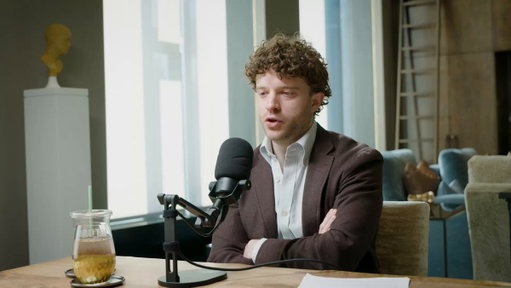
.@williamhockey is one of the least visible founders in tech relative to what he has created.
He co-founded Plaid and is now building Column, a software company that owns a bank, and powers Ramp, Wise, Bilt, Mercury, and others. He funded it himself by borrowing against nearly everything he had in Plaid shares, and has never raised any outside capital.
His story matters because so much of the value in our industry gets created through exactly this kind of extreme personal risk. He is maniacal about being the best in the world at his thing, and has spent his entire career betting on himself and doing whatever it takes to win.
He also spends a lot of time outside the US (in places like Kinshasa) which has given him a rare perch on the power of the US dollar.
We discuss:
- Why emerging markets are often the most financially innovative
- What owning 100% of his company allows him to do that VC-backed founders cannot
- Getting margin called and nearly going bankrupt
- Why the best founders are specialists
- What it takes to be the best in the world at your thing
- How Silicon Valley's consensus culture produces consensus founders
- How the US dollar functions as an instrument of national security
Enjoy!
Timestamps:
0:00 Intro
9:19 Emerging Markets
14:03 Silicon Valley's Elite Consensus Problem
16:03 Rejecting the VC Hamster Wheel
21:45 Equity and Liquidity
26:03 Funding a Bank
29:45 The Necessity of Extreme Founder Risk
37:18 Finding Leverage
45:20 Longevity and Profitability in Banking
48:46 Matching Your Capital Structure to Your Business
51:44 The Unseen Power of the US Dollar
1:02:30 How AI Will Transform Legacy Banks
1:09:23 The Kindest Thing
1.67M
1.05K
67
154
3mo ago
patrick_oshag
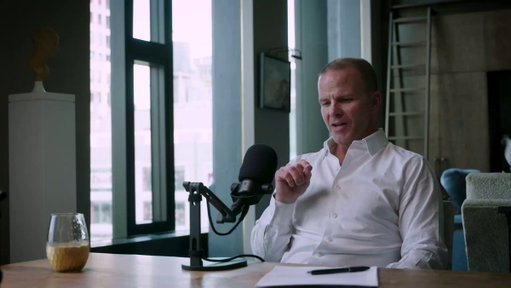
My second conversation with @jeremygiffon. His first episode became one of the most popular we've ever done.
Since then he's become a friend I talk to every day, so this is a taste of one of those conversations.
We discuss:
- The billion dollar PDF
- Why billionaires have become subservient to the "poaster" class
- The philosophers who secretly shaped Silicon Valley
- Lessons from the last 18 months in private markets
- East v. West coast finance
- Buffett + beating the market
- and much more
Enjoy!
0:00 Intro
5:50 The Billion Dollar PDF
11:31 Algorithms and Power Laws
20:28 Peak Guy
31:19 Opting Out of the Timeline
36:14 AI and White-Collar Jobs
43:31 The Next Era of Finance
53:56 The New Economics of Software
1:03:22 Underwriting Emerging Managers
1:18:17 Silicon Valley’s Hidden Philosophy
1.65M
3.24K
229
565
3mo ago
patrick_oshag
Matthew Smith has spent the last 18 months modeling every well, pipeline, storage facility, and power plant in the American natural gas system.
His conclusion is that the US is heading toward a natural gas shortage with no precedent, beginning in 2028.
By 2030, he believes we could exhaust our working natural gas storage entirely.
The fuel everyone in AI is counting on, and that everyone assumes is abundant, is not there.
And because gas sets the price of electricity in most of the country, he argues Americans will pay for the shortage in their power bills.
Matthew has worked in energy markets for over 20 years and is the CIO of Chronometer Partners.
This is his second time on the show, and he's one of my favorite people to talk to about energy.
We discuss:
- Why the bottleneck is moving from power to fuel
- Why we can't just shut off exports
- 2028 as the inflection point
- Large-scale nuclear v. SMRs
- Who wins, who loses, and what can still be done
Enjoy!
TIMESTAMPS
0:00 Intro
1:30 What Drives the Deficit
11:00 Why Supply Can’t Catch Up
20:35 The 2030 Gas Crisis
25:05 Winners and Losers
29:00 Nuclear and Solar
33:30 Consumers Pay the Bill
37:20 AI’s Next Shortage
45:25 Solutions and Global Stakes
51:15 The Coming Gas Knife Fight
1.61M
27.2K
645
3.04K
2mo ago
patrick_oshag
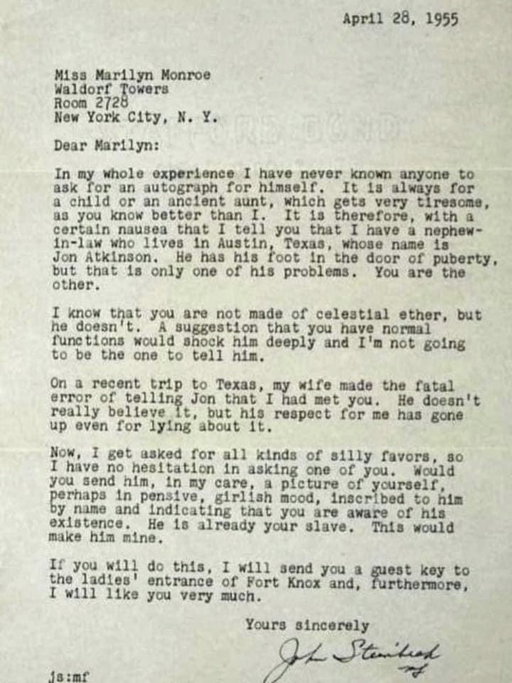
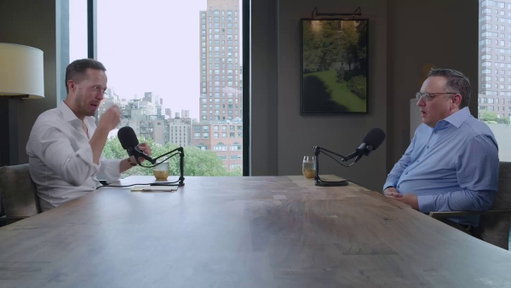
Wake me up when AI can write like John Steinbeck to Marilyn Monroe 😂
1.61M
1.10K
46
170
2mo ago
patrick_oshag
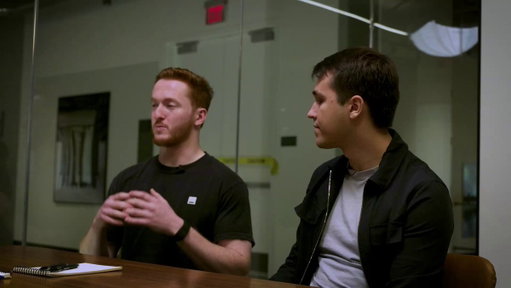
My conversation with @benthompson. Ben has been writing Stratechery for over a decade and remains one of my favorite business thinkers.
We covered a lot. Every important company in the industry and the forces acting on all of them.
- Why he thinks it would be problematic for the US to win the AI race
- Will we run out of money to fund AI
- Google becoming Berkshire Hathaway
- Why ads are amazing
- TSMC, Intel, and Samsung
- Nvidia's invisible price cuts + biggest competitors
- Microsoft, Amazon, Apple, and Meta
I love talking to Ben about everything happening in markets and technology. Enjoy!
TIMESTAMPS
0:00 Intro
0:59 America and the AI Race
8:26 AI’s Funding Problem
15:31 AI’s Capabilities and Limits
20:30 Aggregation Theory, AI, and Ads
31:10 Compute, TSMC, and Intel
47:31 Amazon and Apple’s AI Moats
54:43 The Frontier AI Players
74:07 Nvidia and Commoditized Intelligence
82:52 What Survives an AI Bubble?
1.47M
2.35K
66
274
4mo ago
patrick_oshag
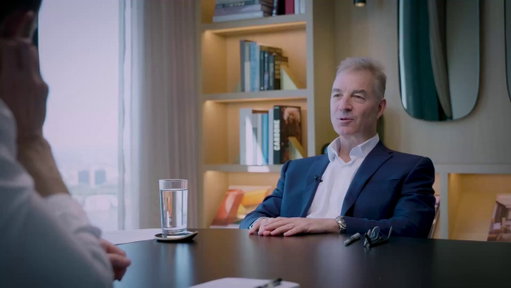
Three years ago, two Harvard dropouts set out to build a better AI chip than the largest companies in the world.
Almost everyone I called at the time said it was impossible.
Today, Etched (@Etched) comes out of stealth with $800M total raised, $1B in signed customer contracts, and a working next-gen AI chip.
This was my excuse to ask the two founders, @UbertiGavin and @robertwachen, every question I have about compute and inference.
We discuss:
- Why they built an entire rack and not just a chip
- The two technical bets behind their architecture no one else has tried
- How two founders in their twenties recruited industry legends
- The night they nearly ran out of money
- Why whoever produces the most tokens wins
If you care about the future of compute, Gavin and Rob are two people to know. I think you will find the story of what they have built hard to forget.
Enjoy!
TIMESTAMPS
0:00 Intro
1:00 Why Nobody Believed Etched Would Work
14:06 Why Inference Is the Bottleneck
22:27 Gavin and Rob’s Origin Stories
33:24 Taking Huge Risks to Move Faster
49:43 Kernels, Compilers, and the AI Stack
1:02:08 Raising $100M to Survive
1:16:00 The Future of Models, Agents, and Intelligence
1.36M
1.94K
67
235
5mo ago
patrick_oshag
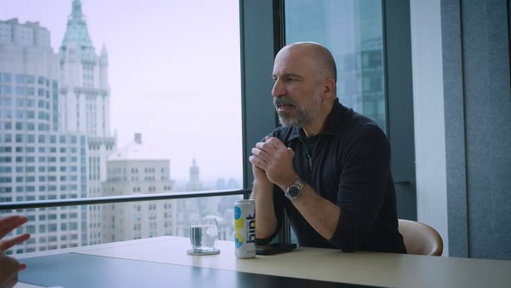
My conversation with @DanielSLoeb1, his first ever podcast and one I've been wanting to do for years.
Dan started Third Point in 1995 with $3 million. Today the firm manages over $24 billion across equities, credit, venture, and insurance.
Along the way he wrote some of the most iconic activist letters.
We discuss:
- Why deep value stopped working
- The power of writing
- The Twitter and XAI credit trades
- Lessons from FTX and Danaher
- The Sony and Sotheby's stories
- What makes a great analyst today
- The importance of kindness
I feel lucky we all get to learn from one of the greats.
Enjoy!
Timestamps:
0:00 Intro
2:48 Macro Views and Tech Trends
5:13 The Roots of Third Point
10:30 Evolving to Quality and Thematic Investing
19:07 Market Psychology and Inefficiencies
24:10 Good and Bad Corporate Governance
29:19 Activism
31:23 Sotheby's
41:37 AI
44:28 Sony
52:50 Danaher's Operating System
56:31 Building an Insurance Business
59:25 FTX
1:05:17 What Makes a Great Analyst Today
1:07:24 The Next Decade
1:10:00 Kindest Thing
1.27M
668
32
94
5mo ago
patrick_oshag
My conversation with @dkhos, CEO of Uber.
Dara took over in 2017, when Uber was losing roughly $4.5B a year.
Today the company generates $10B in free cash flow and is worth about $150B.
We discuss:
- How Daniel Ek convinced him to take the job
- How Uber spent a full year of its AI budget in a single quarter
- Uber's approach to autonomous vehicles
- Drones, hotels, and building a superapp
- Lessons from Allen & Co, Barry Diller, and Reed Hastings
Enjoy!
Timestamps
0:00 Intro
3:44 Bringing Order to Uber’s Chaos
7:22 Managing Stress and Going All In
14:28 Why Uber Is at the Center of AI and Physical
22:39 How to Win in Autonomous Vehicles
32:25 The Trillion-Dollar AV Opportunity
37:05 Drones, Robotaxis, and Global Adoption
38:20 Uber Eats, Uber One, and Aggregating Supply
47:00 The Future of the Uber App
55:55 Lessons from Barry Diller
Patrick OShaughnessy (@patrick_oshag) X Stats & Analytics
Patrick OShaughnessy (@patrick_oshag) has 365K X followers with a 0.25% engagement rate over the past 12 months. Across 1.06K posts, Patrick OShaughnessy received 311K total likes and 128M impressions, averaging 293 likes per post. This page tracks Patrick OShaughnessy's performance metrics, top content, and engagement trends — updated daily. To benchmark @patrick_oshag against other accounts, use Socialpruf's X competitor analysis tool.
Patrick OShaughnessy (@patrick_oshag) X Analytics FAQ
How many X (Twitter) followers does Patrick OShaughnessy have?+
Patrick OShaughnessy (@patrick_oshag) has 365K X (Twitter) followers as of November 2026.
What is Patrick OShaughnessy's X (Twitter) engagement rate?+
Patrick OShaughnessy's X (Twitter) engagement rate is 0.25% over the last 12 months, based on 1.06K posts.
How many likes does Patrick OShaughnessy get on X (Twitter)?+
Patrick OShaughnessy received 311K total likes across 1.06K posts in the last 12 months, averaging 293 likes per post.
How many X (Twitter) impressions does Patrick OShaughnessy get?+
Patrick OShaughnessy's X (Twitter) content generated 128M total impressions over the last 12 months.
Can I compare Patrick OShaughnessy with other X accounts?+
Yes. Add @patrick_oshag to a competitor set with Socialpruf's X competitor analysis tool and benchmark it side by side with any other public accounts on views, engagement rate and follower growth, with history back to each account's first post.