NewGet @thewallstreetskinny's full report

instagram analytics
Similar Accounts:
instagram analytics
Similar Accounts:
followers
520K
impressions
62.9M
likes
755K
comments
28.4K
posts
330
engagement
1.13%
emv
$1.48M
Average per post
191K
Key Metrics
Impressions
monthly
Distributions
Content
4.29M
8.87K
135
9mo ago

thewallstreetskinny
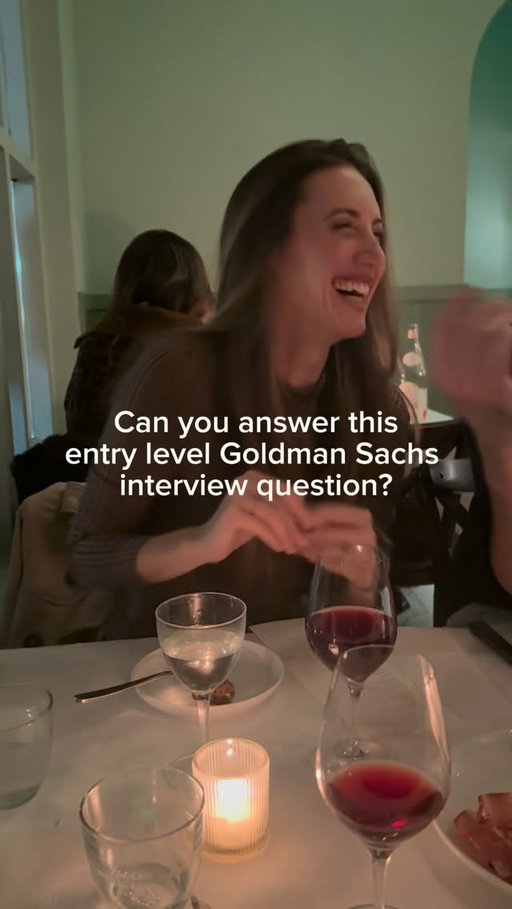
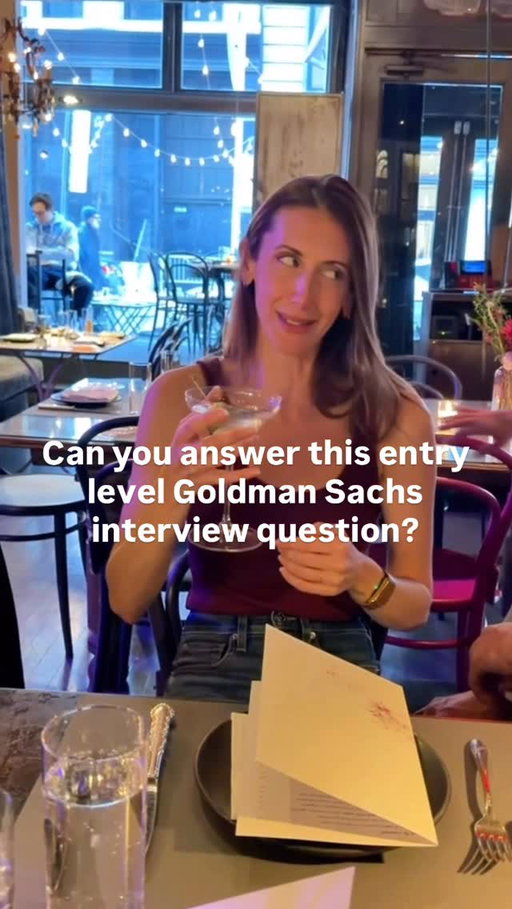
The question: if the 1y rate is 4.00% and the 2y rate is 4.50%, what is the 1y1y rate?
First of all, you always need to understand what your interviewer is assessing. In this case, it's an understanding of how interest rates work, specifically with respect to yield curve construction. It's a question you often get in a fixed income sales & trading, hedge fund, or asset management interview.
The math:
1y1y rate = (1 + 2y rate)^2 / (1 + 1y rate) - 1
= (1 + 0.045)^2 / (1 + 0.040) - 1
= approximately 5.00%
The reason:
It all starts with the assumption that there's no arbitrage here.
We already know the 1 year rate.
And remember, your 2 year rate lets you know your ANNUALIZED return over the two year period.
You earn the 1y rate in year one. Your investment then gets compounded again in year 2 at the 1 year rate in 1 year's time.
So how can we solve for that rate?
The 2 year rate squared --- or, said differently, compounded on itself --- divided by your return over the first year of your investment gives you the rate that you would have had to earn during the second year of your investment if no arbitrage exists.
That gives you the 1 year rate in 1 year's time, aka the 1y1y rate.
Check out our fixed income curriculum if you want to learn everything you need to know to be an expert when it comes to interest rates, bonds, derivatives, and more!

2.84M
19.3K
269
11mo ago
thewallstreetskinny
I'll be sure to circle back and follow up...
100% credit for creative inspiration to @katstickler
#investmentbanking #privateequity #womeninfinance #wallstreet
2.52M
10.6K
359
3mo ago
thewallstreetskinny
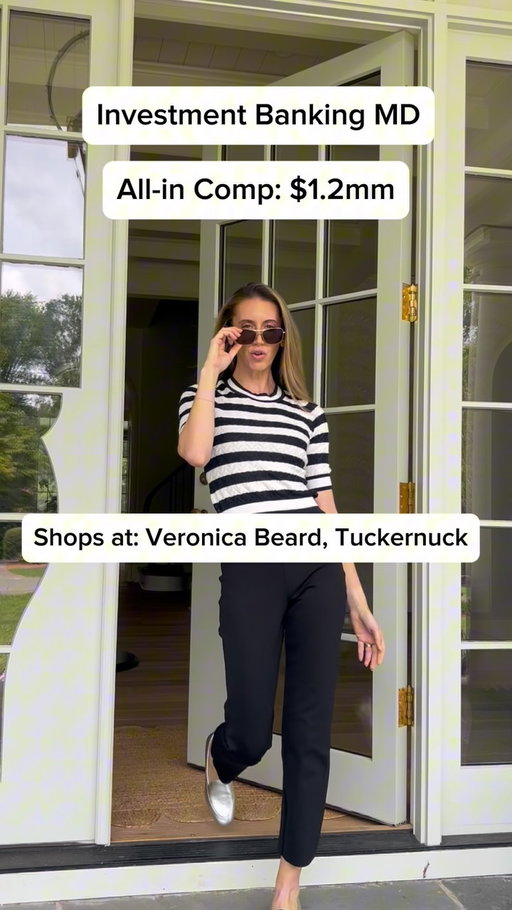
Today we're spilling the tea on EXACTLY how much money people working in Investment Banking, Private Equity, and Private Credit are making. Comment "MONEY" below and we will send you a link to our latest episode, where we are pulling back the curtain on the industry's carefully guarded compensation data with the help of @highyield.harry @buysidehub
1.54M
21.4K
476
2mo ago
thewallstreetskinny
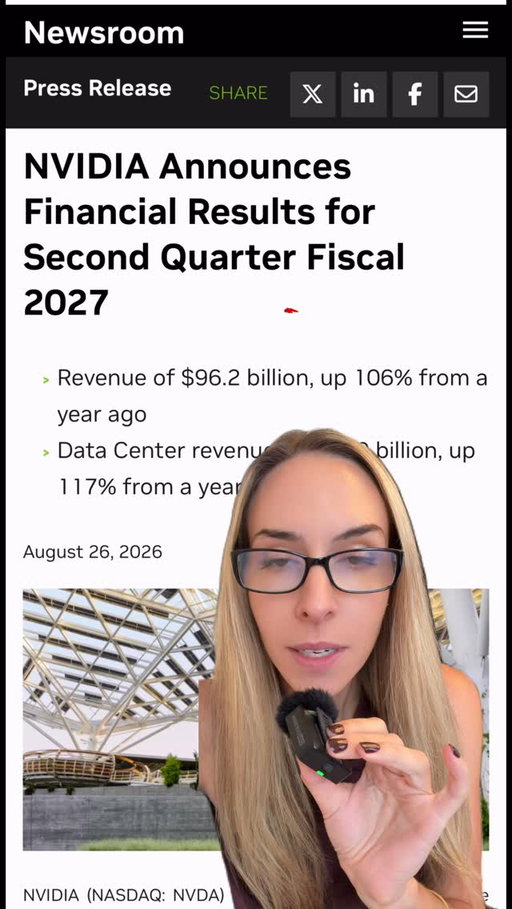
Who exactly makes AI chips? It’s not why you think 👀.

1.27M
3.87K
76
9mo ago
thewallstreetskinny
A private equity firm invests $100 today and gets $200 out in 3 years. What is the IRR?
Mental math only. NO Calculator or Excel.
Hint: Use Rule of 72.
.
.
.
.
The actual answer is 26%. The number you get using the rule of 72 is 24%. But the more interesting question is:
1. HOW do we get the answer?
2. WHY would you use the rule of 72 vs. Excel or a financial calculator?
3. What the heck IS the rule of 72 anyway?
In investment banking and private equity interviews, the notorious “Paper LBO” is a common way firms test candidates’ technical capabilities.
In the paper LBO, the interviewer will give you (the candidate) limited information about a company and ask you to calculate the sponsor’s return — or IRR — using just a pen and paper.
This isn’t easy given you typically NEED Excel or a financial calculator to do time value of money math, and you won’t have access to either.
And that is where the RULE OF 72 comes in.
The rule of 72 is a calculation that estimates the number of years it takes to double your money at a specified rate of return. In other words: if an investor achieves a 10% IRR, they’d double their money in 72 / 10 or 7 years.
Now this doesn’t seem helpful for a paper LBO because we aren’t solving for the doubling time — we’re solving for the return or IRR! We need to use algebra to convert the equation.
If 72 / IRR = years to double, then 72 / years to double = IRR.
So we take 72 / 3 years = 24 (so 24%), which is pretty darn close to the actual IRR you’d get using a financial calculator or Excel: 26%.
There is also the rule of 114/115, which you use if you triple your investment and 144 if you quadruple it.
So, knowing that…what is the IRR if your equity grows from $100 to $300 in 5 years? Let us know in the comments.

1.16M
20.2K
24
10mo ago
thewallstreetskinny
You're telling me we're supposed to believe there's a show about 6 friends in Manhattan in the 90s/00s and not a single one of them works in finance?
Even Monica's apartment is more believable...

1.14M
47.0K
312
6mo ago
thewallstreetskinny
Check your portfolio...and your boyfriend's underwear drawer 👀
#economics #wallstreet #investmentbanking

1.10M
14.0K
366
1w ago
thewallstreetskinny
In case you missed it, there’s been turmoil in AI stocks, sparked by concern over Coreweave’s debt. We have a full deep dive on our Substack. Comment SUBSTACK and we’ll DM you the link.
A few things I couldn’t fit in the video time limit of 3 min:
1. The advance rate, meaning how much neoclouds can borrow relative to the amount of money they need to spend on Capex (to buy chips and equipment) can get QUITE high, in some cases 90-95%+ depending on the credit of the “off-taker”, so from Meta for example.
2. Asset backed financing and project financing (one of the groups I worked in at Morgan Stanley) isn’t new. What is unique about these GPU backed financings are the much shorter contract length; in the power world you often see power purchase agreements of 15-20 years and assets that have a much longer useful life (think a gas turbine). In a power deal, the debt is shorter than the PPA, and the PPA is shorter than the asset’s life, which leaves a long tail. Here the loan, the contract, and the asset useful life are much closer in length, so there is a shorter tail behind the debt.
Now in fairness to the neoclouds, after the off-taker's contracts end the same GPUs can be rented on an hourly basis at higher rates (at least right now) because demand for compute is so high.
While Coreweave does have other types of debt, this structure accounts for over half and funded much of its massive growth over the past few years. They also have a decent amount of convertible debt, which is typically utilized by higher risk companies.
However, the trigger for the recent sell off was the CORPORATE bond yields blew out to 15% (tweeted about by Chamath Palihapitiya on X to which Elon responded “yikes”). That set off renewed concern about their level of debt and rising rates since if lenders can’t pay their debt, the equity goes to $0.
3. But finally what surprised me was that on the other side, so if you look at the OFFTAKERS, like Meta or Anthropic’s balance sheet, “take or pay” agreements to buy the compute do not show up as a liability on the balance sheet, rather just shown as a footnote!!

1.06M
14.1K
119
4mo ago
thewallstreetskinny
Drop the word "EXPERT" for our exclusive curriculum that will teach you all the technical skills needed to succeed in Wall Street's most competitive roles like Investment Banking, Sales & Trading, and Private Equity.
1.05M
23.1K
570
1mo ago
thewallstreetskinny
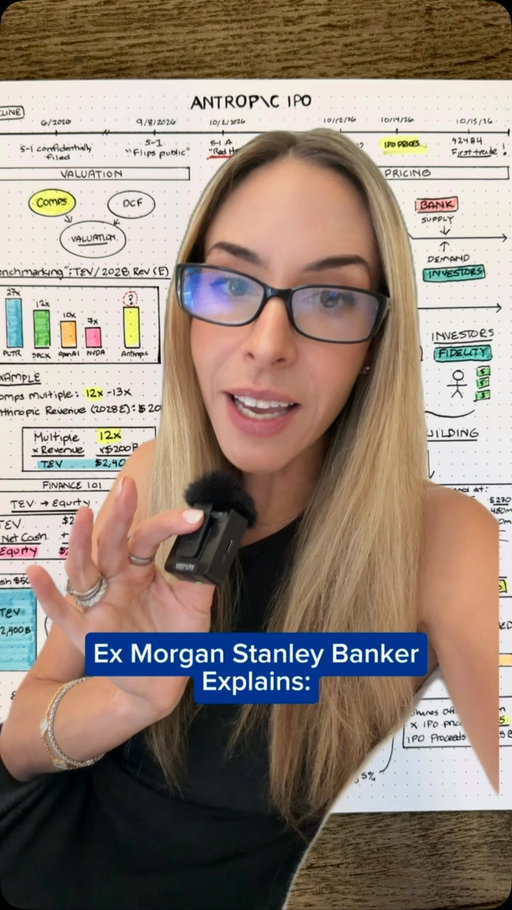
Could Anthropic IPO for a $3 Trillion Valuation?
What about $2 trillion, which is what regular finance media (the Financial Times) has reported they’re targeting.
Anthropic's IPO is expected in the next couple months, with the S-1 expected in October.
That will tell us about past profitability, net cash and debt, lease obligations. What it won't tell us is the number that actually drives valuation. Equity investors are forward looking, and for a company growing this fast, 2028 is the year investors are pricing off of. That means we typically like “consensus research estimates”, but the banks on the deal can't publish until roughly 25 days after the stock starts trading.
With that said, this exercise was an attempt to use available public info — Anthropic has shared expected 2028E revenue of $190-200bn — to get an idea of how and why numbers like $2 trillion and $3 trillion are being thrown around. I’m not saying it should be valued at 12-13x 2028E revenue (heck revenue multiples aren’t ideal) but it’s how you get to the valuations being reported. And 12-13x is in line with comps.
Now this is the problem with bubbles; you’re valuing things relative to other assets that may be also inflated.
Which is why the DCF it’s important. I personally will be looking to see what Aswath Damodaran (my favorite valuation guru) puts together when he does his analysis. But the problem with the DCF is there are SO MANY ASSUMPTIONS aka guesses. While it’s the valuation gold standard, there’s a saying: garbage in garbage out and there’s a lot of uncertainty. However, the process of building a DCF forces analysis of the business model, capex needs, projected cash flows etc.
Regardless, ultimately, pricing will be based on how investors decide to allocate capital and to them it’s: Anthropic vs. NVIDIA vs. OpenAI (post IPO) vs. other tech / AI names in their portfolio
Please note: since we created this video, we found out Anrhopic’s S-1 is likely coming out closer to October and the IPO itself will be closer to early November.
917K
4.17K
0
11mo ago
thewallstreetskinny
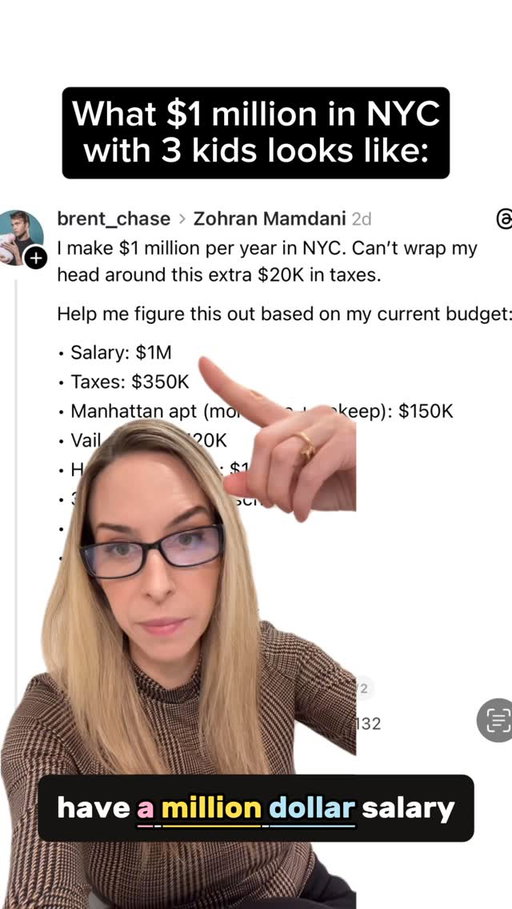
Expectations vs. Reality. Forget the Vail condo or Hamptons house, the most unaffordable luxury item on OPs original list: a properly sized unsubsidized living space, health insurance and kids.
Credit to @brent_chase for the inspiration

862K
9.85K
289
9mo ago
thewallstreetskinny
"And that, kids, is how your mom became a podcaster..."
Creative inspo credit to @the_content_machine
859K
16.3K
610
2mo ago
thewallstreetskinny
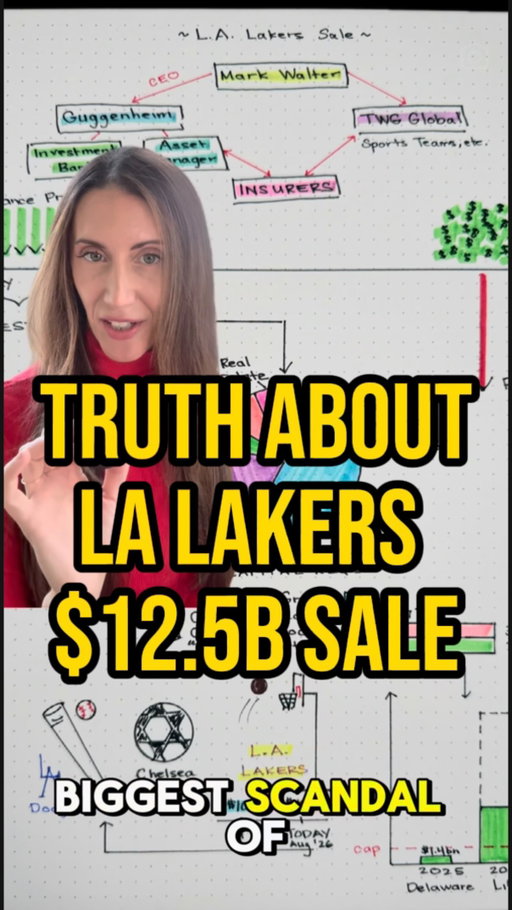
For our full deep dive down the rabbit hole on this one, comment "SUBSTACK" below for one of the wildest stories we've talked about all year.
In the meantime, the question everyone is asking now: what other sports teams and rare assets may be up for grabs, and how widespread is this kind of activity in the first place? Quite possible that this shakes up the entire foundation of private markets investing as we know it today, where all the major private capital players have either bought or built a balance sheet in similar fashion.
Special thanks to Bill Simmons and Hunterbrook, whose research helped inform our article, along with the WSJ, FT, LA Times, and Bloomberg.

768K
1.98K
69
7mo ago
thewallstreetskinny
Managing Director in the office....Summer Analyst at home?
So many senior professionals, especially women with young children (whether in finance or otherwise), feel burned out being pulled in multiple directions.
Not only are they managing the expectation of working insane hours at full tilt, but many are also coming home to the expectation of being the primary emotional caregiver.
Can it be done? Yes. Are we fortunate to be able to CHOOSE to try rather than being forced to out of necessity? Extremely.
We’ve spoken to a number of senior executives — from Avery Sheffield, who runs an equity long-short hedge fund, to Deb Smith, who runs a real estate investment bank, to Michele Trogni, who runs an insurance company — all of whom have large families and have shared plainly the ways they make it work.
But “balance” isn’t always pretty, and sometimes “work” can feel more cut and dry than the complexity of the jobs we do at home.
A great support network is a non negotiable if you want to “have it all”.
The more conversations we can have sharing resources, strategies, and solutions — rather than judgement — the better.
738K
29.5K
796
7mo ago

thewallstreetskinny
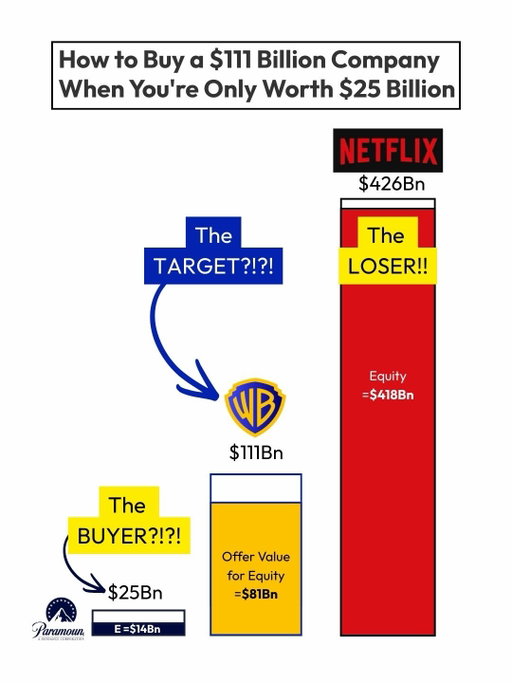
To read our entire analysis of Paramount’s winning bid for Warner Brothers, comment the word SUBSTACK below! ⬇️

721K
24.7K
1.26K
3mo ago
thewallstreetskinny
The Finance of AI 👀
Mark Andreesen (Venture Capitalist, co-founder of a16z) was on Rogan and they played this clip; Andreesen’s response was he agreed with both sides on the tax point.
I therefore went down a rabbit hole to try and understand what exactly are these companies saving as they race to build out AI. To be technically accurate, Meta’s Louisiana project is estimated to cost closer to $50 billion (grossed up to $100 billion to get an idea of the tax savings for the whole company this year as 2026 estimated CapEx is $125 -$145 billion; obviously not all their projects are in LA.)
And they still are paying SOME taxes, enough so the local community got a tax windfall during the construction phase allowing teachers to get a $50k year end bonus.
However, there is still no denying that tax payers are subsidizing a LOT right now, both at the federal and local level.
For deep dives like these in written form too, drop the word SUBSTACK below ⬇️
666K
3.58K
119
3mo ago
thewallstreetskinny
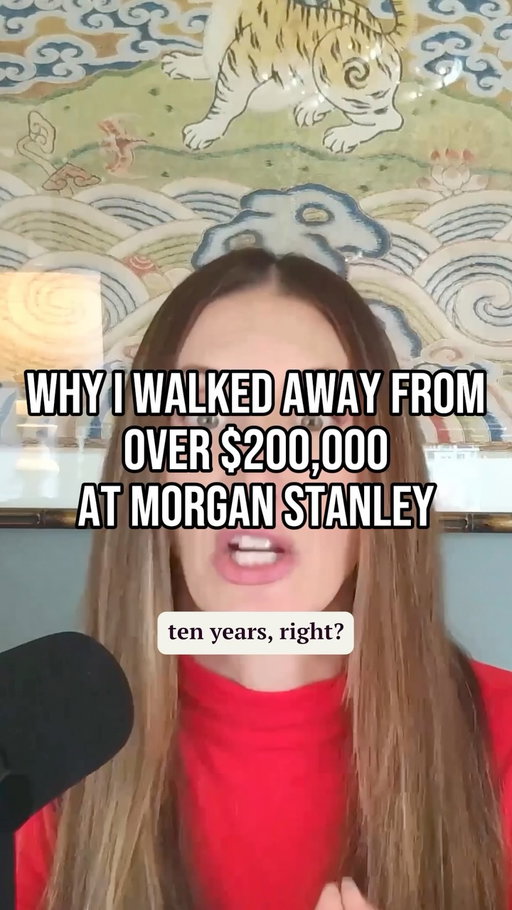
I walked away from hundreds of thousands of dollars when I left my V.P. role at Morgan Stanley. And I'm not alone --- more rising stars than ever are abdicating elite roles across the street. Why are people folding a winning hand just when their career is really taking off?
If you want to know why and what I'd do differently today TO FIX IT, comment "SUBSTACK" to read our hot take on how to escape "the V.P. Curse"!
644K
6.46K
277
2mo ago
thewallstreetskinny
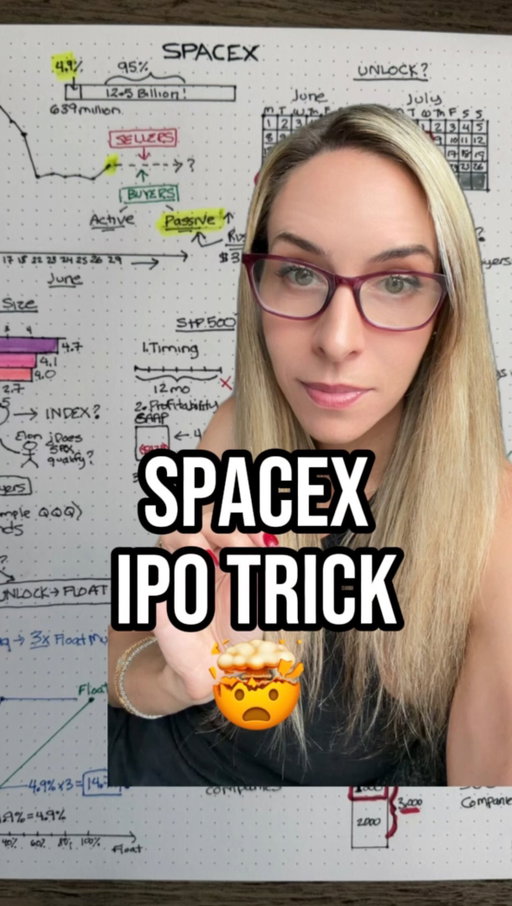
SpaceX announces earnings today, August 4th. Per the prospectus, that will trigger the first official unlock August 6th which will result 911 million shares unlocking. 2 weeks later August 21st there will be another 319 million shares that unlock just in time for Nasdaq’s quarterly rebalancing expected to come around September 18th.
Additionally, according to Yahoo finance: “Short interest in SpaceX’s stock stood at 219.3 million shares as of July 29, according to data from S3 Partners cited by Bloomberg. It works out to about 34% of all shares currently available for public trading, up sharply from 23.3 million shares”.
This means if the share price jumps on good earnings, there is a chance short sellers get squeezed, again resulting in possible forced buying ahead of the unlock which won’t until Thursday, August 6th (two days from now)..
579K
4.83K
47
11mo ago
thewallstreetskinny
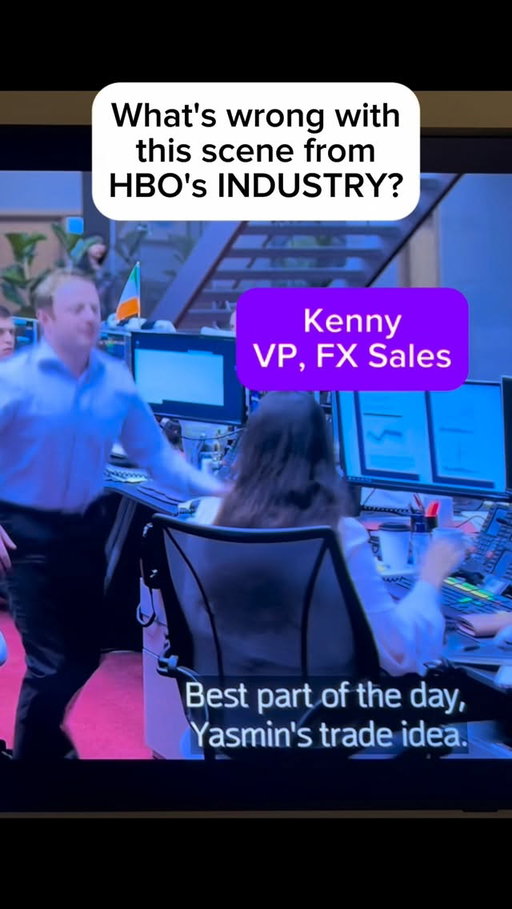
For those of you who are asking for new Industry recaps, we had to pause after s3e3 to finish our Fixed Income course, but will pick it up in December and finish season 3 before season 4 comes out next year!
#investmentbanking #forex #wallstreet #industry #womeninfinance
561K
1.71K
76
5mo ago
thewallstreetskinny
Which is riskier to own: a 10-year US Treasury with a 2.00% coupon, or an otherwise identical 10-year US Treasury with a 4.00% coupon?
********
The answer: the bond with the 2.00% coupon. Why? Well, let's make the example even more extreme. Which is riskier to own, a bond with a 0% coupon that pays you NO interest prior to maturity, when you get all of your money back? Or a bond that pays you something in the interim? You can breathe a little easier knowing you're getting some of your investment back earlier, right?
Remember, with US Treasuries, we're talking about a bond that theoretically is free of default risk, so the risk profile we are talking about is "duration" risk. It's a bond's sensitivity to a change in interest rates, what we call "DV01": the present value TODAY of a 1 basis point change in rates over the entire life of a bond. All else being equal, a bond with a lower coupon will have a higher DV01, and is therefore "riskier" to own because you will make (or lose) more money with each incremental change in rates.
Want to master concepts like these like a practitioner? Check out our exclusive Fixed Income curriculum --- it's what you need to be prepared for your summer internship, your full time job, and the next level up in your Wall Street career.
The Wall Street Skinny (@thewallstreetskinny) Instagram Stats & Analytics
The Wall Street Skinny (@thewallstreetskinny) has 520K Instagram followers with a 1.13% engagement rate over the past 12 months. Across 330 posts, The Wall Street Skinny received 755K total likes and 62.9M impressions, averaging 2.29K likes per post. This page tracks The Wall Street Skinny's performance metrics, top content, and engagement trends — updated daily. To benchmark @thewallstreetskinny against other accounts, use Socialpruf's Instagram competitor analysis tool.
The Wall Street Skinny (@thewallstreetskinny) Instagram Analytics FAQ
How many Instagram followers does The Wall Street Skinny have?+
The Wall Street Skinny (@thewallstreetskinny) has 520K Instagram followers as of October 2026.
What is The Wall Street Skinny's Instagram engagement rate?+
The Wall Street Skinny's Instagram engagement rate is 1.13% over the last 12 months, based on 330 posts.
How many likes does The Wall Street Skinny get on Instagram?+
The Wall Street Skinny received 755K total likes across 330 posts in the last 12 months, averaging 2.29K likes per post.
How many Instagram impressions does The Wall Street Skinny get?+
The Wall Street Skinny's Instagram content generated 62.9M total impressions over the last 12 months.
Can I compare The Wall Street Skinny with other Instagram accounts?+
Yes. Add @thewallstreetskinny to a competitor set with Socialpruf's Instagram competitor analysis tool and benchmark it side by side with any other public accounts on views, engagement rate and follower growth, with history back to each account's first post.