NewGet @benzinga's full report

instagram analytics
Similar Accounts:
instagram analytics
Similar Accounts:
followers
251K
impressions
11.6M
likes
370K
comments
47.1K
posts
2.23K
engagement
1.28%
emv
$383K
Average per post
5.21K
Key Metrics
Impressions
monthly
Distributions
Content
1.45M
58.0K
9.27K
7mo ago

benzinga
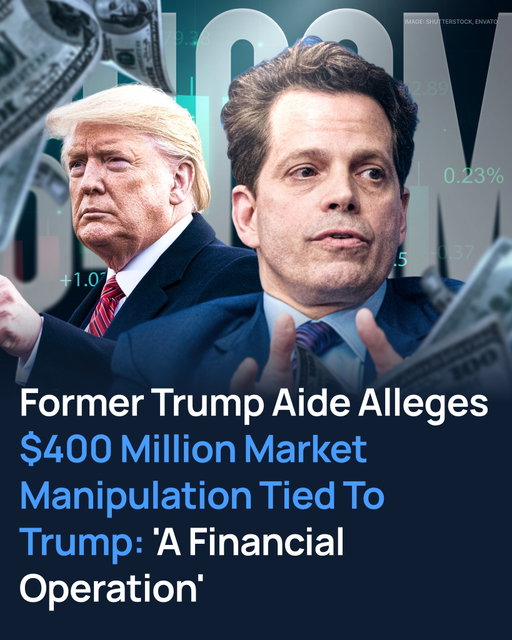
Skybridge Capital co-founder and former White House Communications Director Anthony Scaramucci alleged Friday that President Donald Trump‘s administration orchestrated a massive insider trading scheme tied to geopolitical announcements that yielded up to $400 million in illicit profits.
The $400 Million Strike Moratorium
In a recent video statement on X, Scaramucci detailed highly suspicious trading activity occurring just one hour before Trump announced a five-day moratorium on Iran strikes.
According to Scaramucci, insiders purchased $1.5 billion in notional S&P E-mini futures contracts. This was about four to six times the normal market volume. This took place alongside a simultaneous purchase of $192 million in crude oil futures.
“They made between $300 and $400 million dollars off those trades,” Scaramucci claimed. He further alleged that Trump fabricated a phone call with an Iranian official to justify the market-moving moratorium, noting that Iranian authorities denied the conversation ever took place.
“These people are making hundreds upon hundreds of millions of dollars trading on information that only exists inside the most powerful office in the world,” Scaramucci said. “This isn’t politics anymore. This is a financial operation running out of the White House.”
568K
9.65K
135
2w ago

benzinga
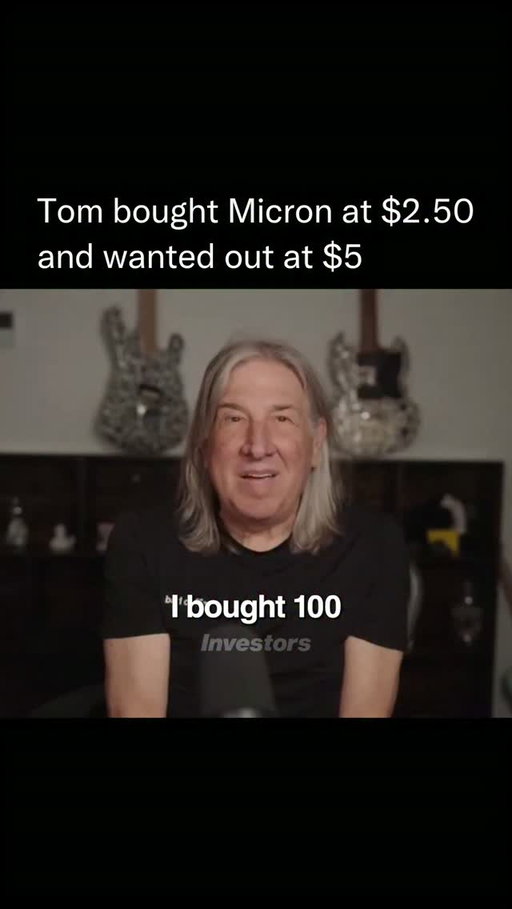
Tom Sosnoff recalls buying more than 100,000 shares of Micron Technology (MU), starting at $5.50 and continuing to buy as the price fell to around $2.50. At the time, he believed the company might go out of business but considered the potential loss manageable.
When Micron rebounded to $5, he couldn't wait to sell his shares. Looking back, he questioned whether he had overlooked a much larger long term opportunity, while also recognizing that he may have held too much of the stock.
His experience highlights the tension between managing risk and staying invested for potential future gains. A low price can create an opportunity, but deciding how much to own and when to exit requires careful judgment.
Credit: Adam Mesh Presents: The Drift Network
474K
18.9K
3.40K
4mo ago
benzinga
Most parents hope their children will grow up to be successful.
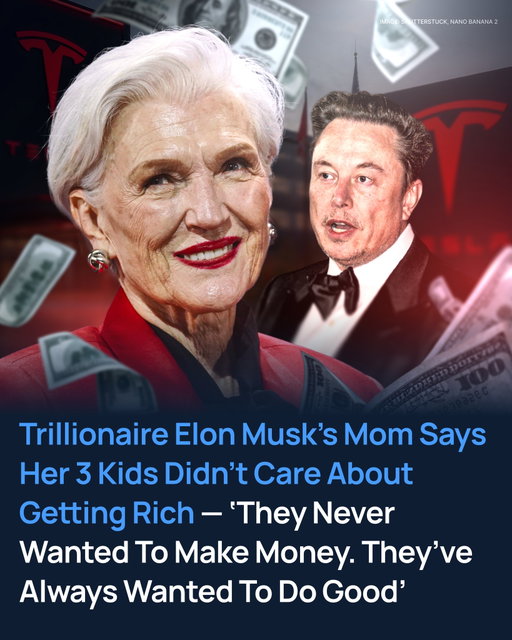
But Maye Musk says her children were never focused on getting rich.
Speaking at the 1 Billion Followers Summit in Dubai, the mother of Elon, Kimbal and Tosca Musk said she never heard her kids talk about wanting money — even though each of them eventually built highly successful businesses.
“They’ve never wanted to make money. They’ve always wanted to do good,” Maye said.
After her divorce, Maye raised her children while building careers as both a dietitian and model. The family moved across nine cities in three countries, often relying on one another to get through difficult periods.
She said Elon was her “encyclopedia” and tech expert, Kimbal helped cook for the family, and Tosca would answer the phone.
From a young age, Maye encouraged independence. When her children chose career paths that did not come with easy financial support or free tuition opportunities, she let them make their own decisions. They took out student loans, graduated with debt and paid it off themselves.
Her approach was simple: let them follow their own path and help where she could.
Maye says the common thread between all three was not money. It was solving problems.
Kimbal went on to build businesses around sustainable food systems. Tosca founded Passionflix, focused on female-led romance films. Elon pursued electric vehicles, energy, satellites, communications and space.
According to Maye, Elon’s biggest ideas were never just about building companies. She says he believed satellites could help people stranded in forests or in the middle of oceans — long before Starlink became widely known.
For Maye, the lesson is clear: her children did not start with a plan to become wealthy.
They started with a desire to build something useful.
And the success followed.
#MayeMusk #ElonMusk #KimbalMusk #ToscaMusk #Tesla #SpaceX #Starlink
243K
9.71K
67
10mo ago
benzinga
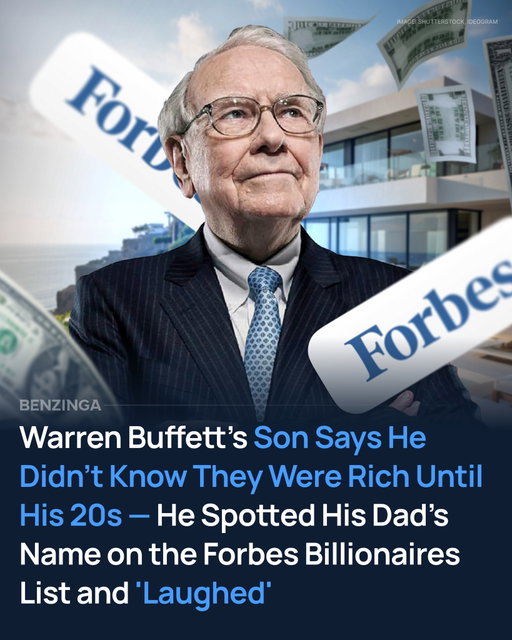
Peter Buffett grew up in what felt like an ordinary middle-class home. No private jets. No mansions. No constant reminders that his father, Warren Buffett, was one of the wealthiest people in the world.
He says he didn’t truly realize the scale of their wealth until his 20s. The moment came when he saw his dad’s name on the Forbes billionaire list and mentioned it to his mom. They laughed, because nothing about their daily life felt different.
Warren Buffett explained that this was intentional. The kids went to public school. They rode the bus. The family stayed in the same Omaha house Warren bought in 1958 instead of upgrading to something flashy.
He said the goal was simple. Live the life they actually wanted, not the lifestyle people expected. There was no pressure to show off wealth, and no reason for the kids to feel special because of money.
Warren even worked out of a small room at home for years with no staff. He believed that keeping life grounded would help his children develop their own identities.
So when Peter finally realized how rich they were, nothing really changed. Their values were already set.
Today, Warren Buffett still lives in that Omaha house. And his approach to wealth remains the same: success is measured by the life you live, not the image you project.
224K
8.97K
256
5mo ago
benzinga
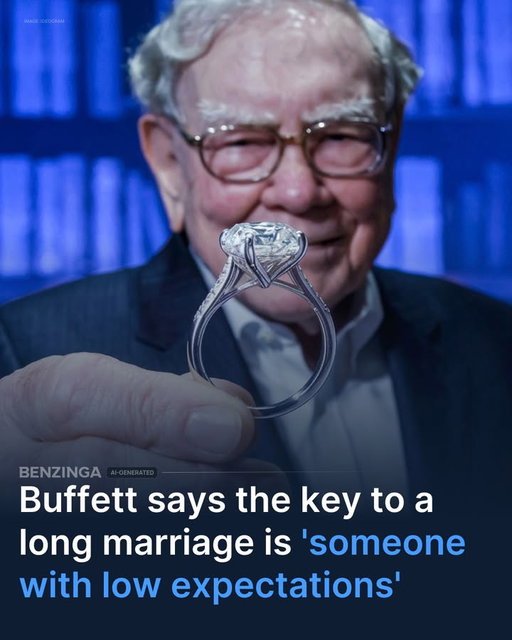
Warren Buffett once joked, “If you want a marriage to last, look for someone with low expectations.” On the surface, it’s classic Buffett humor - but it also reflects his life philosophy: manage expectations, reduce risk, and play the long game.
ㅤ
Buffett spent over 50 years married to Susan Buffett, and after her passing, married Astrid Menks - Susan’s close friend. He credits both women for shaping his life: “Susie put me together, and Astrid keeps me together.”
ㅤ
Their unconventional story teaches an important lesson: relationships evolve, and what matters is having partners who understand, support, and ground you. Buffett’s approach to love mirrors his approach to investing - choose wisely, focus on long-term value, and don’t expect perfection.
ㅤ
He once said, “The most important decision you’ll ever make is who you marry,” urging people to surround themselves with those who bring out their best. Low expectations, in this context, isn't about settling - it’s about staying realistic, adaptable, and committed when life takes unexpected turns.
184K
7.36K
125
10mo ago
benzinga
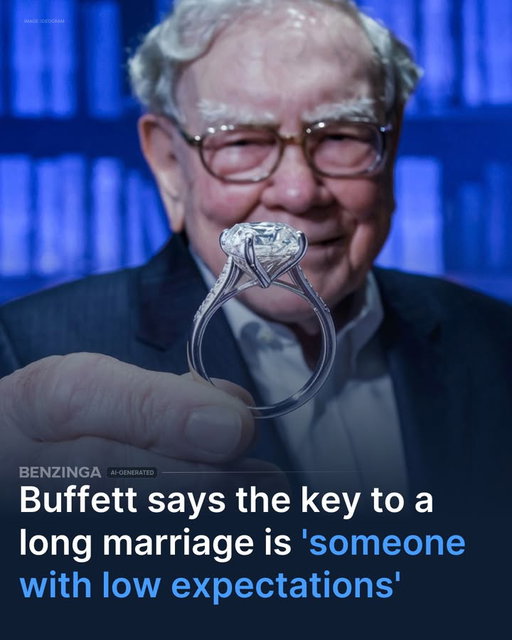
Warren Buffett once joked, “If you want a marriage to last, look for someone with low expectations.” On the surface, it’s classic Buffett humor - but it also reflects his life philosophy: manage expectations, reduce risk, and play the long game.
ㅤ
Buffett spent over 50 years married to Susan Buffett, and after her passing, married Astrid Menks - Susan’s close friend. He credits both women for shaping his life: “Susie put me together, and Astrid keeps me together.”
ㅤ
Their unconventional story teaches an important lesson: relationships evolve, and what matters is having partners who understand, support, and ground you. Buffett’s approach to love mirrors his approach to investing - choose wisely, focus on long-term value, and don’t expect perfection.
ㅤ
He once said, “The most important decision you’ll ever make is who you marry,” urging people to surround themselves with those who bring out their best. Low expectations, in this context, isn't about settling - it’s about staying realistic, adaptable, and committed when life takes unexpected turns.
170K
6.80K
117
10mo ago
benzinga
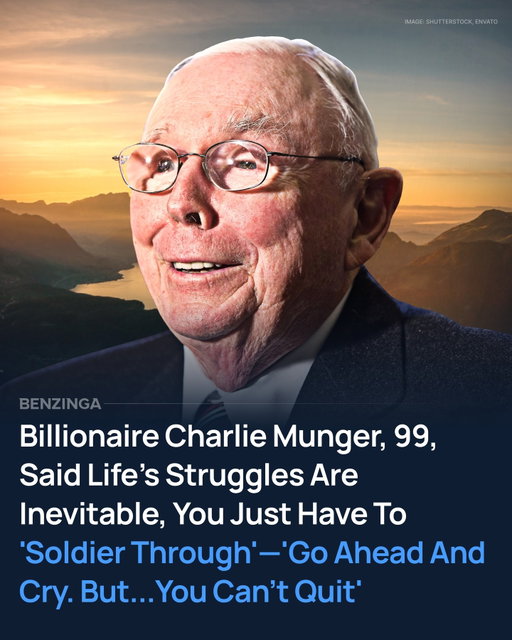
Charlie Munger never pretended life was fair or easy. In his final interview, recorded just weeks before his death at 99, the longtime Berkshire Hathaway vice chairman said hardship is unavoidable and quitting is not an option.
ㅤ
Munger described what he called “soldiering through,” a mindset grounded in realism rather than optimism. He said there are moments when pain cannot be fixed or reversed, and the only choice left is to keep moving forward.
ㅤ
He made it clear that perseverance does not mean suppressing emotion. Munger said crying is part of the process and can be necessary, but stopping altogether is not. Feeling the pain, in his view, is allowed, while giving up is not.
ㅤ
When asked if he had lived that philosophy himself, Munger pointed to the death of his first child. His son Teddy died of leukemia at age nine in 1955, a time when the disease was universally fatal.
ㅤ
Munger said he cried constantly but understood there was nothing he could do to change the outcome. What sustained him was recognizing that progress would eventually spare others from the same loss.
ㅤ
He later took comfort in watching medical advances push childhood leukemia cure rates above 90 percent. To Munger, that progress reflected the strength of civilization and humanity’s ability to endure suffering and improve over time.
ㅤ
Even after nearly a century marked by personal loss, health challenges, and setbacks, Munger remained optimistic about long term human progress. His message was simple and unsentimental. You can grieve, you can struggle, but you cannot quit.
151K
6.02K
86
9mo ago
benzinga
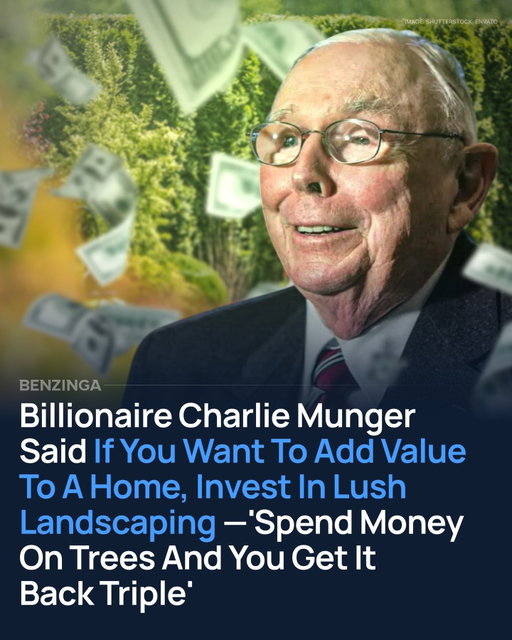
Charlie Munger believed one of the best ways to increase a home’s value isn’t through kitchen upgrades or bathroom remodels but through landscaping. “You spend money on trees, and you get it back triple,” he once said.
ㅤ
In the 1960s, Munger partnered on real estate projects that turned a $100,000 investment into $1.4 million.
ㅤ
One key lesson from those deals was simple: lush landscaping sells. Buyers were drawn to homes with well-kept yards, and curb appeal often sealed the deal before anyone stepped inside.
ㅤ
Munger considered skimping on landscaping a mistake. He believed a beautiful yard made a powerful first impression and signaled care and quality to potential buyers.
ㅤ
Studies support his view, showing landscaping can boost home value by as much as 30 percent.
ㅤ
At a recent shareholder meeting, Warren Buffett shared how much Munger enjoyed real estate and landscaping well into his later years.
ㅤ
His message was clear—planting trees can pay off in a big way.
88.8K
3.55K
463
7mo ago
benzinga
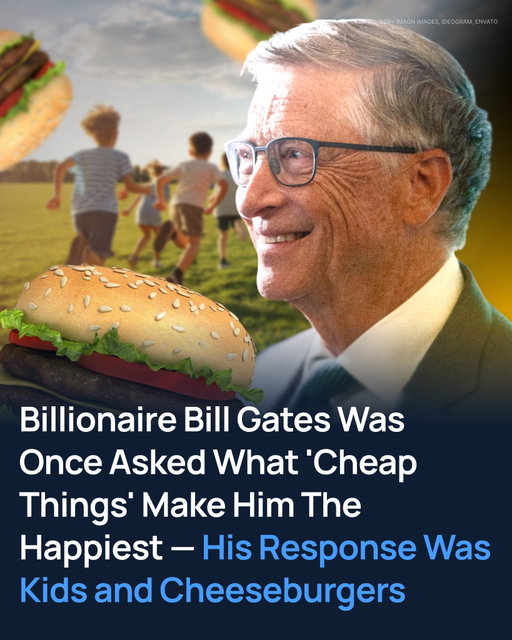
There's something oddly comforting about the idea that one of the richest men alive might be happiest doing the same thing as everyone else: unwrapping a slightly greasy cheeseburger and calling it a day. No gold flakes, no private chef, just a cheap burger and a smile. At least, that's the image.
Back in a 2013 Reddit AMA, Microsoft co-founder Bill Gates was asked what "cheap things" still brought him the most pleasure. His answer was simple: "Kids. Cheap cheeseburgers. Open Course Ware courses…"
When another user joked about where he was finding "cheap kids," Gates replied, "The stork." It was quick, harmless humor, the kind that made a billionaire sound like someone who still appreciated the basics.
More than a decade later, the cheeseburger part of that answer hasn't budged. In a Gates Notes blog post from 2024, Gates wrote, "Cheeseburgers are my favorite food. But I wish they weren't, given the impact they have on the environment." Even with billions at his disposal and investments in alternative proteins, the preference stayed stubbornly ordinary.
It's an image that sticks. A billionaire with access to anything in the world still choosing something that costs less than a movie ticket. It plays well, and it's easy to see why. The message is simple: happiness doesn't have to be expensive.
https://www.benzinga.com/personal-finance/management/26/04/51642370/billionaire-bill-gates-was-once-asked-what-cheap-things-make-him-the-happiest-his-response-was-kids-and-cheeseburgers
82.7K
3.31K
4
11mo ago
benzinga
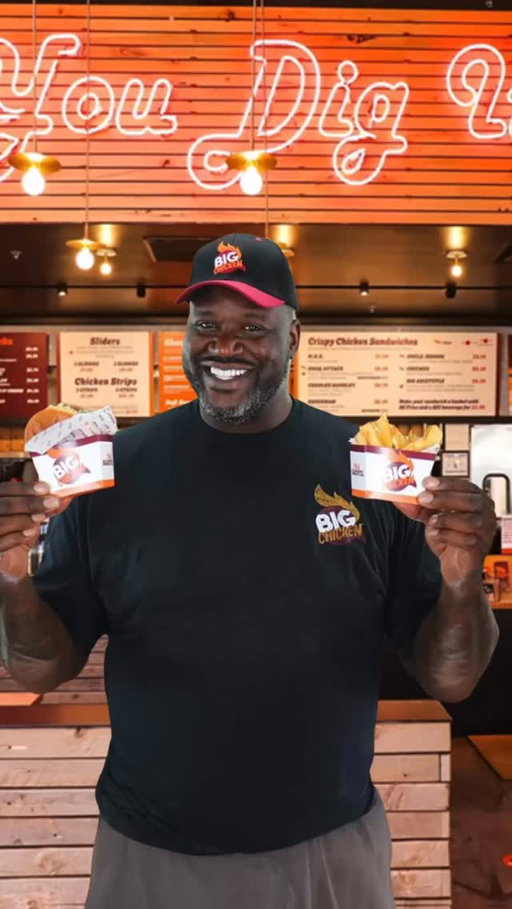
Cashier Checks Shaq’s $100… at Shaq’s Restaurant
80.0K
3.20K
234
11mo ago
benzinga
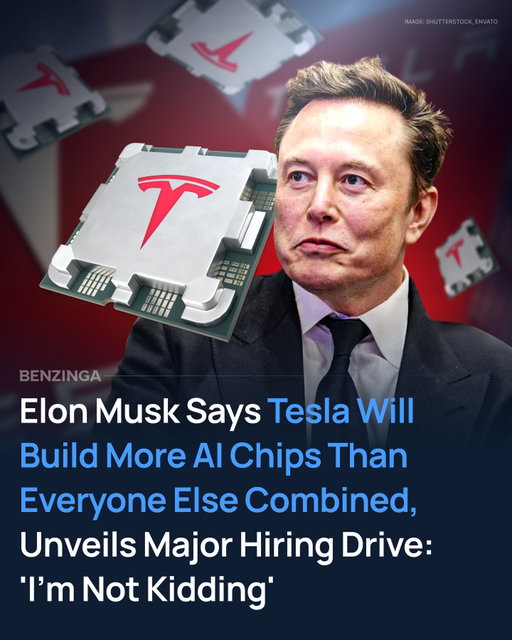
Elon Musk said Tesla plans to build AI chips at volumes surpassing every competitor combined as the company launches a sweeping recruitment push for top-tier chip designers.
Over the weekend, Musk said on X, formerly Twitter, that Tesla had an advanced in-house AI chip and board engineering team “for many years.”
He continued saying that the group has already designed and deployed “several million” chips across its vehicles and data centers. These chips underpin Tesla’s lead in real-world AI and autonomous driving.
Musk noted that Tesla is currently shipping the fourth version of its AI chip, known as AI4, while preparing to finalize AI5 and beginning early work on AI6. The company’s long-term target, he said, is to bring a new chip design into volume production every 12 months.
He added that Tesla ultimately expects to produce more AI chips than the entire rest of the industry, writing, “We expect to build chips at higher volumes ultimately than all other AI chips combined. Read that sentence again, as I’m not kidding.”
71.1K
2.84K
1.45K
4mo ago
benzinga
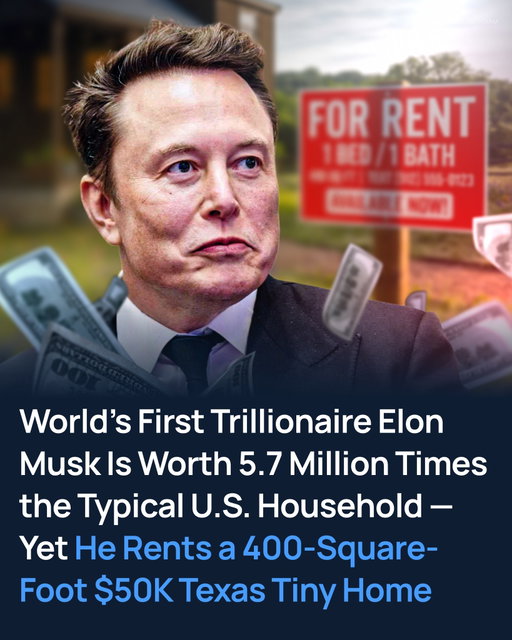
A trillion dollars can buy a lot of houses.
Just don’t tell Elon Musk.
The SpaceX founder reportedly crossed a milestone once thought unimaginable when his net worth topped $1 trillion, making him the first verified trillionaire in modern history.
Depending on the estimate, Musk’s fortune now sits somewhere between roughly $1.1 trillion and $1.4 trillion.
To put that in perspective, the median U.S. household’s net worth is about $192,900, according to Federal Reserve data.
At roughly $1.1 trillion, Musk would be worth about 5.7 million times that amount.
And yet, despite that scale of wealth, Musk’s primary residence has reportedly been a modest home near SpaceX’s Starbase facility in Boca Chica, Texas.
“My primary home is literally a ~$50k house in Boca Chica / Starbase that I rent from SpaceX,” Musk wrote on X in 2021. “It’s kinda awesome though.”
Most billionaire stories involve bigger homes, mega-yachts and luxury purchases.
Musk went the opposite way.
After saying in 2020 that he planned to sell “almost all physical possessions,” he unloaded several California properties and shifted more of his life toward Texas, where SpaceX’s Starbase became central to the company’s Mars ambitions.
For Musk, proximity to the mission may matter more than luxury.
Most of his fortune is not sitting in a bank account. It comes from ownership stakes in companies like SpaceX, Tesla, xAI, Neuralink and The Boring Company.
As those businesses rise in value, his net worth rises with them.
If they fall, hundreds of billions can disappear on paper.
That’s the strange reality of extreme wealth: the number can be enormous, but much of it exists through ownership, not cash.
The irony isn’t that the world’s richest person rents a small house.
It’s that a trillion dollars isn’t built by spending it.
It’s built by owning pieces of things that grow.
62.7K
2.51K
139
11mo ago
benzinga
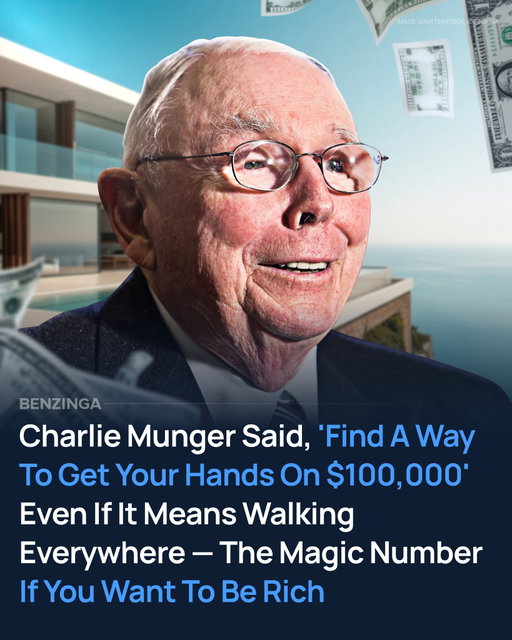
Charlie Munger believed wealth isn’t built through shortcuts, but by clearing key thresholds. His most famous benchmark was the first $100,000. In the 1990s, he bluntly said, “The first $100,000 is a b****, but you gotta do it,” emphasizing how hard — and critical — that initial accumulation is.
Munger argued that once you reach that level, momentum and compounding begin to work in your favor. Until then, progress feels slow and constrained. That’s why he stressed extreme discipline early on, even saying he didn’t care how someone did it, as long as they found a way to reach that first milestone.
Adjusted for inflation, $100,000 then is roughly $200,000 today, but the principle remains the same: the first meaningful pool of capital is the hardest to build, and everything afterward becomes easier. As Munger later put it, “You only have to get rich once.”
Before becoming Warren Buffett’s longtime partner, Munger built wealth through real estate and law, valuing cash flow, patience, and long-term thinking. That mindset still applies today, with real estate remaining a common path for building early financial momentum — even without buying property outright.
61.4K
2.45K
898
4mo ago
benzinga
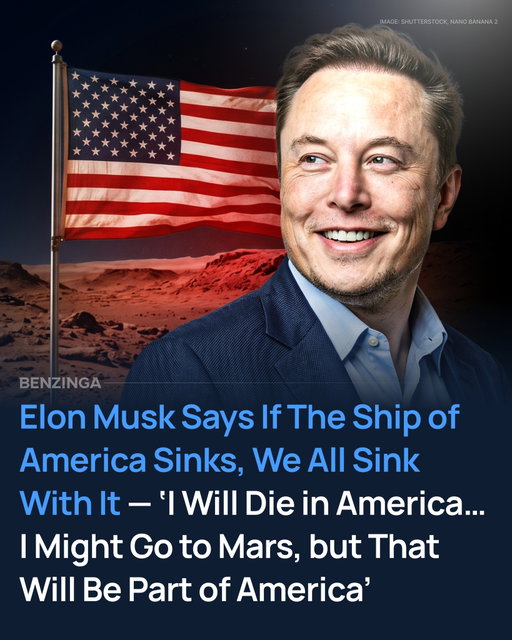
Elon Musk compared America to a ship carrying everyone, from workers and entrepreneurs to investors and billionaires. Speaking at a Wisconsin town hall in 2025, he said that if “the ship of America sinks,” everyone sinks with it.
Musk’s point was that no company or investor is fully protected if the country’s economic foundation weakens. Businesses can expand globally and investors can diversify, but America’s long-term stability still affects the broader economy.
His comment about possibly going to Mars was more of a punchline than the main message. Musk said he would die in America and joked that even if he went to Mars, it would still be “part of America.”
The article also notes that SpaceX’s near-term focus is not only Mars, but first building a self-sustaining city on the Moon. Musk has said the Moon allows for faster testing, launches and development before attempting a permanent Mars settlement.
Beyond rockets, Musk has increasingly focused on the infrastructure needed for future technologies, especially AI. The article points to companies building AI data centers as part of the larger opportunity created by rising demand for computing power.
The broader takeaway is that Musk sees America’s competitiveness as practical, not just political. Whether people are building companies, launching rockets or investing in new technology, they all depend on the same economic base staying strong.
60.1K
2.40K
89
11mo ago
benzinga
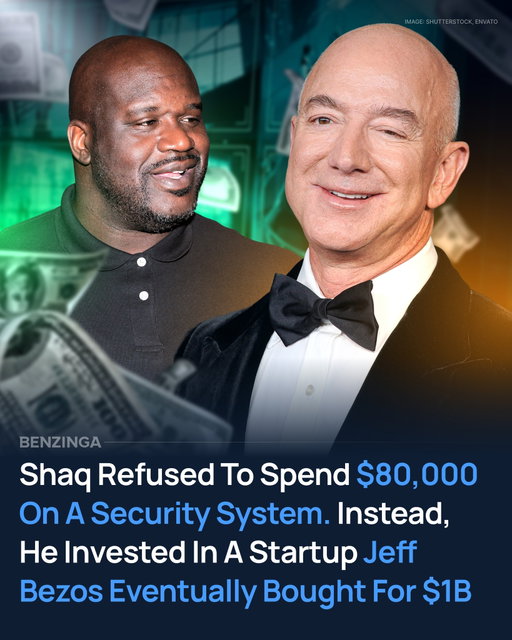
Shaquille O’Neal says one of his smartest investments started with refusing to overspend on home security. Despite his wealth, Shaq thought an eighty thousand dollar quote for a professional system was unnecessary and looked for a better option.
Instead, he bought a Ring camera from Best Buy and installed it himself. While traveling in China, he realized he could speak to someone standing at his front door in Atlanta through the app. That moment convinced him the product was something most people had not yet discovered.
Shaq decided to track down Ring’s founders at a tech conference. He approached them with a direct pitch, saying he wanted to invest in the company and help promote the product. The founders agreed and brought him in as an early investor.
A few years later, Amazon acquired Ring for one billion dollars under Jeff Bezos. Shaq has never disclosed how much he made from the deal, but he confirmed he invested early and benefited from the sale.
He later explained that Ring aligned with his investment philosophy. Shaq prefers backing products that are affordable, practical, and genuinely useful for everyday people, rather than luxury items designed only for the wealthy.
That mindset has guided several of his best investments. In 1999, Shaq invested two hundred fifty thousand dollars in Google after being introduced to the company by venture capitalist Ron Conway. He admitted he largely forgot about the investment until it became enormous.
Shaq also invested early in Lyft, Vitaminwater, and other consumer focused brands. His approach blends curiosity, personal use, and a focus on value, showing how practical decisions can turn into life changing opportunities.
Unlock our premium newsletters for free - just DM or comment the word “news.”
57.1K
2.28K
297
10mo ago
benzinga
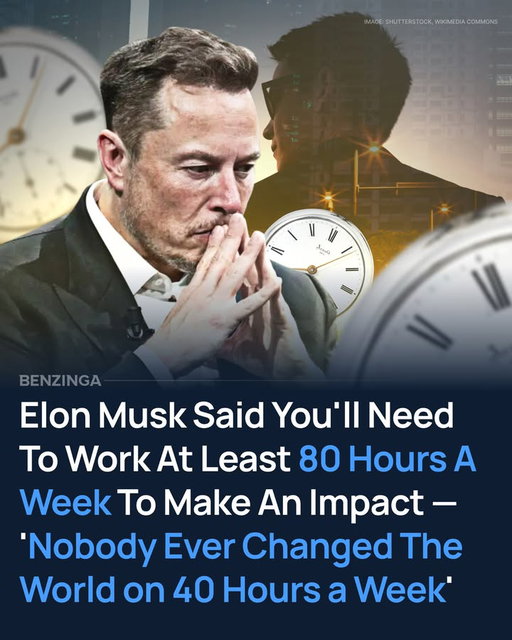
If you're clocking out at 5 p.m. and wondering why you haven't changed the world yet, Elon Musk has an answer: you're not working enough hours.
ㅤ
"There are way easier places to work, but nobody ever changed the world on 40 hours a week," Musk wrote on X in 2018.
ㅤ
When asked what the magic number is, he didn't hesitate. "Varies per person, but about 80 sustained, peaking above 100 at times. Pain level increases exponentially above 80."
ㅤ
For Musk, grueling work hours aren't just a recommendation—they're a way of life. Known for pulling all-nighters on Tesla's factory floor and reportedly sleeping in his office at X's headquarters, Musk has long preached the idea that innovation requires sacrifice.
52.8K
1.19K
18
2mo ago
benzinga
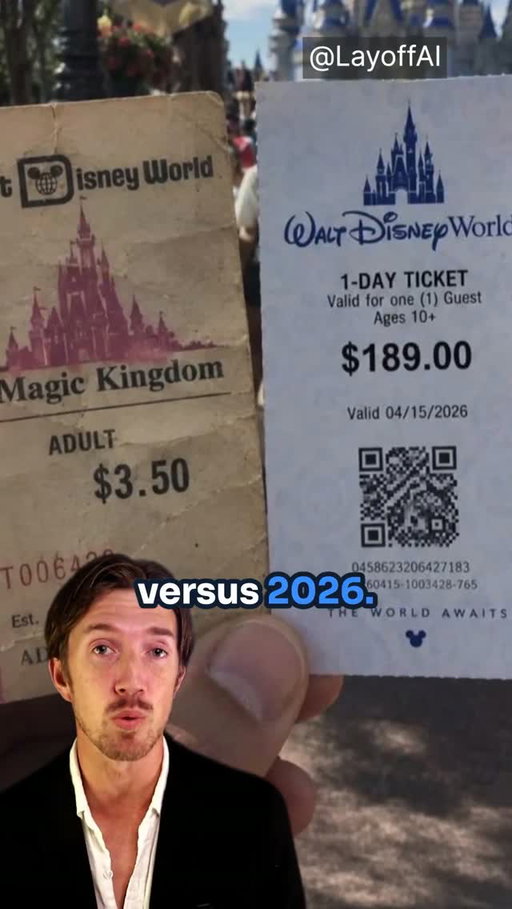
A 1971 Disney ticket cost $3.50. A 2026 ticket runs $189. But once you factor in what that old ticket actually included, the real inflation story is different than it looks.
ㅤ
Video contains content from X users: @LayoffAI, @ManufacturingIntelliect, @themepark101. $DIS.
ㅤ
#Disney #DisneyWorld #Inflation #MagicKingdom #ThenVsNow
50.0K
2.00K
54
5mo ago
benzinga
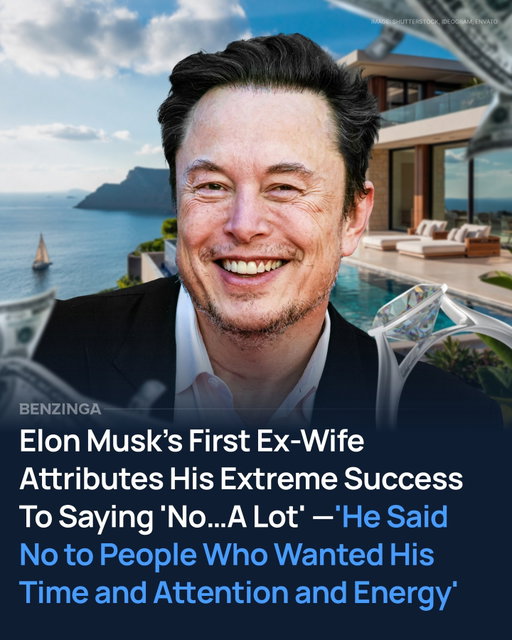
Elon Musk’s first ex-wife, Justine Musk, once said that one of the biggest drivers of his success was his willingness to say no.
ㅤ
In a TEDx talk, she explained that before the world knew him as a billionaire entrepreneur, she saw how relentlessly he worked while guarding his time and energy.
ㅤ
She noticed he said no to distractions, to unnecessary obligations, and to people who wanted constant access to him. Those boundaries, she argued, protected his focus so he could channel everything toward his goals.
ㅤ
Justine framed every no as something deeper. Behind it was what she called the “Deep Yes” — a clear understanding of what matters most and where your life should be headed.
ㅤ
But she also admitted she lost her own sense of direction over time. She spent years shrinking herself, prioritizing other people’s expectations, and living in what she described as a supporting role instead of her own story.
ㅤ
The wake-up call came when she realized that without a strong inner yes, it becomes impossible to set boundaries at all. You cannot protect what you want if you no longer know what you want.
ㅤ
Her message is not just about Elon Musk’s discipline. It is about reclaiming agency, protecting your attention, and learning that sometimes saying no is the only way to fully say yes to yourself.
47.8K
1.91K
81
11mo ago
benzinga
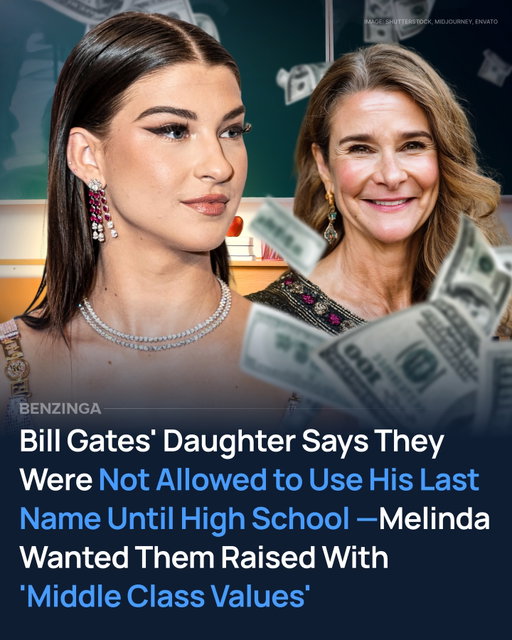
Phoebe Gates says she didn’t use her father’s last name until high school. Her parents wanted her and her siblings to grow up without the instant attention that comes with being a Gates.
She explained on her podcast that using Melinda French Gates’ maiden name helped her make friends in a genuine way. Most classmates had no idea she was tied to one of the world’s most famous families.
Melinda has said this was intentional. She had seen how wealthy kids could struggle with entitlement and wanted her children raised with the middle class values she grew up with.
That meant keeping a low profile at school. Bill even avoided dropping the kids off at first so they could blend in before anyone made the connection.
Each child was allowed to choose how to use the family name later. Phoebe switched to Gates in high school. Her sister adopted the name earlier, while her brother kept French through graduation.
The goal wasn’t secrecy. It was giving the kids room to form their own identities before the world attached assumptions to them.
Melinda has said she wanted them to be known for who they were, not for their last name. The approach gave them a childhood that felt more grounded despite their unusual circumstances.
46.2K
1.85K
167
4mo ago
benzinga
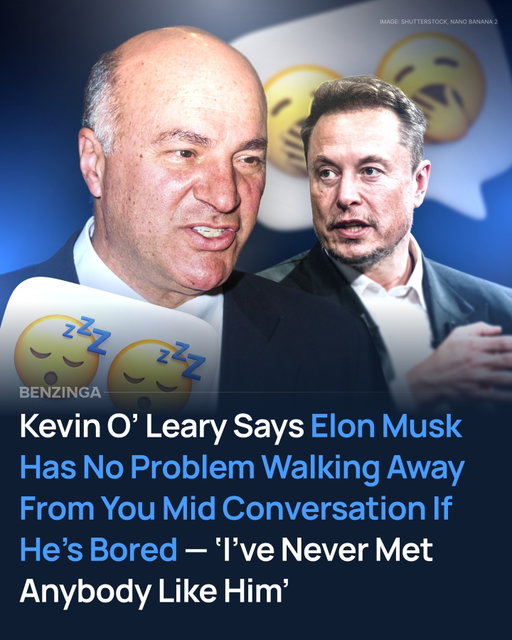
Kevin O’Leary says Elon Musk has one of the most extreme focus filters he has ever seen. According to O’Leary, Musk does not waste time on conversations that are not useful, urgent or moving an idea forward.
ㅤ
In a 2025 video posted on X, O’Leary described Musk as “100% signal” with almost no tolerance for noise. He said Musk may even walk away mid-conversation if someone is boring him or wasting his time.
ㅤ
O’Leary framed this less as rudeness and more as a founder’s survival skill. In his view, Musk protects his time because every unnecessary meeting or distracted conversation can slow down progress at companies like Tesla, SpaceX, Neuralink, xAI and The Boring Company.
ㅤ
He compared Musk’s focus to Steve Jobs, saying Jobs was intense but still had some “noise” in his day. Musk, O’Leary argued, is in his own category because of how quickly he separates what matters from what does not.
ㅤ
The article also connects Musk’s mindset to the larger technology race, especially in AI and infrastructure. As AI grows, companies building data centers, chips and computing systems could become just as important as the software everyone talks about.
ㅤ
The broader lesson is not that everyone should copy Musk’s blunt style. It is that founders, investors and builders have limited time, and knowing what deserves attention can be a major advantage.
Benzinga | Finance, Investing, & Stock Market News (@benzinga) Instagram Stats & Analytics
Benzinga | Finance, Investing, & Stock Market News (@benzinga) has 251K Instagram followers with a 1.28% engagement rate over the past 12 months. Across 2.23K posts, Benzinga | Finance, Investing, & Stock Market News received 370K total likes and 11.6M impressions, averaging 166 likes per post. This page tracks Benzinga | Finance, Investing, & Stock Market News's performance metrics, top content, and engagement trends — updated daily. To benchmark @benzinga against other accounts, use Socialpruf's Instagram competitor analysis tool.
Benzinga | Finance, Investing, & Stock Market News (@benzinga) Instagram Analytics FAQ
How many Instagram followers does Benzinga | Finance, Investing, & Stock Market News have?+
Benzinga | Finance, Investing, & Stock Market News (@benzinga) has 251K Instagram followers as of November 2026.
What is Benzinga | Finance, Investing, & Stock Market News's Instagram engagement rate?+
Benzinga | Finance, Investing, & Stock Market News's Instagram engagement rate is 1.28% over the last 12 months, based on 2.23K posts.
How many likes does Benzinga | Finance, Investing, & Stock Market News get on Instagram?+
Benzinga | Finance, Investing, & Stock Market News received 370K total likes across 2.23K posts in the last 12 months, averaging 166 likes per post.
How many Instagram impressions does Benzinga | Finance, Investing, & Stock Market News get?+
Benzinga | Finance, Investing, & Stock Market News's Instagram content generated 11.6M total impressions over the last 12 months.
Can I compare Benzinga | Finance, Investing, & Stock Market News with other Instagram accounts?+
Yes. Add @benzinga to a competitor set with Socialpruf's Instagram competitor analysis tool and benchmark it side by side with any other public accounts on views, engagement rate and follower growth, with history back to each account's first post.