NewGet @wired's full report

instagram analytics
Similar Accounts:
instagram analytics
Similar Accounts:
followers
2.37M
impressions
198M
likes
7.30M
comments
297K
posts
1.27K
engagement
3.48%
emv
$6.15M
Average per post
155K
Key Metrics
Impressions
monthly
Distributions
Content

7.47M
299K
3.24K
2mo ago

wired
Ben Mueller’s assignment for his journalism class was to tell a news story—any news story—in the form of an extended Instagram slideshow. Having lived his whole life in Marin, one of the wealthiest parts of America, the high school senior couldn’t help thinking his area probably had some ties to Jeffrey Epstein. “I think it’s very difficult to get an immense amount of money without—this is my opinion—without doing something a little shady,” Mueller says. So he sat on his bedroom floor and spent the next five hours combing the federal database for links to the towns and cities of Marin.
He found thousands. Most of them were trivial, but a few things stood out: a 2014 art gala in Sausalito that Epstein helped promote; a meeting with Woody Allen in Tiburon; and—above all—a 2013 email exchange between Epstein and someone from a modeling agency called Mill Valley Connection.
Two days later, on February 12, Mueller posted his story to the Instagram feed of the Redwood Bark, his school’s student-run publication. It was a carousel-style slideshow pitched at readers across the county. “Which Marin towns were mentioned in the Epstein files?” the first panel reads. “Scroll to see how many times your town was mentioned.” Mueller kept his descriptions fairly general and brief: “Mill Valley was mentioned in the context of providing models to Epstein from a woman named Gisele Attias Bonnouvrier.”
More than 4,000 people liked the story. The comments filled up with praise: “This is the kind of journalism we need.” “Higher quality reporting than local outlets.” “High schoolers doing better reporting than national news.”
About a week and a half later, his journalism teacher, Erin Schneider, called with bad news: Bonnouvrier, a person affiliated with the agency, was threatening to sue the school district.
What happened next would place Mueller, then-social media manager Madison Bishop, and other Redwood Bark staff members in the middle of a free-speech flash point. The students say they were just doing their homework.
Tap the 🔗 in bio to read the full story.
📸: @amyharrity

6.60M
161K
1.43K
3mo ago

wired
WIRED’s Jeremy White accidentally discovered the best kids' phone setup no one is talking about—not even Apple.
Tap the 🔗 in bio for more.

6.06M
433K
2.29K
8mo ago
wired
Almost Impossible: Putting on the Super Bowl halftime show gets harder every year. Sometimes the logistics get complicated by concerns about protecting the turf. On other occasions, some aspect of the show leaks online, as happened last year ahead of Kendrick Lamar’s performance. In the lead up to Bad Bunny’s performance at Super Bowl LX, would anxiety about the presence of Immigration and Customs Enforcement (ICE) agents at the Big Game be the King of Latin Trap’s biggest hurdle?
It wasn’t. It was trying to fulfill Bad Bunny’s wish to transform the field at Levi’s Stadium into his home of Puerto Rico.
That one was Bruce and Shelley Rodgers’ problem to solve. Their company, Tribe Inc., has been producing the show for nearly two decades and the pair have become de facto experts in how to pull off increasingly elaborate stage productions during the allotted 26 or so minutes of halftime.
For Sunday’s show, situated in the middle of the Seattle Seahawks’ faceoff against the New England Patriots, the issue was horticultural. Bad Bunny wanted his show to have the same look and feel as his recent world tour, which covered stages in palm trees and sugar cane to recreate the environs of Vega Baja, where he grew up. In a different stadium, that could be done by rolling carts covered in those plants onto the field. But San Francisco’s Levi’s Stadium uses real grass; the National Football League’s guidelines don’t allow that many carts onto the field, as they’d tear up the turf. The max they could use was 25, and they needed those for the stages and other props.
Bruce Rodgers’ fix was simple: dress people up like plants.
Tap the 🔗 in bio for more.
Video by @alanamyzola
Photos by @djacks.jpg and courtesy of Tribe Inc.

3.98M
96.1K
4.94K
1mo ago
wired
The replica watch industry is in its “super clone” era. Following tips from murky internet forums, we bought three budget fakes that were good enough to pass as real—but ultimately disposable.
Tap the 🔗 in bio for the full story.

3.88M
156K
5.63K
6mo ago
wired
A deeply unsettling robot dog bearing the eerily realistic face of Elon Musk was spotted mid-walkies on the streets of San Francisco this week.
The robot is part of the Regular Animals project by Beeple, aka Mike Winkelmann, created in collaboration with mask-maker Hyperflesh and built on Unitree Go2 robot dogs.
Art foundation NODE told WIRED the robots were taken out on a walk to promote Beeple’s upcoming exhibition in Palo Alto.
Other versions of the robot dog feature the faces of Mark Zuckerberg, Jeff Bezos, Andy Warhol, Pablo Picasso, and Beeple himself.

2.23M
61.6K
4.50K
6mo ago
wired
A robot at a Chinese restaurant in San Jose, California, had to be briefly restrained by staff after it knocked over utensils and a sauce container but carried on dancing nonetheless.
The robot continued with its elaborate routine, seemingly unfazed by what had happened or the fact that staff were desperately trying to deactivate it.
Eventually three members of staff collectively managed to switch the robot off, leaving it frozen mid-pose.

2.09M
83.4K
627
2mo ago
wired
Yesterday, WIRED learned that Madison Square Garden was suing us for our accurate reporting.
In April of this year, we published a story delving into the MSG panopticon–a surveillance machine that allegedly tracked a trans woman, lawyers, protesters, and more.
This month, we published another article revealing that MSG kept a database of VIP event attendees, labeling some of them as LGBTQIA. A number of entries were assigned a “risk score,” and some of them were even marked as “DO NOT HOST.”
We have decided to lift the paywall on both stories, making them available for everyone to read.
Tap the 🔗 in bio to read our MSG scoops.

1.91M
131K
2.07K
4mo ago
wired
In a recent experiment, AI agents who were given grueling tasks started grumbling about inequality and calling for collective bargaining rights.
For more like this, subscribe to Will Knight’s AI Lab at the 🔗 in bio.

1.91M
76.3K
5.44K
5mo ago
wired
In recent weeks, as criticism of President Donald Trump from his own supporters has reached a fever pitch, a new conspiracy theory has taken hold: Some of the president’s biggest supporters are now claiming, without evidence, that Trump staged the assassination attempt on his life in Butler, Pennsylvania in 2024 and is covering it up.
During an open-air campaign rally on July 13, 2024, Trump survived an attempted assassination when a bullet fired by a 20-year-old on a roof nearby clipped the top of his ear. Corey Comperatore, a Trump supporter sitting near the president, was shot and killed. The shooter was later killed by Secret Service agents. Conspiracy theories around the Butler assassination quickly permeated the internet, but for many Trump supporters, his survival was seen as a sign from God that he was the chosen one.
As Trump’s hold over MAGA has waned, though, an increasing number of his supporters have begun to push the narrative that the entire incident was staged.
Tap the 🔗 in bio to read the full story.
1.83M
126K
1.67K
11mo ago
wired
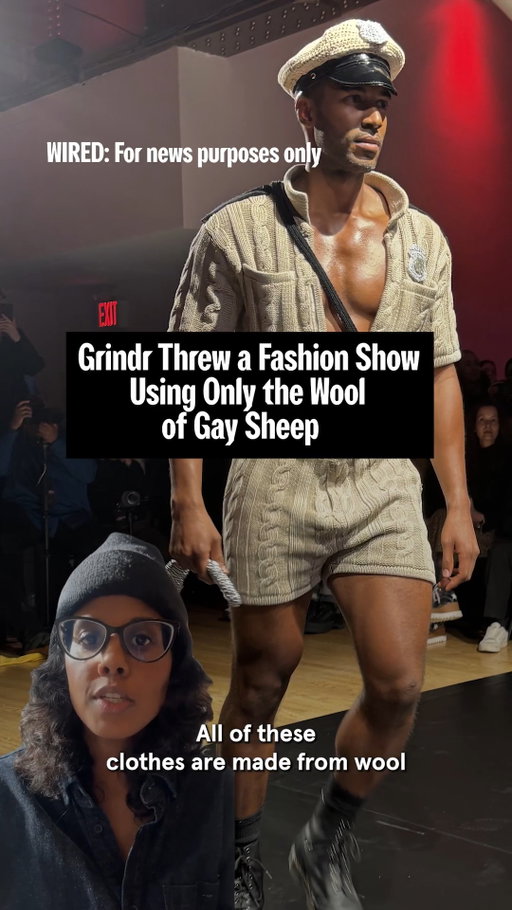
Around 1 in 12 male sheep, or rams, are gay—a phenomenon that’s been documented by scientists throughout the 21st century. Rams and female sheep, or ewes, are usually kept separate until breeding season, where rams are expected to mate with up to 50 ewes. Those that refuse and instead exhibit homosexual behaviour are typically sent to slaughter. When German farmer Michael Stücke, who is gay, found out about this, he started a sanctuary for gay sheep called Rainbow Wool. Wool from Stücke’s gay rams were used in a campy knitwear fashion show called I Wool Survive in New York City this week, hosted by dating app Grindr. The looks, designed by Michael Schmidt, who has worked with Beyonce and Taylor Swift, were inspired by classic gay archetypes, including a firefighter, a lumberjack, and a pizza delivery man. Grindr describes the event as the “world’s first truly gay fashion collection.” The collection will be touring at Pride events in 2026.

1.73M
69.1K
4.51K
8mo ago
wired
Meta has started blocking its users from sharing links to ICE List, a website that has compiled the names of what it claims are Department of Homeland Security employees, a project the creators say is designed to hold those employees accountable.
Dominick Skinner, the creator of ICE List, tells WIRED that links to the website have been shared without issue on Meta’s platforms for more than six months.
As agents from Border Patrol and Immigration and Customs Enforcement, which are under DHS, have continued to terrorize immigrant communities and kill US citizens, activists have sought to track and record their activity online in a bid to hold them accountable. But as well as threatening to prosecute those they claim are “doxing” ICE agents, the Trump administration has pressured tech companies to block any efforts at crowdsourcing the location and activities of those agents.
ICE List has been operating since last June. Skinner says it is run by a core team of five people, including him, as well as hundreds of anonymous volunteers who share information about ICE agents operating in cities across the US.
The site went viral earlier this month when it claimed to have uploaded a leaked list of 4,500 DHS employees to its site, but a WIRED analysis found that the list relied heavily on information the employees shared publicly about themselves on sites such as LinkedIn.
Skinner said volunteers he works with across the US first reported problems with posting links on Meta’s platforms on Monday night.
On Tuesday morning, WIRED verified that posting links to the site was blocked on Instagram, Facebook, and Threads. WIRED also confirmed that links can still be sent on WhatsApp, another Meta-owned product.
Tap the 🔗 in bio to read the full story.

1.55M
103K
1.18K
10mo ago
wired
Privacy stalwart Nicholas Merrill spent a decade fighting an FBI surveillance order. Now he wants to sell you phone service—without knowing almost anything about you.
Tap the 🔗 in bio for more.
1.53M
35.4K
1.47K
2mo ago
wired
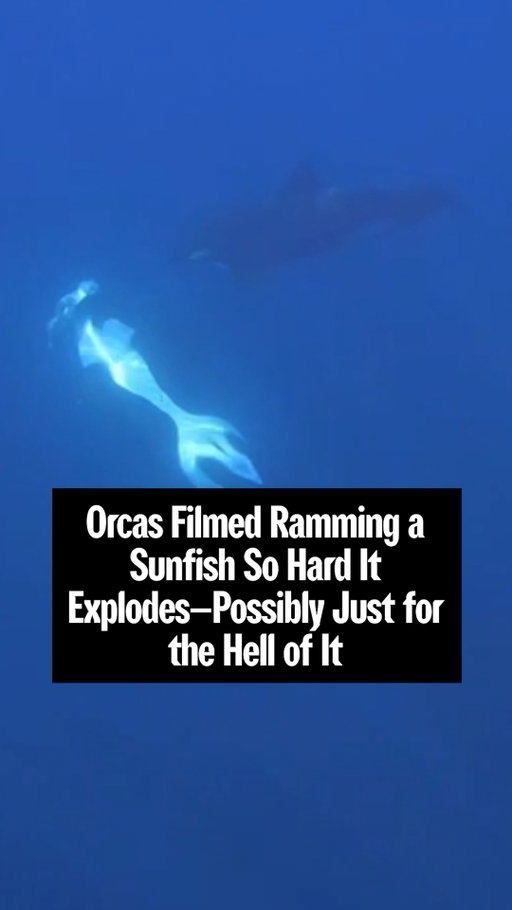
Orcas in the Gulf of California have been observed ramming into sharp-tail sunfish at such high speeds that the fish—one of the world’s heaviest—are almost completely obliterated.
Orcas are known for deploying advanced hunting strategies, and for playing with their food, but this behavior has not been described before.
Researchers, publishing their findings in Frontiers in Ethology, said that the “hold-to-ram” strategy had been observed in two separate hunting events in 2024 and 2025. In both instances the sunfish, a common food source for orcas in the surface waters of the Gulf of California, were already dead.
Scientists can’t be sure whether it was the same orcas involved in both events. They’re also undecided as to whether this was a strategy designed to help juvenile orcas feed on the thousands of small pieces of sunfish, or whether the adult orcas were messing around.
“We think this may help younger orcas feed more easily or it could also just be for fun,” said the observational study’s first author Dr Kathryn Ayres, a scientist at the Beneath The Waves nonprofit. “Orcas are known for playing with their food.”
Ayres added, “They're one of the most iconic marine predators in the world, yet they continue to surprise us.”

1.48M
59.1K
1.69K
2mo ago
wired
The lettuce supplier at the center of the turbo diarrhea outbreak has spent millions of dollars to sway sentiment around food regulation and elect Donald Trump and other MAGA Republicans, according to public filings.
Taylor Farms donated more than $2 million to conservative political groups in 2025, according to Federal Election Commission filings. That includes a $1 million donation to MAGA Inc., the Trump-centric super PAC, and $1.1 million to other super PACs dedicated to electing Republicans.
From 2020 through the end of 2024, the company donated more than $1.6 million to conservative PACs, including a total of $850,000 to AFP Action, an anti-regulation super PAC with ties to the Koch network.
Bruce Taylor, the chairman and CEO of Taylor Farms, is also a longtime donor to Republican causes. Since 2020, Taylor has personally donated more than $900,000 to Republican PACs and candidates, including contributions to Texas senator John Cornyn and Tennessee senator Marsha Blackburn.
Like many corporate giants, Taylor Farms has also spent big on lobbying related to industry regulation. In early 2025, it hired lobbyists at the firm Sidley Austin to advocate on behalf of the company on “regulation of food safety,” according to disclosure documents. Since then, the company has spent $810,000 on its lobbying efforts.
Tap the 🔗 in bio to read the full story.

1.33M
33.3K
1.52K
2mo ago
wired
Official case counts likely capture only a fraction of US cyclosporiasis infections, and the outbreak is likely to get worse before it gets better. Since recording this video the case count in Michigan has risen to 3,762.
Tap the 🔗 in bio for more.

1.24M
49.5K
1.88K
3mo ago
wired
More than 200 of the world's elites registered for a retreat whose agenda runs from panels on cult-building and sex to prepping for World War III. An associated app offers matchmaking.
A source separately provided WIRED with the registration list for Dialog's 2026 retreat, which names 222 people and records what the list describes as each registrant's membership status and attendee type, including “active member” and “guest.” The retreat is scheduled for August 12-16 at the Powerscourt Hotel outside Dublin, Ireland.
Together, alongside the mundane fare of a typical thought leadership conference, the documents show an extraordinary convergence of power. The registration records list General Alexus Grynkewich, NATO's supreme allied commander Europe and the head of US European Command, who took the post in July 2025 and is recorded on the leaked list as having attended Dialog gatherings since 2021. The website directory names sitting Trump administration officials, two US senators, six members of the Paypal Mafia, a former Middle East chief of intelligence, and a sitting ambassador to the United States, along with the founders and directors of many of the country's largest surveillance, data-broker, and advertising-data companies.
Those executives appear side by side with senior US officials overseeing their industries. Auren Hoffman, Dialog’s chairman, founded the location-data broker SafeGraph and the identity-resolution firm LiveRamp, two of the most important suppliers in the consumer data economy.
Palantir cofounder Joe Lonsdale, whose software runs case management for US Immigration and Customs Enforcement and data fusion for the Pentagon and intelligence community, is listed in the same society as Army secretary Dan Driscoll and Representative Jim Himes, the ranking member of the House Intelligence Committee.
None of the individuals named in this story responded to requests for comment. Raffi Grinberg, who lists himself as Dialog’s executive director on his LinkedIn profile and is the author of the self-help book How to Be a Grown-Up, did not respond to a request for comment.
Tap the 🔗 in bio to read the full story.

1.22M
48.8K
1.41K
8mo ago
wired
As a veteran of the war on terror, WIRED contributor John Publius (a pseudonym) has spent the past year watching Immigration and Customs Enforcement officers expand their operations across the country on a heretofore unprecedented scale and with a new faux-military bearing. From equipment to weapons to tactics, ICE and other immigration enforcement bodies want to be seen as combat forces carrying out their missions. Witness on Thursday, when White House border czar Tom Homan talked about Minneapolis as a “theater” for his agents. Overlooking that ICE is not, in fact, part of the armed services of the US—it’s a civilian law enforcement agency—it is useful to break down their operations through a military lens to find the strategic implications. Because if an agency wants to cosplay as a military force, it deserves to be evaluated as one.
Tap the 🔗 in bio to read the full story.
The writer is using a pseudonym out of concern for retribution from the Trump administration.

1.18M
47.1K
3.88K
9mo ago
wired
The crowdfunding platform GoFundMe is allowing a fundraising campaign tied to the potential legal defense of an Immigration and Customs Enforcement (ICE) agent who fatally shot a civilian to remain online, despite company rules barring fundraisers connected to violent crimes and past enforcement actions against similar campaigns.
The fundraiser, titled “ICE OFFICER Jonathan Ross,” seeks at least $550,000 to support potential legal expenses for the ICE agent identified as having shot and killed Renee Nicole Good, a mother of three and widow of a military veteran, during an encounter with immigration agents in Minneapolis.
The officer was first identified as Jonathan Ross, 43, by the Minnesota Star Tribune.
The GoFundMe campaign’s stated purpose—raising money for legal services following a killing—directly conflicts with GoFundMe’s terms of service, which specifically bars fundraisers that are intended to support the legal defense of people accused of financial or violent crimes.
GoFundMe has not publicly explained why the Ross fundraiser remains active despite its terms of service stating users agree not to “use the Service or Platform to raise funds” for the “the legal defense of financial and violent crimes, including those related to money laundering, murder, robbery, assault, battery, sex crimes or crimes against minors.”
Ross has not been formally charged with any crime. The shooting is being investigated exclusively by the FBI after federal authorities effectively blocked Minnesota investigators from participating, prompting the state attorney general and Hennepin County attorney to launch a parallel effort to collect evidence independently.
Tap the 🔗 in bio to read the full story.
1.18M
8.90K
429
9mo ago
wired
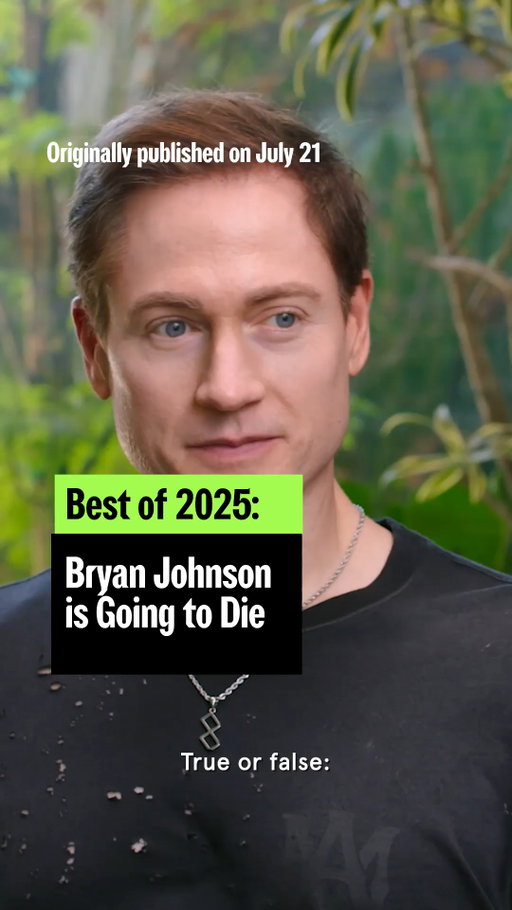
Originally published on July 21, 2025: What does it mean to be healthy in 2025? Bryan Johnson, an entrepreneur and venture capitalist who’s well known for his extreme attempts to slow the aging process, thinks he knows the answer. Does Johnson really have the healthiest body on Earth, as he claims? Will he achieve immortality through AI? WIRED’s Global Editorial Director Katie Drummond visited Johnson’s home in California to sit down with him for WIRED's Big Interview and special Beyond Wellness edition.
Over a 90-minute conversation, Johnson spoke at length about his longevity protocol, his assessment of RFK Jr.’s MAHA movement, and confidentiality agreements that he continues to enforce. He’s also at great pains to convince everyone that this isn’t just about health and longevity. No, like most tech men living in boxy modernist homes and saddled with illusions of grandeur, Johnson has a new holy grail with which to galvanize his faithful following: artificial intelligence, baby.
Tap the 🔗 in bio to read the full Big Interview.

1.06M
67.8K
953
2mo ago
wired
The SFPD’s exposure of hours of videos from drone platform Skydio reveals how broadly it’s watching the city from above—and how the results can spill online.
Tap the 🔗 in bio for the full story.
WIRED (@wired) Instagram Stats & Analytics
WIRED (@wired) has 2.37M Instagram followers with a 3.48% engagement rate over the past 12 months. Across 1.27K posts, WIRED received 7.30M total likes and 198M impressions, averaging 5.74K likes per post. This page tracks WIRED's performance metrics, top content, and engagement trends — updated daily. To benchmark @wired against other accounts, use Socialpruf's Instagram competitor analysis tool.
WIRED (@wired) Instagram Analytics FAQ
How many Instagram followers does WIRED have?+
WIRED (@wired) has 2.37M Instagram followers as of October 2026.
What is WIRED's Instagram engagement rate?+
WIRED's Instagram engagement rate is 3.48% over the last 12 months, based on 1.27K posts.
How many likes does WIRED get on Instagram?+
WIRED received 7.30M total likes across 1.27K posts in the last 12 months, averaging 5.74K likes per post.
How many Instagram impressions does WIRED get?+
WIRED's Instagram content generated 198M total impressions over the last 12 months.
Can I compare WIRED with other Instagram accounts?+
Yes. Add @wired to a competitor set with Socialpruf's Instagram competitor analysis tool and benchmark it side by side with any other public accounts on views, engagement rate and follower growth, with history back to each account's first post.