NewGet @askthedentist's full report

tiktok analytics
Similar Accounts:
tiktok analytics
Similar Accounts:
followers
250K
impressions
34.6M
likes
303K
comments
12.3K
posts
475
engagement
0.912%
emv
$784K
Average per post
72.9K
Key Metrics
Impressions
monthly
Distributions
Content
2.53M
18.4K
681
9mo ago

askthedentist
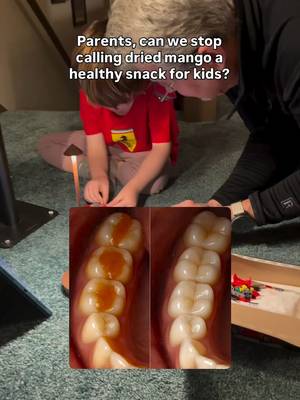
Just because it’s fruit doesn’t mean it won’t cause cavities. Dried fruit is often WORSE than candy because of how it sticks in the grooves of the molars like in this diagram. As a dentist who practiced for over 40+ years this is often the piece of advice I give that shocks parents the most. 👉For more advice like this, follow + comment NEWSLETTER - you’ll get the same advice my patients got for free, along with 115,000 others.

1.24M
4.59K
169
7mo ago
askthedentist
Here’s what most American dentists won’t tell you: cavities are a bacterial infection. Starve the bacteria, starve the disease. Xylitol does exactly that — it’s a sugar alcohol that cavity-causing bacteria can’t metabolize. They eat it, they can’t use it, they die. The countries that treat the CAUSE outperform the countries that treat the SYMPTOM. Every single time. Comment GUM and I’ll send you a link to my two favorites in my Amazon storefront 👇
1.12M
7.60K
87
7mo ago
askthedentist
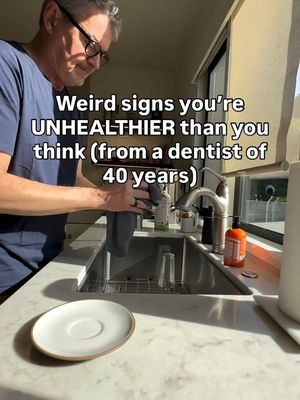
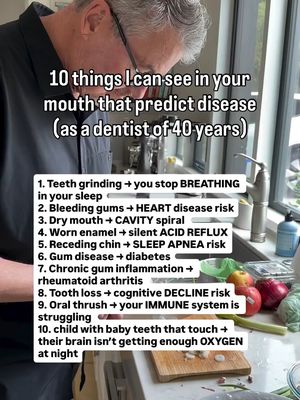
Most people think dentists just look at teeth. 10 things your dentist will see long before your doctor does: 1. Bleeding gums during pregnancy Gum disease is independently linked to preterm birth across multiple large studies. Oral bacteria enter the bloodstream and trigger systemic inflammation. The stakes are higher than most OBs realize. 2. Cracked, red corners of your mouth Angular cheilitis that won’t resolve is a clinical sign of iron, B2 or B12 deficiency — or uncontrolled diabetes. 25% of cases are nutritional. 3. Sweet or fruity breath like nail polish remover A hallmark sign of diabetic ketoacidosis. If you’re not on keto, take this seriously. 4. A smooth, shiny tongue with no texture The papillae are gone. Atrophic glossitis — a textbook sign of B12, iron, or folate deficiency. I’ve caught anemia this way more times than I can count. 5. Dry mouth every single morning Elevated blood glucose suppresses saliva. The mouth can often signal diabetes before formal diagnosis. 6. Mouth ulcers returning in the same spot A recognized oral sign of celiac disease, Crohn’s, and ulcerative colitis. Worth a GI doc conversation. 7. A white or red patch that hasn’t changed in weeks The one I would take most seriously. Leukoplakia and erythroplakia are precancerous. Painless — which is exactly why people wait too long. 8. Teeth sensitive and slightly transparent near the gum Acid erosion from silent GERD. Most reflux patients never feel heartburn. 9. Swollen glands under your jaw Lymph nodes staying swollen for weeks need evaluation. Persistent unexplained lymphadenopathy can indicate lymphoma or oral cancer. Don’t justcwrite it off as a cold. 10. Gum disease that won’t resolve no matter how well you clean Periodontitis and rheumatoid arthritis share inflammatory pathways. Ask your doctor to check your systemic inflammatory markers. Your dentist sees you twice a year. Most doctors never look in your mouth at all. Save this. Which one surprised you most?
1.10M
11.2K
217
11mo ago
askthedentist
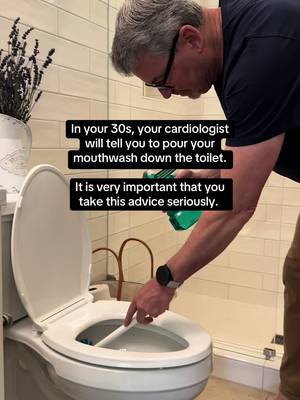
In 2019, a three-year trial looked at people who used mouthwash twice a day. The results were staggering: 49% higher risk of developing diabetes Almost double the risk of high blood pressure All from killing off bacteria in the mouth! Here’s what’s going on: Half of the nitric oxide your body makes—the molecule that keeps your blood vessels relaxed and flexible—comes from the back of your tongue. Certain oral bacteria take the nitrates from your food and turn them into nitrites, which is step one in making nitric oxide. Antibacterial mouthwash wipes them out. No bacteria → no nitric oxide → blood vessels can’t expand → blood pressure goes up. @Dr. Jeremy London, MD a board certified cardiothoracic surgeon—when asked, “if you wanted to fast track someone’s path to heart disease, the #1 killer in the world for both men and women, how would you design their day?” responded, “don’t brush your teeth and don’t floss.” I love it when medicine talks dental!
1.07M
4.89K
172
4mo ago
askthedentist
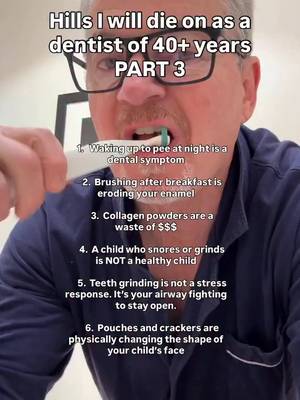
👋 If your dentist doesn’t talk to you about this stuff, message me the word“NEWSLETTER” and I’ll send you all the same advice only my patients used to get, free to your email inbox. By the way…let’s talk about that last one. The jaw develops in direct response to mechanical load. Chewing dense, fibrous foods is how the bone gets the signal to grow wide. A wide jaw means a wide airway. When kids eat a diet of soft, processed food from infancy, the jaw never gets that signal. The airway stays narrow. Then we call it “behavioral issues” and “delayed bedwetting.” Message me the word “AIRWAY” if you want to understand what that actually means for your child. -Dr. B
1.05M
16.5K
304
10mo ago
askthedentist
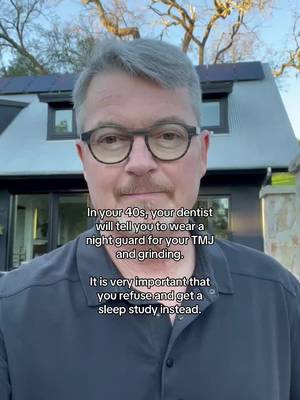
I’m a dentist and I would NEVER recommend a night guard without ruling out a sleep disorder first. Here’s what the research shows: 🔹 up to 80% of people who clench or grind at night have undiagnosed sleep-disordered breathing 🔹 Night guards don’t treat the root cause—they just protect teeth while potentially making the grinding and TMJ WORSE 🔹clenching and grinding are red flags that you can’t breathe in deep stage sleep – Dr. B If we neglect the airway, the entire body pays the price…
992K
21.8K
482
6mo ago
askthedentist
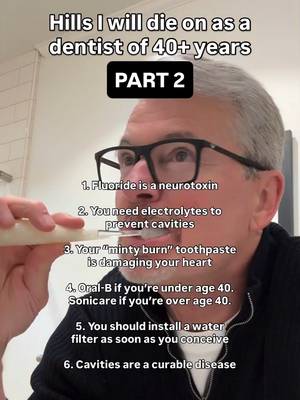
👋If your dentist doesn’t talk you about this stuff, comment “NEWSLETTER” below and I’ll send you all the same advice only my patients used to get, free to your email inbox By the way, that “minty burn” you feel from your toothpaste is damaging the healthy bacteria in your mouth that your heart relies on. Comment TOOTHPASTE for a toothpaste formulated to NOURISH those bacteria and whole body health. -Dr. B

967K
2.85K
87
7mo ago
askthedentist
If your dentist only checks for cavities, they’re missing something your gastroenterologist would want to know about. A 2024 meta-analysis of 16.6 million people found that gum disease is associated with a 21% increased risk of colorectal cancer — consistent across 19 studies. And we’re starting to understand why. An oral bacterium called Fusobacterium nucleatum, a primary driver of gum disease, has been found living inside colorectal tumors in approximately 50% of cases studied. Researchers believe it travels from the mouth through the stomach to colonize the lower gut. Your mouth may be the first place this shows up: 1. Bleeding gums — chronic bacterial inflammation now linked to colorectal cancer risk. Not just a dental problem. 2. Persistent bad breath — may signal a bacterial burden that goes well beyond your mouth. 3. Gums that stay inflamed no matter how well you brush — sustained inflammation is the mechanism researchers believe drives the connection. 4. Receding gums — years of microbial imbalance means years of elevated pathogenic bacterial exposure. 5. Heavy tartar buildup — a fortress that protects harmful bacteria from your immune system. 6. A history of aggressive gum disease — if you’ve lost teeth to periodontitis, your systemic exposure has been elevated for years. 7. Any of the above and you’re overdue for a colonoscopy — colon cancer is now the #1 cancer killer in men under 50. This screening conversation needs to happen. The mouth is the beginning of the digestive tract. What lives there doesn’t always stay there. Save this and send it to someone overdue for a colonoscopy. 👉 Follow for more secrets I’ve learned from 40 years as a dentist.
836K
4.24K
194
5mo ago
askthedentist
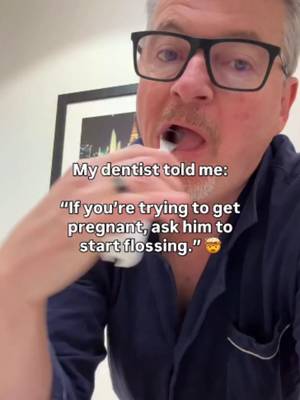
I do have regrets though, like getting braces for all three of my girls, not knowing about airway dentistry. One of my adult daughters is going through MARPE expansion right now as a result
815K
9.33K
53
3mo ago
askthedentist
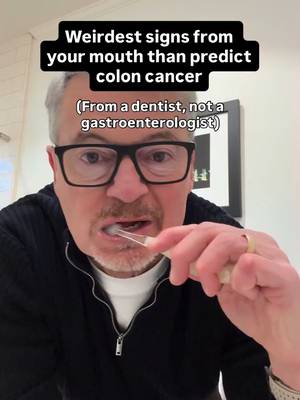
A 2025 systematic review of nine studies (1,386 men) found a significant association between periodontitis and decreased sperm motility, abnormal morphology, and increased DNA fragmentation. Sperm count and concentration were the one inconsistent area, but motility (how well they swim), shape, and DNA integrity all took hits. Those three matter enormously for conception and for a healthy pregnancy. Follow @askthedentist and message me the word NEWSLETTER for more mouth-body science from a dentist of 40 years -Dr. B
737K
3.84K
67
5mo ago
askthedentist
If your dentist only checks for cavities, they’re missing something your gastroenterologist would want to know about. A 2024 meta-analysis of 16.6 million people found that gum disease is associated with a 21% increased risk of colorectal cancer - consistent across 19 studies. And we’re starting to understand why. An oral bacterium called Fusobacterium nucleatum, a primary driver of gum disease, has been found living inside colorectal tumors in approximately 50% of cases studied. Researchers believe it travels from the mouth through the stomach to colonize the lower gut. Your mouth may be the first place this shows up: 1. Bleeding gums - chronic bacterial inflammation now linked to colorectal cancer risk. Not just a dental problem. 2. Persistent bad breath may signal a bacterial burden that goes well beyond your mouth. 3. Gums that stay inflamed no matter how well you brush - sustained inflammation is the mechanism researchers believe drives the connection. 4. Receding gums - years of microbial imbalance means years of elevated pathogenic bacterial exposure. 5. Heavy tartar buildup - a fortress that protects harmful bacteria from your immune system. 6. A history of aggressive gum disease - if you’ve lost teeth to periodontitis, your systemic exposure has been elevated for years. 7. Any of the above and you’re overdue for a colonoscopy - colon cancer is now the #1 cancer killer in men under 50. This screening conversation needs to happen. The mouth is the beginning of the digestive tract. What lives there doesn’t always stay there. Save this and send it to someone overdue for a colonoscopy. 👉 Follow for more secrets I’ve learned from 40 years as a dentist.
710K
4.86K
152
5mo ago
askthedentist
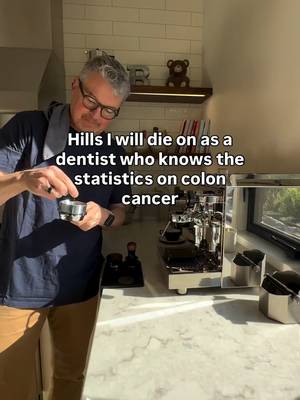
Colorectal cancer is now the #1 cause of cancer death in Americans under 50 — as of 2023. It was fifth in 1990. Every other major cancer in that age group is declining. Breast, lung, leukemia, brain — all going down. This is the only one going the wrong direction. In more than 40% of colorectal cancer cases studied, the oral bacterium found living inside the tumor was genetically identical to the strain in that same person’s saliva. The same bacterium — Fusobacterium nucleatum — survives stomach acid that kills most other oral bacteria. It navigates the full length of the digestive tract. It hides inside tumor cells. A 2024 meta-analysis of 16.6 million people across 19 studies found a 21% higher colorectal cancer risk in people with periodontal disease. Twice a year, someone examines your gum tissue in detail. They chart your pockets. They note your bleeding. Almost none of them know they may be looking at one of the earliest warning signals for colon cancer. The hill I will die on: bleeding gums are not a hygiene problem. They are a broken barrier between your oral microbiome and your bloodstream — aka a highway to the rest of your body.

702K
4.89K
110
7mo ago
askthedentist
If your dentist only checks for cavities, you’re getting half an exam. Some of the earlier warning signs of heart disease show up in your mouth before they show up in bloodwork. Save this for your next dentist appointment and ask them about… 1. Bleeding gums. Chronic periodontal inflammation raises hs-CRP, the same marker cardiologists use to assess cardiovascular risk. 2. Loose or shifting teeth — the bone loss in your jaw shares the same inflammatory pathway driving calcification in your arteries. If one is happening, check the other. 3. Gums that stay red no matter how well you brush — your immune system is stuck in overdrive. That same inflammation damages blood vessel walls. Step one of atherosclerosis. 4. Bad breath that won’t quit — can signal overgrowth of P. gingivalis, a pathogen found inside arterial plaques. This stuff travels to other body paths including the heart. 5. Scalloped tongue — a sign of sleep-disordered breathing, which is associated with heart attack, stroke, and AFib. 6. Teeth worn flat or cracking — bruxism is often your body fighting to keep a collapsing airway open. A night guard will protect your teeth but could make the grinding worse, damaging your jaw, and ignore the root cause, a sleep disorder causing wear and tear on the heart. 7. Dry mouth when you wake up — could indicate you’re mouth breathing at night, which reduces nitric oxide production and puts your cardiovascular system under stress. Oral bacteria enter your bloodstream through inflamed gums and have been found inside arterial plaques. The inflammatory pathways are the same. The association is well-established — and most dental exams still don’t screen for it. Save this and send it to someone who grinds their teeth at night. 👉Follow for more secrets I’ve learned from 40 years of dentistry.
702K
5.88K
73
7mo ago
askthedentist
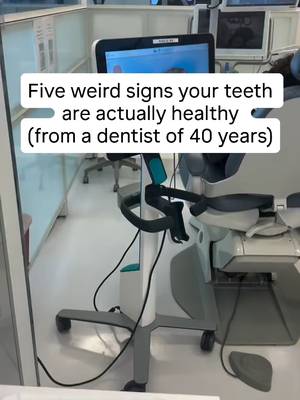
1. You still have your mamelons. Those small scalloped ridges along the edge of your front teeth are called mamelons, and they’re a sign your enamel hasn’t been ground flat. When they disappear, it’s almost always from grinding — and grinding is almost always a sleep disorder in disguise. 2. Your gums don’t bleed when you floss. I’ve heard patients say “I bleed a little, but I floss every day.” Bleeding gums are not a flossing problem. They’re an inflammation problem — and that inflammation is now directly linked to cardiovascular disease and Alzheimer’s. Healthy gums don’t bleed. 3. You wake up with your mouth closed. If your mouth is open when you sleep, your oral pH drops, your saliva dries up, and your body often responds by clenching or grinding. Nasal breathing at night is one of the most underrated things you can do for your teeth — and your sleep. Try mouth tape, and if you can’t keep it on, see a myofunctional therapist and/or ENT to help you pinpoint the root cause of why you cannot breathe through your nose — this is life changing stuff, I promise. 4. You don’t have dry mouth. Saliva is your enamel’s built-in repair system. It continuously delivers calcium and phosphate to remineralize your teeth and neutralizes acid after every meal. Dry mouth isn’t just uncomfortable — it’s how cavities happen fast, even in people who brush twice a day. 5. Your wisdom teeth had room to come in. Impacted wisdom teeth aren’t bad luck. They’re a sign that the jaw didn’t develop wide enough. And a narrow jaw doesn’t just crowd your teeth — it crowds your airway, which means your body can’t breathe fully during deep sleep. That’s a problem with consequences far beyond your mouth. Your mouth is a window into your whole body. Most dentists just aren’t trained to read it that way.

567K
11.9K
264
5mo ago
askthedentist
If you know me, you know the next time we see each other, I’m going to ask if you’ve booked that sleep study and switched to an airway dentist from @functionaldentistdirectory yet… #dentalsleepmedicine #bruxism #sleepapnea
528K
1.76K
55
7mo ago
askthedentist
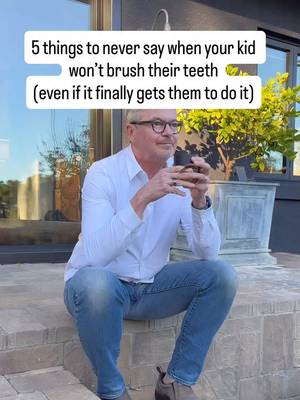
Here’s what to say instead… “Fine, skip it. Just this once.” This makes everything harder for the parent because now you’ve basically told your child that brushing time is DEBATABLE. So kids will try to debate every single time you try to brush. Not to mention, the bacteria that cause cavities now get eight hours overnight to wreak havoc.) Instead: “Two minutes and we’re done. Want to listen to your favorite song while we brush?” Kids need to know it’s a non-negotiable, like wearing seatbelts in the car. “If you don’t brush, the sugar bugs will eat your teeth.” It works tonight. But I’ve been seeing the adults it creates for 40 years — white-knuckling it in my chair at 45, still scared. Instead: “Let’s go brush away those sugar bugs.” Small shift but makes your kid the hero, not the victim. Believe me, this pays dividends into adulthood. “You need to floss every single one of your teeth.” A resistant kid with 10 seconds of real contact beats a two-minute standoff every time. Instead: Lower the bar before you lose the habit entirely. Flos just one tooth. Every night. Build from there! “Open your mouth, I’ll just do it fast.” Kids know when your heart isn’t in it—when you’re just trying to get the chore done. Instead: Let them brush first, badly. Then you “check” after. Kids love this game and love to correct adults on their “bad” brushing! Cavities are a bacterial infection. Contagious. Reversible early. Almost entirely preventable once you know what’s actually feeding them. Save this and send it to a parent who needs this.
520K
1.18K
24
4mo ago
askthedentist
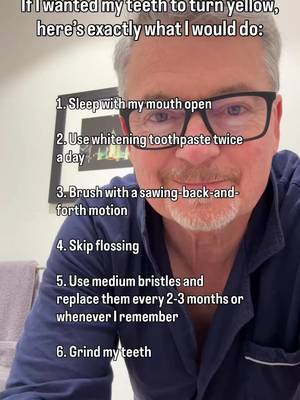
Explanation for each ⬇️ 1. Sleep with my mouth open. Saliva is like a natural mouthwash, constantly carrying staining agents away from your teeth. A dry mouth gives those agents time to sit on the surface and harden, and a chronically dry mouth ages teeth internally, yellowing the dentin from the inside …the kind of color change no whitening product can touch. 2. Use whitening toothpaste twice a day. Most whitening pastes remove stains with very abrasive ingredients that create tiny microabrasions, and that scratching makes teeth more susceptible to the foods and drinks that stain them. If your goal is whiter teeth, using whitening toothpaste every day is counterproductive. 3. Brush with a sawing motion. Sawing back and forth leaves little divots on the tooth surface, and those divots are the perfect spot for food particles and bacteria to hang out. 4. Skip flossing. Tartar buildup doesn’t go away from brushing. It has to be removed by a professional and tartar is porous, so it soaks up the color of everything you eat and drink. 5. Medium bristles, replaced whenever I remember. Stiff bristles and heavy pressure wear at the gumline, gums recede, and the root surface underneath that gets exposed is more yellow in color. 6. Grind my teeth every night. Grinding is the body’s response when you stop breathing during sleep … the motion reopens a collapsed airway, but it slowly destroys your teeth . Enamel is the white part. Wear it thin and the yellow dentin shows through. Follow for more of what 40 years of dentistry taught me, and message me the word NEWSLETTER and I’ll send you everything I’ve written on keeping teeth white without wrecking them. —Dr. B
511K
2.92K
141
7mo ago
askthedentist
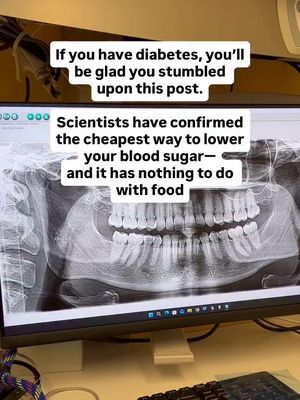
A Cochrane Review — the gold standard of medical evidence — analyzed 35 randomized controlled trials and over 3,000 patients. The finding: treating periodontal disease reduced HbA1c by nearly half a point in people with type 2 diabetes. No new medication. No dietary intervention. Just treating the infection in their mouth. Here’s why that happens… Gum disease is a chronic bacterial infection that triggers a systemic immune response — meaning your body is fighting inflammation around the clock. That constant inflammatory load directly impairs insulin signaling and disrupts your body’s ability to regulate glucose. Remove the infection. Reduce the inflammation. Improve blood sugar control. The same mechanism that connects gum disease to heart disease, Alzheimer’s risk, and preterm birth. To be clear: treating your gums is not a replacement for diabetes management. But the evidence is now strong enough that I believe every endocrinologist treating a diabetic patient should be asking: when did you last see a dentist? And every dentist treating a patient with bleeding gums should be asking: has anyone checked your blood sugar? We’ve siloed these two conditions for too long. If you have type 2 diabetes and you’ve never had a full periodontal assessment — not just a cleaning, a full assessment with pocket depth measurements — that conversation needs to happen. If your dentist isn’t talking to you about stuff like this, welcome. I’m a dentist who practiced for nearly 40 years sharing wisdom like this on my page — follow along and comment NEWSLETTER to join 126,000 people getting info like this for free. 📎 Sanz et al., Cochrane Database of Systematic Reviews, 2022. PMID: 35420698
496K
7.66K
85
3mo ago
askthedentist
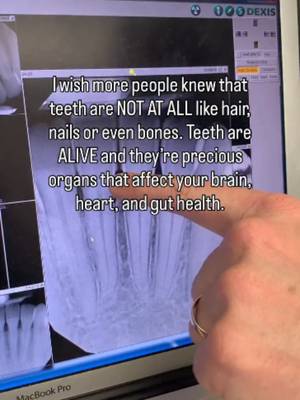
If you thought teeth were just about avoiding fillings and tricking your hygienist into thinking you floss, oh wow, do I have your next rabbit hole. Follow me and message me the word NEWSLETTER to join 200K people learning about the latest mouth-body science and what it means for your health, all for free. -Dr. B
471K
1.29K
25
5mo ago
askthedentist
Follow for more mouth-body science that might just change your life.
Dr. Mark Burhenne | Dentist (@askthedentist) TikTok Stats & Analytics
Dr. Mark Burhenne | Dentist (@askthedentist) has 250K TikTok followers with a 0.91% engagement rate over the past 12 months. Across 475 videos, Dr. Mark Burhenne | Dentist received 303K total likes and 34.6M views, averaging 639 likes per video. This page tracks Dr. Mark Burhenne | Dentist's performance metrics, top content, and engagement trends — updated daily. To benchmark @askthedentist against other accounts, use Socialpruf's TikTok competitor analysis tool.
Dr. Mark Burhenne | Dentist (@askthedentist) TikTok Analytics FAQ
How many TikTok followers does Dr. Mark Burhenne | Dentist have?+
Dr. Mark Burhenne | Dentist (@askthedentist) has 250K TikTok followers as of October 2026.
What is Dr. Mark Burhenne | Dentist's TikTok engagement rate?+
Dr. Mark Burhenne | Dentist's TikTok engagement rate is 0.91% over the last 12 months, based on 475 videos.
How many likes does Dr. Mark Burhenne | Dentist get on TikTok?+
Dr. Mark Burhenne | Dentist received 303K total likes across 475 videos in the last 12 months, averaging 639 likes per video.
How many TikTok views does Dr. Mark Burhenne | Dentist get?+
Dr. Mark Burhenne | Dentist's TikTok content generated 34.6M total views over the last 12 months.
Can I compare Dr. Mark Burhenne | Dentist with other TikTok accounts?+
Yes. Add @askthedentist to a competitor set with Socialpruf's TikTok competitor analysis tool and benchmark it side by side with any other public accounts on views, engagement rate and follower growth, with history back to each account's first post.