NewGet @theatlantic's full report

instagram analytics
Similar Accounts:
instagram analytics
Similar Accounts:
followers
2.15M
impressions
195M
likes
7.30M
comments
263K
posts
2.09K
engagement
3.01%
emv
$6.06M
Average per post
93.5K
Key Metrics
Impressions
monthly
Distributions
Content
4.56M
182K
2.48K
8mo ago

theatlantic
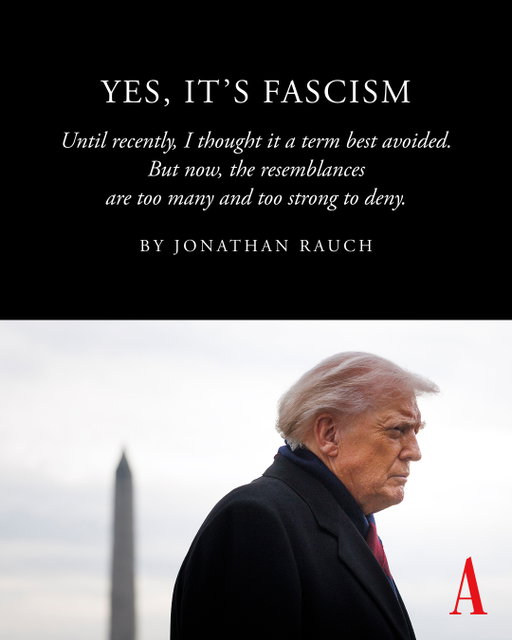
“Until recently, I resisted using the F-word to describe President Trump,” Jonathan Rauch argues. “For one thing, there were too many elements of classical fascism that didn’t seem to fit. For another, the term has been overused to the point of meaninglessness, especially by left-leaning types who call you a fascist if you oppose abortion or affirmative action. For yet another, the term is hazily defined, even by its adherents.”
But “over Trump’s past year, what originally looked like an effort to make the government his personal plaything has drifted distinctly toward doctrinal and operational fascism,” Rauch argues. “Trump’s appetite for lebensraum, his claim of unlimited power, his support for the global far right, his politicization of the justice system, his deployment of performative brutality, his ostentatious violation of rights, his creation of a national paramilitary police—all of those developments bespeak something more purposeful and sinister than run-of-the-mill greed or gangsterism.”
Fascism “is ideological, aggressive, and, at least in its early stages, revolutionary. It seeks to dominate politics, to crush resistance, and to rewrite the social contract,” Rauch writes. One can object that certain elements of classical European fascism are not found in Trumpism, but the exercise of comparing fascism’s various forms is not precise, Rauch continues: “Trump is building something new on old principles. He is showing us in real time what 21st-century American fascism looks like.”
“Recent events have brought Trump’s governing style into sharper focus. ‘Fascist’ best describes it, and reluctance to use the term has now become perverse,” Rauch continues. “That is not because of any one or two things he and his administration have done but because of the totality. Fascism is not a territory with clearly marked boundaries but a constellation of characteristics. When you view the stars together, the constellation plainly appears.”
Read more at the link in our bio.
📸: Tom Brenner / Getty
2.91M
116K
1.02K
8mo ago
theatlantic
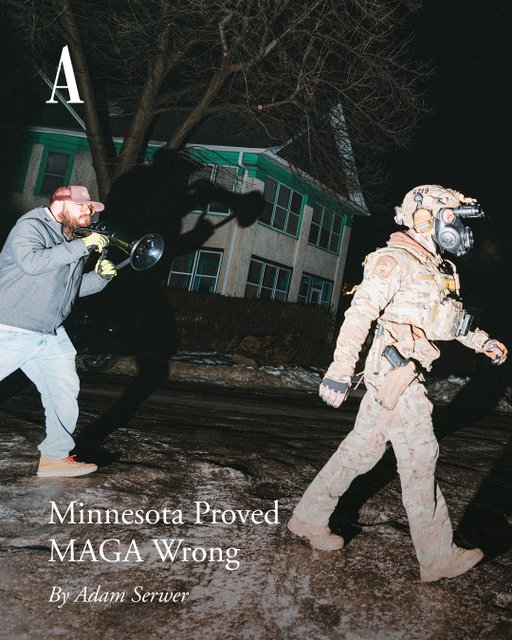
Minneapolis residents aren’t just pushing back against Trump’s crackdown—they’re undercutting MAGA’s core philosophy, Adam Serwer reports from Minneapolis.
“The federal surge into Minneapolis reflects a series of mistaken MAGA assumptions,” Serwer argues. “The first is the belief that diverse communities aren’t possible.”
Earlier this year, J. D. Vance said in a speech that “social bonds form among people who have something in common.” But this has been proved wrong in Minneapolis, Serwer writes: The vice president’s remarks “are the antithesis to the neighborism of the Twin Cities, whose people do not share the narcissism of being capable of loving only those who are exactly like them.”
“A second MAGA assumption is that the left is insincere in its values, and that principles of inclusion and unity are superficial forms of virtue signaling,” Serwer continues. Although this may be the case for some on the left, “it is not true of millions of ordinary Americans, who have poured into the streets in protest, spoken out against the administration, and, in Minnesota, resisted armed men in masks at the cost of their own life,” Serwer argues.
Third is that the “MAGA faith in liberal weakness has been paired with the conviction that real men—Trump’s men—are conversely strong,” Serwer continues. “The federal agents sent to Minnesota wear body armor and masks, and bear long guns and sidearms. But their skittishness and brutality are qualities associated with fear, not resolve. It takes far more courage to stare down the barrel of a gun while you’re armed with only a whistle and a phone than it does to point a gun at an unarmed protester.”
“No matter how many more armed men Trump sends to impose his will on the people of Minnesota, all he can do is accentuate their valor,” Serwer argues. “These agents, and the president who sent them, are no one’s heroes, no one’s saviors—just men with guns who have to hide their faces to shoot a mom in the face, and a nurse in the back.”
Read more at the link in our bio.
📸: @jackisjackwas for The Atlantic
2.74M
109K
724
6mo ago
theatlantic
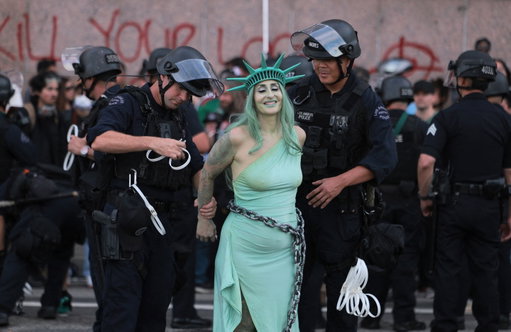
More than 3,000 marches and rallies took place yesterday in cities and towns across America during the third “No Kings” event, where millions protested against the policies and actions of President Trump and his administration.
See more photos at the link in our bio.
📸: Etienne Laurent / AFP / Getty; Kerem Yucel / AFP / Getty; Hasan Akbas / Anadolu / Getty; Seth Herald / Anadolu / Getty; Stephen Maturen / Getty; Evan Agostini / Invision / AP; John Rudoff / Reuters; Peter Zay / Anadolu / Getty; Jason Connolly / AFP / Getty
2.16M
86.4K
1.61K
10mo ago
theatlantic
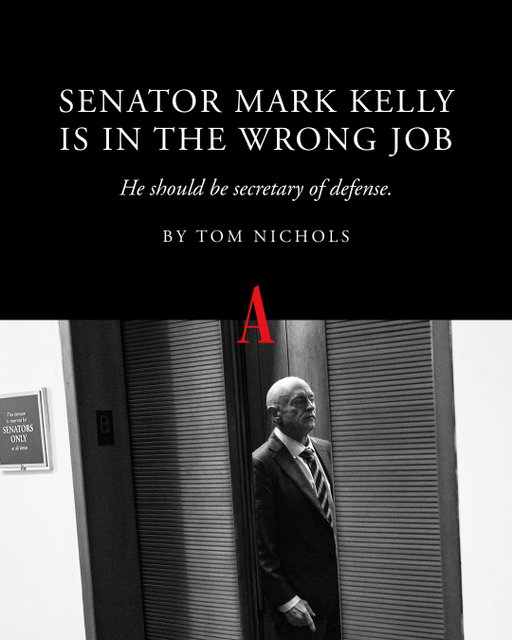
Pete Hegseth is right that Mark Kelly is in the wrong job—the senator should have Hegseth’s gig as secretary of defense, Tom Nichols argues.
“Kelly was one of six Democratic legislators who released a video reminding the officers and enlisted people of the U.S. military that they are bound by their oaths to disobey illegal orders,” Nichols writes. “Now Hegseth wants to recall Kelly, a decorated combat veteran and former astronaut, back to active duty in the Navy so that Kelly can be court-martialed for what Hegseth sees as riling up the troops against the commander in chief.”
Kelly has flown 39 combat missions in Operation Desert Storm, has a uniform heavy with awards, and has piloted or commanded multiple Space Shuttle missions. “Kelly’s had some business ventures, but he’s a bit light on management experience,” Nichols writes. “Still, he’d be a far better choice than Hegseth, who is now vying to snag the never-coveted title of Worst Secretary of Defense in Modern American History.”
The Trump White House seems to know that Hegseth is “unqualified to do anything but push-ups,” Nichols continues. “This realization is probably why Secretary of the Army Daniel Driscoll, and not the actual head of the Pentagon, is the person meeting with the Russians in Geneva trying to stop the biggest war in Europe since 1945. Trump seems to like Hegseth, but the administration also seems to be taking care not to let Hegseth near anything breakable or dangerous.”
While Hegseth acts “as if he won ‘The Apprentice: The Nuclear-Weapons Season,’” Trump should look for “an actual secretary of defense,” Nichols argues at the link in our bio. “He has plenty of options—including Mark Kelly.”
📸: Kent Nishimura / Getty
1.79M
71.5K
3.12K
8mo ago
theatlantic
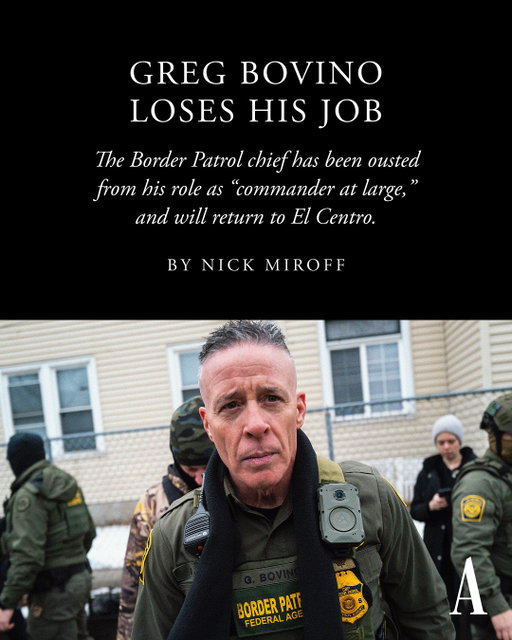
Gregory Bovino has been removed from his role as Border Patrol “commander at large” and will return to his former job in El Centro, California, where he is expected to retire soon, according to a DHS official and two people with knowledge of the change who spoke with Nick Miroff.
“Bovino’s sudden demotion is the clearest sign yet that the Trump administration is reconsidering its most aggressive tactics after the killing Saturday of 37-year-old Alex Pretti by Border Patrol agents under Bovino’s command,” Miroff writes.
For more than half a year, Bovino has been the public face of a traveling immigration crackdown on cities governed by Democrats. Trump officials gave Bovino the “commander” title, and “he became a MAGA social-media star as he traveled the country with his own film crew and used social media to hit back at Democratic politicians and random critics online.”
“DHS and U.S. Customs and Border Protection officials did not immediately respond to questions about Bovino’s departure from Minnesota and his current role,” Miroff writes, and when asked about Bovino and Homeland Security Secretary Kristi Noem, a White House spokesperson referred to press secretary Karoline Leavitt’s statement today that Noem has the president’s “utmost confidence and trust.”
Read more at the link in our bio.
📸: Stephen Maturen / Getty
1.59M
63.5K
1.06K
11mo ago
theatlantic
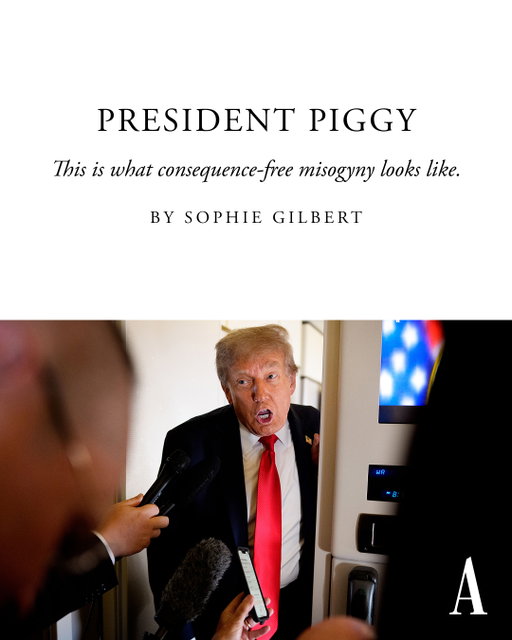
Donald Trump’s “Quiet, piggy” remark joins a preponderance of evidence suggesting “how limited a proportion of men actually see women as equal human beings,” Sophie Gilbert argues.
Read more at the link in our bio.
🎨: Andrew Harnik / Getty
1.58M
63.4K
1.56K
7mo ago
theatlantic
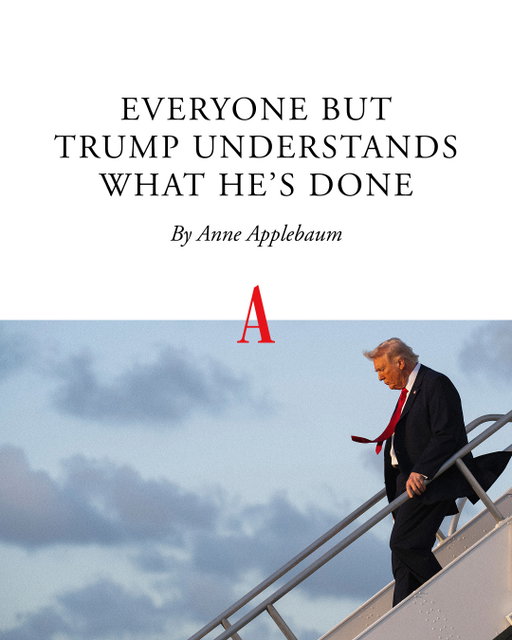
Donald Trump shouldn’t be surprised that U.S. allies are unwilling to help him in Iran, Anne Applebaum argues.
Since the start of his second term, Trump has made threats against NATO, curtailed aid to Ukraine, and created real economic damage with his tariffs. Trump “does not consider the wider implications of his decisions. He does not take responsibility when these decisions go wrong. Instead, he acts on whim and impulse, and when he changes his mind—when he feels new whims and new impulses—he simply lies about whatever he said or did before,” Applebaum continues.
“For the past 14 months, few foreign leaders have been able to acknowledge that someone without any strategy can actually be president of the United States,” Applebaum writes. But “this week, something broke.”
Leaders representing Canada, Germany, Spain, the U.K, and France have declared that they will have no part in the war on Iran. “This isn’t cowardice. It’s a calculation,” Applebaum writes: “If allied leaders thought that their sacrifice might count for something in Washington, they might choose differently. But most of them have stopped trying to find the hidden logic behind Trump’s actions, and they understand that any contribution they make will count for nothing. A few days or weeks later, Trump will not even remember that it happened.”
Read more at the link in our bio.
📸: Roberto Schmidt / Getty
1.51M
60.5K
628
8mo ago
theatlantic
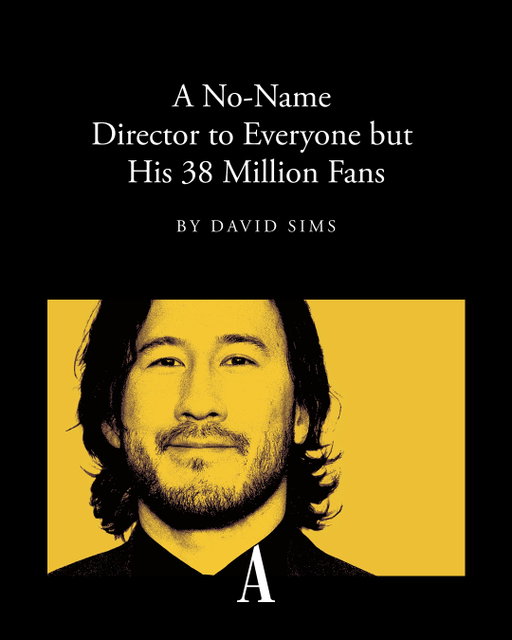
The surprise box-office smash “Iron Lung” is far stranger than the average indie horror movie—and “stranger still is the fact that it’s even in theaters,” David Sims writes:
“Iron Lung,” a sci-fi film about a man exploring a mysterious underwater world, was funded, made, and released entirely by a YouTuber most famous for playing video games on camera—and thus far, the film has grossed more than $30 million domestically against a $3 million budget.
The film’s writer, director, and star, Mark Fischbach—better known as Markiplier—achieved with the film the “kind of creative success story most independent artists can only dream of,” Sims argues. “Iron Lung” was shot over 35 days, and took years to release “partly because Fischbach edited it himself, then declined to make a deal with any traditional distributor,” Sims adds. With a YouTube following of 38 million, Fischbach never launched a paid media campaign ahead of release—he simply used his own feeds for promotion, cut his own trailers, and built up anticipation among his large viewer base.
“I was expecting ‘Iron Lung’ to be small-scale, given the production cost; I was also anticipating a lot of the cheap thrills that can come with low-budget horror hits,” Sims continues. But “maybe the most intriguing thing about ‘Iron Lung’ is that it has basically none of those elements.”
“It’s an odd, heady, talky bit of ambient storytelling that runs for 127 minutes, despite not very much actually happening,” Sims writes—yet he also found himself charmed by the film’s “shagginess.” “I haven’t seen anything quite like it, and the idea of such a curious piece of art becoming a genuine box-office phenomenon is a little heartwarming.”
Read more at the link in our bio.
🎨: The Atlantic. Source: Alberto E. Rodriguez / Getty.
1.41M
79.3K
1.61K
9mo ago

theatlantic
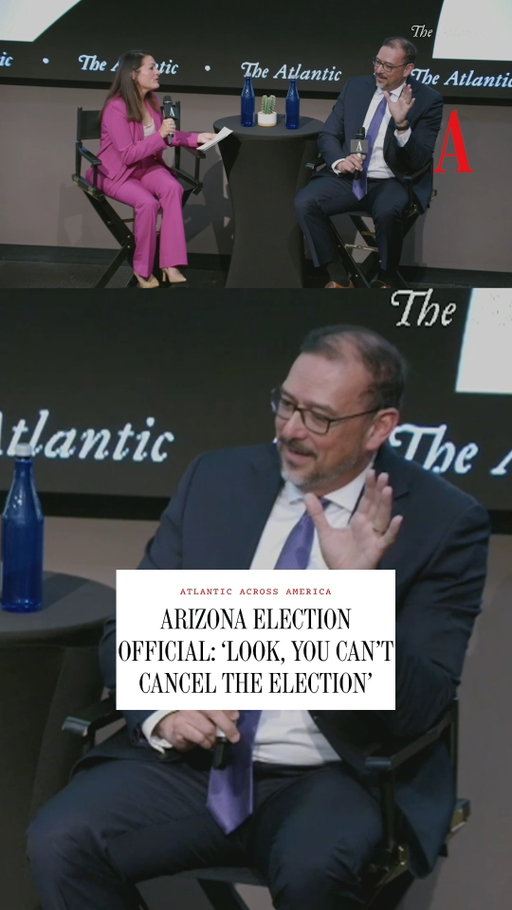
President Trump has made comments questioning the necessity of midterm elections.
Arizona’s secretary of state talked about this threat earlier this week, telling Yvonne Wingett Sanchez “you can’t cancel the election.” “But here’s the problem,” he said. “The fact that we’re running through these scenarios in the first place should tell you something about the health of our democracy.”

1.37M
54.8K
1.07K
8mo ago
theatlantic
You’ve taken your daughter to a birthday party. In the air, invisible, is the measles virus. Even if she survives, the virus may never be done with her, or the other people it has infected. Elizabeth Bruenig on what measles can do to a body, to a brain, and to a family:
The virus might be transmitted “from an infected but asymptomatic child who was hopping and laughing among the others,” Bruenig writes. “The infected aerosolized droplets will linger in the air for hours, which is partly why measles is among the most contagious diseases in the world.”
“The virus infects roughly 90 percent of unvaccinated people exposed to it; the infected can then, in turn, infect a dozen to several hundred people each,” Bruenig writes. “Among the unvaccinated, one in five people infected with measles in the United States will require hospitalization, and roughly two out of every 1,000 infected children will die of complications, regardless of medical care.”
After two weeks of steadily worsening symptoms, your daughter and infant son are diagnosed with measles. “Your daughter is in pain and bewildered and afraid, but you tell her everything is okay,” Bruenig writes. “You try to keep your voice even, though your heart is pounding.”
“Most children infected with measles will survive the virus, but 30 percent of cases lead to complications, and it is nearly impossible to predict which patients will be affected,” Bruenig continues. Your son “lost some of his hearing, but the doctors say that he could make a full recovery in a matter of months.”
Eight years later, your son begins acting uncharacteristically. He is diagnosed with a rare measles complication that leads to irreversible degeneration of the brain. “There are treatments but no cure,” Bruenig writes. “Your son will continue to lose brain function as time passes, resulting in seizures, severe dementia, and, in a matter of two or three years, death.”
“You look at your son, the glasses you picked out with him, the haircut he chose from the wall at the barbershop, the beating heart you gave him,” Bruenig continues. “You know that you, too, will never recover.”
Read more at the link in our bio.
🎨: The Atlantic
1.27M
56.9K
330
6mo ago
theatlantic
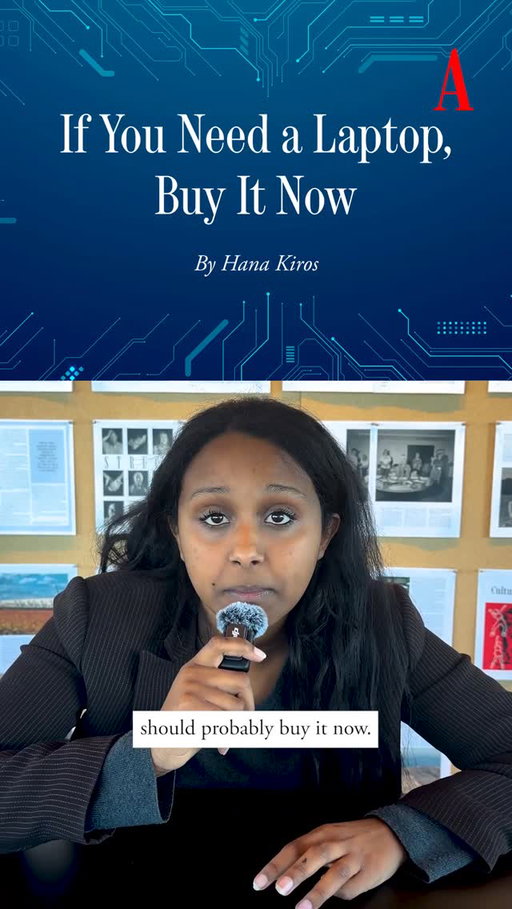
Tech gear is about to get more expensive due to a worldwide shortage of a basic electronics part—“and you can thank the AI boom,” Hana Kiros reports. She breaks down what RAMageddon could mean for tech prices:
1.16M
46.2K
174
9mo ago
theatlantic
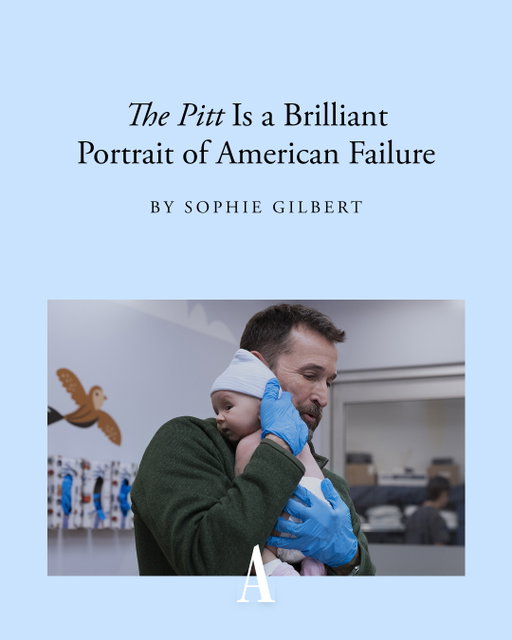
In its second season, “The Pitt” refuses to both-sides issues that it considers straightforward—and “in an era of relentlessly absurd and wealth-washed TV,” this “realism, its defiant lack of glamour, is bracing,” Sophie Gilbert argues.
Some might call the way that “The Pitt”—HBO Max’s hospital-set drama—approaches social issues “preachy,” Gilbert writes. But the show, she argues, “has an emphatic moral clarity that feels awkward only because we haven’t seen it for so long.”
On the question of whether children should be vaccinated for measles, for instance, the show offers a clear answer: “Yes,” Gilbert writes. The show’s setting in an emergency room also contributes to its realism: This is an environment where “society’s problems become inescapable” and “people who have fallen through the cracks land,” Gilbert continues.
“The show can be funny, the camaraderie among the characters is gratifying, and the doctors are extraordinarily good-looking in the way only TV doctors can be,” Gilbert writes. “But in a moment when most series seem intent on keeping us mindlessly half-engaged and monetizing the minutes we watch, there’s something inherently satisfying about a series that actually wants us to think. And, even more crucially, to care.”
Read more at the link in our bio.
📸: Warrick Page / HBO Max
1.07M
42.9K
841
8mo ago
theatlantic
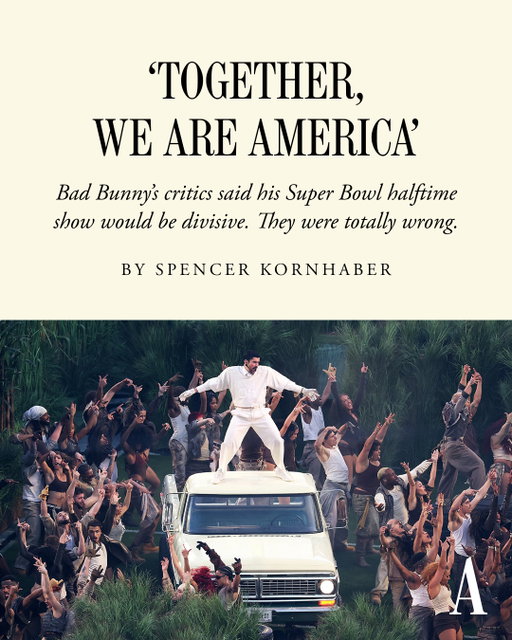
Bad Bunny's entire performance “rebuked the notion that he is some culture-war proxy being foisted upon an American public that wants its stars to shut up and sing,” Spencer Kornhaber argues.
“Yes, he filled this show with slogans and symbols signalling Puerto Rican and Latino pride at a time when federal agents are menacing Spanish speakers and President Trump has declared English to be the national language,” Kornhaber continues. “But fundamentally, the halftime was a blast: an instant-classic, precisely detailed, relentlessly stimulating medley rooted in the good-old-fashioned pleasure principle.”
Read more at the link in our bio.
1.03M
41.1K
241
10mo ago
theatlantic
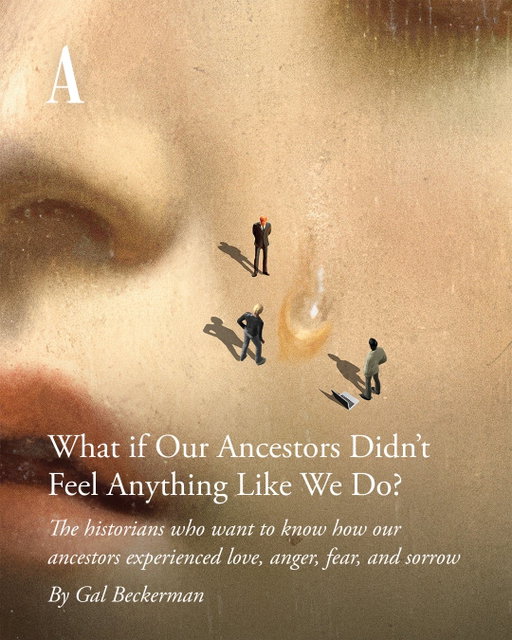
A common assumption is that throughout history, people have experienced the same basic range of emotions. A radical field of history now challenges this assumption, Gal Beckerman reports.
People tend to imagine that other people “have the exact same set of emotions that we have,” Beckerman writes. “We perform this projection on any number of human experiences: losing a child, falling ill, being bored at work. We assume that emotions in the past are accessible because we assume that at their core, people in the past were just like us, with slight tweaks for their choice of hats and of personal hygiene.”
Rob Boddice, a leader in the field of the history of emotions and senses, mistrusts this universalism, a philosophy that emerged during the Enlightenment, when European intellectuals began to assume that all people share a common nature. Many critics now understand that they were attempting to exert power and order over a world that had recently become bigger and stranger. “By the time we get to our current globalized culture, in which a Korean thriller can win Best Picture at the Oscars and Latin pop stars dominate the U.S. charts, the notion that our emotional registers are all essentially alike feels self-evident,” Beckerman continues.
“Boddice starts with the opposite premise, that we are not the same,” Beckerman writes. “Rather than being a constant—extending across space and time—human nature for Boddice is a variable and unstable category, one with infinite possible shades.”
Although his approach might seem “squishy and postmodern,” Beckerman writes, Boddice’s research layers his own thinking on top of the most recent advances in neuroscience.
At the link in our bio, read more about the field of study that is pushing historians to reconsider their assumptions about the people of the past.
🎨: @nxrx
988K
52.4K
1.07K
1mo ago
theatlantic
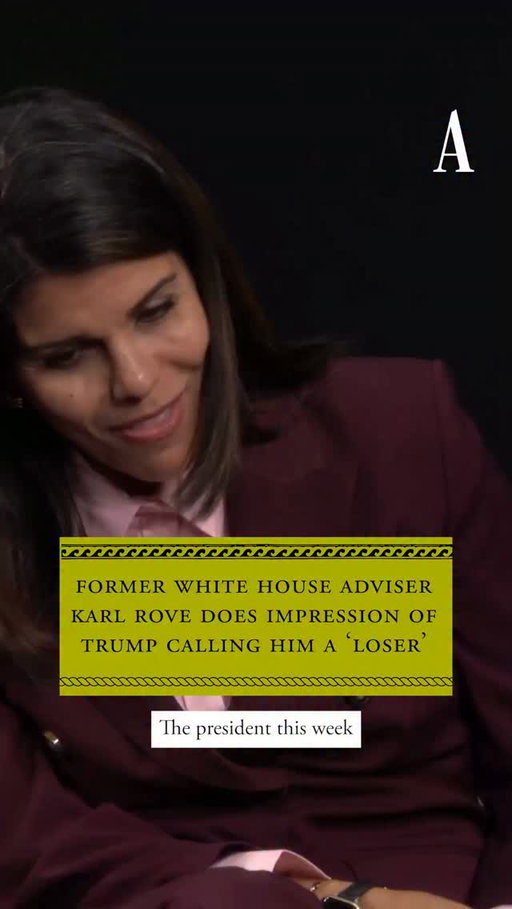
Karl Rove, the former adviser to President George W. Bush, does an impression of Donald Trump at #TAF26, in response to the president calling him a “stone cold loser.”
982K
20.6K
436
3mo ago
theatlantic
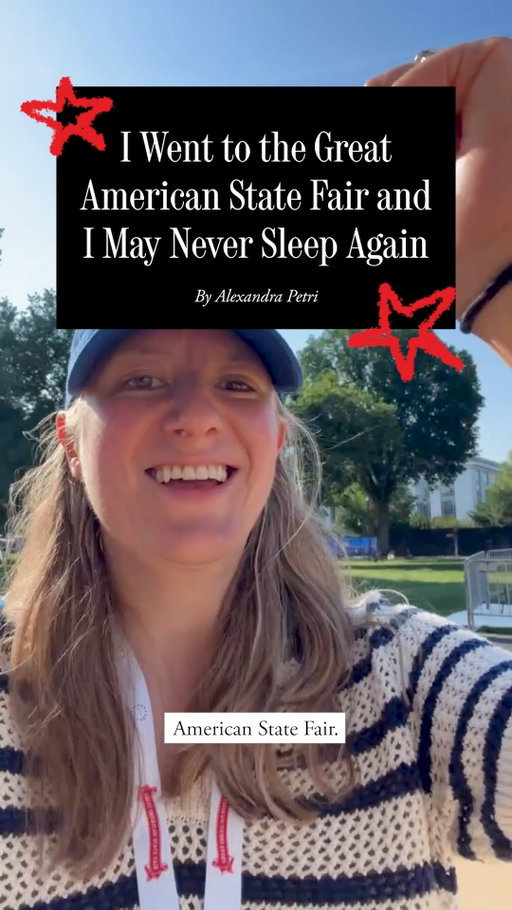
With the help of a very strong energy drink, Alexandra Petri takes you inside the Great American State Fair in Washington, D.C., where a “freedom wheel,” a hologram Abraham Lincoln, and … potatoes helped commemorate America’s 250th birthday.
Read more from Petri’s surreal day on the National Mall at the link in bio.
955K
63.0K
1.46K
10mo ago
theatlantic
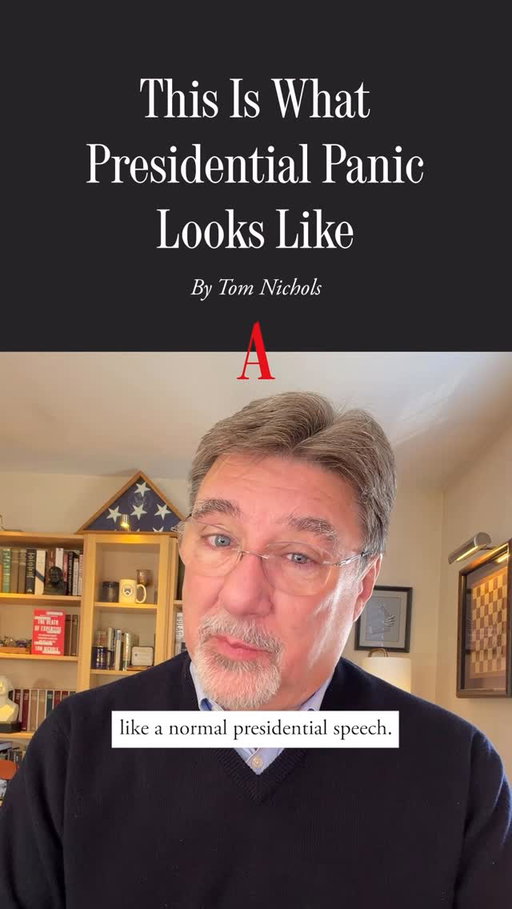
Donald Trump’s televised speech last night was a “presidential address unworthy of the American people and the American nation and its democracy,” Tom Nichols argues.
Read more at the link in our bio.
915K
36.6K
881
11mo ago
theatlantic
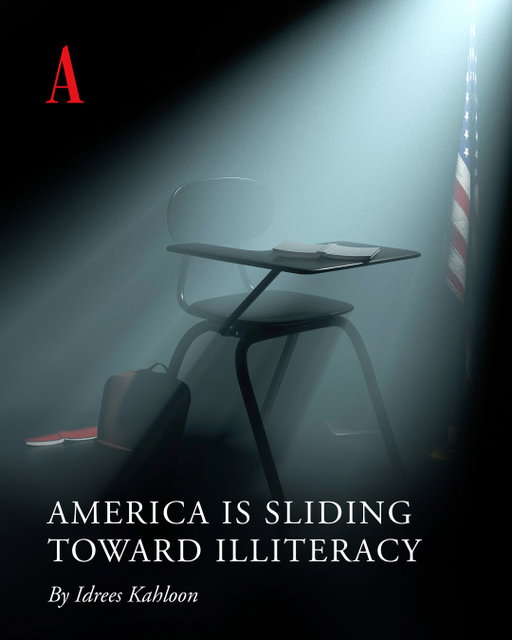
American students are falling behind, and the most common explanations overlook the main problem, Idrees Kahloon argues.
“The past decade may rank as one of the worst in the history of American education,” Kahloon writes. At the start of the century, American students steadily improved in math and reading. This progress began to stall around 2013—and then backslid dramatically. Test scores released this year show that 33 percent of eighth graders and 40 percent of fourth graders are reading at a level that is “below basic.”
“The decline began well before the pandemic, so COVID-era disruptions alone cannot explain it,” Kahloon writes. Some progressives blame insufficient spending, but school spending has not declined in the period when students have fallen behind. In fact, it has increased. Another theory is that smartphones are to blame. Although this hypothesis matches the timeline, it has other holes: Performance is declining for children of all ages, even those in elementary school, who are less likely to have smartphones. And even though smartphone use is almost universal among older kids, high-achieving students are doing roughly as well as they always have, while those at the bottom are seeing rapid losses.
“But there’s another explanation, albeit one that progressives in particular seem reluctant to countenance,” Kahloon writes: “a pervasive refusal to hold children to high standards.” Read his full argument at the link in our bio.
🎨: @Matteo_Giuseppe_Pani / The Atlantic
884K
35.4K
723
10mo ago
theatlantic
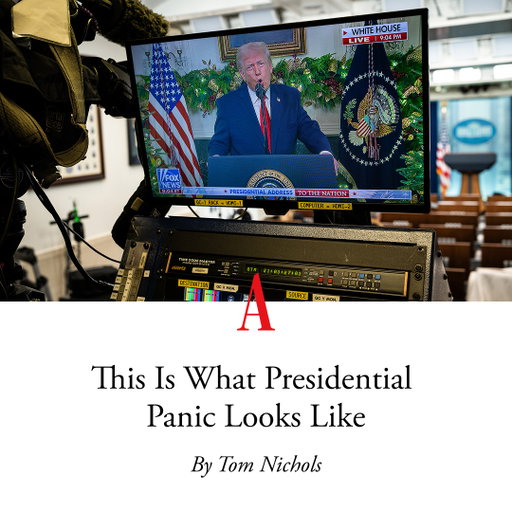
For 20 minutes last night, Americans watched Donald Trump speak, “drenched in panic as he tried to bully an entire nation into admitting he’s doing a great job,” Tom Nichols argues.
“We could take apart Trump’s fake facts, as checkers and pundits will do in the next few days. But perhaps more important than false statements—which for Trump are par for the course—was his demeanor,” Nichols continues. “He vented his hurt feelings without a molecule of empathy or awareness.”
The president’s speech “contained no news, other than an example of his contempt for the U.S. military, whose loyalty he thinks he can purchase with a onetime $1,776 bonus check,” Nichols writes. “This is projection: Trump has shown his willingness to be bought off with gold bars and trinkets, and he may think that the men and women of the armed forces are people of equally low character.”
In effect, “Trump took to the airwaves, pointed his finger, and said: ‘Quiet, piggy,’” Nichols argues. “Even by Trump’s standards, this was an unnerving display of fear.”
Read more at the link in our bio.
📸: Graeme Sloan / Bloomberg / Getty
825K
55.1K
1.82K
7mo ago
theatlantic
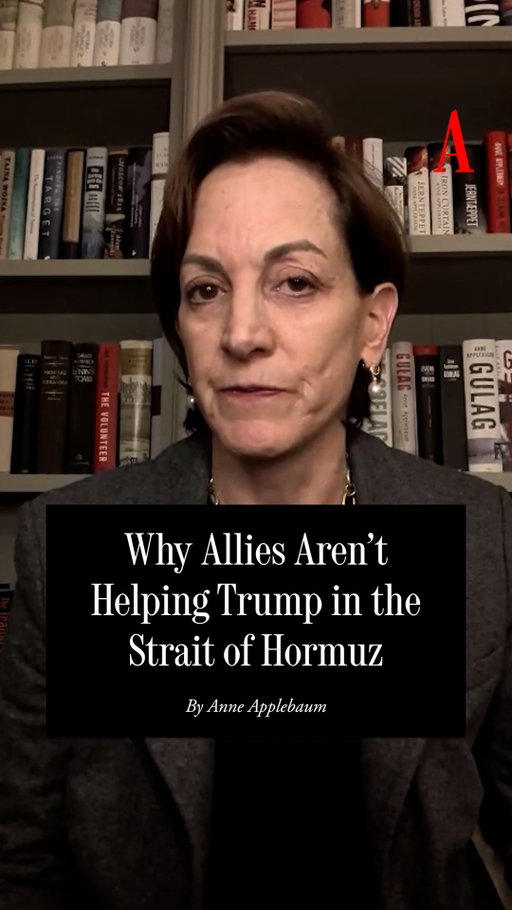
NATO members know that Donald Trump would not value their contribution if they became involved in the Strait of Hormuz, Anne Applebaum argues: “What you’re hearing from America’s European allies is not cowardice. It’s a calculation.”
Read the full article at the link in our bio.
📸: Reg Burkett / Hulton Archive / Getty Images; Andrew Harnik / Getty Images Europe; Omar Havana / Getty Images Europe; Keystone/Hulton Archive / Getty Images; Chip Somodevilla / Getty Images North America; Mandel Ngan / AFP / Getty Images; Gallo Images / Gallo Images Editorial / Getty Images; NATO / Hulton Archive / Getty Images; Pool / Getty Images Europe
The Atlantic (@theatlantic) Instagram Stats & Analytics
The Atlantic (@theatlantic) has 2.15M Instagram followers with a 3.01% engagement rate over the past 12 months. Across 2.09K posts, The Atlantic received 7.30M total likes and 195M impressions, averaging 3.49K likes per post. This page tracks The Atlantic's performance metrics, top content, and engagement trends — updated daily. To benchmark @theatlantic against other accounts, use Socialpruf's Instagram competitor analysis tool.
The Atlantic (@theatlantic) Instagram Analytics FAQ
How many Instagram followers does The Atlantic have?+
The Atlantic (@theatlantic) has 2.15M Instagram followers as of October 2026.
What is The Atlantic's Instagram engagement rate?+
The Atlantic's Instagram engagement rate is 3.01% over the last 12 months, based on 2.09K posts.
How many likes does The Atlantic get on Instagram?+
The Atlantic received 7.30M total likes across 2.09K posts in the last 12 months, averaging 3.49K likes per post.
How many Instagram impressions does The Atlantic get?+
The Atlantic's Instagram content generated 195M total impressions over the last 12 months.
Can I compare The Atlantic with other Instagram accounts?+
Yes. Add @theatlantic to a competitor set with Socialpruf's Instagram competitor analysis tool and benchmark it side by side with any other public accounts on views, engagement rate and follower growth, with history back to each account's first post.