NewClaim a free social report
X analytics
Similar Accounts:
followers
1.86M
impressions
275M
likes
810K
comments
144K
posts
12.3K
engagement
0.347%
emv
$5.88M
Average per post
22.3K

Key Metrics

Distributions

Top Content

The Epstein files reveal that plenty of powerful people tolerated or participated in disgusting, shameful, and even criminal behavior—but they also bolster the case that there never was any grand conspiracy, @GiladEdelman argues. t.co/nhXsRXqVI7

12.4M
2.17K
1.63K
644
5mo ago
TheAtlantic
The Epstein files reveal that plenty of powerful people tolerated or participated in disgusting, shameful, and even criminal behavior—but they also bolster the case that there never was any grand conspiracy, @GiladEdelman argues. https://t.co/nhXsRXqVI7
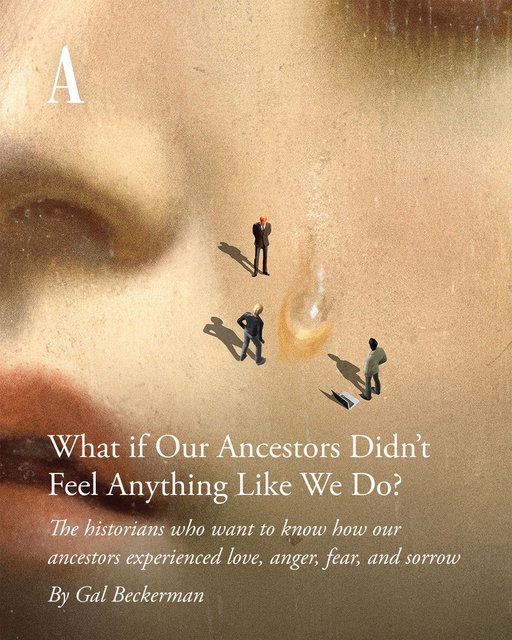
A common assumption is that throughout history, people have experienced the same basic range of emotions. A radical field of history now challenges this assumption, Gal Beckerman reports. https://t.co/eLFv144oU2

People tend to imagine that other people “have the exact same set of emotions that we have,” Beckerman writes. “We perform this projection on any number of human experiences: losing a child, falling ill, being bored at work. We assume that emotions in the past are accessible because we assume that at their core, people in the past were just like us, with slight tweaks for their choice of hats and of personal hygiene.”

Rob Boddice, a leader in the field of the history of emotions and senses, mistrusts this universalism, a philosophy that emerged during the Enlightenment, when European intellectuals began to assume that all people share a common nature. Many critics now understand that they were attempting to exert power and order over a world that had recently become bigger and stranger. “By the time we get to our current globalized culture, in which a Korean thriller can win Best Picture at the Oscars and Latin pop stars dominate the U.S. charts, the notion that our emotional registers are all essentially alike feels self-evident,” Beckerman continues.

“Boddice starts with the opposite premise, that we are not the same,” Beckerman writes. “Rather than being a constant—extending across space and time—human nature for Boddice is a variable and unstable category, one with infinite possible shades.”

Although his approach might seem “squishy and postmodern,” Beckerman writes, Boddice’s research layers his own thinking on top of the most recent advances in neuroscience.

At the link, read more about the field of study that is pushing historians to reconsider their assumptions about the people of the past.

🎨: Nicolás Ortega
10.8M
14.5K
706
3.23K
7mo ago
TheAtlantic
A common assumption is that throughout history, people have experienced the same basic range of emotions. A radical field of history now challenges this assumption, Gal Beckerman reports. https://t.co/eLFv144oU2 People tend to imagine that other people “have the exact same set of emotions that we have,” Beckerman writes. “We perform this projection on any number of human experiences: losing a child, falling ill, being bored at work. We assume that emotions in the past are accessible because we assume that at their core, people in the past were just like us, with slight tweaks for their choice of hats and of personal hygiene.” Rob Boddice, a leader in the field of the history of emotions and senses, mistrusts this universalism, a philosophy that emerged during the Enlightenment, when European intellectuals began to assume that all people share a common nature. Many critics now understand that they were attempting to exert power and order over a world that had recently become bigger and stranger. “By the time we get to our current globalized culture, in which a Korean thriller can win Best Picture at the Oscars and Latin pop stars dominate the U.S. charts, the notion that our emotional registers are all essentially alike feels self-evident,” Beckerman continues. “Boddice starts with the opposite premise, that we are not the same,” Beckerman writes. “Rather than being a constant—extending across space and time—human nature for Boddice is a variable and unstable category, one with infinite possible shades.” Although his approach might seem “squishy and postmodern,” Beckerman writes, Boddice’s research layers his own thinking on top of the most recent advances in neuroscience. At the link, read more about the field of study that is pushing historians to reconsider their assumptions about the people of the past. 🎨: Nicolás Ortega

Benjamin Netanyahu’s long career was built on conflict avoidance—then, October 7 transformed and radicalized him, @Yair_Rosenberg argues: t.co/a4WD6U4WgJ

6.03M
1.13K
3.66K
1.28K
4mo ago
TheAtlantic
Benjamin Netanyahu’s long career was built on conflict avoidance—then, October 7 transformed and radicalized him, @Yair_Rosenberg argues: https://t.co/a4WD6U4WgJ

Pete Buttigieg—the Harvard graduate, Rhodes Scholar, and McKinsey alum—now has a beard and a splitting maul, @gcaw reports. Can he convince America he’s a man of the people? t.co/Em5eYkBgVf

3.49M
414
4.58K
627
4mo ago
TheAtlantic
Pete Buttigieg—the Harvard graduate, Rhodes Scholar, and McKinsey alum—now has a beard and a splitting maul, @gcaw reports. Can he convince America he’s a man of the people? https://t.co/Em5eYkBgVf
“The vaccination has stuff we don’t trust,” said the father of the 6-year-old girl who died of measles. In March, @tebartl wrote about his visit with a family confronting an unthinkable tragedy. 

Revisit one of The Atlantic’s most-read stories of 2025: https://t.co/DoBpzHQ3vb
3.42M
2.15K
315
1.02K
7mo ago
TheAtlantic
“The vaccination has stuff we don’t trust,” said the father of the 6-year-old girl who died of measles. In March, @tebartl wrote about his visit with a family confronting an unthinkable tragedy. Revisit one of The Atlantic’s most-read stories of 2025: https://t.co/DoBpzHQ3vb

The Epstein files reveal that plenty of powerful people tolerated or participated in disgusting, shameful, and even criminal behavior—but they also bolster the case that there never was any grand conspiracy, @GiladEdelman argues. t.co/1bOtPSxuvQ

3.16M
479
814
216
5mo ago
TheAtlantic
The Epstein files reveal that plenty of powerful people tolerated or participated in disgusting, shameful, and even criminal behavior—but they also bolster the case that there never was any grand conspiracy, @GiladEdelman argues. https://t.co/1bOtPSxuvQ

The U.S. is effectively checkmated in Iran—and this defeat will carry lasting consequences unlike any America has endured before, Robert Kagan argues. t.co/6fUPwsZfRg

2.81M
7.47K
1.08K
2.52K
2mo ago
TheAtlantic
The U.S. is effectively checkmated in Iran—and this defeat will carry lasting consequences unlike any America has endured before, Robert Kagan argues. https://t.co/6fUPwsZfRg

As his regime crumbled, Bashar al-Assad was obsessed with sex and video games, and he refused every lifeline he was offered. Palace insiders told @robertfworth that Assad could have saved his regime if he hadn’t been so stubborn and vain. t.co/22iS2Bmr5M

2.81M
4.17K
120
922
5mo ago
TheAtlantic
As his regime crumbled, Bashar al-Assad was obsessed with sex and video games, and he refused every lifeline he was offered. Palace insiders told @robertfworth that Assad could have saved his regime if he hadn’t been so stubborn and vain. https://t.co/22iS2Bmr5M

Exclusive: Border Patrol “Commander at Large” Gregory Bovino has been removed from his role and is expected to retire soon, sources tell Nick Miroff. t.co/JqmLqCFMiy

2.51M
2.01K
276
752
6mo ago
TheAtlantic
Exclusive: Border Patrol “Commander at Large” Gregory Bovino has been removed from his role and is expected to retire soon, sources tell Nick Miroff. https://t.co/JqmLqCFMiy
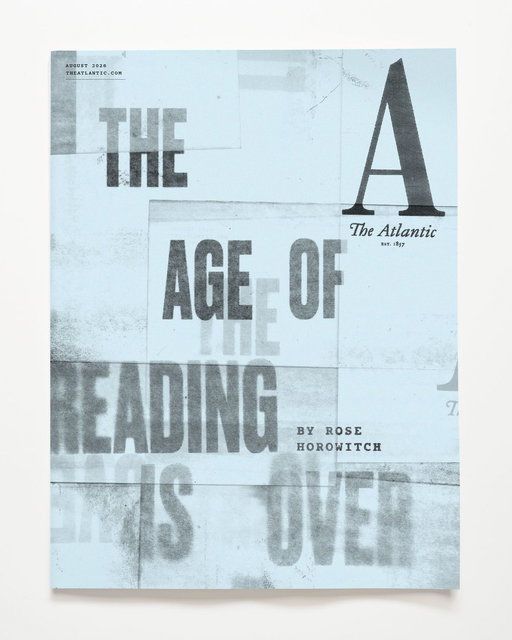
Americans were once members of a proudly literate society, but today, reading has declined across age groups, gender, and education levels. For The Atlantic’s August issue, @rosehorowitch explores the reading collapse—and its effects on civilization: https://t.co/AWuYlYRts1
2.26M
3.47K
169
1.04K
3w ago
TheAtlantic
Americans were once members of a proudly literate society, but today, reading has declined across age groups, gender, and education levels. For The Atlantic’s August issue, @rosehorowitch explores the reading collapse—and its effects on civilization: https://t.co/AWuYlYRts1
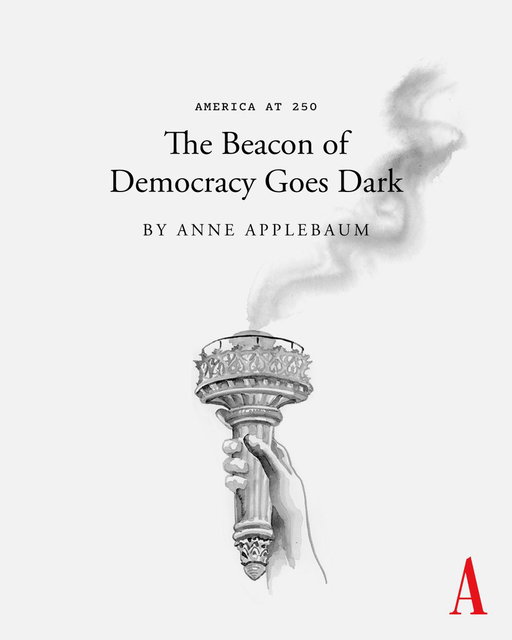
For nearly 250 years, America promoted freedom and equality abroad, even when it failed to live up to those ideals itself—not anymore. @anneapplebaum argued in The Atlantic’s “Unfinished Revolution” issue last year. https://t.co/MrTTw6jL1m
2.11M
541
705
425
4w ago
TheAtlantic
For nearly 250 years, America promoted freedom and equality abroad, even when it failed to live up to those ideals itself—not anymore. @anneapplebaum argued in The Atlantic’s “Unfinished Revolution” issue last year. https://t.co/MrTTw6jL1m

Police spent more than 50 days searching a lake for Ryan Borgwardt, a kayaker they assumed had drowned. Then they told his wife that they’d come to believe something different. @ThompsonJamieL spoke with the people involved in the case that rattled a Wisconsin town: t.co/OZbacyqiUE

1.89M
3.09K
22
271
8mo ago
TheAtlantic
Police spent more than 50 days searching a lake for Ryan Borgwardt, a kayaker they assumed had drowned. Then they told his wife that they’d come to believe something different. @ThompsonJamieL spoke with the people involved in the case that rattled a Wisconsin town: https://t.co/OZbacyqiUE

The Epstein files reveal that plenty of powerful people tolerated or participated in disgusting, shameful, and even criminal behavior—but they also bolster the case that there never was any grand conspiracy, @GiladEdelman argues. t.co/IbXhrQ79TL

1.81M
255
664
118
5mo ago
TheAtlantic
The Epstein files reveal that plenty of powerful people tolerated or participated in disgusting, shameful, and even criminal behavior—but they also bolster the case that there never was any grand conspiracy, @GiladEdelman argues. https://t.co/IbXhrQ79TL
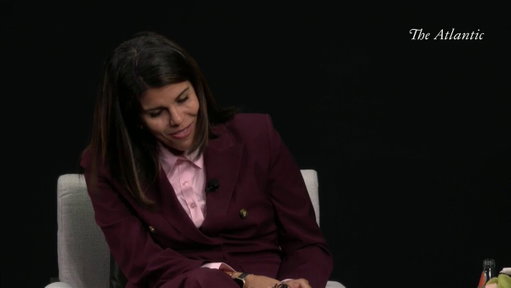
David Letterman to Jeffrey Goldberg on Jimmy Kimmel’s suspension: “You can’t go around firing somebody because you’re fearful or trying to suck up to an authoritarian—a criminal—administration in the Oval Office. That’s just not how this works.” #TAF25
1.78M
30.5K
1.78K
7.78K
10mo ago
TheAtlantic
David Letterman to Jeffrey Goldberg on Jimmy Kimmel’s suspension: “You can’t go around firing somebody because you’re fearful or trying to suck up to an authoritarian—a criminal—administration in the Oval Office. That’s just not how this works.” #TAF25

A year ago, it wasn’t clear whether Project 2025 would amount to much. Today, it’s become the Trump era’s most effective policy initiative. In The Atlantic Daily, @GrahamDavidA reviews how Project 2025 transformed 2025: t.co/2g8d9zm7iT

1.53M
486
741
516
7mo ago
TheAtlantic
A year ago, it wasn’t clear whether Project 2025 would amount to much. Today, it’s become the Trump era’s most effective policy initiative. In The Atlantic Daily, @GrahamDavidA reviews how Project 2025 transformed 2025: https://t.co/2g8d9zm7iT

Kash Patel’s colleagues are alarmed by what they describe as erratic behavior and excessive drinking—conduct that could cost him his job, Sarah Fitzpatrick reports. She spoke with more than two dozen people with knowledge of his conduct, some of whom described it as a national-security vulnerability. t.co/nnz9F8CqZU

1.45M
10.2K
1.27K
3.57K
3mo ago
TheAtlantic
Kash Patel’s colleagues are alarmed by what they describe as erratic behavior and excessive drinking—conduct that could cost him his job, Sarah Fitzpatrick reports. She spoke with more than two dozen people with knowledge of his conduct, some of whom described it as a national-security vulnerability. https://t.co/nnz9F8CqZU

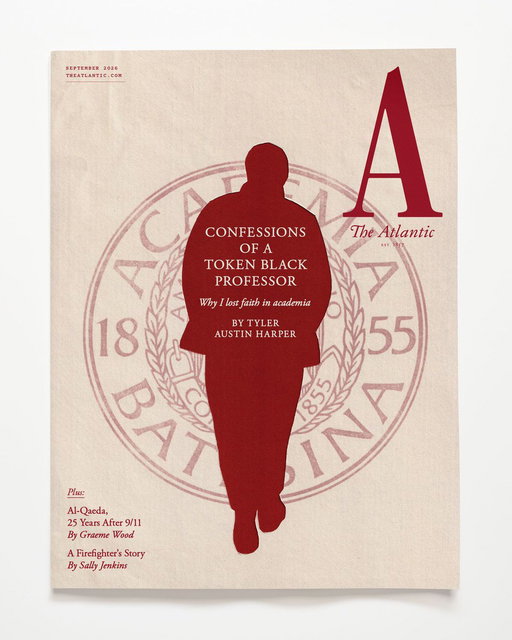
Miller Lite is a bad beer but an incredible beverage, @Tyler_A_Harper argues: “It is neither complicated nor offensive, and it derives its magic from this bland alchemy, this delicate equipoise of fizzy nothingness.” t.co/1bsBtA7uzV

1.40M
728
29
114
2mo ago
TheAtlantic
Miller Lite is a bad beer but an incredible beverage, @Tyler_A_Harper argues: “It is neither complicated nor offensive, and it derives its magic from this bland alchemy, this delicate equipoise of fizzy nothingness.” https://t.co/1bsBtA7uzV

After a stunning rise, Stephen Miller has seen his influence quietly diminished in the White House, insiders tell @michaelscherer and @NickMiroff. t.co/3ev65czWvW

1.39M
1.17K
51
160
2mo ago
TheAtlantic
After a stunning rise, Stephen Miller has seen his influence quietly diminished in the White House, insiders tell @michaelscherer and @NickMiroff. https://t.co/3ev65czWvW

Since the start of Donald Trump’s second term, Republicans have deployed ever more Nazi imagery and rhetoric, and espoused ideas associated with the Nazi Party, @RadioFreeTom argues. He examines how this dark fringe reached the center of the GOP: t.co/rahixGbMHe

1.31M
1.49K
2.82K
777
5mo ago
TheAtlantic
Since the start of Donald Trump’s second term, Republicans have deployed ever more Nazi imagery and rhetoric, and espoused ideas associated with the Nazi Party, @RadioFreeTom argues. He examines how this dark fringe reached the center of the GOP: https://t.co/rahixGbMHe
The Trump administration's “war on empathy,” @HillaryClinton writes, “threatens to pave the way for an extreme vision of Christian nationalism that seeks to replace democracy with theocracy in America”: https://t.co/UTI8jnNpS7
1.14M
1.53K
833
934
6mo ago
TheAtlantic
The Trump administration's “war on empathy,” @HillaryClinton writes, “threatens to pave the way for an extreme vision of Christian nationalism that seeks to replace democracy with theocracy in America”: https://t.co/UTI8jnNpS7

The Atlantic (@theatlantic) X Stats & Analytics

The Atlantic (@theatlantic) has 1.86M X followers with a 0.35% engagement rate over the past 12 months. Across 12.3K posts, The Atlantic received 810K total likes and 275M impressions, averaging 65.7 likes per post. This page tracks The Atlantic's performance metrics, top content, and engagement trends — updated daily.

The Atlantic (@theatlantic) X Analytics FAQ

How many X (Twitter) followers does The Atlantic have?+
The Atlantic (@theatlantic) has 1.86M X (Twitter) followers as of July 2026.
What is The Atlantic's X (Twitter) engagement rate?+
The Atlantic's X (Twitter) engagement rate is 0.35% over the last 12 months, based on 12.3K posts.
How many likes does The Atlantic get on X (Twitter)?+
The Atlantic received 810K total likes across 12.3K posts in the last 12 months, averaging 65.7 likes per post.
How many X (Twitter) impressions does The Atlantic get?+
The Atlantic's X (Twitter) content generated 275M total impressions over the last 12 months.