NewGet @startuparchive_'s full report

X analytics
Similar Accounts:
X analytics
Similar Accounts:
followers
157K
impressions
102M
likes
337K
comments
10.9K
posts
909
engagement
0.341%
emv
$2.14M
Average per post
112K
Key Metrics
Impressions
monthly
Distributions
Content
32.8M
26.2K
1.03K
4.42K
10mo ago

StartupArchive_
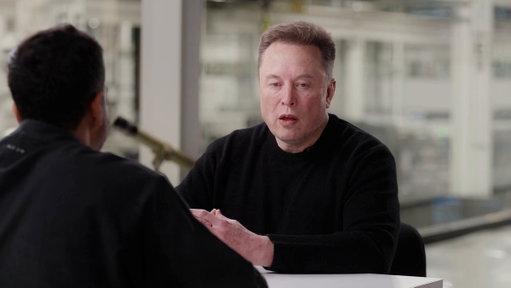
Elon Musk: “Anyone who wants to make more than they take has my respect”
Elon is asked for his advice for entrepreneurs, to which he responds:
“I’m a big fan of anyone who wants to build. Anyone who wants to make more than they take has my respect. That’s the main thing you should aim for: to make more than you take and be a net contributor to society.”
He compares it to the pursuit of happiness:
“If you want to create something valuable financially, you don’t pursue that. It’s best to pursue providing useful products and services. If you do that, money will come as a natural consequence of that rather than pursuing money directly. You can’t pursue happiness directly. You pursue things that lead to happiness — fulfilling work, study, friends, loved ones.”
Elon continues:
“It sounds very obvious, but generally if somebody is trying to make a company work, they should expect to grind super hard and accept that there’s a meaningful chance of failure. Then just focus on having the output be worth more than the input. Are you a value creator? That’s what really matters: making more than you take.”
Video source: @nikhilkamathcio (2025)
13.5M
15.5K
484
2.43K
9mo ago
StartupArchive_
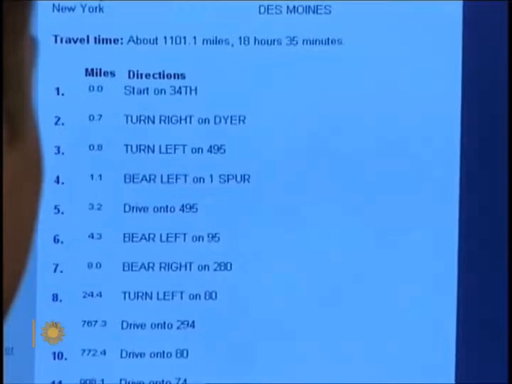
Elon Musk on building his first startup Zip2
In 1995, when he was just 23 years old, Elon dropped out of Stanford’s PhD program in physics to start Zip2 with his brother Kimbal Musk.
Elon personally wrote the first national maps, directions, yellow pages and white pages on the Internet that summer in C with a little C++.
In this CBS interview, a 27 year old Elon describes living in a $200/month office with a leaky roof:
“We found that an office was actually cheaper than apartment in Silicon Valley and we got this dinky little office that had a leaky roof. It was just the nastiest place you could imagine. I lived in it too and showered at the YMCA. This lasted for about three or four months, and the reason we chose this office — in addition to it being really cheap — was that there was an internet service provider on the floor below. So we were able to get really cheap internet access by drilling a hole in the floor and connecting to their server directly.”
In February 1999 — less than a year after this interview — Compaq would purchase Zip2 for $307 million in cash.
The interviewer also asks Elon what he thinks the future of the Internet will be, to which Elon responds:
“I think the internet is the superset of all media. It is the be all and end all of media. One will see print, broadcast, radio — essentially all media — folding into the internet. What the internet amounts to is it’s the first two-way communication medium that is intelligent. It allows consumers to choose what they want to see, when they want to see it.”
![John Carmack on what he admires about Elon Musk
Programming legend John Carmack is asked about his relationship with Elon Musk, to which he replies:
“In some ways we have a similar background. We’re almost exactly the same age, have backgrounds programming personal computers, and have even read similar books that have turned us into the people we are today.”
John first met Elon when he was building Armadillo Aerospace. Elon visited Armadillo with his right-hand propulsion guy, and the three of them talked about rockets.
“I think in many corners [Elon] does not get the respect he should for being a wealthy person who could just retire,” John says. “He went all-in, and he could’ve gone bust. There’s plenty of athletes or entertainers who had all the money in the world and blew it. [Elon] could’ve been the business case example of that with the things he was doing: space exploration, electrification of transportation, and Solar City type things. These are big, world-level things. And I have a great deal of admiration that he was willing to throw himself so completely into that.”
John contrasts this with the way he approached his own aerospace company:
“I was doing Armadillo Aerospace in this tightly-bounded way. It was ‘John’s crazy money’ at the time that had a finite limit on it. It was never going to impact me or my family if it completely failed, and I was still hedging my bets working at id Software at a time when [Elon] had been really all-in. I have a huge amount of respect for that.”
It also irritates John when people call Elon “just a business guy”:
“Elon was deeply involved in a lot of the [technical] decisions. Not all of them were perfect, but he cared very much about engine material selection and propellant selection. For years he’d be telling me to ‘Get off that hydrogen peroxide stuff. Liquid oxygen is the only proper oxidizer for this.’ And the times that I’ve gone through the factories with him, we talked about very detailed things like how this weld is made or how this subassembly goes together. He’s really in there a very detailed level . . . I worry a lot that he’s stretched too thin. He’s got the Boring Company and Neuralink and Twitter too whereas I know I have limits on how much I can pay attention to.”
John continues:
“I look back at my aerospace side of things, and I’m like, ‘I did not go all-in on that.’ I did not commit myself at a level that it would’ve taken to be successful there. And it’s a weird thing having a discussion with him. He’s the richest man in the world right now, but he operates on a level that is still very much in my wheelhouse on the technical side of things.”
Video source: @lexfridman (2022)](https://cdn.socialpruf.com/twitter/thumbnails/2001273783844220985?optimizer=image&width=512)
5.63M
8.85K
180
952
10mo ago
StartupArchive_
John Carmack on what he admires about Elon Musk
Programming legend John Carmack is asked about his relationship with Elon Musk, to which he replies:
“In some ways we have a similar background. We’re almost exactly the same age, have backgrounds programming personal computers, and have even read similar books that have turned us into the people we are today.”
John first met Elon when he was building Armadillo Aerospace. Elon visited Armadillo with his right-hand propulsion guy, and the three of them talked about rockets.
“I think in many corners [Elon] does not get the respect he should for being a wealthy person who could just retire,” John says. “He went all-in, and he could’ve gone bust. There’s plenty of athletes or entertainers who had all the money in the world and blew it. [Elon] could’ve been the business case example of that with the things he was doing: space exploration, electrification of transportation, and Solar City type things. These are big, world-level things. And I have a great deal of admiration that he was willing to throw himself so completely into that.”
John contrasts this with the way he approached his own aerospace company:
“I was doing Armadillo Aerospace in this tightly-bounded way. It was ‘John’s crazy money’ at the time that had a finite limit on it. It was never going to impact me or my family if it completely failed, and I was still hedging my bets working at id Software at a time when [Elon] had been really all-in. I have a huge amount of respect for that.”
It also irritates John when people call Elon “just a business guy”:
“Elon was deeply involved in a lot of the [technical] decisions. Not all of them were perfect, but he cared very much about engine material selection and propellant selection. For years he’d be telling me to ‘Get off that hydrogen peroxide stuff. Liquid oxygen is the only proper oxidizer for this.’ And the times that I’ve gone through the factories with him, we talked about very detailed things like how this weld is made or how this subassembly goes together. He’s really in there a very detailed level . . . I worry a lot that he’s stretched too thin. He’s got the Boring Company and Neuralink and Twitter too whereas I know I have limits on how much I can pay attention to.”
John continues:
“I look back at my aerospace side of things, and I’m like, ‘I did not go all-in on that.’ I did not commit myself at a level that it would’ve taken to be successful there. And it’s a weird thing having a discussion with him. He’s the richest man in the world right now, but he operates on a level that is still very much in my wheelhouse on the technical side of things.”
Video source: @lexfridman (2022)
1.85M
3.04K
51
251
10mo ago
StartupArchive_
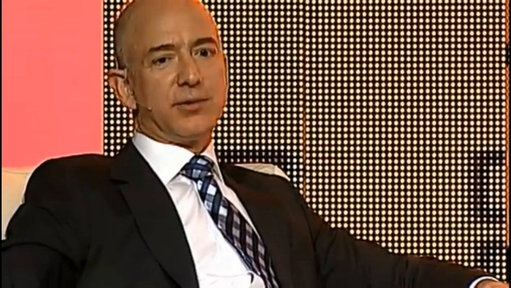
Jeff Bezos on his favorite interview question
“When I interview people, I ask them to give me an example of something they've invented. And I always point out, it doesn't have to be something that you actually took to the patent office. It could be a metric that you invented and followed carefully. It could be a business process that you invented. You want to select people who like to invent their way out of boxes.”
A lot of people will immediately jump to what Jeff calls an “either or” solution (e.g. “We can do A or B.”). But as Jeff explains:
“The right question is how can we do A and B? What invention do we need to be able to do both?”
1.47M
2.90K
57
120
3mo ago
StartupArchive_
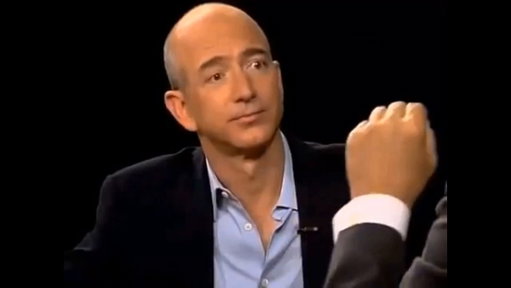
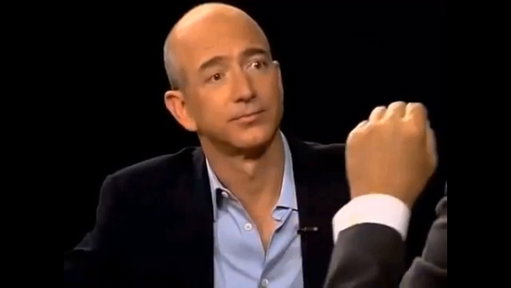
Jeff Bezos: “You don’t understand my audience”
When Charlie Rose asks him if the iPad is a “Kindle killer” in this 2012 interview, Jeff gives an incredible response:
“It’s a very different product, and I can give you an example. If I came to you and said: ‘Charlie, I love your show, but we’ve got to sex it up. We need fast cuts and vicious arguments between your guests.’ You would rightly say to me: ‘Jeff, I love you man, but you don’t understand my audience. We have a cerebral conversation here. It’s what we do, and it’s how we’re differentiated.’”
He continues:
“When people come to me and say: ‘You’ve got to have full-motion video and color on the Kindle.” I say: ‘Why? You think Hemingway is going to pop more in color?’… You don’t understand my audience.”
Jeff explains that his vision for the Kindle is a purpose-build device for reading where no tradeoffs have been made—every single design decision is optimized for reading.
And knowing exactly who his audience is gave him conviction in the Kindle team’s design decisions—even when everyone at the time was saying that the iPad would crush them.
1.17M
2.69K
60
178
11mo ago
StartupArchive_
Jeff Bezos: “You don’t understand my audience”
When Charlie Rose asks him if the iPad is a “Kindle killer” in this 2012 interview, Jeff gives an incredible response:
“It’s a very different product, and I can give you an example. If I came to you and said: ‘Charlie, I love your show, but we’ve got to sex it up. We need fast cuts and vicious arguments between your guests.’ You would rightly say to me: ‘Jeff, I love you man, but you don’t understand my audience. We have a cerebral conversation here. It’s what we do, and it’s how we’re differentiated.’”
He continues:
“When people come to me and say: ‘You’ve got to have full-motion video and color on the Kindle.” I say: ‘Why? You think Hemingway is going to pop more in color?’… You don’t understand my audience.”
Jeff explains that his vision for the Kindle is a purpose-build device for reading where no tradeoffs have been made—every single design decision is optimized for reading.
And knowing exactly who his audience is gave him conviction in the Kindle team’s design decisions—even when everyone at the time was saying that the iPad would crush them.
![Brian Armstrong explains how he built Coinbase on nights and weekends while working at Airbnb
Brian first advises those who are currently employed to not build your project on company hours or on your company laptop:
“If you build it on company time or on the company hardware, the company probably owns the IP.”
Then he describes his schedule for working on Coinbase while still working full-time at Airbnb.
“I would often work [at Airbnb] until 7pm. I’d come home, eat dinner, and then I would work from 8pm to midnight. I would do that maybe 3-4 days a week on weekdays. And then on the weekend I’d work Sunday afternoon for 7-8 hours.”
Brian did this consistently for about a year and a half until Coinbase was far enough along for him to get seed funding from Y Combinator.
“It sucked. I mean I was tired after the full day of work [at Airbnb]. But this is where determination comes in… At that moment in time, I was in my late 20s, and I was like, ‘I really want to try to build something important in the world.’”
When asked how he maintained friendships during this time, Brian replies:
“I was pretty intense about it. I would say I sacrificed friendships for it. It’s not like I was just never responding to people, but I’ve seen this happen to various people. They get to a certain point in their life. Sometimes they turn a certain age where they thought they would have more done by then or maybe someone in their family passes away and they’re like, Oh my god, time is finite. It’s precious. And something happens where they’re like, ‘I’m going to get this done, no matter the cost.’”
Brian tells those out there who might be in a similar situation:
“Go hard at it. Finish your book. Launch your thing. Just start doing stuff - and even if you don’t know what to do, just do anything, because action will produce information and it’ll help you get to the right thing.”
Video source: @StevenBartlett (2022)](https://cdn.socialpruf.com/twitter/thumbnails/2041846076530159814?optimizer=image&width=512)
1.09M
1.79K
47
162
6mo ago
StartupArchive_
Brian Armstrong explains how he built Coinbase on nights and weekends while working at Airbnb
Brian first advises those who are currently employed to not build your project on company hours or on your company laptop:
“If you build it on company time or on the company hardware, the company probably owns the IP.”
Then he describes his schedule for working on Coinbase while still working full-time at Airbnb.
“I would often work [at Airbnb] until 7pm. I’d come home, eat dinner, and then I would work from 8pm to midnight. I would do that maybe 3-4 days a week on weekdays. And then on the weekend I’d work Sunday afternoon for 7-8 hours.”
Brian did this consistently for about a year and a half until Coinbase was far enough along for him to get seed funding from Y Combinator.
“It sucked. I mean I was tired after the full day of work [at Airbnb]. But this is where determination comes in… At that moment in time, I was in my late 20s, and I was like, ‘I really want to try to build something important in the world.’”
When asked how he maintained friendships during this time, Brian replies:
“I was pretty intense about it. I would say I sacrificed friendships for it. It’s not like I was just never responding to people, but I’ve seen this happen to various people. They get to a certain point in their life. Sometimes they turn a certain age where they thought they would have more done by then or maybe someone in their family passes away and they’re like, Oh my god, time is finite. It’s precious. And something happens where they’re like, ‘I’m going to get this done, no matter the cost.’”
Brian tells those out there who might be in a similar situation:
“Go hard at it. Finish your book. Launch your thing. Just start doing stuff - and even if you don’t know what to do, just do anything, because action will produce information and it’ll help you get to the right thing.”
Video source: @StevenBartlett (2022)
920K
366
27
53
3mo ago
StartupArchive_
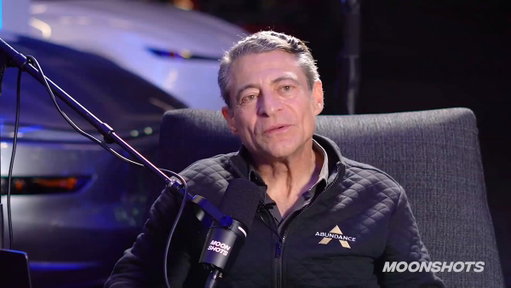
Elon Musk’s 4 predictions for the next decade
#1 Human lifespans will nearly double in the next decade
Asked what he thinks of Anthropic CEO Dario Amodei’s prediction that human lifespans will double in the next decade, Elon replies, “That’s probably correct. I don’t know about doubling but a significant increase? Sure.”
Elon explains:
“I have long thought that longevity or semi-immortality is an extremely solvable problem. I don’t think it’s a particularly hard problem. When you consider the fact that your body is extremely synchronized in its age, the clock must be incredibly obvious . . . you’re programmed to die. And so if you change the program, you will live longer. In retrospect, the solution to longevity will seem obvious.”
#2 There will be more robot surgeons in 3 years than all surgeons on Earth today
“Right now there’s a shortage of doctors and great surgeons,” Elon begins. “It takes a super long time to learn to be a good doctor, and even then, the knowledge is constantly evolving. Doctors have limited time. They make mistakes.”
He predicts that Tesla’s Optimus robot will be a better surgeon than the best surgeons on the planet in three years at scale:
“There will probably be more Optimus robots that are great surgeons than there are all surgeons on Earth . . . I mean I’m not like absolutely certain, but I’d say in four years I’d be absolutely certain.”
Elon explains:
“Here’s the thing to understand about humanoid robots in terms of the rate of improvement: you have three exponentials multiplied by each other. You have an exponential increase in the AI software capability, an exponential increase in the AI chip capability, and an exponential increase in the electromechanical dexterity. The usefulness of the humanoid robot is those three things multiplied by each other. Then you have the recursive effect of Optimus building Optimus. So you have a recursive multiplicable, triple exponential. Put a little margin on it, and it’s better than any human in four years. By five years, it’s not even close . . . Everyone will have access to medical care that is better than what the president receives right now.”
He says that you won’t even want a human in the loop:
“We’ve seen some advanced cases of automation, like Lasik for example, where the robot just lasers your eyeball. Now do you want an ophthalmologist with a hand laser? I wouldn’t want the best ophthalmologist with the steadiest hand out there with a hand laser on my eyeball. It’s going to be like that.”
#3 We may see “high double-digit” GDP Growth
“My best guess for how this will manifest is that prices will drop as the efficiency of production increases,” Elon predicts. “Prices in dollar terms are the ratio between the output of goods and services and the money supply. So if your output of goods and services increases faster than the money supply, you will have deflation . . . And I think governments will actually be pushing to increase money supply faster. They won’t be able to waste the money fast enough.”
Elon continues:
“Productivity is going to improve dramatically — it is improving dramatically — and I think we may see high double-digit output of goods and services.”
#4 Money will lose significance and you won’t have to save for retirement
“One side recommendation I have is: don’t worry about squirreling money away for retirement in like 10 or 20 years. It won’t matter.” Elon predicts. “If any of the things we’ve said are true, saving for retirement will be irrelevant.”
Elon explains:
“I don’t just have court side seats — I’m on the court, and it still blows my mind sometimes multiple times a week . . . I think we’ll hit AGI in 2026 . . . And I’m confident that by 2030, AI will exceed the intelligence of all humans combined.”
He continues:
“I’ll tell you something that most people in the AI community don’t yet understand. Almost no one understands this. The intelligence density potential is vastly greater than what we’re currently experiencing. I think we’re off by two orders of magnitude in terms of intelligence density per gigabyte — characterized by the file size of the AI . . . So two orders of magnitude that’s just algorithmic improvement — same computer. And the computers are getting better. That’s why I think it is a 10x improvement per year type thing. 1,000 percent. And that’s going to happen for the foreseeable future.”
Source: @PeterDiamandis (Jan 2026)
766K
248
14
25
2mo ago
StartupArchive_
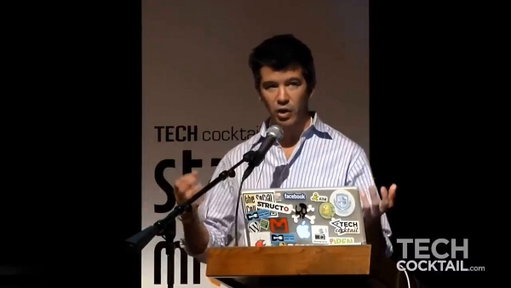
Travis Kalanick on the 2 things he looks for when investing in a startup
1. Would I cofound a company with this person? “Is the entrepreneur that sits across the table from me somebody that - either right at this moment in time or I see has the potential to be - somebody that I could see being a cofounder of myself? Somebody I could get excited about working with.”
2. Does this startup make for a good cocktail story? “Is your idea disruptive? Does it shake things up? Will it make big impact? And does it make for a good cocktail story? That’s sort of a litmus test - if I tell a story, am I excited about it? Do my eyes sparkle when I tell the story of what this founder is doing?”
![Telegram founder Pavel Durov on what separates A Players from B Players
“I can recall a few instances in my career where firing an engineer actually resulted in an increase in productivity,” Telegram founder Pavel Durov begins.
He gives an example of two Android engineers building an app that are having a hard time hitting deadlines:
“You think, ‘I probably have to hire a third engineer.’ But then you notice that one of [the engineers] is really weird — falling behind schedule, complaining, not assuming responsibility — and you ask, ‘What if I just fired this person?’ Then you fire this person, and in a few weeks you realize you never needed a third engineer. The problem was this guy who created more issues and problems than he solved. It’s so counterintuitive because in developing tech projects, you tend to think that you just throw more people into something and things get solved miraculously.”
Pavel continues:
“The other thing that people don’t realize is how demotivating working with a B Player is. Everyone can tell if the other engineer they’re working with is really competent. If the person is asking the wrong questions and they keep lagging behind, at a certain point if you’re an A Player, you get get this dissatisfaction and feeling that you are not able to realize your full potential and accomplish what you’re really meant to accomplish because of this person working next to you (or pretending to work next to you).”
Pavel reflects on what it is exactly that separates these B Players from A Players:
“In some cases it’s not because the person is lazy . . . It’s not about experience. More often it’s about natural ability and persistence. In 90% of cases, it’s just the inability to focus on one task for an extended period of time. Not everybody has this ability. So for people who do have this ability, it’s an insult to work alongside someone who is distracted and cannot go deep in the projects that they’re responsible for.”
Video source: @lexfridman (2025)](https://cdn.socialpruf.com/twitter/thumbnails/1980240080565641668?optimizer=image&width=512)
711K
2.29K
51
290
12mo ago
StartupArchive_
Telegram founder Pavel Durov on what separates A Players from B Players
“I can recall a few instances in my career where firing an engineer actually resulted in an increase in productivity,” Telegram founder Pavel Durov begins.
He gives an example of two Android engineers building an app that are having a hard time hitting deadlines:
“You think, ‘I probably have to hire a third engineer.’ But then you notice that one of [the engineers] is really weird — falling behind schedule, complaining, not assuming responsibility — and you ask, ‘What if I just fired this person?’ Then you fire this person, and in a few weeks you realize you never needed a third engineer. The problem was this guy who created more issues and problems than he solved. It’s so counterintuitive because in developing tech projects, you tend to think that you just throw more people into something and things get solved miraculously.”
Pavel continues:
“The other thing that people don’t realize is how demotivating working with a B Player is. Everyone can tell if the other engineer they’re working with is really competent. If the person is asking the wrong questions and they keep lagging behind, at a certain point if you’re an A Player, you get get this dissatisfaction and feeling that you are not able to realize your full potential and accomplish what you’re really meant to accomplish because of this person working next to you (or pretending to work next to you).”
Pavel reflects on what it is exactly that separates these B Players from A Players:
“In some cases it’s not because the person is lazy . . . It’s not about experience. More often it’s about natural ability and persistence. In 90% of cases, it’s just the inability to focus on one task for an extended period of time. Not everybody has this ability. So for people who do have this ability, it’s an insult to work alongside someone who is distracted and cannot go deep in the projects that they’re responsible for.”
Video source: @lexfridman (2025)
697K
592
224
233
8mo ago
StartupArchive_
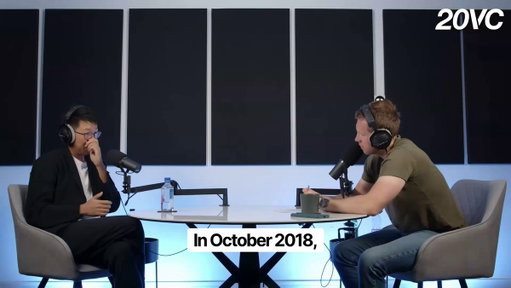
Jack Zhang on why he said no to Stripe’s $1.2 billion offer to buy Airwallex
“In October 2018, Stripe reached out to buy us,” Airwallex co-founder Jack Zhang (@awxjack) begins.
Patrick Collison flew out to Shanghai to meet Jack and his co-founder, and they spent the day together. After the meeting, Patrick sent over a Google Doc that was 10-20 pages long and asked Jack to make comments.
“I was like, ‘Wow, the vision of the companies over the next decade is very much the same.’ We both wanted to build the AWS of financial services, and obviously Stripe was much further ahead of us. But this was before COVID. Stripe was like a $9 billion company — very similar to the scale of Airwallex today. I also really liked Patrick. It was like this guy is so smart.”
Asked what makes Patrick Collison so smart, Jack replies:
“He’s intellectually honest about everything, and he’s able to go deep in multiple dimensions.”
Eventually Stripe offered $1.2 billion for Airwallex, and according to Jack, he and his co-founders would’ve walked away with $350 million.
“I met with the whole team, and I was really impressed,” Jack recalls. “I basically said I think we’re going to do it.”
But when he flew back to Melbourne, Jack decided against it. And it was actually Patrick Collison who inspired him to reject the offer. Jack explains:
“So one of the things that really inspired me from talking and spending time with Patrick was I asked, ‘What’s the long-term thing for Stripe and yourself? Are you going to be here forever?’ And Patrick said to me that he’s going to build Stripe for the next 20-40 years. And I just never heard a founder tell me they will dedicate their entire life to building a business. And so that was inspiring to me, and I’m like that’s what I want to do.”
Today, Airwallex (@airwallex) is an $8B company, with more than $1B in ARR.
Video source: @twentyminutevc @HarryStebbings (2025)
693K
2.71K
57
337
5mo ago
StartupArchive_
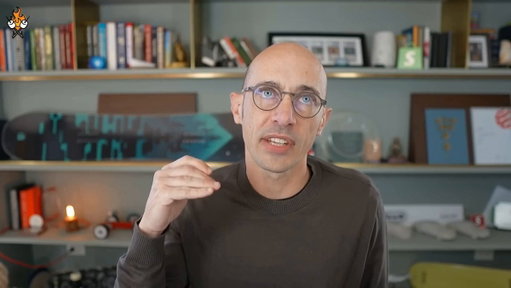
Shopify CEO Tobi Lutke explains Goodhart’s law and why he doesn’t like KPIs or OKRs
“Goodhart’s law is real. The moment a metric becomes a goal, it’s no longer a useful metric… No metric by itself is a complete heuristic for a complex business. There’s a million different tensions in a company, and you can’t keep all of them in harmony by optimizing for one thing.”
For this reason, Shopify doesn’t use KPIs or OKRs. But as Tobi explains, this doesn’t mean they don’t value data and metrics.
“We are extremely data informed. We have invested enormous amounts of money and time into systems that give us basically everything at our fingertips… But what Shopify attempts to do is just not over-fit for what’s quantifiable.”
People love optimizing for highly-quantifiable things because there’s immediate gratification that comes from seeing a number go up. But Tobi thinks that the most important aspects of a product are rarely quantifiable:
“The overlap of the most valuable things you can do with a product and the things that happen to be fully quantifiable are like maybe 20%. Which leaves 80% of a value space unaddressable by the people who only look at quantifiable things.”
He continues:
“Shopify is comfortable with unquantifiable things like taste, quality, passion, love, hate… The sort of deep satisfaction that a craftsperson feels when they’ve done a job well is actually a better proxy if you allow it to be.”
They then have robust analytics systems that tell the company if something’s wrong or a new rollout breaks something.
“We think about it as a cockpit for a pilot. The decisions are still made by pilots, and we think this leads to better results… I think there needs to be more acceptance in business of unquantifiable things… And then metrics take a support function.”
Source: @lennysan (Feb 2025)
609K
2.33K
77
237
10mo ago
StartupArchive_
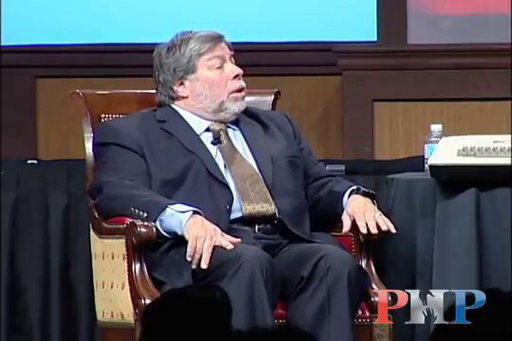
Steve Wozniak explains why he gave $10 million of his own shares to early Apple employees after the IPO
When Apple went public in 1980, Woz’s 4 million shares were worth some $116M, and he gave away $10M of them to early Apple employees.
As he explains in today’s clip:
“There were five of us that really ran the company for the first three years, and we pretty much had almost all the stock. So when we went public, I didn’t feel right about it. I felt that everybody who’d been around us was a part of helping.”
He continues:
“I came from Hewlett Packard and they had profit sharing every quarter. A certain amount of the profit was given to the employees of stock because you as an employee should feel like an owner of your company. And I felt that so strongly. So I gave away a lot of my stock to almost everybody in the company in marketing and engineering jobs… Then I gave huge amounts to a few key people—young people that were in high school and helped enthuse me and helped write code with me in the early days. I wouldn’t have gotten to where I got to without them. And I felt they deserved a part of it too.”
Video source: @PHPAgency (2011)
608K
2.94K
107
504
10mo ago
StartupArchive_
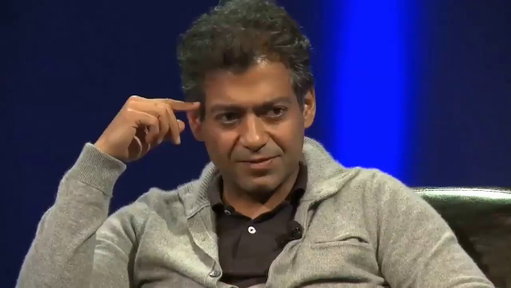
Naval Ravikant: “Networking is overrated… Do something great and your network will instantly emerge"
Naval offers the following advice to startup founders:
“Don’t spend your time doing meetings unless you really, really have to. I really think networking is overrated. There’s all these articles about how you’ve got to network more, and it makes me want to vomit.”
Instead he suggests:
“Go do something great and your network will instantly emerge. If you build a great product or if you get a good customer base, I guarantee you will get funded.”
Recruiting (customers and employees) and learning from really smart people are two exceptions. But don’t worry about building relationships with VCs or going to conferences early on. Just focus on your product, your team, and your users.
![Larry Ellison: “When WhatsApp sold for $19B, a lot of us were shocked… until we thought about it”
In 2014, Mark Zuckerberg bought WhatsApp and their 450 million MAUs for $19 billion.
“A lot of us [in Silicon Valley] were shocked — until we thought about it and understood the value of having access to that many consumers,” Oracle founder Larry Ellison says in this interview that took place a few months after the acquisition closed.
Ellison points out that you have to take into consideration how much traditional businesses (e.g. cable TV companies) pay to acquire customers:
“This is not the place to debate how much you can get through WhatsApp — $1 per year per customer is not going to do it — but I believe there will be opportunity to sell these same customers other things as they join your ecosystem.”
He continues:
“There was quite a battle between Facebook and Google over that property. It wasn’t that one guy did something really silly with a lot of money. Mark Zuckerberg won an auction over Google and paid a high price but got a very valuable asset in the 21st century.”
As of 2025, WhatsApp has approximately 3.1 billion MAUs globally.](https://cdn.socialpruf.com/twitter/thumbnails/2041184021544329474?optimizer=image&width=512)
601K
990
32
130
6mo ago
StartupArchive_
Larry Ellison: “When WhatsApp sold for $19B, a lot of us were shocked… until we thought about it”
In 2014, Mark Zuckerberg bought WhatsApp and their 450 million MAUs for $19 billion.
“A lot of us [in Silicon Valley] were shocked — until we thought about it and understood the value of having access to that many consumers,” Oracle founder Larry Ellison says in this interview that took place a few months after the acquisition closed.
Ellison points out that you have to take into consideration how much traditional businesses (e.g. cable TV companies) pay to acquire customers:
“This is not the place to debate how much you can get through WhatsApp — $1 per year per customer is not going to do it — but I believe there will be opportunity to sell these same customers other things as they join your ecosystem.”
He continues:
“There was quite a battle between Facebook and Google over that property. It wasn’t that one guy did something really silly with a lot of money. Mark Zuckerberg won an auction over Google and paid a high price but got a very valuable asset in the 21st century.”
As of 2025, WhatsApp has approximately 3.1 billion MAUs globally.
595K
1.28K
67
152
1mo ago
StartupArchive_
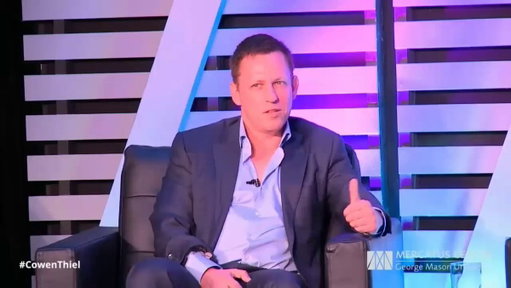
Peter Thiel on why the name of your startup is predictive of success or failure
“This is a slight aesthetic thing that I believe in very strongly: the names of companies are often very predictive of future failure or success.”
PayPal and Napster are the first example Thiel gives:
“PayPal was a very friendly name — it was the friend that helps you pay. Napster was a bad name — you nap some music, you nap a kid. That sounds like a bad thing to be doing, and it’s no wonder the government then comes in and shuts the company down within a few years.”
“You want to be very careful of how you name companies,” Thiel warns founders. In the context of the sharing economy, he likes Airbnb more than Uber:
“Airbnb sounds very innocent like this virtual bread and breakfast — this very light, non-threatening sort of company. Uber sounds like a bad name from Germany sometime in the 1930s. What are you exactly above? Maybe the law? This is probably something that, again from a regulatory perspective, I think Airbnb is a vastly better name than Uber.”
And on the social networking side, Thiel likes Facebook more than MySpace:
“You can say that all these social networks involve both reading and writing… Over time, reading dominates writing. Facebook was about learning about people around you — about their real identities at Harvard. MySpace started among wannabe actors in Los Angeles, and it was about them coming up with fictional narratives around themselves and a lot of other people in LA who are generally like that. And because reading dominates writing, Facebook would ultimately dominate MySpace. There’s a certain version where the whole arc of the company and the whole product arc was implicit in the names.”
Source: @mercatus (Apr 2015)
![Google founder Larry Page on how he learned to run a business
When asked how he learned to run a business, Google cofounder Larry Page responds:
“I read a lot of books.”
He joked:
“[When renaming Google to Alphabet] I read like three books on naming—which is more than anyone else had read. So I decided I was the expert . . . and actually that was useful. I recommend reading things.”
It’s an important mindset that is often overlooked. One of the richest ways to learn something is reading things written by people who deeply understand their subject matter.
Even Elon Musk was able to teach himself about the fundamentals of rocket design and astrodynamics by reading books. He is often quoted on this topic:
“I read books and talked to people. I mean that's kind of how one learns anything. There's lots of great books out there and lots of smart people.”
Building a startup is an infinite set of problems that are being thrown at you.
Next time you’re facing one of those problems, I’d recommend finding the best book or blog post you can on the topic and reading it.
You don’t need an MBA from a fancy school to be an expert in business or startups.
You just need to sit down and read.
Video source: @FortuneMagazine (2015)](https://cdn.socialpruf.com/twitter/thumbnails/2004172170927194449?optimizer=image&width=512)
557K
2.91K
81
402
9mo ago
StartupArchive_
Google founder Larry Page on how he learned to run a business
When asked how he learned to run a business, Google cofounder Larry Page responds:
“I read a lot of books.”
He joked:
“[When renaming Google to Alphabet] I read like three books on naming—which is more than anyone else had read. So I decided I was the expert . . . and actually that was useful. I recommend reading things.”
It’s an important mindset that is often overlooked. One of the richest ways to learn something is reading things written by people who deeply understand their subject matter.
Even Elon Musk was able to teach himself about the fundamentals of rocket design and astrodynamics by reading books. He is often quoted on this topic:
“I read books and talked to people. I mean that's kind of how one learns anything. There's lots of great books out there and lots of smart people.”
Building a startup is an infinite set of problems that are being thrown at you.
Next time you’re facing one of those problems, I’d recommend finding the best book or blog post you can on the topic and reading it.
You don’t need an MBA from a fancy school to be an expert in business or startups.
You just need to sit down and read.
Video source: @FortuneMagazine (2015)
Watch the full interview with Elon Musk on the @nikhilkamathcio podcast here: youtube.com/watch
543K
662
17
124
10mo ago
StartupArchive_
Watch the full interview with Elon Musk on the @nikhilkamathcio podcast here: https://www.youtube.com/watch?v=Rni7Fz7208c
525K
1.39K
55
119
7mo ago
StartupArchive_
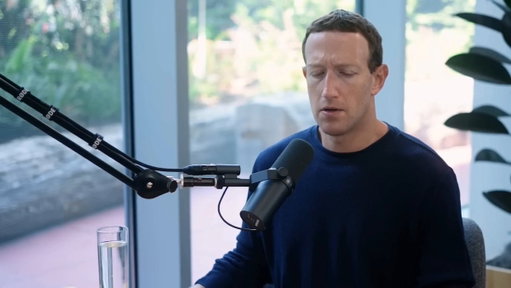
Mark Zuckerberg on Elon Musk’s acquisition of Twitter
Elon Musk famously reduced head count by 80% after acquiring Twitter. It was controversial at the time, but Mark is asked what he thinks Elon did well during it.
Mark responds:
“You can agree or disagree with the exact tactics and how he did that. Every leader has their own style… But a lot of the specific principles that he pushed on: making the organization more technical, decreasing distance between engineers at the company and him, fewer layers of management. I think that those were generally good changes.”
Mark also believes this was good for the technology industry as a whole:
“My sense is that there were a lot of other people who thought that those were good changes, but who may have been a little shy about doing them. Just in my conversations with other founders and how people have reacted to the things we’ve done… When people see what Elon is doing, I think that gives people the ability to think through how to shape their organizations in a way that can be good for the industry and make all these companies more productive over time.”
He continues:
“So I think that was one thing where he was quite ahead of a bunch of the other companies on… And from the outside, it’s very hard to know. Did he cut too much? Did he not cut enough? I don’t think it’s my place to opine on that… But certainly his actions led me and, I think, a lot of other folks in the industry to think about, ‘Hey, are we doing this as much as we should? Could we make our companies better by pushing on some of these same principles?’”
Video source: @lexfridman (2023)
511K
3.30K
79
149
2mo ago
StartupArchive_
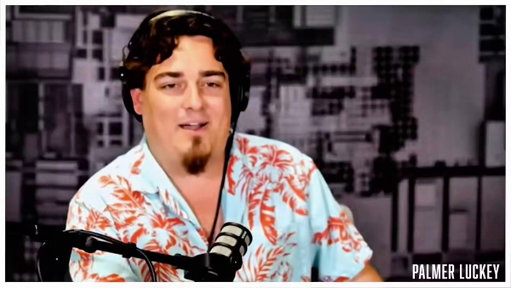
Billionaire Palmer Luckey on why he only flies coach
“I don’t fly private and do fly coach,” billionaire founder of Anduril and Oculus Palmer Luckey says. “For me, it’s a reasoned thing. With exceptions for long, international travel, we only cover coach travel for our employees — it’s only a few hours, and it’s a very bad use of company money for us to be buying business or first-class for people. Because we have so much travel at the company, we could easily spend a very serious fraction of our resources on people traveling instead of slightly better seats.”
To lead by example, Palmer will fly coach — even when he uses his own money:
“People say, ‘Well, why don’t you just fly first-class?’ And here’s why: if I’m going to ask my employees to do it, I need to do it too — even when it’s my own money. It’s not that I would appear out of touch, I would literally be out of touch. Maybe one day coach gets so bad that I literally tell everyone, ‘I hear you, we’re all going business now.’ But today is not that day.”
He continues:
“I love the back of the plain by the window. Nobody bothers you. You can let everyone get off the plane before you. You don’t have to fight anybody . . . And my grandpa was a pilot for United Airlines for over 40 years. So I also grew up around commercial airlines and to me there is a certain romanticism to mass-market, mass-available air travel. What an incredible thing. And we did it — America did it! We figured out how to make it economically viable, and we build everyone else’s airplanes. It is an American thing.”
Source: @myfirstmilpod (Oct 2022)
Startup Archive (@startuparchive_) X Stats & Analytics
Startup Archive (@startuparchive_) has 157K X followers with a 0.34% engagement rate over the past 12 months. Across 909 posts, Startup Archive received 337K total likes and 102M impressions, averaging 371 likes per post. This page tracks Startup Archive's performance metrics, top content, and engagement trends — updated daily. To benchmark @startuparchive_ against other accounts, use Socialpruf's X competitor analysis tool.
Startup Archive (@startuparchive_) X Analytics FAQ
How many X (Twitter) followers does Startup Archive have?+
Startup Archive (@startuparchive_) has 157K X (Twitter) followers as of October 2026.
What is Startup Archive's X (Twitter) engagement rate?+
Startup Archive's X (Twitter) engagement rate is 0.34% over the last 12 months, based on 909 posts.
How many likes does Startup Archive get on X (Twitter)?+
Startup Archive received 337K total likes across 909 posts in the last 12 months, averaging 371 likes per post.
How many X (Twitter) impressions does Startup Archive get?+
Startup Archive's X (Twitter) content generated 102M total impressions over the last 12 months.
Can I compare Startup Archive with other X accounts?+
Yes. Add @startuparchive_ to a competitor set with Socialpruf's X competitor analysis tool and benchmark it side by side with any other public accounts on views, engagement rate and follower growth, with history back to each account's first post.