NewGet @founderspodcast's full report

X analytics
Similar Accounts:
X analytics
Similar Accounts:
followers
215K
impressions
35.8M
likes
329K
comments
7.00K
posts
1.30K
engagement
0.940%
emv
$806K
Average per post
27.5K
Key Metrics
Impressions
monthly
Distributions
Content
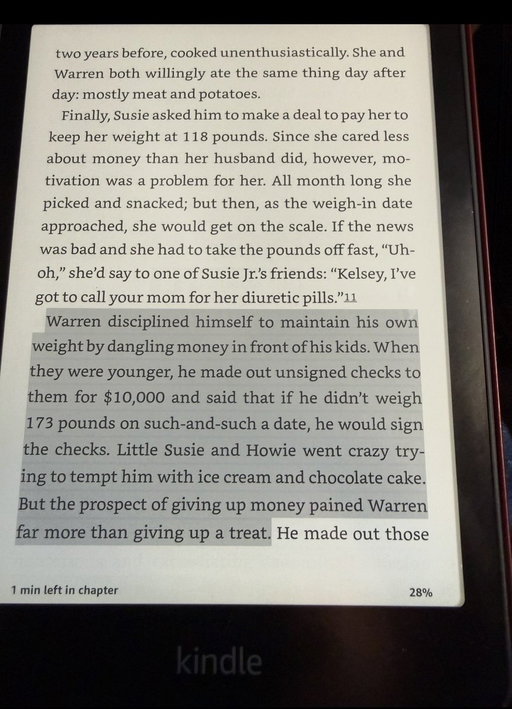
3.77M
10.4K
178
810
8mo ago

FoundersPodcast
How Warren Buffett stopped himself from getting fat:
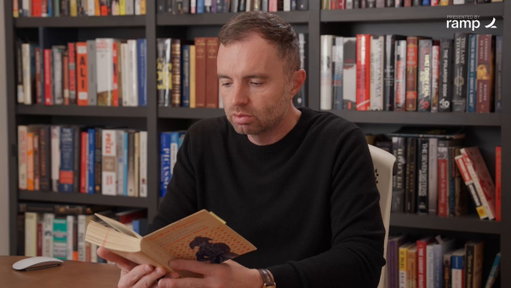
1.56M
2.72K
43
409
1mo ago
FoundersPodcast
Episode #432 The Mind of Napoleon:
0:00 — " This book gives you insight into the mind of a man who combined energy of thought and energy of action to an exceptional degree."
0:30 — "Work is my element. I am born and built for work. I have known the limitations of my legs, I have known the limitations of my eyes; I have never been able to know the limitations of my working capacity."
0:52 — "He knows that men have always been the same, that nothing can change their nature. It is from the past that he will draw his lessons in order to shape the present."
1:33 — "All my life I have sacrificed everything: comfort, self-interest, happiness, to my destiny. Destiny must be fulfilled that is my chief doctrine."
2:33 — "A consecutive series of great actions never is the result of chance and luck; it always is a product of planning and genius.
2:40 — "What is luck? The ability to exploit accidents: The vulgar would call this luck, but in fact it is the characteristic of genius."
3:30 — "Hesitation is fatal; once an action is begun, it must be followed through with the utmost exertion of the will."
3:44 — "If I have any ambition, it is so natural to me, so innate, so intimately linked with my existence, that it is like the blood that circulates in my veins, like the air that I breathe."
4:14 — "To have lived without glory, without leaving a trace of one's existence, is to have not lived at all."
6:25 — "Without great men, we have only mediocre men, and if there had never been anything but mediocre men, we would still be half apes."
7:20 — "The great majority of men attend to what is necessary only when they feel a need for it-the precise time when it is too late."
7:30 — "True character always pierces through in moments of crisis. There are sleepers whose awakening is terrifying."
9:11 — "Be successful! I judge men only by the results of their actions."
11:15 — "The truth is that everything around us is miracle."
15:18 — "Men of genius are meteors destined to be consumed in lighting up their century."
16:13 — "A man must know himself. Until then, all endeavors are in vain and all schemes collapse."
17:53 — "All great events hang by a single thread. The clever man takes advantage of everything, neglects nothing that may give him some added opportunity; the less clever man, by neglecting one thing, sometimes misses everything."
18:12 — "What I am, I owe to strength of will, character, application, and daring."
19:27 — "Imagination rules the world."
20:58 — " History I conquered rather than studied. That is to say, I wanted from it, and retained of it, only what could add to my ideas. I spurned what was of no use, and I seized upon certain conclusions that pleased me."
26:01 — " It is better to eat than be eaten."
26:08 — "Appetite comes with eating."
27:43 — "It may be possible to arrest the surge of progress or to throttle it, but not to destroy it."
29:01 — " I have read your letter. It is utterly worthless. There are too many words and not enough ideas."
31:08 — "Without talent, without knowledge, there is no equality but the equality of misery and servitude."
33:46 — Napoleon to someone who hasn't studied history: " Speak as little as possible. Your knowledge is too limited, and your education has been too neglected for you to engage freely in discussions."
36:08 — "The corpse of an enemy always smells sweet.”
36:44 — "If you wage war, do it energetically and with severity."
39:30 — "In war, men are nothing. One man is everything."
40:20 — "Death is nothing, but to live defeated and without glory is to die every day."
46:23 — "Conquest made me what I am. Conquest alone can keep me there."
46:34 — "Power is my mistress. I have worked too hard at her conquest to allow anyone to take her away from me."
47:13 — "My soul is made of marble. Lightning has found no grip on it and had to slide off of it. I have no fear of becoming their victim. They will be biting into granite."

1.11M
6.47K
56
494
10mo ago
FoundersPodcast
Arnold Schwarzenegger on his love life:
"A conflict grew up in our relationship. She was a well-balanced woman who wanted an ordinary life, and I was not a well-balanced man and hated the very idea of ordinary life.
She thought I would settle down, that I would reach the top in my field and level off. But that's a concept that has no place in my thinking.
For me, life is continuously being hungry.
The meaning of life is not simply to exist, to survive, but to move ahead, to go up, to achieve, to conquer.
I wanted to grow. I wanted to continue on. The life she wanted would not permit that."
— From episode 309 “Arnold Schwarzenegger Before He Was Successful”
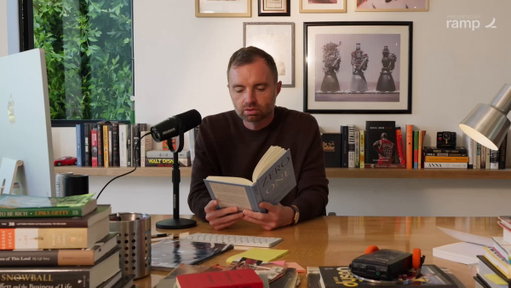
723K
1.42K
37
177
3mo ago
FoundersPodcast
New episode: Peter Thiel on How to Build a Creative Monopoly
Or what I learned from reading Zero to One for the 3rd (or 4th) time:
0:00 Every great entrepreneur is first and foremost a designer.
0:21 Long-term planning is often undervalued by our indefinite short-term world.
1:24 Founders only sell when they have no more concrete visions for the company. Definitive founders with robust plans don't sell.
2:03 A startup is the largest endeavor over which you can have definitive mastery.
3:44 Don’t do anything someone else can do.
4:29 Today's best practices lead to dead ends. The best paths are new and untried.
5:05 Technology is miraculous because it allows us to do more with less, ratcheting up our fundamental capabilities to a higher level. By creating new technologies, we rewrite the plan of the world.
6:25 Indeed, the single most powerful pattern I have noticed is that successful people find value in unexpected places, and they do this by thinking about business from first principles instead of formulas.
9:16 Brilliant thinking is rare, but courage is even in shorter supply than genius.
9:53 The present is the past biting into the future.
10:37 Small groups of people bound together by a sense of mission have changed the world for the better.
11:25 This is what startup has to do: question received ideas and rethink business from scratch.
13:36 The most contrarian thing of all is not to oppose the crowd, but to think for yourself.
15:57 Creative monopoly means new products that benefit everybody and sustainable profits for its creator.
18:50 If you're interested in making things, you'll be less afraid to pursue this activity single-mindedly and thereby become incredibly good at them.
22:03 If you focus on near-term growth above all else, you miss the most important question you should be asking: Will this business still be around a decade from now?
26:30 Every monopoly dominates a large share of its market. Therefore, every startup should start with a very small market. Always err on the side of starting too small. If you think your initial market might be too big, it almost certainly is.
28:53 Competition is for losers. Avoid competition as much as possible.
29:44 The definitive person determines the one best thing to do and then does it. The definitive person strives to be great at something substantial. They strive to be a monopoly of one.
31:15 What is luck? The ability to exploit accidents. — Napoleon
33:20 We do not live in a normal world. We live under a power law. And as a result, company outcomes follow a power law. A small handful of companies radically outperform all others.
34:00 If you do start your own company, you must remember the power law to operate it well.
34:05 The most important things are singular.
36:29 Making mistakes is the privilege of the active.
38:00 The best entrepreneurs know this: Every great business is built around a secret that is hidden from the outside. A great company is a conspiracy to change the world. When you share your secret, the recipient becomes a fellow conspirator.
40:54 A small company depends on great people much more than a big company does.
41:15 The founding of a company lasts as long as a company is creating new things, and it ends when creation stops.
41:25 No company has a culture. Every company is a culture.
41:48 Since time is your most valuable asset, it is odd to spend it working with people who you don't envision any long-term future together.
42:09 Recruiting is a core competency for any company. It should never be outsourced.
42:37 Your company should be a tribe of like-minded people fiercely devoted to the company mission.
44:02 Superior sales and distribution by itself can create a monopoly, even with no product differentiation. The converse is not true.
44:24 Advertising matters because it works. It works on nerds and it works on you.
44:49 Advertising doesn't exist to make you buy a product right away. It exists to embed subtle impressions that will drive sales later.
46:29 Poor sales rather than bad product is the most common cause of failure. If you can get just one distribution channel to work, you have a great business.
49:00 When Howard Hughes was awarded the Congressional Gold Medal in 1939 for his achievements in aviation, he didn't even show up to claim it.
52:00 The most important task in business, the creation of new value, cannot be reduced to a formula and applied by professionals.
Today is the 10 year anniversary of Founders. It’s my life’s work. Thank you for listening.
699K
4.19K
320
229
3w ago
FoundersPodcast
Today is the 10 year anniversary of Founders.
It’s my life’s work.
Thank you for listening.
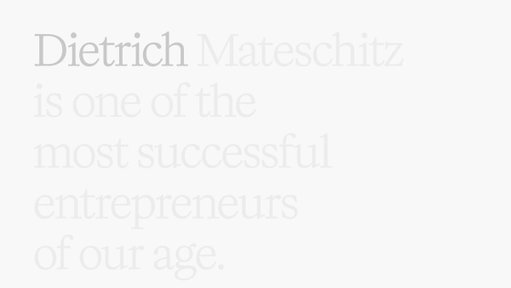
683K
1.79K
45
220
10mo ago
FoundersPodcast
A few surprising things I learned from reading about the founder of Red Bull:
1. He started the company when he was 41 years old.
2. He was making $500 to $800 million a year and his 49% stake was worth $20 to $30 billion.
3. The company was started with just $500,000 from him and $500,000 from his partner. Outside of a small loan from a local bank all other expansion was funded by profits.
4. The company reached profitability in its 3rd year and has been profitable every year since. (33 years and counting)
5. He took no dividends for the first 13 years and reinvested all profits into growth instead.
6. He viewed Red Bull as a “marketing conglomerate” and tried to outsource everything else.
7. He was intensely private.
When an author tried to interview his elderly mother for an unauthorized biography Mateschitz threatened to have the author's knee caps broken.
He said it would only cost $500 to hire a Russian to do the job.
8. There are no biographies written in English about Mateschitz.
9. He believed a handshake agreement among gentlemen was sufficient and regularly did business with trusted partners with no written contract.
10. He bought a popular magazine just so he wouldn’t appear in it.
11. He didn’t like spending time socializing. He said:
“I don't believe in 50 friends. I believe in a smaller number. Nor do I care about society events. It's the most senseless use of time. When I do go out, from time to time, it's just to convince myself again that I'm not missing a lot."
12. He was universally described by former employees as a gentleman, charismatic, and fiercely loyal.
13. He owned a private island in Fiji and said he was attracted to having his own independent state. His state would have the shortest set of laws in the world:
“The rules are simple: Nobody tells you what you have to do — only what you don’t have to do.”
14. He still prioritized fitness deep into his 70s and liked driving fast, piloting his planes, and competing in off-road motorcycle races.
15. When he was asked if he was going to retire he said: “I’m having more fun than ever.”
16. He refused to sell Red Bull or take it public and worked on it until he died.
---
I'm reposting one of my favorite founder stories. If you listened to this first time, I recommend listening again. If you missed this before, you're about to hear one of the wildest founder stories of all time.
493K
5.04K
102
311
5mo ago
FoundersPodcast
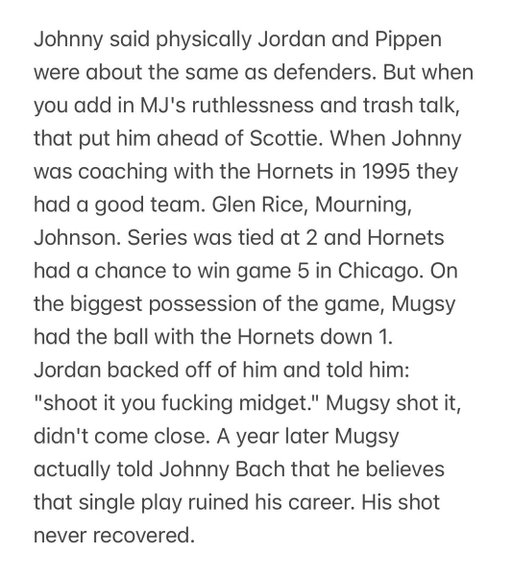
Michael Jordan was cold-blooded:
435K
6.60K
41
729
11mo ago
FoundersPodcast
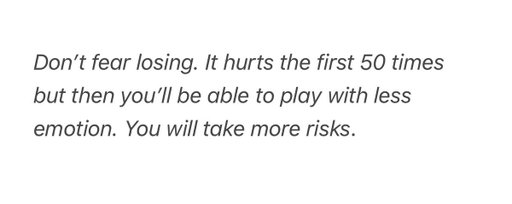
Sage advice from Elon:
393K
1.19K
27
169
7mo ago
FoundersPodcast
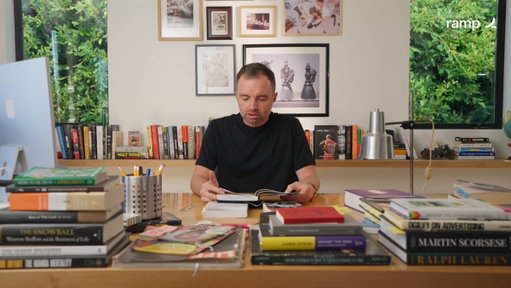
SpaceX is one of the most dominant companies on the planet and their performance gap just keeps getting bigger. In 2025, SpaceX launched more mass to orbit than every other provider on Earth combined. MUCH MORE: every payload from China, Russia, Europe, and all American launchers wasn’t even a fifth of what SpaceX put into orbit. They’re the only company producing rockets at an industrial scale. The practices that made SpaceX dominant aren’t unique to rockets. They’re a blueprint for building anything hard. This episode — and the essay it is based on — explores How SpaceX Works:
386K
492
12
58
4w ago
FoundersPodcast
Episode #433 How Michael Bloomberg Works
0:00 — "I was fired from the only full-time job I'd ever known and from the high-pressure life I loved."
3:43 — "If we're going to eat, someone's gotta sell."
4:21 — "You're always selling. And if you don't like to sell, here's my advice: get over it." — Ken Griffin
4:48 — "It's the doers, the lean and hungry ones, those with ambition in their eyes and fire in their bellies who go the furthest and achieve the most."
13:56 — "It's said that 80 percent of life is just showing up.
I believe that.
You can never have complete mastery over your existence. You can't choose the advantages you start out with, and you certainly can't pick your genetic intelligence level.
But you can control how hard you work. I'm sure someone, someplace, is smart enough to succeed while “keeping it in perspective" and not working too hard, but I've never met him or her.
"The more you work, the better you do. It's that simple. I always outworked the other person (and if I hadn't, he or she would be writing this book)"
15:04 — "I've never let planning get in the way of doing."
15:07 — "Life, I've found, works the following way: Daily, you're presented with many small and surprising opportunities. Sometimes you seize one that takes you to the top. Most, though, if valuable at all, take you only a little way.
To succeed, you must string together many small incremental advances-rather than count on hitting the lottery jackpot once.
Trusting to great luck is a strategy not likely to work for most people.
As a practical matter, constantly enhance your skills, put in as many hours as possible, and make tactical plans for the next few steps.
Then, based on what actually occurs, look one more move ahead and adjust the plan. Take lots of chances, and make lots of individual, spur-of-the-moment decisions."
15:51 — "Don't devise a Five-Year Plan. Central planning didn't work for Stalin or Mao, and it won't work for an entrepreneur either."
16:13 — "A reporter asked me what we at Bloomberg had failed at.
My answer was, "Nothing; but what we accomplished wasn't always what we set out to do."
Often, in the process, things worked that we hadn't planned on; unforeseen uses arose for our products; customers appeared whom we hadn't known existed-and exactly the reverse occurred for those we had been dead sure of. Planning has its place; the actual thought process sometimes leads to great new ideas.
But you can only accomplish what’s possible when you get there."
16:45 — "Whatever your idea is you've got to do more of it than anyone else."
17:07 — "I've always loved my work and put in a lot of time which has helped make me successful.
I truly pity people who don't like their jobs.
They struggle at work, so unhappily, for ultimately so much less success, and thus develop even more reason to hate their occupations.
There's too much delightful stuff to do in this short lifetime not to love getting up on a weekday morning."
17:30 — "Did I want to risk an embarrassing and costly failure? Absolutely.
Happiness for me has always been the thrill of the unknown.
Trying something that everyone says can't be done.
Feeling that gnawing pit in my stomach that says: "Danger ahead."
I want action, I want challenge.
Work was, is, and always will be a very big part of my life. I love it.
Even today, after toiling for 50 years, I wake up looking forward to getting in early, practicing my profession, creating something, competing against the best.
It's a real high to be a participant rather than a spectator."
19:10 — "Banks and venture capitalists can be the worst enemies of entrepreneurs. They create doubt in entrepreneurs' minds. And worst of all, they think that the originator will be helped by their oh-so-insightful views on how he or she should run the new business. Often, they kill off what's different, special, and full of potential."
20:11 — "We've always built the product first. Selling is the only process we run simultaneously with development from the start."
20:22 — "We acted from day one. Others plan to plan for months."
44:32 — "I don't believe that business battles should be even. At Bloomberg, we don't want fair fights. We want to go into contests with an advantage."
45:20 — "Most fortunes are built by entrepreneurs who started with nothing and generally got fired once or twice in their careers.
And throughout history, the vast majority of great writers, artists, musicians, dancers, and athletes have come from the less financially secure families."
48:17 — On never selling his company: "Why swap fun, influence, challenge, and more money than you could ever spend for only a multiple of more money than you can ever spend? Answering to no one is the ultimate situation."
Incredible list of thoughts and ideas. Numbers 3, 4, 8, 10, and 14 are my personal favorites
349K
1.19K
84
141
11mo ago
FoundersPodcast
Incredible list of thoughts and ideas. Numbers 3, 4, 8, 10, and 14 are my personal favorites
“He was paying himself $500,000,000 to $800,000,000 a year.”
339K
1.03K
12
61
10mo ago
FoundersPodcast
“He was paying himself $500,000,000 to $800,000,000 a year.”

314K
2.48K
16
187
12mo ago
FoundersPodcast
309K
628
26
91
1mo ago
FoundersPodcast
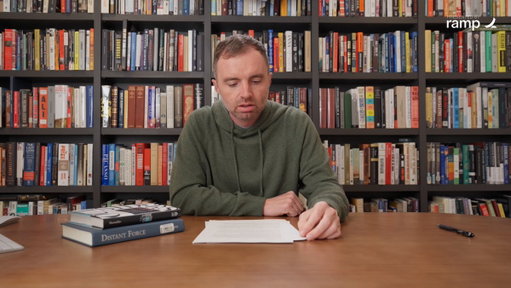
Charlie Munger said "Henry Singleton's financial returns were a mile higher than anyone else's, they were utterly ridiculous."
NEW episode: "HOW HENRY SINGLETON WORKED" based on the hard-to-find book Distant Force: A Memoir of the Teledyne Corporation and The Man Who Created It
0:00 — "He aggressively repurchased his stock, eventually buying over ninety percent of Teledyne's shares."
0:45 — "He was known as The Sphinx for his reluctance to speak with either analysts or journalists."
1:25 — Charlie Munger: "Singleton's financial returns were a mile higher than anyone else's, they were utterly ridiculous."
2:00 — Buffett: "The heads of many companies are not skilled in capital allocation. Their inadequacy is not surprising. Most bosses rise to the top because they've excelled in an area such as marketing, production, engineering, administration, or sometimes institutional politics."
4:10 — Singleton: "Our conclusion was that the key was cash flow. Our attitude towards cash generation and asset management came out of our own thinking. It is not copied."
4:30 — Buffett: "Henry Singleton has the best operating and capital deployment record in American business. If one took the hundred top business school graduates and made a composite of their triumphs, their record would not be as good as Singleton's."
9:40 — Singleton: "If anyone wants to follow Teledyne, they should get used to the fact that our quarterly earnings will jiggle. Our accounting is set to maximize cash flow, not reported earnings."
10:50 — Singleton believed buying stock at attractive prices was self-catalyzing, analogous to coiling a spring that at some future point would surge forward to realize full value."
11:50 — Singleton: "I don't reserve any day-to-day responsibilities for myself, so I don't get into any particular rut. I do not define my job in any rigid terms, but in terms of having the freedom to do whatever seems to be in the best interest of the company at any time."
14:35 — Singleton: "If everyone's doing them, there must be something wrong with them." (on share repurchases by Fortune 500 companies)
26:30 — Singleton: "Teledyne is like a living plant, with our companies as the different branches and each putting out new branches and growing so that no one business is too significant."
28:35 — Singleton: "We work our heads off to increase our own capability at collecting and promoting the right people. To the extent that we succeed, the whole company will succeed."
32:30 — "What's unique about him is that I'll ask him a question about one of these companies that I've asked him to supervise, and he always knows the exact numerical answer. That's the kind of fellow that you pick who runs a company and does it well."
35:00 — Singleton: "There are tremendous values in the stock market, but in buying stocks, not entire companies. Buying companies tends to raise the purchase price too high."
41:35 — Claude Shannon on Singleton: "He always tries to work out the best moves, and maybe he doesn't like to talk too much because when you're playing a game, you don't tell anyone else what your strategy is."
42:00 — Singleton: "We are not particularly persuaded by quick, temporary gains. We'd rather get something permanent, and that takes time."
44:40 — Munger: "Henry Singleton was the smartest single human being I've ever known in my entire life."
45:00 — Munger: "Henry was a lot smarter, but Warren had thought about investments a lot longer." (distinguishing raw intelligence from accumulated experience)
276K
663
21
68
2w ago
FoundersPodcast
New episode: Mark Zuckerberg's Empire
0:00 — "Carthage must be destroyed." (Zuckerberg on Google)
2:59 — "Sean Parker observed this kind of imperial tendency in Mark."
3:35 — "Either a Caesar or nothing." (Zuckerberg's shirt)
4:25 — "What is it like to be one of the most powerful men in human history, who, by age 42 has secured a place in the books that'll be written about his era for centuries after his death?"
4:55 — "People call him arrogant. He's not. But time after time, his arrogance just turns into truth."
7:25 — "One day they will be out of office and eventually dead, while Zuckerberg, whose majority control of Meta's voting power makes his removal effectively impossible, could in fifty years still be ruler of his empire."
8:05 — "The more power a man acquires, the more his empire expands, the more he depends on other people for information about everything from his own court to the furthest reaches of the empire." (The Dictator's Dilemma)
14:15 — "I think we all have a void in our lives, and the lucky ones find something that fills that space to make us more optimal, to make us a better human being. Mark filled the void with fighting." (Zuckerberg's MMA coach)
16:40 — "There have been too many things that I've tried to build and then have been told, 'Nah, you can't really build that,' by the platform provider. At some level, I'm just like, 'Nah, fuck that.'" (Mark Zuckerberg)
18:05 — "Meta's capital expenditure this year will exceed the military budget of every country on Earth except the United States, China, and Russia."
18:15 — "This is how it is for him; there is no stopping. He is not like the others of his vintage, who all at some point abdicate, or sell, or are overthrown."
20:15 — "I'm never going to stop." (Mark Zuckerberg)
31:15 — "Mark is the fucking Terminator. He's actually not an asshole. He's not a miserable fuck. His source of advantage is he's never happy. He just doesn't fucking stop." (A researcher at a competing AI lab, who formerly worked at Meta)
39:55 — "This is who I am. I love this. I didn't set out to build a company. I just love building things." (Mark Zuckerberg)
40:35 — "You can't take this away from him. He wouldn't be him if he stopped."
271K
846
36
115
12mo ago
FoundersPodcast
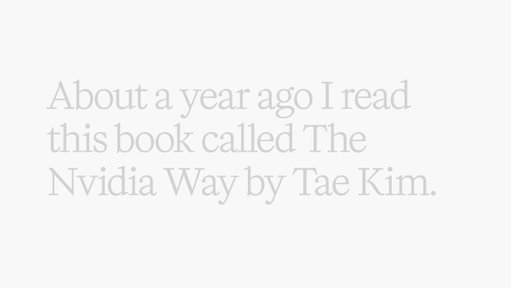
New episode: "How Jensen Works"
This episode covers the insanely valuable company-building principles of Jensen Huang and nothing else.
List of ideas:
1. Professor Jensen
2. The Whiteboard
3. Complacency Kills
4. Flat Organization
5. Public Criticism
6. Tortured into Greatness
7. Speed of Light
8. Extreme in All Things
9. Top 5 Emails
10. Direct Communication
1. LUA
12. The Mission is the Boss and Pilot-in-Command
13. Strategy is Action
14. Ship the Whole Cow
15. Go to School on Everybody
16. Create the Market
17. Choke You With Gold
18. Highest Priority First
19. Swarm Your Greatest Opportunity
I spent over 40 hours reading (and rereading) The Nvidia Way by Tae Kim.
I then spent several days editing down 30 pages of notes from the book.
I deleted everything that wasn't How Jensen Works.
19 ideas. 55 minutes:

264K
473
45
18
9mo ago
FoundersPodcast
Recording a conversation today with one of the greatest living founders. Hint:
![This episode is about a once-in-a-generation mind working on what may be the most important problem in history.
It's based on the new book The Infinity Machine: Demis Hassabis, DeepMind, and the Quest for Superintelligence by Sebastian Mallaby.
(0:00) This is the most crazy, ferocious corporate battle that we've ever seen.
(2:21) Intelligence is fundamental; it is the root of all else.
(3:27) When Demis founded DeepMind almost every investor turned him away.
(4:50) Demis is a missionary entrepreneur and out-of-the-box scientist who, through brilliance and extraordinary drive, emerges as the right person for a particular moment.
(6:20) I sit at my desk at 2 a.m., and I feel like reality is staring at me, screaming at me, literally screaming at me, trying to tell me something if I could just listen hard enough. That's how I feel every day, so you can see why I'm trying to build AI. I've felt that since I was very young that there's a deep, deep mystery about what's going on here.
(7:10) Demis, who blazed the trail followed by rivals, is decent and public-spirited and wants the best for humanity. He has ego; he is fearsomely competitive, but his goal is scientific enlightenment, not money or power.
(9:49) Demis has an extraordinary level of determination, unlike pretty much anybody. Astonishing, incredible determination. That's his most defining characteristic: just unbelievable determination. He works, sleeps, eats, breathes the mission 24 hours a day to a degree that I haven't seen with other people.
(10:48) There is no 50% mode in Demis. There is not even a 99% mode in Demis. There is only 100%.
(14:39) The slightly warped way I took that was: how do you know you've done your best? The only way I could know is basically if I push myself to the point just before death, because that is literally when you have done your best.
(19:07) When he signed up for a game he liked to feel that he could win.
(20:44) He saw no reason not to start a company and so he did.
(22:40) Demis on what losing feels like to him: It's like my soul is on fire.
(25:34) Demis was an extreme case of an authentic entrepreneur, not a mercenary who starts with a desire to get rich from a startup then casts around for a plausible idea, but rather a missionary who feels compelled to work on a particular challenge then starts a company as a way of tackling it.
(25:57) The good thing about missionaries is that they never quit. Even if they have to work around the clock and pay themselves nothing. They will keep obsessing about the problem.
(26:08) Peter Thiel on Demis: “I always say that people aren't really entrepreneurs in the abstract, but there's maybe one great company that somebody has in them. It was Demis's destiny to build this one.”
(26:30) "If you invent a breakthrough in artificial intelligence so machines can learn, that would be worth 10 Microsofts." — Bill Gates
(32:09) We only wanted hardcore believers. We would go to conferences and tell people we are starting an AGI company. 80% of the people would roll their eyes at us, literally roll their eyes at us and turn around and walk away. We figured that this was a very efficient way to discover who we should be talking to.
(32:50) Blessed are those who believed before there was any evidence.
(34:17) The way Demis saw things, true general intelligence would make almost anything possible, surpassing the internet, the printing press, or even the industrial revolution in importance.
(35:22) Elon had declared that humans needed to colonize Mars in case disaster struck Earth. Demis had countered that killer AI robots might be one such disaster, but that the AI could obviously follow humans to Mars if it wanted to.
(36:25) Peter Thiel felt instinctively suspicious of a fellow chess player. A man who had spent his formative years mentally crushing opponents should be treated with caution, Thiel reckoned.
(37:07) I'm talking about the biggest invention ever, and investors keep coming back to "Where's the widget?" and I'm like, "I'm going to revolutionize all widgets, so I can pick you a random widget if you want me to, but you obviously haven't got the point if you're asking me this."
(37:42) He [Larry Page] was basically telling me, maybe you could build a company like Google, but it would take the best part of your career. If my real mission was to build AGI, then why don't I use all the resources that he's accumulated? I thought that was a pretty good argument.
(38:50) Elon tries to buy DeepMind
(42:33) Sam Altman emails Elon: "I've been thinking a lot about whether it's possible to stop humanity from developing AI. I think the answer is almost definitely not. If it's going to happen anyway, it seems like it would be good for someone other than Google to do it first."
(43:18) If you have powerful people who are able to understand the impact of the technology, they're not just gonna sit on the sidelines.
(44:08) Humans had not understood how little they had understood.
(44:31) As Peter Thiel said of Demis, "Geniuses are seldom brilliant in a general way. They tend to be brilliantly suited to a particular mission."
(46:50) Demis was far more original and far more of a contrarian than most of the self-identified contrarians of Silicon Valley.
(48:11) When Demis solves something big, he doesn't pause to spend much time savoring the achievement.
(48:49) You definitely can't crack a hard problem if the person leading the team thinks it's not possible.
(54:05) This is my whole life's work. I have to do what's necessary. The mission is in me; it's infused in me. You can't separate it from me.
(54:28) Demis's core theme is that money and power were not ends in themselves. They were a means to scientific knowledge.](https://cdn.socialpruf.com/twitter/thumbnails/2039458365559251121?optimizer=image&width=512)
258K
442
13
68
6mo ago
FoundersPodcast
This episode is about a once-in-a-generation mind working on what may be the most important problem in history.
It's based on the new book The Infinity Machine: Demis Hassabis, DeepMind, and the Quest for Superintelligence by Sebastian Mallaby.
(0:00) This is the most crazy, ferocious corporate battle that we've ever seen.
(2:21) Intelligence is fundamental; it is the root of all else.
(3:27) When Demis founded DeepMind almost every investor turned him away.
(4:50) Demis is a missionary entrepreneur and out-of-the-box scientist who, through brilliance and extraordinary drive, emerges as the right person for a particular moment.
(6:20) I sit at my desk at 2 a.m., and I feel like reality is staring at me, screaming at me, literally screaming at me, trying to tell me something if I could just listen hard enough. That's how I feel every day, so you can see why I'm trying to build AI. I've felt that since I was very young that there's a deep, deep mystery about what's going on here.
(7:10) Demis, who blazed the trail followed by rivals, is decent and public-spirited and wants the best for humanity. He has ego; he is fearsomely competitive, but his goal is scientific enlightenment, not money or power.
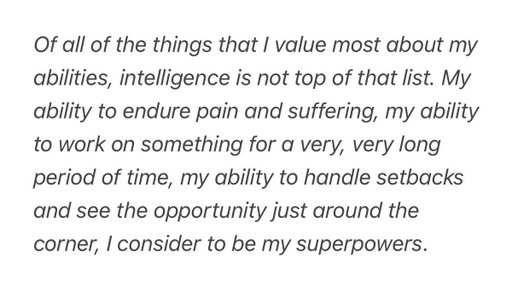
(9:49) Demis has an extraordinary level of determination, unlike pretty much anybody. Astonishing, incredible determination. That's his most defining characteristic: just unbelievable determination. He works, sleeps, eats, breathes the mission 24 hours a day to a degree that I haven't seen with other people.
(10:48) There is no 50% mode in Demis. There is not even a 99% mode in Demis. There is only 100%.
(14:39) The slightly warped way I took that was: how do you know you've done your best? The only way I could know is basically if I push myself to the point just before death, because that is literally when you have done your best.
(19:07) When he signed up for a game he liked to feel that he could win.
(20:44) He saw no reason not to start a company and so he did.
(22:40) Demis on what losing feels like to him: It's like my soul is on fire.
(25:34) Demis was an extreme case of an authentic entrepreneur, not a mercenary who starts with a desire to get rich from a startup then casts around for a plausible idea, but rather a missionary who feels compelled to work on a particular challenge then starts a company as a way of tackling it.
(25:57) The good thing about missionaries is that they never quit. Even if they have to work around the clock and pay themselves nothing. They will keep obsessing about the problem.
(26:08) Peter Thiel on Demis: “I always say that people aren't really entrepreneurs in the abstract, but there's maybe one great company that somebody has in them. It was Demis's destiny to build this one.”
(26:30) "If you invent a breakthrough in artificial intelligence so machines can learn, that would be worth 10 Microsofts." — Bill Gates
(32:09) We only wanted hardcore believers. We would go to conferences and tell people we are starting an AGI company. 80% of the people would roll their eyes at us, literally roll their eyes at us and turn around and walk away. We figured that this was a very efficient way to discover who we should be talking to.
(32:50) Blessed are those who believed before there was any evidence.
(34:17) The way Demis saw things, true general intelligence would make almost anything possible, surpassing the internet, the printing press, or even the industrial revolution in importance.
(35:22) Elon had declared that humans needed to colonize Mars in case disaster struck Earth. Demis had countered that killer AI robots might be one such disaster, but that the AI could obviously follow humans to Mars if it wanted to.
(36:25) Peter Thiel felt instinctively suspicious of a fellow chess player. A man who had spent his formative years mentally crushing opponents should be treated with caution, Thiel reckoned.
(37:07) I'm talking about the biggest invention ever, and investors keep coming back to "Where's the widget?" and I'm like, "I'm going to revolutionize all widgets, so I can pick you a random widget if you want me to, but you obviously haven't got the point if you're asking me this."
(37:42) He [Larry Page] was basically telling me, maybe you could build a company like Google, but it would take the best part of your career. If my real mission was to build AGI, then why don't I use all the resources that he's accumulated? I thought that was a pretty good argument.
(38:50) Elon tries to buy DeepMind
(42:33) Sam Altman emails Elon: "I've been thinking a lot about whether it's possible to stop humanity from developing AI. I think the answer is almost definitely not. If it's going to happen anyway, it seems like it would be good for someone other than Google to do it first."
(43:18) If you have powerful people who are able to understand the impact of the technology, they're not just gonna sit on the sidelines.
(44:08) Humans had not understood how little they had understood.
(44:31) As Peter Thiel said of Demis, "Geniuses are seldom brilliant in a general way. They tend to be brilliantly suited to a particular mission."
(46:50) Demis was far more original and far more of a contrarian than most of the self-identified contrarians of Silicon Valley.
(48:11) When Demis solves something big, he doesn't pause to spend much time savoring the achievement.
(48:49) You definitely can't crack a hard problem if the person leading the team thinks it's not possible.
(54:05) This is my whole life's work. I have to do what's necessary. The mission is in me; it's infused in me. You can't separate it from me.
(54:28) Demis's core theme is that money and power were not ends in themselves. They were a means to scientific knowledge.
241K
4.93K
35
601
11mo ago
FoundersPodcast
Jensen nails it:
238K
1.55K
81
85
10mo ago
FoundersPodcast
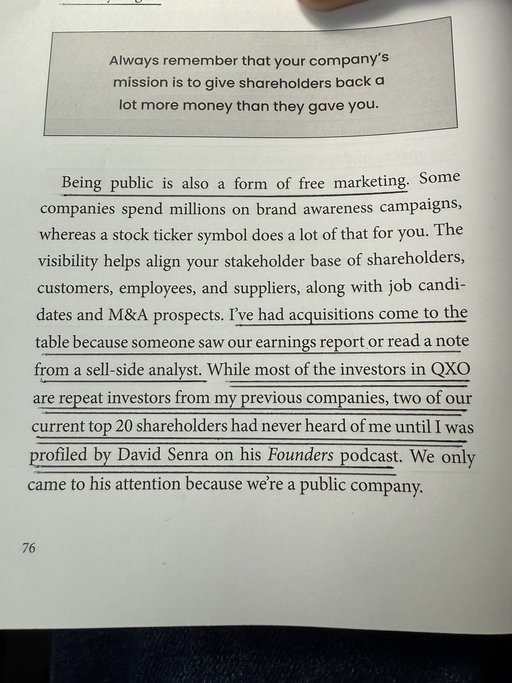
Holy shit. From Brad Jacobs new book:
David Senra (@founderspodcast) X Stats & Analytics
David Senra (@founderspodcast) has 215K X followers with a 0.94% engagement rate over the past 12 months. Across 1.30K posts, David Senra received 329K total likes and 35.8M impressions, averaging 253 likes per post. This page tracks David Senra's performance metrics, top content, and engagement trends — updated daily. To benchmark @founderspodcast against other accounts, use Socialpruf's X competitor analysis tool.
David Senra (@founderspodcast) X Analytics FAQ
How many X (Twitter) followers does David Senra have?+
David Senra (@founderspodcast) has 215K X (Twitter) followers as of October 2026.
What is David Senra's X (Twitter) engagement rate?+
David Senra's X (Twitter) engagement rate is 0.94% over the last 12 months, based on 1.30K posts.
How many likes does David Senra get on X (Twitter)?+
David Senra received 329K total likes across 1.30K posts in the last 12 months, averaging 253 likes per post.
How many X (Twitter) impressions does David Senra get?+
David Senra's X (Twitter) content generated 35.8M total impressions over the last 12 months.
Can I compare David Senra with other X accounts?+
Yes. Add @founderspodcast to a competitor set with Socialpruf's X competitor analysis tool and benchmark it side by side with any other public accounts on views, engagement rate and follower growth, with history back to each account's first post.