NewGet @thewallstreetskinny's full report

tiktok analytics
Similar Accounts:
tiktok analytics
Similar Accounts:
followers
85.8K
impressions
4.09M
likes
198K
comments
4.60K
posts
168
engagement
4.94%
emv
$137K
Average per post
24.4K
Key Metrics
Impressions
monthly
Distributions
Content
326K
23.6K
908
2mo ago

thewallstreetskinny
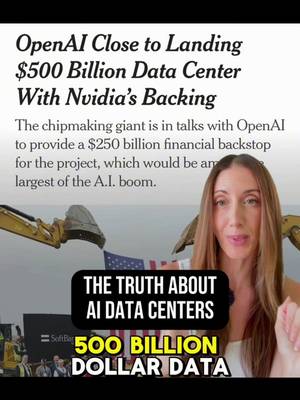
We know that data centers are a hot button issue, especially when it comes to the land, water, and energy they're using. That's why we sat down with someone who actually builds data centers, extrapolated costs from financial filings from previous projects, and tried to explain how a half a trillion dollar 10 gigawatt AI data center actually gets built, as simply as we can, in under three minutes, on one sheet of paper. Tons of caveats given this deal hasn't even been finalized --- especially on the water front: just because many NEW data centers are being built with closed loop system doesn't change the fact that the majority of OLD data centers are still wasteful. And we barely scratched the surface on the energy issues despite spending half the video talking about them.
282K
24.6K
253
2mo ago
thewallstreetskinny
The finance of AI 👀: the AI chips
243K
11.0K
210
2mo ago
thewallstreetskinny
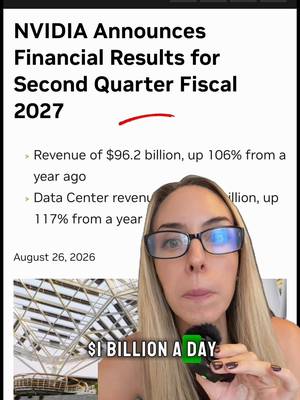
NVIDIA Q2 earnings 👀
234K
9.04K
293
1w ago
thewallstreetskinny
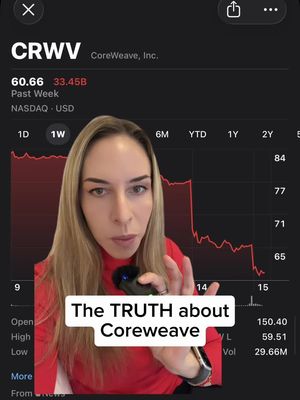
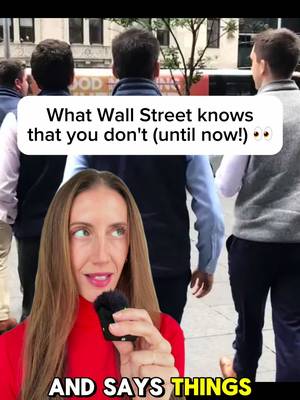
In case you missed it, there’s been turmoil in AI stocks, sparked by concern over Coreweave’s debt. Here’s exactly what you need to know about the neoclouds. A few things I couldn’t fit in the video: 1. The advance rate, meaning how much neoclouds can borrow relative to the amount of money they need to spend on Capex (to buy chips and equipment) can get QUITE high, in some cases 90-95%+ depending on the credit of the “off-taker”, so from Meta for example. 2. Asset backed financing and project financing (one of the groups I worked in at Morgan Stanley) isn’t new. What is unique about these GPU backed financings are the much shorter contract length; in the power world you often see power purchase agreements of 15-20 years and assets that have a much longer useful life (think a gas turbine). In a power deal, the debt is shorter than the PPA, and the PPA is shorter than the asset’s life, which leaves a long tail. Here the loan, the contract, and the asset useful life are much closer in length, so there is a shorter tail behind the debt. Now in fairness to the neoclouds, after the off-taker's contracts end the same GPUs can be rented on an hourly basis at higher rates (at least right now) because demand for compute is so high. While Coreweave does have other types of debt, this structure accounts for over half and funded much of its massive growth over the past few years. They also have a decent amount of convertible debt, which is typically utilized by higher risk companies. 3. And finally what surprised me was the fact that on the other side, so if you look at an Anthropic’s balance sheet, “take or pay” agreements to buy the compute do not show up as a liability on the balance sheet, rather just shown as a footnote!! While this is consistent with accounting rules, it’s surprising.
223K
17.4K
175
1mo ago
thewallstreetskinny
Update: the market is now pricing in an 87% chance of a hike 😱I could barely get this video out fast enough...but at least you know how to track it now! Don't miss our live Fed coverage this week, where we'll be sitting down with the Head of Macro at a $1.5 trillion asset manager on immediately after the rate decision and press conference.
193K
5.03K
15
10mo ago
thewallstreetskinny
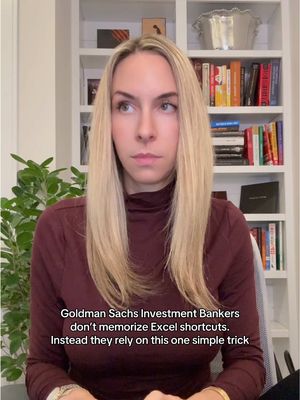
I’ve taught tens of thousands of analysts and associates at investment banks and private equity firms like Blackstone, Silver Lake, Goldman, and Morgan Stanley, and the most common question is: “How do I get good at Excel?” The reality is you can’t memorize everything, but the good news is you don’t have to. You just need to understand the system behind the madness to remember 90% of shortcuts. Some do require committing to memory, but it’s only a tiny few. So here’s how to think about it. 💻 WINDOWS SHORTCUTS (Windows key + intuitive letter) These control your entire WINDOWS workspace and they’re extremely intuitive once you see the pattern. Windows + D = go to desktop Windows + E = open Explorer Windows + ↑ = maximize window Windows + ↓ = minimize/restore Windows + ← / → = snap window left or right ⚡️ QUICK TIP: With shortcuts, you must press the keys at the same time. With hotkey sequences, which we will get to next, you press keys sequentially — one after the other. 📊 EXCEL HOTKEY SEQUENCES (Alt → the letters Excel reveals) Press the Alt key and Excel reveals its structure. Every ribbon tab and button becomes a letter. Alt → H → O → I = Autofit column Alt → A → W → T = Run a data table Alt → W → V → G = Remove gridlines The sequence always mirrors the path you’d click with your mouse. Once you realize that, hotkeys become intuitive instead of memorized. 🟩 CORE EXCEL SHORTCUTS (Ctrl + intuitive letter) These are the shortcuts that are easy to remember because they make sense: Ctrl C / Ctrl V = copy / paste Ctrl D = fill down Ctrl R = fill right Ctrl S = save Ctrl Shift + = insert row/column Ctrl – = delete row/column Ctrl [ = trace precedents 📈 BUT… some of the most powerful modeling tools aren’t intuitive — you just have to remember them: Alt + Tab = switch apps Alt = AutoSum Ctrl + 1 = pulls up the format cells dialogue box Ctrl + Alt + V = Paste Special Shift F8 = select non-contiguous ranges F5 = Go To With that said, most PE & IBD associates don’t have these shortcuts memorized rather, they’re ingrained in the muscle memory in their fingers. That’s the ultimate goal. But that level of fluency only comes with practice.

184K
4.50K
53
11mo ago
thewallstreetskinny
I'll be sure to circle back and follow up... 100% creative inspiration credit to @Kat #investmentbanking #privateequity #womeninfinance

151K
12.0K
144
2mo ago
thewallstreetskinny
Information about his book came from public disclosure (13F and 13Gs) which are limited in scope (missing outright shorts, sold calls and puts, non US listed holdings and swaps) as well as public reporting from news media.
124K
6.27K
153
2mo ago
thewallstreetskinny
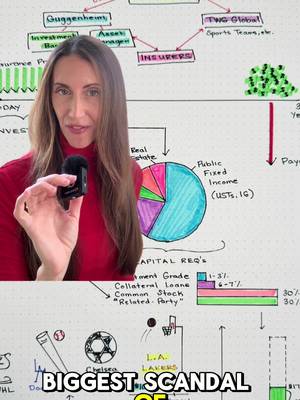
Turns out the biggest story in sports right now is ACTUALLY the craziest scandal in private equity, private credit, and investing as we've come to know it over the past two decades. The question everyone is asking now: what other sports teams and rare assets may be up for grabs, and how widespread is this kind of activity in the first place? Quite possible that this shakes up the entire foundation of private markets investing as we know it today, where all the major private capital players have either bought or built a balance sheet in similar fashion. Special thanks to Bill Simmons and Hunterbrook, whose research helped inform our article, along with the WSJ, FT, LA Times, and Bloomberg.
118K
675
12
9mo ago
thewallstreetskinny
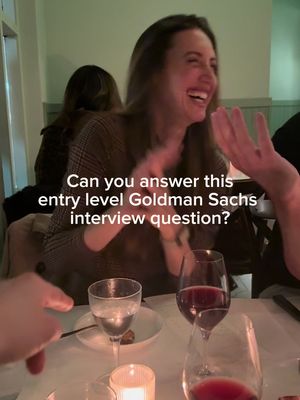
The question: if the 1y rate is 4.00% and the 2y rate is 4.50%, what is the 1y1y rate? First of all, you always need to understand what your interviewer is assessing. In this case, it's an understanding of how interest rates work, specifically with respect to yield curve construction. It's a question you often get in a fixed income sales & trading, hedge fund, or asset management interview. The math: 1y1y rate = (1 + 2y rate)^2 / (1 + 1y rate) - 1 = (1 + 0.045)^2 / (1 + 0.040) - 1 = approximately 5.00% The reason: It all starts with the assumption that there's no arbitrage here. We already know the 1 year rate. And remember, your 2 year rate lets you know your ANNUALIZED return over the two year period. You earn the 1y rate in year one. Your investment then gets compounded again in year 2 at the 1 year rate in 1 year's time. So how can we solve for that rate? The 2 year rate squared --- or, said differently, compounded on itself --- divided by your return over the first year of your investment gives you the rate that you would have had to earn during the second year of your investment if no arbitrage exists. That gives you the 1 year rate in 1 year's time, aka the 1y1y rate. Check out our fixed income curriculum if you want to learn everything you need to know to be an expert when it comes to interest rates, bonds, derivatives, and more!

118K
7.10K
300
2mo ago
thewallstreetskinny
We sat down with someone who actually builds data centers, extrapolated costs from financial filings from previous projects, and tried to explain how a half a trillion dollar 10 gigawatt AI data center actually gets built, as simply as we can, in under three minutes, on one sheet of paper. Tons of caveats given this deal hasn't even been finalized --- especially on the water front: just because many NEW data centers are being built with closed loop system doesn't change the fact that the majority of OLD data centers are still wasteful. And we barely scratched the surface on the energy issues despite spending half the video talking about them. If you want more on this topic, or other explainers on big issues in finance, business, and tech, check out our Substack!

107K
2.01K
29
3mo ago
thewallstreetskinny
I walked away from hundreds of thousands of dollars of my bonus when I left my V.P. role at Morgan Stanley. And I'm not alone --- more rising stars than ever are abdicating elite roles across the street. Why are people folding a winning hand just when their career is really taking off? If you want to know why and what I'd do differently today TO FIX IT, read our hot take on how to escape "the V.P. Curse" on our Substack now! #investmentbanking #privateequity #hedgefunds #womeninfinance
91.4K
6.38K
287
3mo ago
thewallstreetskinny
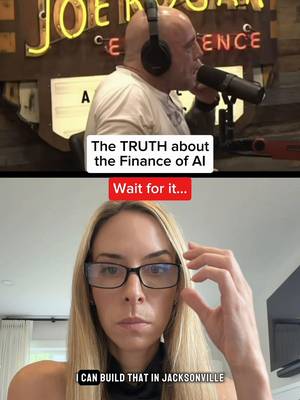
The truth about the finance of AI 👀
84.9K
3.14K
115
1mo ago
thewallstreetskinny
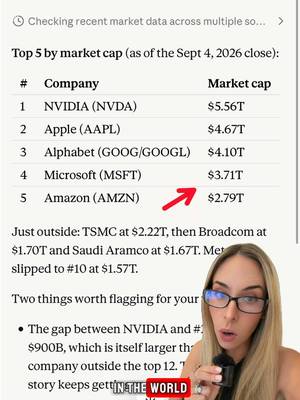
ANTHROPIC’s IPO: what insiders are watching 👀
84.2K
3.79K
153
1mo ago
thewallstreetskinny
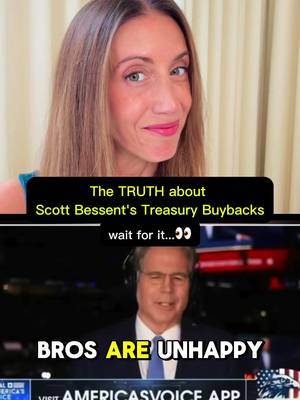
So how will we actually know which option the Treasury chose? Well…there isn’t exactly pink or blue confetti and an announcement on social media. Traders and analysts might watch the Daily Treasury Statement to see if the TGA balance drained on buyback settlement days, as well as weekly bill issuance announcements to see if T-bill or cash management bill issuance increases to match the purchases. But the OFFICIAL record comes in the quarterly refunding statement...which it just so happens is slated to be released the day after the midterm elections 👀 Check out Substack for our full breakdown of this topic so you don't miss Part II, where we dive into FX interventions...

78.2K
1.84K
19
10mo ago
thewallstreetskinny
Life = printing trades 👀👀👀 If you want to understand all the trades in our FAVORITE SHOW and the historical market moving events behind them (ahem, Liz Truss and emergency QE to bail out British pension funds, anyone?), get caught up ahead of Season 4's premiere with our unofficial companion podcast! #industry

58.1K
2.82K
60
1mo ago
thewallstreetskinny
Anthropic’s IPO: here’s what insiders are watching 👀 Update: On 9/5 after this video was posted, news broke that the S-1 public flip has been pushed to October with the IPO now expected right before midterm elections in the US.
51.4K
3.96K
22
3mo ago
thewallstreetskinny
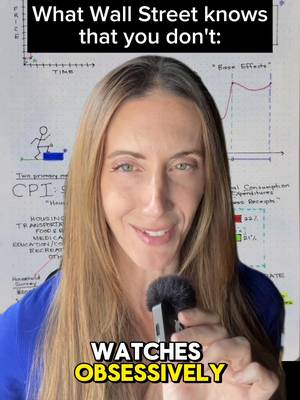
Ex-Morgan Stanley investment banker breaking down the most important economic data that Wall Street, the Federal Reserve, and the government are all watching...in under three minutes!
46.8K
1.56K
80
2mo ago
thewallstreetskinny
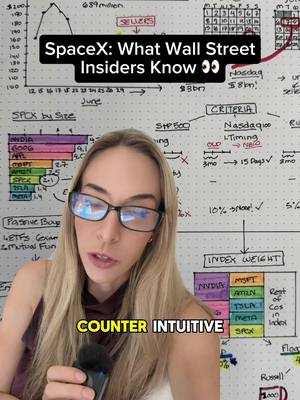
SpaceX announced earnings today, August 4th: they beat. That’s not the interesting part. Per the prospectus, that will trigger the first official unlock August 6th which will result 911 million shares unlocking. 2 weeks later August 21st there will be another 319 million shares that unlock just in time for Nasdaq’s quarterly rebalancing expected to come around September 18th. Additionally, according to Yahoo finance: "Short interest in SpaceX's stock stood at 219.3 million shares as of July 29, according to data from S3 Partners cited by Bloomberg. It works out to about 34% of all shares currently available for public trading, up sharply from 23.3 million shares”. The share price was up 10% going into the announcement which means some short sellers got squeezed, resulting in possible forced buying ahead of the unlock which won’t until Thursday, August 6th (two days from now). But what’s more interesting is what happens post unlock (two waves are coming Aug 6 and Aug 21) and then when rebalances happen for the Nasdaq and other indices.
42.4K
1.93K
44
4d ago
thewallstreetskinny
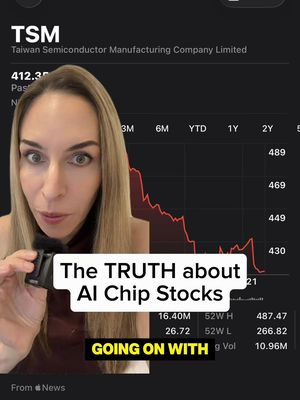
AI chip stocks just had a rough two weeks. Last week, the semiconductor index fell 11.4%, its worst week since April 2025, with eight straight losing days, the longest streak in 16 years. A hot inflation report raised the odds of more Fed rate hikes, which makes the AI buildout more expensive to finance. Debt fears hit the neoclouds with CoreWeave losing close to a quarter of its value in a week. You can watch our prior video on that our check out our latest Substack deep dive. On top of that, Chinese memory maker CXMT announced progress on advanced chips, which hit Micron, SK Hynix, and Samsung. Chips bounced early this week, then sold off again on Thursday. Tesla cut its capex forecast, raising questions about future chip demand. Meta kept spending heavily, to the point that its spending now exceeds the cash its business generates. And a report that Nvidia and Tesla plan to invest $2.8 billion in a Samsung chip-substrate supplier revived worries about circular financing, where companies fund partners that then turn around and buy their products. By late morning, all 22 chip and storage stocks in the Nasdaq-100 were down, with roughly $650 billion in market value gone. The takeaway: Wall Street is now punishing AI spending in both directions. Spend too little and investors worry about demand. Spend too much and they worry about returns.
thewallstreetskinny (@thewallstreetskinny) TikTok Stats & Analytics
thewallstreetskinny (@thewallstreetskinny) has 85.8K TikTok followers with a 4.94% engagement rate over the past 12 months. Across 168 videos, thewallstreetskinny received 198K total likes and 4.09M views, averaging 1.18K likes per video. This page tracks thewallstreetskinny's performance metrics, top content, and engagement trends — updated daily. To benchmark @thewallstreetskinny against other accounts, use Socialpruf's TikTok competitor analysis tool.
thewallstreetskinny (@thewallstreetskinny) TikTok Analytics FAQ
How many TikTok followers does thewallstreetskinny have?+
thewallstreetskinny (@thewallstreetskinny) has 85.8K TikTok followers as of October 2026.
What is thewallstreetskinny's TikTok engagement rate?+
thewallstreetskinny's TikTok engagement rate is 4.94% over the last 12 months, based on 168 videos.
How many likes does thewallstreetskinny get on TikTok?+
thewallstreetskinny received 198K total likes across 168 videos in the last 12 months, averaging 1.18K likes per video.
How many TikTok views does thewallstreetskinny get?+
thewallstreetskinny's TikTok content generated 4.09M total views over the last 12 months.
Can I compare thewallstreetskinny with other TikTok accounts?+
Yes. Add @thewallstreetskinny to a competitor set with Socialpruf's TikTok competitor analysis tool and benchmark it side by side with any other public accounts on views, engagement rate and follower growth, with history back to each account's first post.