NewGet @drsaharyousef's full report

tiktok analytics
Similar Accounts:
tiktok analytics
Similar Accounts:
followers
5.53K
impressions
2.32M
likes
150K
comments
2.61K
posts
85
engagement
6.58%
emv
$87.2K
Average per post
27.3K
Key Metrics
Impressions
monthly
Distributions
Content

1.74M
112K
1.89K
2mo ago

drsaharyousef
Are you watching this on the toilet? I can’t believe I’m typing this, but a 24 year old man scrolled for 30 minutes, stood up, and collapsed. He's now paralyzed!!! Doctors are calling it BATHROOM SCROLL SYNDROME. I can’t make this stuff up. This is ridiculous. Stop taking your phone to the bathroom and SHIT IN PEACE. Here’s the scientific publication link for the article called: Smartphone use on the toilet and the risk of hemorrhoids https://pmc.ncbi.nlm.nih.gov/articles/PMC12407481/ And one called: Toilet seat syndrome: renal failure, perineal gangrene, and sciatic neuropathy https://www.amjmed.com/article/S0002-9343(00)00752-X/fulltext00752-X/fulltext) And even a CNN article: https://www.cnn.com/2024/11/12/health/phones-on-toilet-wellness WE NEED TO DO BETTER!!
354K
24.2K
456
4mo ago
drsaharyousef
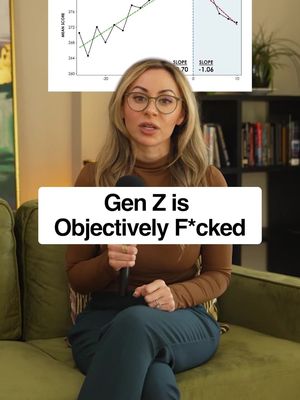
Gen Z is the first generation in history that is measurably less cognitively capable than their parents, and the research points directly at screen time as the primary cause. The good news is neuroplasticity works in both directions and a more intentional relationship with technology is enough to start reversing the damage. #SaharYousef #BecomingSuperhuman #DigitalWellbeing

145K
9.25K
144
1mo ago
drsaharyousef
Everyone assumes we adapt to screens with practice. The reading research says the opposite has happened. A meta-analysis in Educational Research Review pooled 54 studies covering 171,055 people, comparing how well the same material was understood on paper versus on a screen. Paper won, which by now is not surprising. What should be surprising is what the authors found when they sorted the studies by publication year: the paper advantage GREW over time rather than shrinking! It was worse under time pressure, and it showed up for informational and expository text while disappearing for narrative. Stories survive the screen. Twenge's 2026 analysis of PISA scores across 36 countries found that after 2012, math, reading and science scores fell, and they fell hardest in the countries where students spent the most leisure time on devices during the school day. Loneliness at school climbed on the same map, steeply in the high-device countries and hardly at all in the low-device ones. But the mechanism underneath all of it is neuroplasticity, and neuroplasticity has no memory of what it did last year. It gives you back whatever you keep asking it for. That's why this is not a life sentence for anyone. Read one hard thing on paper this week. Under no time pressure. See what happens
4.46K
343
2
1mo ago
drsaharyousef
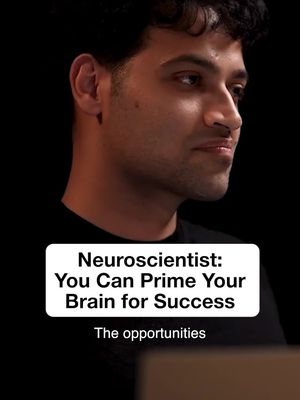
You write down a goal, close the journal, and go back to your life. Then what? Writing it down is a start. But if you never return to it, how does it become part of what you actually DO? What you want to accomplish and who you want to be in the future needs a place in your day. EVERY DAY, review the goal, review the plan, and ask yourself: “What can I do today to move closer to this goal?” You’re reorienting yourself and your mind towards what you want. You are reminding yourself what matters, what you need to do next, and what could help you get there. That gives your attention a direction. Then when all of this information is loaded in the back of your mind every day, someone mentions something in a conversation, and you recognize how it could help. An idea comes up, and you connect it to the problem you’ve been trying to solve. This is why writing it down once and putting it away isn’t enough. Keep returning to it. Keep reviewing what you’re working toward and how you plan to get there. And pay attention to the story you’re telling yourself along the way. What do you believe is possible for you? Are you leaving room to explore an opportunity, or deciding it couldn’t possibly be for you? Open the journal again tomorrow. Review the goal. Review the plan. Then choose what you’ll do next.

3.44K
232
3
1mo ago
drsaharyousef
Some of the most successful people approach obstacles with a very different assumption: there is a way through, and they’re capable of finding it. They WILL find it. Where someone else sees a reason to stop, they see a problem they can work on. There’s a concept in psychology called SELF-EFFICACY: your belief in your ability to carry out the actions a particular challenge requires. It helps explain why feeling capable matters for effort and persistence. Bandura, 1977 Think about the difference between approaching a problem with “There’s nothing you can do” versus “There’s something here you can learn to do and you’re going to figure it out.” The first approach feels like a WALL and the second one gives you a reason to look for a door, build a door, or honestly, BREAK THE F@%cking WALL. And this carries into the way you see yourself. When “following through” and PERSISTING is part of who you believe you are, taking the next step becomes a way of living up to that identity. Each time you do it, you give yourself more evidence. You don’t have to be a billionaire to start approaching challenges this way. You can practice asking what’s possible, what you can learn, and always, “what’s the next step?” Which is why I keep asking people what story they’re running on. That story can shape what they’re willing to attempt, and how they respond when it gets difficult. So…who do you think you are?

2.61K
170
2
1mo ago
drsaharyousef
When you feel powerless, what are you picturing inside your own head? What story are you telling yourself? Maybe it’s “I’m not capable of this.” Or “I already know how badly this is going to go.” Or one of the most common…”This isn’t possible.” Pay attention to that. What are you imagining yourself doing? Failing? Getting rejected? Giving up before you’ve even started? Now try imagining yourself feeling capable instead. Try to daydream. SERIOUSLY. Research on mental rehearsal shows that imagining a movement engages some of the same brain systems involved in performing it. Imagining and doing are different, but they share some of the machinery. Hardwick et al., 2018 Try making your daydream as specific as possible. Picture yourself walking into the room, speaking up, or taking the first step toward something you’ve been afraid to try. Let yourself spend a little time in that experience. Notice how you feel. You have to protect your brain, and that means taking time to AUDIT it every day. What are you letting in? What thoughts keep repeating? What are you telling yourself is possible? That daily check-in gives you a chance to notice when you’re rehearsing the worst possible outcome. When you catch it, pause. Picture yourself feeling capable again. Give your attention somewhere else to go. The reality is a construct of your own mind. Feeling powerless right now doesn’t mean you’re incapable of doing something about your situation. So ask yourself: what would you like to feel more capable of right now?

2.35K
154
6
3mo ago
drsaharyousef
Scrolling is producing measurable brain atrophy in areas tied to self-awareness and cognitive control, and the research shows it goes in both directions. Two habits that are actually reversing it: a phone parking lot that keeps the device out of sight for dedicated blocks every day, and finite scrolling sessions that cut the infinite feed off before it cuts into the brain. #SaharYousef #BecomingSuperhuman #DigitalWellbeing

2.30K
110
8
2mo ago
drsaharyousef
One of the most striking studies ever seen in this field brought hundreds of high performers into a lab, powered their phones completely off, and split them into three groups based on where the phone was located. Scores on attention, memory, and fluid intelligence dropped measurably as the phone got closer, and the researchers concluded that the mere presence of a phone reduces brain power even when it is off and face down. #SaharYousef #BecomingSuperhuman #DigitalWellbeing
2.05K
115
3
1w ago
drsaharyousef
Forty seconds of looking at concrete made them worse. 150 students on a deliberately mind-numbing task, then a 40-second break looking at a picture of a concrete city rooftop. The other half of the students looked at the SAME rooftop covered in a greenery and flowers. The concrete group came back about 8% WORSE. The greenery group came back about 6% better. The only variable was what was the CONTENT in front of their eyes for forty seconds. It was a photograph, by the way. Nobody went outside. So the version you just did, looking at something green on a phone, is the ACTUAL intervention! Try to get some nature videos in your scrolling sessions as a starting point.
2.05K
146
5
1mo ago
drsaharyousef
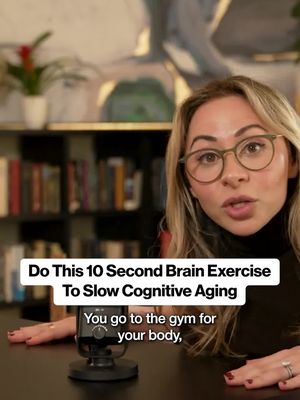
Most people think that attentional training or meditation involves having NO thoughts or that the exercise is holding attention the entire time. So the second their mind drifts off to their inbox, or to something someone said, they decide they are “bad at this” and stop. The REP that makes your attention network STRONGER ISSSS the CATCHING of your attention and then REDIRECTING it back. If you were able to focus the whole time and it was easy, how would you be “training” anything? Your attention drifts, you notice it drifted, you walk it back. If your mind never wandered, you would not be doing anything at all!! You cannot curl a weight without lowering it first. So when it wanders forty times in ten seconds, that is forty reps. Congratulations, that was a set! Pick your thing. Coffee, your breath, a plant. Notice the drift. Walk it back. I'll see you back here tomorrow.
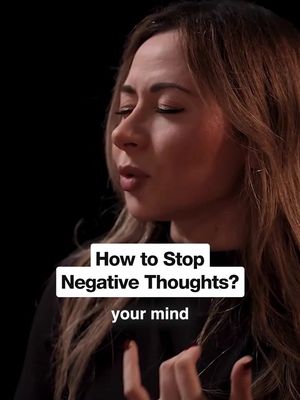
1.73K
139
2
4w ago
drsaharyousef
Attentional Redirection: Your brain can tell you all kinds of stories: you’re not good enough, you’re a victim, you’re a failure. When self-defeating or negative stories are coming up for you, that is when you need to tell your brain to SHUT UP, and then redirect your attention to where YOU want it to be. Ask yourself: “What’s the story YOU want to live?” “Who am I?” “What’s possible for me?” MAKE YOUR OWN STORY. This is something you need to return to every day. Yes, every day. And when you catch yourself back in the negative story, redirect your attention again. Remember, anything is possible.
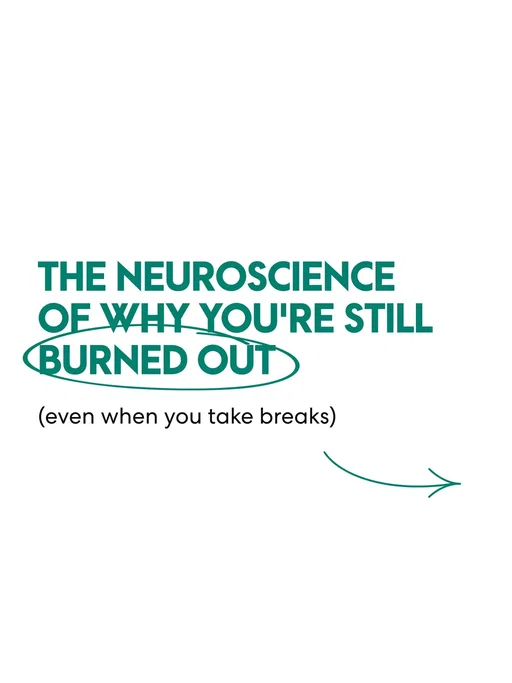
1.72K
30
1
3mo ago
drsaharyousef
You're taking breaks and you're still burned out. That's because the quality of the break matters more than the quantity. Your brain needs complete psychological detachment — something demanding enough to force your mind into the present moment. The Three M Framework gives you three tiers of recovery: daily, weekly, and monthly. Skip any one and your brain never fully recharges.
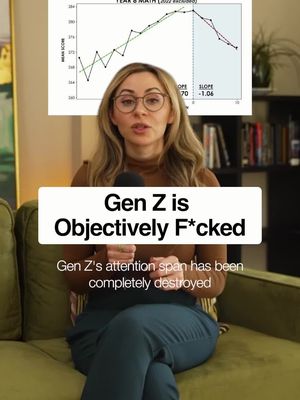
1.71K
126
7
5mo ago
drsaharyousef
Attention spans are not permanently destroyed and my students at UC Berkeley have been able to reverse the damage in just two months by simply changing their relationship with technology. Start with one thing: create a phone parking lot in your home or office and put it out of sight, out of reach, with notifications off every time you need to focus. #DrSaharYousef #BecomingSuperhuman #Neuroscience

1.60K
112
2
1mo ago
drsaharyousef
Being able to do two things at once doesn't mean you're giving both your full attention. Driving is the perfect example. You take a call, you drive, you arrive at your destination. But you cannot give the road 100% of your attention AND give the conversation 100%. You don't have two brains, and you don't have two 100s. You have ONE. So when you drove, the road got maybe 90% of your attention and the conversation got the other 10%. Honestly, if it’s your hometown, it’s likely the other way around until something goes wrong on the drive. Same applies to your work, your studies, anything really. I'm not saying you can't divide your attention or you should never do it. You CAN. But there's a trade-off, so be strategic! When something needs 100% of your attention or needs your best thinking, close the email down, silence the notifications, and put the phone away. Give it to the whole 100!
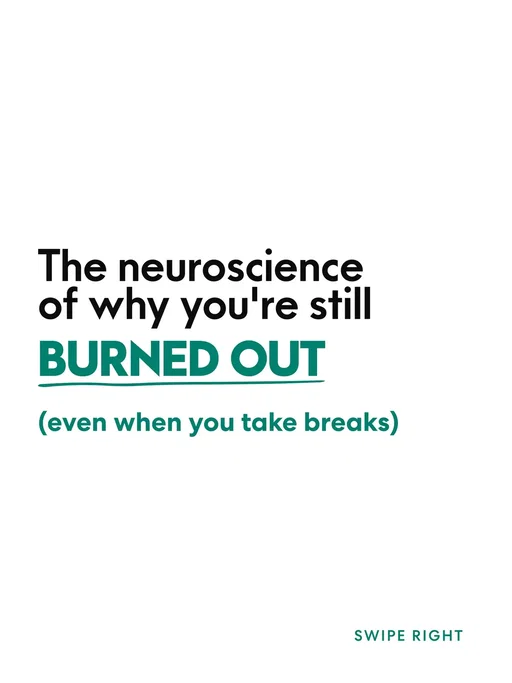
1.57K
14
1
4mo ago
drsaharyousef
You're taking breaks and you're still burned out. That's because the quality of the break matters more than the quantity. Your brain needs complete psychological detachment, something demanding enough to force your mind into the present moment. The Three M Framework gives you three tiers of recovery: daily, weekly, and monthly. Skip any one and your brain never fully recharges.

1.55K
124
0
1mo ago
drsaharyousef
This April, the same Finnish group published a paper arguing that the modern playground is the problem. Their case: artificial turf, rubber matting, and sealed surfaces have turned playgrounds into microbial deserts, right at the age when a child's immune system is trying to learn what to fight. A few years earlier, they ran the whole thing again as a placebo-controlled, double-blinded trial, but this time with sandboxes! One group got playground sand enriched with microbially diverse soil. The other group got sand that looked exactly the same, but was microbially poor. Nobody, not the kids, not the staff, knew which was which. The living-sand kids shifted their skin bacteria and their immune markers moved toward regulation. The placebo kids didn't. A placebo-controlled trial. On dirt. I love these people. All studies linked in the comments! My real science take is that these are small trials and the biomarkers are being tested over weeks. Nobody has shown that a forest floor at daycare prevents an actual disease diagnosis twenty years later. Still, think about what we actually did here. We spent forty years making childhood cleaner, smoother, and more indoors, and the immune-mediated conditions went UP. I had a doctor once explain to me that a kid's immune system is like a security guard who has never met anybody. If you don't give it faces and people to learn, it can start taking shots at pollen, at peanuts, at the kid's own tissue. If you are lucky enough to have a yard, remember it's free. Your local park is free. Let them get filthy. Kids are washable. 🌱

1.49K
102
2
1mo ago
drsaharyousef
Forty seconds of looking at concrete made them worse. 150 students on a deliberately mind-numbing task, then a 40-second break looking at a picture of a concrete city rooftop. The other half of the students looked at the SAME rooftop covered in a greenery and flowers. The concrete group came back about 8% WORSE. The greenery group came back about 6% better. The only variable was what was the CONTENT in front of their eyes for forty seconds. It was a photograph, by the way. Nobody went outside. So the version you just did, looking at something green on a phone, is the ACTUAL intervention! Try to get some nature videos in your scrolling sessions as a starting point.

1.43K
94
1
1mo ago
drsaharyousef
There are mice that will starve sitting next to food they still enjoy. Berridge and Robinson spent decades divorcing two things: WANTING and LIKING. If you take the dopamine away from an animal, the liking still survives. You can see the same reaction to sugar as before but they don't actually get up. Dopamine-deficient mice go aphagic, meaning they stop eating, and they will not cross the cage for food they would still find delicious. If you flip it and flood the system with dopamine, animals eat voraciously without enjoying it one bit more. WANTING and LIKING are two different systems and dopamine runs only one of them. And in 2007 a Stanford team watched this happen in people shopping! They put people in an fMRI scanner and had them look at products for four seconds and then another four seconds looking at the price, then decide if they want to buy it or not. The nucleus accumbens fired while they were still looking at the PRODUCT, before any price appeared. From that activation the researchers could predict whether someone would buy, better than chance, before the person had technically decided. Dopamine Shop and FoodNeverComes are sorta like a nicotine-free vape…but for your wallet. Next time the cart FEELS GOOD, notice that the good part already happened. Then decide whether you still want the product.

1.41K
85
2
1mo ago
drsaharyousef
The machinery really is the same underneath habits and addictions. Researchers, Everitt and Robbins, spent decades mapping this, and their model proposed three stages: goal-directed action —> habit —> compulsion / addiction. Our behaviors begin with prefrontal control then move towards the striatum in the brain, and then there is loss of top-down inhibitory control. This is when a behavior becomes automatic! So, when something is a habit, WE’RE ON OUR WAY to an automatic behavior (or an addiction). The cue-and-craving loop underneath both really is neutral. It's the same process and the same "wiring" that has someone reaching for a drink at 6pm vs. reaching for their running shoes or a book.
1.40K
37
0
4mo ago
drsaharyousef
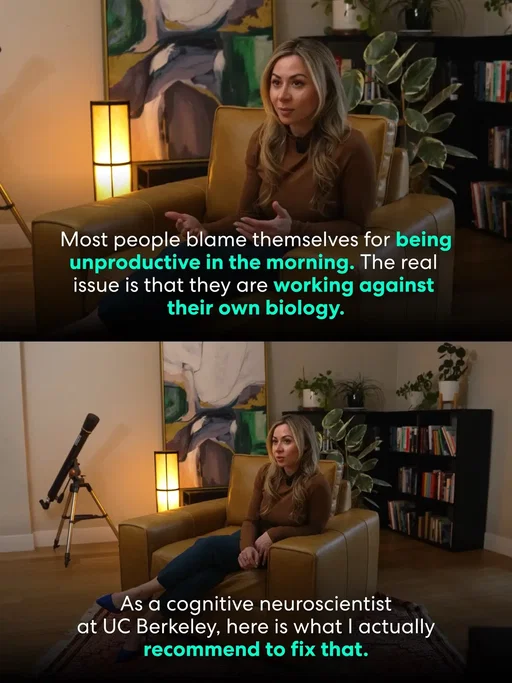
Unproductive mornings are not a discipline problem they are a biology problem and once you understand your chronotype, your energy peaks, and how to protect them, everything changes. Your biology is not the enemy, it is the most powerful productivity tool you have and learning to work with it instead of against it is the difference between surviving your day and actually dominating it. #DrSaharYousef #BecomingSuperhuman #Neuroscience
Sahar (@drsaharyousef) TikTok Stats & Analytics
Sahar (@drsaharyousef) has 5.53K TikTok followers with a 6.58% engagement rate over the past 12 months. Across 85.0 videos, Sahar received 150K total likes and 2.32M views, averaging 1.77K likes per video. This page tracks Sahar's performance metrics, top content, and engagement trends — updated daily. To benchmark @drsaharyousef against other accounts, use Socialpruf's TikTok competitor analysis tool.
Sahar (@drsaharyousef) TikTok Analytics FAQ
How many TikTok followers does Sahar have?+
Sahar (@drsaharyousef) has 5.53K TikTok followers as of October 2026.
What is Sahar's TikTok engagement rate?+
Sahar's TikTok engagement rate is 6.58% over the last 12 months, based on 85.0 videos.
How many likes does Sahar get on TikTok?+
Sahar received 150K total likes across 85.0 videos in the last 12 months, averaging 1.77K likes per video.
How many TikTok views does Sahar get?+
Sahar's TikTok content generated 2.32M total views over the last 12 months.
Can I compare Sahar with other TikTok accounts?+
Yes. Add @drsaharyousef to a competitor set with Socialpruf's TikTok competitor analysis tool and benchmark it side by side with any other public accounts on views, engagement rate and follower growth, with history back to each account's first post.