NewClaim a free social report
X analytics
Similar Accounts:
followers
1.63K
impressions
411K
likes
3.19K
posts
500
engagement
1.01%
emv
$10.2K
comments
969
Average per post
822

Key Metrics

Distributions
Top Content

Running multiple stores on Shopify Plus? Your analytics just got easier.

Multi-store reporting is now live! 🎉

Instead of switching between admins or exporting spreadsheets, you can view sales, orders, and key metrics for your entire organization in one dashboard.

What this unlocks:
→ Compare performance by store, region, or brand
→ Track results in multiple currencies
→ Build custom views for the KPIs that matter most

This feature is available to Plus organizations with multiple stores. To access, users need full organization analytics permissions.

Start exploring your analytics dashboard today, or refer to the Help Center for setup details.

Read the full update here:
https://t.co/8FH5ba4vGt
7.85K
23
8
6
5mo ago
ArchetypeThemes
Running multiple stores on Shopify Plus? Your analytics just got easier. Multi-store reporting is now live! 🎉 Instead of switching between admins or exporting spreadsheets, you can view sales, orders, and key metrics for your entire organization in one dashboard. What this unlocks: → Compare performance by store, region, or brand → Track results in multiple currencies → Build custom views for the KPIs that matter most This feature is available to Plus organizations with multiple stores. To access, users need full organization analytics permissions. Start exploring your analytics dashboard today, or refer to the Help Center for setup details. Read the full update here: https://t.co/8FH5ba4vGt
Shopify’s new theme block architecture redefines flexibility inside the theme editor, and it fits perfectly with how we build at Archetype.

Theme blocks take what sections started and make them modular.

Developers can now create reusable building blocks that work anywhere, nested, grouped, or stacked up to eight levels deep, with no duplicated code.

For merchants, this means more creative control inside the editor:

→ Custom layouts without custom builds
→ Faster content updates
→ Cleaner, more consistent storefronts

For developers, it means fewer workarounds and a structure that is easier to maintain and scale.

It is the same foundation our themes are built on: performance through structure, flexibility through design.
3.67K
27
7
1
4mo ago
ArchetypeThemes
Shopify’s new theme block architecture redefines flexibility inside the theme editor, and it fits perfectly with how we build at Archetype. Theme blocks take what sections started and make them modular. Developers can now create reusable building blocks that work anywhere, nested, grouped, or stacked up to eight levels deep, with no duplicated code. For merchants, this means more creative control inside the editor: → Custom layouts without custom builds → Faster content updates → Cleaner, more consistent storefronts For developers, it means fewer workarounds and a structure that is easier to maintain and scale. It is the same foundation our themes are built on: performance through structure, flexibility through design.
Bad UX doesn’t just frustrate your users. It breaks their trust, slows decisions, and costs you conversions.

Baymard’s research highlights common pitfalls that show up everywhere, from Apple’s Magic Mouse to confusing parking signs, clunky ATMs, overwhelming AWS menus, endless dropdowns, and autoplaying ads.

The lesson here?
That avoiding bad UX is about so much more than having flashy visuals. It’s getting the foundations right:

1️⃣ Understand users → Design around real needs and contexts.
2️⃣ Map the journey → Build flows that prevent friction and mistakes.
3️⃣ Give control → Empower users instead of restricting them.
4️⃣ Keep it simple → Clarity beats complexity every time.
5️⃣ Test & learn → Validate designs with real users and refine.

Good UX makes every interaction with your customer feel effortless.

While bad UX drives them away.

Follow @ArchetypeThemes for research-backed insights on creating better ecom experiences.
3.37K
17
4
4
5mo ago
ArchetypeThemes
Bad UX doesn’t just frustrate your users. It breaks their trust, slows decisions, and costs you conversions. Baymard’s research highlights common pitfalls that show up everywhere, from Apple’s Magic Mouse to confusing parking signs, clunky ATMs, overwhelming AWS menus, endless dropdowns, and autoplaying ads. The lesson here? That avoiding bad UX is about so much more than having flashy visuals. It’s getting the foundations right: 1️⃣ Understand users → Design around real needs and contexts. 2️⃣ Map the journey → Build flows that prevent friction and mistakes. 3️⃣ Give control → Empower users instead of restricting them. 4️⃣ Keep it simple → Clarity beats complexity every time. 5️⃣ Test & learn → Validate designs with real users and refine. Good UX makes every interaction with your customer feel effortless. While bad UX drives them away. Follow @ArchetypeThemes for research-backed insights on creating better ecom experiences.

Shopify just proposed a developer feature that might finally end snippet folder clutter. Inline Snippets in Liquid — here’s why this could be a game-changer for Shopify theme devs. 🧵

3.33K
24
5
2
11mo ago
ArchetypeThemes
Shopify just proposed a developer feature that might finally end snippet folder clutter. Inline Snippets in Liquid — here’s why this could be a game-changer for Shopify theme devs. 🧵
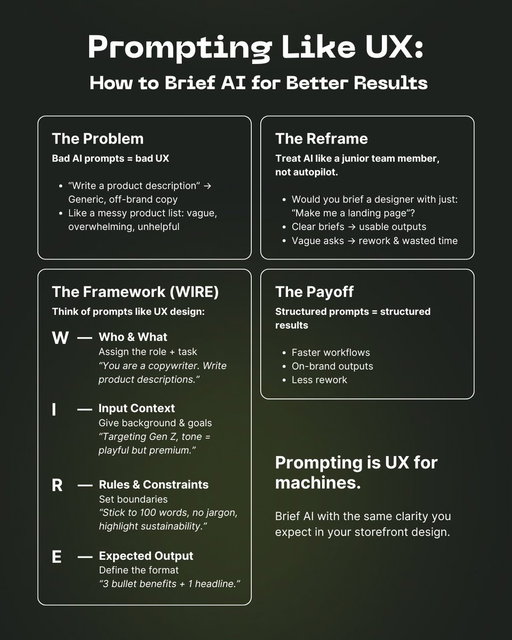
Prompting isn’t just typing into a box. It’s more like briefing a designer or setting defaults in a theme.

Take a look at this vague line → “Write me a product description.”
The result? A generic text response that you definitely need to rewrite.

We’ve been digging into frameworks that treat prompting like UX.
Not to overcomplicate things, but to give merchants a structure that reduces rework.

The WIRE model is one we keep coming back to:

→ Who & What: Define the role and task
→ Input Context: Provide audience, goals, tone
→ Rules & Constraints: Set boundaries, word counts, exclusions
→ Expected Output: Spell out the format

When prompts are structured, the results are too.
Clearer copy. Faster workflows. Less guesswork.

For merchants, the principle is familiar:
The same way filters, nav, and layouts shape how customers shop, prompts shape how AI works with you.

Follow @ArchetypeThemes for insights on designing both storefronts and workflows with intent.
3.29K
16
3
4
5mo ago
ArchetypeThemes
Prompting isn’t just typing into a box. It’s more like briefing a designer or setting defaults in a theme. Take a look at this vague line → “Write me a product description.” The result? A generic text response that you definitely need to rewrite. We’ve been digging into frameworks that treat prompting like UX. Not to overcomplicate things, but to give merchants a structure that reduces rework. The WIRE model is one we keep coming back to: → Who & What: Define the role and task → Input Context: Provide audience, goals, tone → Rules & Constraints: Set boundaries, word counts, exclusions → Expected Output: Spell out the format When prompts are structured, the results are too. Clearer copy. Faster workflows. Less guesswork. For merchants, the principle is familiar: The same way filters, nav, and layouts shape how customers shop, prompts shape how AI works with you. Follow @ArchetypeThemes for insights on designing both storefronts and workflows with intent.

Canada Post to the US is now DDP only! As of August 29, 2025, all Canada Post shipments into the US must be sent Delivered Duties Paid (DDP). DDU labels are no longer accepted and will be blocked at creation. Here’s what this means for merchants: ✅ Duties must be prepaid; customers can’t pay at delivery ✅ Shopify duties calculations must be enabled to purchase labels ✅ Canada Post + Zonos integration supports duty pre-collection directly in Shopify To stay compliant, make sure you have: → Enabled duty collection for the US in Settings > Taxes > Duties → Added HS codes + Country of Origin to all products → Updated duties display in Markets > United States → Adjusted US shipping rates to reflect DDP costs → Confirmed your fulfillment partner can generate Canada Post DDP labels (or purchase labels in Shopify) If you haven’t updated your settings, you’ll need to act before your next US order. Alternatively, DHL Express or Purolator via Shopify Shipping remain options for DDU shipping. Learn more: t.co/2HqjLSQaZy Follow @ArchetypeThemes for more compliance and shipping updates.

3.27K
16
3
1
6mo ago
ArchetypeThemes
Canada Post to the US is now DDP only! As of August 29, 2025, all Canada Post shipments into the US must be sent Delivered Duties Paid (DDP). DDU labels are no longer accepted and will be blocked at creation. Here’s what this means for merchants: ✅ Duties must be prepaid; customers can’t pay at delivery ✅ Shopify duties calculations must be enabled to purchase labels ✅ Canada Post + Zonos integration supports duty pre-collection directly in Shopify To stay compliant, make sure you have: → Enabled duty collection for the US in Settings > Taxes > Duties → Added HS codes + Country of Origin to all products → Updated duties display in Markets > United States → Adjusted US shipping rates to reflect DDP costs → Confirmed your fulfillment partner can generate Canada Post DDP labels (or purchase labels in Shopify) If you haven’t updated your settings, you’ll need to act before your next US order. Alternatively, DHL Express or Purolator via Shopify Shipping remain options for DDU shipping. Learn more: https://t.co/2HqjLSQaZy Follow @ArchetypeThemes for more compliance and shipping updates.
Premium brands demand a premium presence.

See how @Linksys leverages the Impulse theme from @ArchetypeThemes to create a shopping experience as polished as their products.

A masterclass in tech retail done right.

🧵
3.16K
13
6
1
11mo ago
ArchetypeThemes
Premium brands demand a premium presence. See how @Linksys leverages the Impulse theme from @ArchetypeThemes to create a shopping experience as polished as their products. A masterclass in tech retail done right. 🧵
Easier theme discovery for every merchant

The Theme Store has simplified how themes are organized.

Each theme now uses one primary industry tag, making search results more accurate and easier to browse.

This change means:
→ All secondary tags have been automatically removed
→ Each theme’s main industry tag now serves as its sole classification

For merchants, that means faster, cleaner discovery of themes built for your specific products and audience.

For partners, it’s a good time to double-check that your primary tag reflects:
• the main product types in your demo store
• your target merchant audience

Explore @ArchetypeThemes: https://t.co/TbQw2ifGC1

Learn more here: https://t.co/EZs1wQoeNy
3.13K
13
4
1
4mo ago
ArchetypeThemes
Easier theme discovery for every merchant The Theme Store has simplified how themes are organized. Each theme now uses one primary industry tag, making search results more accurate and easier to browse. This change means: → All secondary tags have been automatically removed → Each theme’s main industry tag now serves as its sole classification For merchants, that means faster, cleaner discovery of themes built for your specific products and audience. For partners, it’s a good time to double-check that your primary tag reflects: • the main product types in your demo store • your target merchant audience Explore @ArchetypeThemes: https://t.co/TbQw2ifGC1 Learn more here: https://t.co/EZs1wQoeNy
Gift bows, bundle discounts, and wholesale scaling…

What does that have to do with great e-commerce UX?

Everything. Here’s how Wrapido nails it with Shopify’s Expanse theme 👇
3.08K
14
4
1
5mo ago
ArchetypeThemes
Gift bows, bundle discounts, and wholesale scaling… What does that have to do with great e-commerce UX? Everything. Here’s how Wrapido nails it with Shopify’s Expanse theme 👇
Building Shopify liquid themes is hard.

Open source resources like Dawn and Shopify CLI help you start, but fall short for advanced needs.

Successful theme businesses must invest heavily in custom tooling—creating a massive barrier for newcomers.

Meanwhile, innovation remains trapped in private silos.

The Liquid tooling ecosystem is stagnating, which hurts merchants.

Yet Liquid remains essential.

As Shopify moves upmarket to enterprise, quality themes are more important than ever.

With tighter budgets, headless solutions aren't economically viable for most.

That's why we built Archetype DevKit—an open source, component-first theme building experience available now on GitHub.

DevKit offers:
⤷ Specifications, workflows and tooling used to power thousands of Shopify stores
⤷ Centralized, reusable theme components
⤷ Seamless design handoff with matching Figma files
⤷ End-to-end theme design and development environment

This initial preview is our call to action. We need the community's expertise to continue building the ideal open source spec for a shared solution.

Let's save the competition for what we build, not how we build it.

Together, we can advance the Shopify theme ecosystem.

Check it out: https://t.co/JIY15c3Kba
3.07K
29
5
4
11mo ago
ArchetypeThemes
Building Shopify liquid themes is hard. Open source resources like Dawn and Shopify CLI help you start, but fall short for advanced needs. Successful theme businesses must invest heavily in custom tooling—creating a massive barrier for newcomers. Meanwhile, innovation remains trapped in private silos. The Liquid tooling ecosystem is stagnating, which hurts merchants. Yet Liquid remains essential. As Shopify moves upmarket to enterprise, quality themes are more important than ever. With tighter budgets, headless solutions aren't economically viable for most. That's why we built Archetype DevKit—an open source, component-first theme building experience available now on GitHub. DevKit offers: ⤷ Specifications, workflows and tooling used to power thousands of Shopify stores ⤷ Centralized, reusable theme components ⤷ Seamless design handoff with matching Figma files ⤷ End-to-end theme design and development environment This initial preview is our call to action. We need the community's expertise to continue building the ideal open source spec for a shared solution. Let's save the competition for what we build, not how we build it. Together, we can advance the Shopify theme ecosystem. Check it out: https://t.co/JIY15c3Kba
How do you scale humor into a serious ecommerce business?

Crazy Dog T-Shirts shows us how, powered by Shopify’s Expanse theme. 

🧵
2.98K
20
5
1
6mo ago
ArchetypeThemes
How do you scale humor into a serious ecommerce business? Crazy Dog T-Shirts shows us how, powered by Shopify’s Expanse theme. 🧵

Most shoppers don’t leave because of price. Shoppers often leave because they can’t find what they want. Baymard’s 2025 benchmark shows 58% of desktop sites and 78% of mobile sites fail at Product List UX. That means cluttered catalogs, weak filters, and buyers giving up before checkout. Here are 8 fixes every ecom site should implement: 1/ Combine variations into one list item Don’t flood the list with duplicates. Instead, use swatches for colors and finishes. 2/ Show 3+ thumbnails per item Multiple views (cutout, lifestyle, and feature) help users decide without extra clicks. 3/ Include price per unit Clear comparisons, less math, faster decisions. 4/ Be cautious with horizontal filters They hide options and slow discovery. Use only for small sets. 5/ Enable multi-select filters Let users pick more than one size, color, or price range. 6/ Always include 5 essential filters Price, rating, color, size, and brand. 7/ Show applied filters clearly Quick remove and “clear all” to keep users in control. 8/ Offer the 4 essential sort types Price, rating, best sellers, and newest. For developers and merchants, these are low-lift theme changes that unlock higher discovery and higher conversion. Follow @ArchetypeThemes for more practical UX insights backed by research.

2.93K
13
4
2
5mo ago
ArchetypeThemes
Most shoppers don’t leave because of price. Shoppers often leave because they can’t find what they want. Baymard’s 2025 benchmark shows 58% of desktop sites and 78% of mobile sites fail at Product List UX. That means cluttered catalogs, weak filters, and buyers giving up before checkout. Here are 8 fixes every ecom site should implement: 1/ Combine variations into one list item Don’t flood the list with duplicates. Instead, use swatches for colors and finishes. 2/ Show 3+ thumbnails per item Multiple views (cutout, lifestyle, and feature) help users decide without extra clicks. 3/ Include price per unit Clear comparisons, less math, faster decisions. 4/ Be cautious with horizontal filters They hide options and slow discovery. Use only for small sets. 5/ Enable multi-select filters Let users pick more than one size, color, or price range. 6/ Always include 5 essential filters Price, rating, color, size, and brand. 7/ Show applied filters clearly Quick remove and “clear all” to keep users in control. 8/ Offer the 4 essential sort types Price, rating, best sellers, and newest. For developers and merchants, these are low-lift theme changes that unlock higher discovery and higher conversion. Follow @ArchetypeThemes for more practical UX insights backed by research.
Today's theme spotlight: Expanse.

While our collection features many premium Shopify themes, Expanse deserves special attention for its versatility across beauty, cosmetics, and home brands.

Here's why it's becoming a favorite for premium merchants:
2.88K
17
5
1
11mo ago
ArchetypeThemes
Today's theme spotlight: Expanse. While our collection features many premium Shopify themes, Expanse deserves special attention for its versatility across beauty, cosmetics, and home brands. Here's why it's becoming a favorite for premium merchants:
𝗖𝘆𝗯𝗲𝗿 𝗠𝗼𝗻𝗱𝗮𝘆 𝗶𝘀 𝗮 𝗦𝗧𝗥𝗘𝗦𝗦 𝗧𝗘𝗦𝗧 𝗳𝗼𝗿 𝗲𝗰𝗼𝗺 𝗨𝗫.

Your shoppers are racing against the clock, comparing multiple sites, and every friction point gets magnified.

Baymard’s research highlights 10 proven ways to reduce cart abandonment and build buyer confidence during high-traffic sales:

1️⃣ 𝗦𝘂𝗽𝗽𝗼𝗿𝘁 𝗮𝗹𝗹 𝟴 𝘀𝗲𝗮𝗿𝗰𝗵 𝗾𝘂𝗲𝗿𝘆 𝘁𝘆𝗽𝗲𝘀
55% of sites fail at least one, forcing users to work harder to find products.

2️⃣ 𝗙𝗶𝘅 “𝗡𝗼 𝗥𝗲𝘀𝘂𝗹𝘁𝘀” 𝗽𝗮𝗴𝗲𝘀
Add related categories, alt searches, or recommendations to keep users from bouncing.

3️⃣ 𝗦𝗵𝗼𝘄 𝗽𝗿𝗶𝗰𝗲-𝗽𝗲𝗿-𝘂𝗻𝗶𝘁
Help shoppers quickly see which option is the better deal.

4️⃣ 𝗔𝘂𝘁𝗼-𝗮𝗽𝗽𝗹𝘆 𝗱𝗶𝘀𝗰𝗼𝘂𝗻𝘁𝘀
Remove friction by applying promo codes automatically.

5️⃣ 𝗛𝗶𝗴𝗵𝗹𝗶𝗴𝗵𝘁 𝗳𝗿𝗲𝗲 𝘀𝗵𝗶𝗽𝗽𝗶𝗻𝗴 𝗶𝗻 𝘁𝗵𝗲 𝗕𝘂𝘆 𝗯𝗼𝘅
Shoppers often decide based on shipping, don’t hide it.

6️⃣ 𝗔𝗱𝗱 𝗰𝗹𝗲𝗮𝗿 𝗳𝗼𝗼𝘁𝗲𝗿 𝗹𝗶𝗻𝗸𝘀 𝗳𝗼𝗿 𝗦𝗵𝗶𝗽𝗽𝗶𝗻𝗴 & 𝗥𝗲𝘁𝘂𝗿𝗻𝘀
Some users go straight to the footer to find this info.

7️⃣ 𝗔𝗹𝗹𝗼𝘄 𝗽𝗵𝗼𝘁𝗼 𝘂𝗽𝗹𝗼𝗮𝗱𝘀 𝗶𝗻 𝗿𝗲𝘃𝗶𝗲𝘄𝘀
User photos build trust and show products in real life.

8️⃣ 𝗔𝗱𝗱 𝘀𝗼𝗰𝗶𝗮𝗹 𝗺𝗲𝗱𝗶𝗮 𝘃𝗶𝘀𝘂𝗮𝗹𝘀
Curated Instagram/TikTok images boost buyer confidence.

9️⃣ 𝗠𝗮𝗸𝗲 𝗚𝘂𝗲𝘀𝘁 𝗖𝗵𝗲𝗰𝗸𝗼𝘂𝘁 𝗽𝗿𝗼𝗺𝗶𝗻𝗲𝗻𝘁
For rushed shoppers, it should be the most visible option.

🔟 𝗢𝗳𝗳𝗲𝗿 𝘁𝗵𝗶𝗿𝗱-𝗽𝗮𝗿𝘁𝘆 𝗽𝗮𝘆𝗺𝗲𝗻𝘁𝘀
PayPal, Apple Pay, and others reduce friction and abandonment.

𝗞𝗲𝘆 𝗧𝗮𝗸𝗲𝗮𝘄𝗮𝘆:

Cyber Monday puts extra pressure on shoppers and sites alike.

Reducing friction across search, pricing, shipping, social proof, and checkout isn’t just a seasonal tactic, it’s the foundation for year-round conversions.

Full article 👇 https://t.co/WtGNJ3MzQr

Follow @ArchetypeThemes for more insights on how to design Shopify stores that match how people actually shop.
2.86K
12
3
1
5mo ago
ArchetypeThemes
𝗖𝘆𝗯𝗲𝗿 𝗠𝗼𝗻𝗱𝗮𝘆 𝗶𝘀 𝗮 𝗦𝗧𝗥𝗘𝗦𝗦 𝗧𝗘𝗦𝗧 𝗳𝗼𝗿 𝗲𝗰𝗼𝗺 𝗨𝗫. Your shoppers are racing against the clock, comparing multiple sites, and every friction point gets magnified. Baymard’s research highlights 10 proven ways to reduce cart abandonment and build buyer confidence during high-traffic sales: 1️⃣ 𝗦𝘂𝗽𝗽𝗼𝗿𝘁 𝗮𝗹𝗹 𝟴 𝘀𝗲𝗮𝗿𝗰𝗵 𝗾𝘂𝗲𝗿𝘆 𝘁𝘆𝗽𝗲𝘀 55% of sites fail at least one, forcing users to work harder to find products. 2️⃣ 𝗙𝗶𝘅 “𝗡𝗼 𝗥𝗲𝘀𝘂𝗹𝘁𝘀” 𝗽𝗮𝗴𝗲𝘀 Add related categories, alt searches, or recommendations to keep users from bouncing. 3️⃣ 𝗦𝗵𝗼𝘄 𝗽𝗿𝗶𝗰𝗲-𝗽𝗲𝗿-𝘂𝗻𝗶𝘁 Help shoppers quickly see which option is the better deal. 4️⃣ 𝗔𝘂𝘁𝗼-𝗮𝗽𝗽𝗹𝘆 𝗱𝗶𝘀𝗰𝗼𝘂𝗻𝘁𝘀 Remove friction by applying promo codes automatically. 5️⃣ 𝗛𝗶𝗴𝗵𝗹𝗶𝗴𝗵𝘁 𝗳𝗿𝗲𝗲 𝘀𝗵𝗶𝗽𝗽𝗶𝗻𝗴 𝗶𝗻 𝘁𝗵𝗲 𝗕𝘂𝘆 𝗯𝗼𝘅 Shoppers often decide based on shipping, don’t hide it. 6️⃣ 𝗔𝗱𝗱 𝗰𝗹𝗲𝗮𝗿 𝗳𝗼𝗼𝘁𝗲𝗿 𝗹𝗶𝗻𝗸𝘀 𝗳𝗼𝗿 𝗦𝗵𝗶𝗽𝗽𝗶𝗻𝗴 & 𝗥𝗲𝘁𝘂𝗿𝗻𝘀 Some users go straight to the footer to find this info. 7️⃣ 𝗔𝗹𝗹𝗼𝘄 𝗽𝗵𝗼𝘁𝗼 𝘂𝗽𝗹𝗼𝗮𝗱𝘀 𝗶𝗻 𝗿𝗲𝘃𝗶𝗲𝘄𝘀 User photos build trust and show products in real life. 8️⃣ 𝗔𝗱𝗱 𝘀𝗼𝗰𝗶𝗮𝗹 𝗺𝗲𝗱𝗶𝗮 𝘃𝗶𝘀𝘂𝗮𝗹𝘀 Curated Instagram/TikTok images boost buyer confidence. 9️⃣ 𝗠𝗮𝗸𝗲 𝗚𝘂𝗲𝘀𝘁 𝗖𝗵𝗲𝗰𝗸𝗼𝘂𝘁 𝗽𝗿𝗼𝗺𝗶𝗻𝗲𝗻𝘁 For rushed shoppers, it should be the most visible option. 🔟 𝗢𝗳𝗳𝗲𝗿 𝘁𝗵𝗶𝗿𝗱-𝗽𝗮𝗿𝘁𝘆 𝗽𝗮𝘆𝗺𝗲𝗻𝘁𝘀 PayPal, Apple Pay, and others reduce friction and abandonment. 𝗞𝗲𝘆 𝗧𝗮𝗸𝗲𝗮𝘄𝗮𝘆: Cyber Monday puts extra pressure on shoppers and sites alike. Reducing friction across search, pricing, shipping, social proof, and checkout isn’t just a seasonal tactic, it’s the foundation for year-round conversions. Full article 👇 https://t.co/WtGNJ3MzQr Follow @ArchetypeThemes for more insights on how to design Shopify stores that match how people actually shop.
A great ‘About Us’ page doesn’t just share your story, it builds belief in the product.

This one does it with precision.

Instead of leading with fluffy mission statements, it connects values to use cases:

→ Hydration as ritual, not trend
→ Wellness as systems, not aesthetics

The tone is conviction-led but clear.
The visuals feel thoughtful, not staged.
And the structure earns trust before the PDP ever loads.

By the end, you’re not just learning who built the product.

You’re sold on why it matters.

That’s the difference between filler content and real conversion UX.

Follow @ArchetypeThemes for more ways to build trust before checkout.
2.77K
20
4
2
7mo ago
ArchetypeThemes
A great ‘About Us’ page doesn’t just share your story, it builds belief in the product. This one does it with precision. Instead of leading with fluffy mission statements, it connects values to use cases: → Hydration as ritual, not trend → Wellness as systems, not aesthetics The tone is conviction-led but clear. The visuals feel thoughtful, not staged. And the structure earns trust before the PDP ever loads. By the end, you’re not just learning who built the product. You’re sold on why it matters. That’s the difference between filler content and real conversion UX. Follow @ArchetypeThemes for more ways to build trust before checkout.
AI image generation's viral moment raises copyright red flags for merchants 🚩

OpenAI's new GPT-4o image generator has gone viral with users creating Studio Ghibli-style versions of everything from Elon Musk to Lord of the Rings characters.

But this viral moment highlights a critical question for ecom brands:

Where's the line between inspiration and copyright infringement?

The real concern lies in how AI tools are trained to imitate styles.

Are these companies training on copyrighted works, and if so, does that violate copyright law?

According to @TechCrunch, while "style" isn't explicitly copyright protected, the lawsuits against AI companies for training on copyrighted works without permission are still pending in courts.

For Shopify merchants using tools like ChatGPT-4o or Shopify Magic:

→ Develop unique brand aesthetics rather than mimicking famous styles
→ Consider AI as a creative assistant, not a replacement for original work
→ Stay informed about evolving legal standards in this rapidly changing space

Read the full analysis: https://t.co/GCoycbISoO

Are you using AI tools like ChatGPT-4o or Shopify Magic for your store's imagery?

Original concepts or style inspiration?

Share in the comments!

Follow @ArchetypeThemes for more insights!
2.71K
15
3
2
11mo ago
ArchetypeThemes
AI image generation's viral moment raises copyright red flags for merchants 🚩 OpenAI's new GPT-4o image generator has gone viral with users creating Studio Ghibli-style versions of everything from Elon Musk to Lord of the Rings characters. But this viral moment highlights a critical question for ecom brands: Where's the line between inspiration and copyright infringement? The real concern lies in how AI tools are trained to imitate styles. Are these companies training on copyrighted works, and if so, does that violate copyright law? According to @TechCrunch, while "style" isn't explicitly copyright protected, the lawsuits against AI companies for training on copyrighted works without permission are still pending in courts. For Shopify merchants using tools like ChatGPT-4o or Shopify Magic: → Develop unique brand aesthetics rather than mimicking famous styles → Consider AI as a creative assistant, not a replacement for original work → Stay informed about evolving legal standards in this rapidly changing space Read the full analysis: https://t.co/GCoycbISoO Are you using AI tools like ChatGPT-4o or Shopify Magic for your store's imagery? Original concepts or style inspiration? Share in the comments! Follow @ArchetypeThemes for more insights!
Breaking the bundle!

(How we doubled performance with NoBuild CSS)

We challenged conventional CSS bundling wisdom and discovered something surprising: unbundling CSS dramatically improves performance.

By replacing our single PostCSS bundle with component-based CSS files, we achieved:
• 2.5x faster First Contentful Paint (7.2s → 2.8s)
• Zero render-blocking resources
• Simplified debugging with component-specific files
• No build tools required

How it works:

1️⃣ Above-the-fold components
Styles inlined directly in HTML

2️⃣ Below-the-fold components
Styles loaded asynchronously

3️⃣ Smart loading
Automatic decisions based on section location

Despite increasing our document size from 47KB to 70KB, eliminating render-blocking resources led to dramatically faster visual rendering.

Counterintuitively, 28 small async requests now outperform a single 42KB blocking request.

This approach is now available in Devkit, representing a fundamental shift in Shopify theme CSS organization.

Learn more → https://t.co/FLeH64fSGz
2.7K
18
3
2
11mo ago
ArchetypeThemes
Breaking the bundle! (How we doubled performance with NoBuild CSS) We challenged conventional CSS bundling wisdom and discovered something surprising: unbundling CSS dramatically improves performance. By replacing our single PostCSS bundle with component-based CSS files, we achieved: • 2.5x faster First Contentful Paint (7.2s → 2.8s) • Zero render-blocking resources • Simplified debugging with component-specific files • No build tools required How it works: 1️⃣ Above-the-fold components Styles inlined directly in HTML 2️⃣ Below-the-fold components Styles loaded asynchronously 3️⃣ Smart loading Automatic decisions based on section location Despite increasing our document size from 47KB to 70KB, eliminating render-blocking resources led to dramatically faster visual rendering. Counterintuitively, 28 small async requests now outperform a single 42KB blocking request. This approach is now available in Devkit, representing a fundamental shift in Shopify theme CSS organization. Learn more → https://t.co/FLeH64fSGz
AI just got better at understanding Shopify themes.

Shopify added a new Liquid-specific rule to the official skeleton theme, improving how tools like Cursor parse and suggest Liquid code.

If you use Cursor or VS Code with AI pair programming, this means:

- Better autocompletion when writing Liquid
- More context-aware suggestions inside Shopify themes
- Less confusion around schema, filters, and markup

The new rule lives in ".cursor/rules/liquid.mdc" and is open to community feedback and improvement.

Feel free to review or contribute here: https://t.co/ipJioALgJ1

This is a practical step toward making AI tools more reliable in Shopify theme development.

Follow @ArchetypeThemes for updates that support faster, cleaner, and more collaborative builds.
2.64K
20
3
2
9mo ago
ArchetypeThemes
AI just got better at understanding Shopify themes. Shopify added a new Liquid-specific rule to the official skeleton theme, improving how tools like Cursor parse and suggest Liquid code. If you use Cursor or VS Code with AI pair programming, this means: - Better autocompletion when writing Liquid - More context-aware suggestions inside Shopify themes - Less confusion around schema, filters, and markup The new rule lives in ".cursor/rules/liquid.mdc" and is open to community feedback and improvement. Feel free to review or contribute here: https://t.co/ipJioALgJ1 This is a practical step toward making AI tools more reliable in Shopify theme development. Follow @ArchetypeThemes for updates that support faster, cleaner, and more collaborative builds.
Customer accounts are one of the most overlooked parts of ecommerce UX.

Baymard’s 2025 benchmark found that 73% of sites score “mediocre” or worse in Accounts & Self-Service performance.

That means friction for the customers most likely to come back and buy again.

One merchant getting it right? @Altenew, built on the Impulse theme.

Their account link includes a dropdown menu with shortcuts to core account features - orders, addresses, payments, and more.

This approach solves one of Baymard’s most common pitfalls:

96% of sites fail to provide direct paths in the account menu. Altenew does.

The impact:

✅ Customers skip the generic dashboard and get straight to what they need
✅ Managing orders, payments, or details becomes faster and clearer
✅ Account UX feels like a feature, not an afterthought

For brands, the takeaway is simple:

Account flows may be post-purchase, but they leave a lasting impression.
A better account menu builds trust and drives retention.

Try Impulse → https://t.co/lWZZK8WMWt
See Altenew in action → https://t.co/rjfxzLfJfX

Read Baymard’s study → https://t.co/H89JqbRPVi

Follow @ArchetypeThemes  for more insights on building ecommerce experiences that convert long after checkout.
2.61K
17
3
1
6mo ago
ArchetypeThemes
Customer accounts are one of the most overlooked parts of ecommerce UX. Baymard’s 2025 benchmark found that 73% of sites score “mediocre” or worse in Accounts & Self-Service performance. That means friction for the customers most likely to come back and buy again. One merchant getting it right? @Altenew, built on the Impulse theme. Their account link includes a dropdown menu with shortcuts to core account features - orders, addresses, payments, and more. This approach solves one of Baymard’s most common pitfalls: 96% of sites fail to provide direct paths in the account menu. Altenew does. The impact: ✅ Customers skip the generic dashboard and get straight to what they need ✅ Managing orders, payments, or details becomes faster and clearer ✅ Account UX feels like a feature, not an afterthought For brands, the takeaway is simple: Account flows may be post-purchase, but they leave a lasting impression. A better account menu builds trust and drives retention. Try Impulse → https://t.co/lWZZK8WMWt See Altenew in action → https://t.co/rjfxzLfJfX Read Baymard’s study → https://t.co/H89JqbRPVi Follow @ArchetypeThemes for more insights on building ecommerce experiences that convert long after checkout.
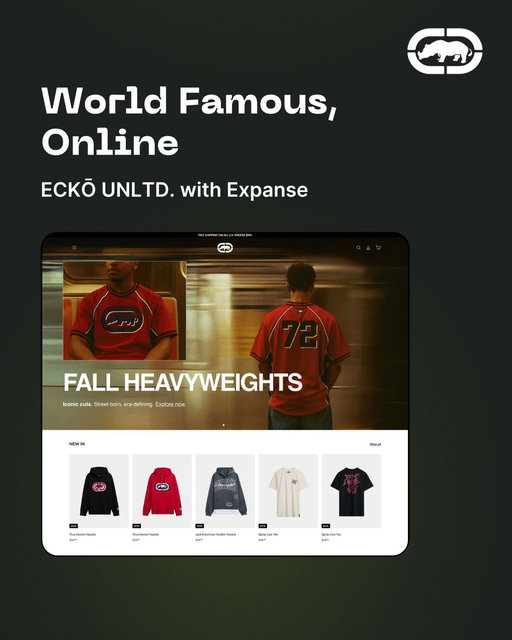
Streetwear is all about presence.
But online, presence = performance.

ECKŌ UNLTD. nails both, using the Expanse theme to turn bold design and massive catalogs into a seamless shopping experience. 👇
2.57K
19
4
2
5mo ago
ArchetypeThemes
Streetwear is all about presence. But online, presence = performance. ECKŌ UNLTD. nails both, using the Expanse theme to turn bold design and massive catalogs into a seamless shopping experience. 👇

ARCHΞTYPE (@archetypethemes) X Stats & Analytics

ARCHΞTYPE (@archetypethemes) has 1.63K X followers with a 1.01% engagement rate over the past 12 months. Across 500 posts, ARCHΞTYPE received 3.19K total likes and 411K impressions, averaging 6.37 likes per post. This page tracks ARCHΞTYPE's performance metrics, top content, and engagement trends — updated daily.

ARCHΞTYPE (@archetypethemes) X Analytics FAQ

How many X (Twitter) followers does ARCHΞTYPE have?+
ARCHΞTYPE (@archetypethemes) has 1.63K X (Twitter) followers as of March 2026.
What is ARCHΞTYPE's X (Twitter) engagement rate?+
ARCHΞTYPE's X (Twitter) engagement rate is 1.01% over the last 12 months, based on 500 posts.
How many likes does ARCHΞTYPE get on X (Twitter)?+
ARCHΞTYPE received 3.19K total likes across 500 posts in the last 12 months, averaging 6.37 likes per post.
How many X (Twitter) impressions does ARCHΞTYPE get?+
ARCHΞTYPE's X (Twitter) content generated 411K total impressions over the last 12 months.