
Key Metrics
Distributions


Rage Baiting is for Losers Yesterday, YC announced Chad IDE aka “the brainrot code editor.” Chad is an AI code editor that allows you to gamble, watch TikTok, and use dating apps while working on coding tasks. Their launch rightfully got a lot of attention. On one hand it’s funny. On the other hand, what are we doing here and why does this belong on the official YC account? To understand Chad IDE, Cluely, Icon, Friend, and the new class of Gen Z startups, you have to understand the online environment these founders grew up in. If you grew up on the internet and studied how and why certain people would regularly go viral, you know that making people mad has and always will be a highly effective way to get attention. The feedback loop is simple: 1) make something (product or ad) that makes people angry; 2) people comment/ share/ dunk; 3) because feeds are optimized to show posts with high engagement the most, you get more reach. Rage baiting for commercial purposes was pioneered by course bros. People like Tai Lopez realized that making the masses mad was an effective way to drive course sales. They could flaunt Lamborghinis, make a bunch of people angry, and as long as a handful of people found their way into their course, it was a viable, repeatable strategy. Historically on X, rage baiting was a marketing strategy, not a product strategy. Accounts like @sweatystartup frequently post things to get an angry reaction and subsequent reach, but behind the scenes he's always been running a normal commercial real estate fund. In 2025, rage baiting has become a product strategy. Cluely started as an app for cheating on coding interviews. Chad IDE’s only known differentiation from the other hundred AI native IDEs is that you can gamble and swipe on dating apps in it. The rage bait is sitting at the product level now. It’s becoming clear that while rage bait might occasionally work as a marketing strategy, it really should not be employed as a product strategy. Running a successful VC-backed company requires you to build a coalition of people that want to see you win. Getting media, investors, talent, and customers on your side is not an easy task. Rage baiting (whether at the marketing level or product level) is the most effective way to get people (who could be potential investors, customers, or team members) to actively pray for your downfall. YC has long provided some of the most durable, high quality, generalizable advice for startups and I believe it has had a tremendously positive impact on the companies that go through YC and even those that don’t. Launch now, make something people want, do things that don’t scale, ignore your competitors, etc. As someone who believes that YC is one of the most important and influential institutions in tech, I believe it might be time to include this in their list of essential startup advice: “Rage baiting is for losers.”
The largest workforce reduction as a share of total employees in S&P 500 history btw

Low IQ high agency continues to be one of the most OP human builds
Someone should make software that allows you to easily play all these songs on your phone, make playlists, and share music with friends I bet a lot of people would happily pay $10/month Could even give artists a rev share

Lawyer friend: “I’ve seen the future. Harvey isn’t perfect but has better attention to detail and is more thoughtful than almost any junior person at our firm. I’ve watched it do $100K of associate level work in 10 minutes”


Your goal as a software founder is to never let your spoon get bent

The Uninspired Company of Silicon Valley Six years ago, “The Browser Company of New York” was born. This week, its acquisition by Atlassian closed. Regardless of how you feel about the product, or the ultimate acquisition price, it’s undeniable that Josh, Hursh, and the team brought an incredibly fresh perspective to what a startup brand could look and feel like. The name, the brand design, etc. were all incredibly thoughtful. But they weren’t new. Roughly 150 years ago it was standard practice to name a company like they did: - The Prudential Insurance Company of America, founded in 1875 - The Standard Oil Company of New York, founded in 1911 - Edison Electric Illuminating Company of New York, founded in 1880 The Browser Company of New York was a perfect name for a specific reason: juxtaposing a hundred-and-fifty-year-old naming convention with a modern tool such as the web browser was an incredible way to stand out and signal to the world exactly what their mission was, and that they would be bringing inspired thinking to the category. The Browser Company’s name, brand, and marketing materials were so effective that they catalyzed a wave of companies to adopt the same naming convention. Between The Browser Company’s emergence and their eventual exit, I’d estimate that between 50 to 100 companies adopted this type of legacy naming convention. Naming a web browser company “The Browser Company of New York” signaled original, inspired thinking. The problem is that the second, third, fourth, etc. company to use the The [X] Company of [X] signals the exact opposite. I’m not automatically bearish on these companies, but I think many miss the point of what made The Browser Company a great name. At least one of these companies, The Interaction Company of California, has managed to really break through the noise and deliver a truly novel consumer AI product experience, but ironically they did it under the Poke brand, and I’d argue they should just abandon the original name entirely at this point. Poke dot com itself is a fantastic domain and name for their business and audience. In defense of the copycat branding, naming startups is really hard. Great domain names are finite, words in the English language are finite, and more companies (and startups specifically) are being created than ever. Another defense would be the classic (but misinterpreted) quote from Picasso: "Good artists copy, great artists steal." Taken literally, someone might think that means if you see a startup doing something that’s getting a good response, you should do the same thing yourself. But the a better interpretation of the quote is that great artists “steal” from the past, a variety of sources, and differing categories to create their own unique style and approach. The Browser Company of New York hit so hard because of the juxtaposition between a multi-hundred year old naming convention and a modern tool like the browser. To my knowledge, no one had done this before and that’s why it got such a great response. Just using this legacy naming convention for any random category, and after someone else executed against it so loudly and effectively, is not a good strategy. It signals that you are: - In a rush (fair) - Don’t value naming (concerning) - Didn’t want to spend the time to find a great domain (ok) - Aren’t seeking out inspiration outside of the tech bubble (concerning) - Didn’t seek out influence or advice from people that understand the value of naming, know how to find and acquire great domains, etc. (concerning) Browsers are ALL modern — Netscape, Edge, Chrome, Atlas, etc. So not only was The Browser Company a great name because it created a juxtaposition between a legacy naming structure and a modern tool, but it was immediately counterpositioned to all the other players in the category. Of course, this is not an isolated incident. Any time a startup does something truly great, a wave of companies gets a little too inspired. We saw this when @linear launched in 2019. Their website was so good that hundreds, maybe thousands of startups basically cloned it. Linear’s product and web design signaled original and deep thinking, a love for the craft of product design, and genuine love of design in general. The next thousand companies that copied them signaled the opposite. What this comes down to is that I believe the tech industry needs to learn how to copy or “steal” from OUTSIDE the industry. Even today, every AI company wants to be the "Apple of AI." It’s counterintuitive, but I’d bet that the “Apple of AI” will probably not build an iconic, generational brand by trying to emulate Apple advertisements from the 80s and 90s. They’ll do it by being themselves, or said differently, “stealing” from the past, a variety of sources, and a variety of categories to create their own unique style and approach. It’s perfectly respectable and even fair to take inspiration from obvious sources and industries. We at @tbpn have been vocal about being inspired by ESPN, SportsCenter and Complex, but the key thing is that we took that inspiration and applied it to an area (tech) that none of those groups had ever played in. So if you’re starting a company today, I urge you to take inspiration from the outside world and other industries, and avoiding the trap of becoming an uninspired company.
FYI: There are a number of websites selling counterfeit @tbpn merch. Our lawyer has taken down a lot of them but they keep popping up. If you purchased, I recommend pursuing a charge back asap. We have never sold merch and if/when we do it'll be available only on tbpn dot com.
JUST IN: Horses say we may be in a Car Bubble
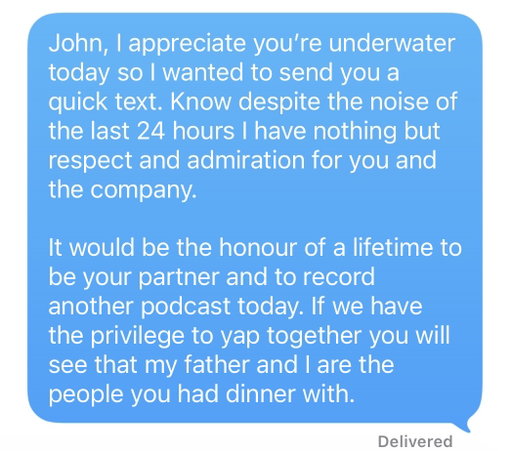

You can’t even share the internal secrets of your ai lab on a cinematic podcast in this country anymore
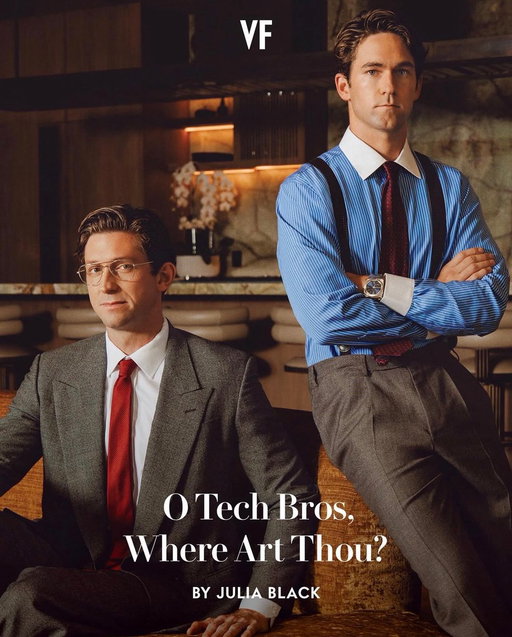
Jordi Hays (@jordihays) X Stats & Analytics
Jordi Hays (@jordihays) has 48.3K X followers with a 0.73% engagement rate over the past 12 months. Across 443 posts, Jordi Hays received 114K total likes and 16.2M impressions, averaging 257 likes per post. This page tracks Jordi Hays's performance metrics, top content, and engagement trends — updated daily. To benchmark @jordihays against other accounts, use Socialpruf's X competitor analysis tool.