instagram analytics
Last Year02/21/25 - 02/21/26
Comparable Performance:
followers
1.06M
impressions
232M
likes
8.14M
comments
35.4K
posts
277
engagement
3.52%
emv
$6.72M
Avg. per post
875K

Key Metrics

Distributions

Top Content

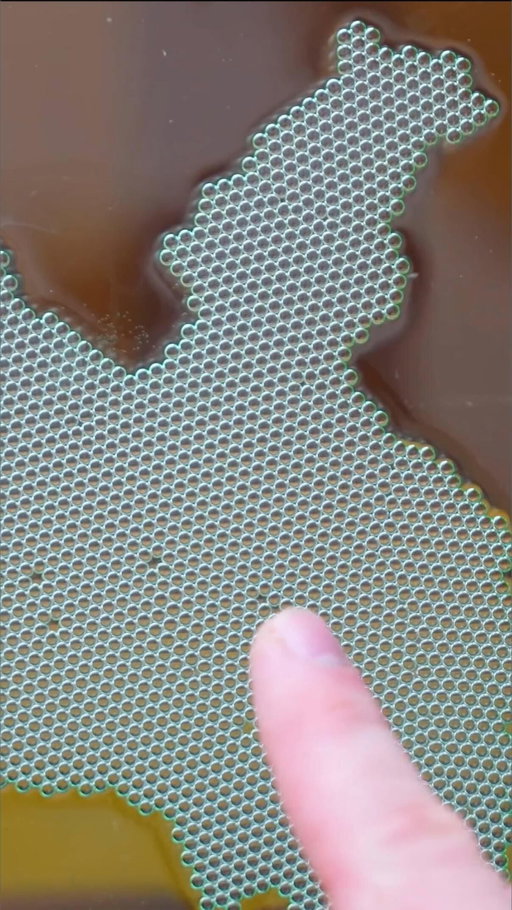
Can you swim in shade balls?

#science #veritasium #physics #engineering #experiment #swimming #shadeballs
27.5M
800K
1.75K
6mo ago
veritasium_daily
Can you swim in shade balls? #science #veritasium #physics #engineering #experiment #swimming #shadeballs
What Jumping Spiders Teach Us About Colour - Part 1

Why we put spiders on soccer balls 

Part 2 Tomorrow!

Hosted by Derek Muller

Written and directed by Neil Losin 

#science #veritasium #physics #engineering #biology #soccer #football #spiders
16.3M
857K
4.82K
10mo ago
veritasium_daily
What Jumping Spiders Teach Us About Colour - Part 1 Why we put spiders on soccer balls Part 2 Tomorrow! Hosted by Derek Muller Written and directed by Neil Losin #science #veritasium #physics #engineering #biology #soccer #football #spiders
The SAT Question That Everyone Got Wrong - Part 1

In 1982, there was one SAT question that every single student got wrong.

Here it is.

In the figure above, the radius of circle A is 1/3 the radius of circle B. Starting from the position shown in the figure, circle A rolls around circle B. At the end of how many revolutions of circle A will the centre of the circle first reach its starting point.

Is it:
A) 3/2
B) 3
C) 6
D) 9/2
E) 9

SAT Questions are designed to be quick. This exam gave students 30 minutes to solve 25 problems, so about a minute each.

So feel free to pause the video here and try to solve it.

Hosted by Derek Muller 

Written by @emilylinzhang and @gregor_cavlovic 

Directed by @emilylinzhang 

What is your answer? - Comment Below!👇 

#science #veritasium #physics #math #sat #satquestion #exam #misconception #mathproblem #homework
12.8M
182K
1.81K
10mo ago
veritasium_daily
The SAT Question That Everyone Got Wrong - Part 1 In 1982, there was one SAT question that every single student got wrong. Here it is. In the figure above, the radius of circle A is 1/3 the radius of circle B. Starting from the position shown in the figure, circle A rolls around circle B. At the end of how many revolutions of circle A will the centre of the circle first reach its starting point. Is it: A) 3/2 B) 3 C) 6 D) 9/2 E) 9 SAT Questions are designed to be quick. This exam gave students 30 minutes to solve 25 problems, so about a minute each. So feel free to pause the video here and try to solve it. Hosted by Derek Muller Written by @emilylinzhang and @gregor_cavlovic Directed by @emilylinzhang What is your answer? - Comment Below!👇 #science #veritasium #physics #math #sat #satquestion #exam #misconception #mathproblem #homework
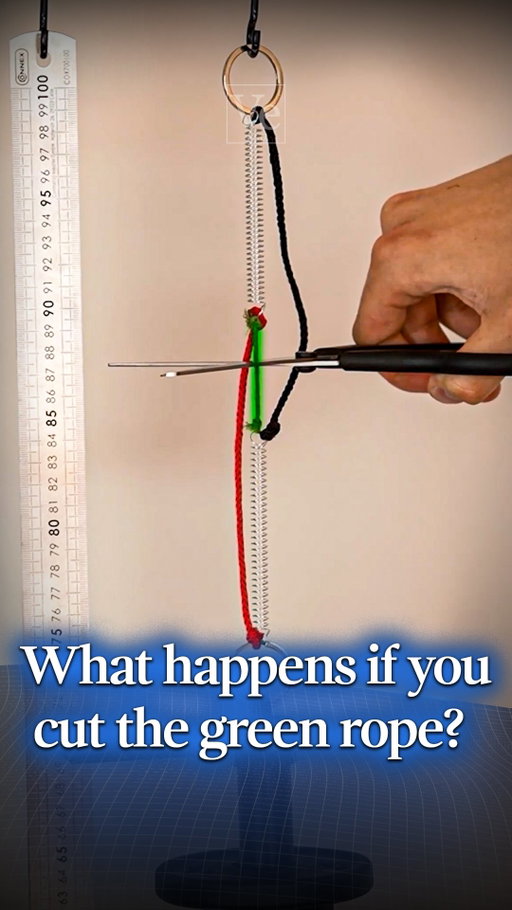
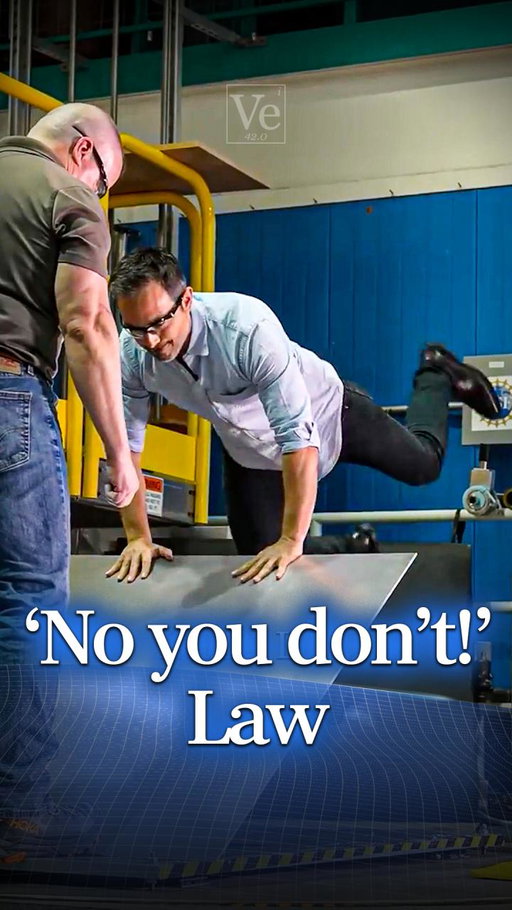
What will happen to the weight if you cut the green rope?

Written by @gregor_cavlovic and Derek Muller

Produced and directed by @gregor_cavlovic 

Hosted by Derek Muller and @gregor_cavlovic 

#science #veritasium #physics #experiment
9.42M
72.6K
439
1mo ago
veritasium_daily
What will happen to the weight if you cut the green rope? Written by @gregor_cavlovic and Derek Muller Produced and directed by @gregor_cavlovic Hosted by Derek Muller and @gregor_cavlovic #science #veritasium #physics #experiment
Can you solve the helicopter riddle? 

Written by Derek Muller, @emilylinzhang, and @sciencepetr 

Produced by Derek Muller, @sciencepetr and @emilylinzhang 

Hosted by Derek Muller

#science #veritasium #physics #engineering #math #problem #riddle #question #helicopter
7.44M
279K
1.6K
5mo ago
veritasium_daily
Can you solve the helicopter riddle? Written by Derek Muller, @emilylinzhang, and @sciencepetr Produced by Derek Muller, @sciencepetr and @emilylinzhang Hosted by Derek Muller #science #veritasium #physics #engineering #math #problem #riddle #question #helicopter
The Man Who Killed Millions And Saved Billions

The story of one of the most tragic scientists to ever win the Nobel Prize, Fritz Haber.

Hosted by Derek Muller

Written by @sciencepetr, Derek Muller, Felicity Nelson and Kovi Rose

#science #physics #veritasium #chemistry #nobelprize #nobel #haber #fritzhaber
6.68M
199K
309
11mo ago
veritasium_daily
The Man Who Killed Millions And Saved Billions The story of one of the most tragic scientists to ever win the Nobel Prize, Fritz Haber. Hosted by Derek Muller Written by @sciencepetr, Derek Muller, Felicity Nelson and Kovi Rose #science #physics #veritasium #chemistry #nobelprize #nobel #haber #fritzhaber
Happy Pi Day 2025!

When the demonstration hits your eye and it explains the value of pi, that’s Newton!

Hosted by Derek Muller

Written by Derek Muller and Alex Kontorovich 

#science #veritasium #physics #math #experiment #pi #pizza
6.14M
190K
1.29K
11mo ago
veritasium_daily
Happy Pi Day 2025! When the demonstration hits your eye and it explains the value of pi, that’s Newton! Hosted by Derek Muller Written by Derek Muller and Alex Kontorovich #science #veritasium #physics #math #experiment #pi #pizza
Why It Was Almost Impossible To Make The Blue LED - Part 1

LEDs don’t get their color from their plastic covers. And you can see that because here is a transparent LED that also glows the same red color.

The color of the light comes from the electronics themselves. The casing just helps us tell different LEDs apart.

In 1962, general Electric engineer Nick Holonyak created the first visible LED. It glowed a faint red. A few years after that, engineers at Monsanto created a green LED.

But for decades, all we had were those two colors. So LEDs could only be used in things like indicators, calculators, and watches.

If only we could make blue, then we could mix red, green, and blue to make white, and every other color, unlocking LEDs for every type of lighting in the world, from light bulbs, to phones, to computers, to TVs to billboards.

But blue was almost impossible to make.

Hosted by Derek Muller

Written by @emilylinzhang, Ricky Nathvani and Derek Muller

Directed by @emilylinzhang 

#science #veritasium #physics #engineering #led #blueled #nichia #light #electricity
4.98M
181K
220
10mo ago
veritasium_daily
Why It Was Almost Impossible To Make The Blue LED - Part 1 LEDs don’t get their color from their plastic covers. And you can see that because here is a transparent LED that also glows the same red color. The color of the light comes from the electronics themselves. The casing just helps us tell different LEDs apart. In 1962, general Electric engineer Nick Holonyak created the first visible LED. It glowed a faint red. A few years after that, engineers at Monsanto created a green LED. But for decades, all we had were those two colors. So LEDs could only be used in things like indicators, calculators, and watches. If only we could make blue, then we could mix red, green, and blue to make white, and every other color, unlocking LEDs for every type of lighting in the world, from light bulbs, to phones, to computers, to TVs to billboards. But blue was almost impossible to make. Hosted by Derek Muller Written by @emilylinzhang, Ricky Nathvani and Derek Muller Directed by @emilylinzhang #science #veritasium #physics #engineering #led #blueled #nichia #light #electricity
I waterproofed myself in aerogel!

What is Aerogel?

Aerogels are the world’s lightest (least dense) solids. They are also excellent thermal insulators and have been used in numerous Mars missions and the Stardust comet particle-return mission.

How was it created?

Back in 1931, a guy named Professor Samuel Kistler had a bet with his colleague Charles Learned. Now the bet revolved around jellies, like peanut-butter-and-jelly jellies.

Now the thing about jellies is they are actually a combination of liquids and solids. I mean, they’re mostly liquid, but it’s embedded within this 3D solid structure. So if you think of a gel, like jello, has a skeleton with nano-sized pores that gives it its rigidity, and then that’s about 1% of the gel.

So the bet was this:

Could you remove the liquid from the jelly? Without affecting the solid structure? I mean, if you just evaporate the liquid out, well, then the solid structure shrinks, because as you remove liquid molecules, they pull on each other, and they pull on the solid structure around them, basically crumpling it from the inside.

Now Samuel Kistler solved this problem in two ways. First, he realized you could replace one liquid with another inside the jelly just by washing it thoroughly. So you could swap out, say, water, for alcohol. And then, if you take the jelly and put it in a high-pressure vessel called a autoclave, by heating it to the high-temperature, high-pressure point called the critical point of the liquid, that liquid transformed into a semi-liquid, semi-gas called a supercritical fluid.

At this point, there is no longer a distinction between liquid and gas. Those molecules are no longer pulling on each other.

So once you’ve depressurized the vessel, that solid skeleton, that 1% of the mass of the gel, is left behind intact, except for where there was liquid in the pores before is now gas, and that solid skeleton, that nano porous solid is what we call aerogel.

Hosted by Derek Muller
 
Written by Derek Muller

#science #veritasium #physics #aerogel #waterproof #lightestsolid #silica #NASA #nano #nanotechnology
4.79M
87.4K
347
11mo ago
veritasium_daily
I waterproofed myself in aerogel! What is Aerogel? Aerogels are the world’s lightest (least dense) solids. They are also excellent thermal insulators and have been used in numerous Mars missions and the Stardust comet particle-return mission. How was it created? Back in 1931, a guy named Professor Samuel Kistler had a bet with his colleague Charles Learned. Now the bet revolved around jellies, like peanut-butter-and-jelly jellies. Now the thing about jellies is they are actually a combination of liquids and solids. I mean, they’re mostly liquid, but it’s embedded within this 3D solid structure. So if you think of a gel, like jello, has a skeleton with nano-sized pores that gives it its rigidity, and then that’s about 1% of the gel. So the bet was this: Could you remove the liquid from the jelly? Without affecting the solid structure? I mean, if you just evaporate the liquid out, well, then the solid structure shrinks, because as you remove liquid molecules, they pull on each other, and they pull on the solid structure around them, basically crumpling it from the inside. Now Samuel Kistler solved this problem in two ways. First, he realized you could replace one liquid with another inside the jelly just by washing it thoroughly. So you could swap out, say, water, for alcohol. And then, if you take the jelly and put it in a high-pressure vessel called a autoclave, by heating it to the high-temperature, high-pressure point called the critical point of the liquid, that liquid transformed into a semi-liquid, semi-gas called a supercritical fluid. At this point, there is no longer a distinction between liquid and gas. Those molecules are no longer pulling on each other. So once you’ve depressurized the vessel, that solid skeleton, that 1% of the mass of the gel, is left behind intact, except for where there was liquid in the pores before is now gas, and that solid skeleton, that nano porous solid is what we call aerogel. Hosted by Derek Muller Written by Derek Muller #science #veritasium #physics #aerogel #waterproof #lightestsolid #silica #NASA #nano #nanotechnology
The bizarre behaviour of rotating bodies - Part 1

What you are looking at is known as the Dzhanibekov effect or the tennis racket theorem or the intermediate axis theorem. 

It involves arguably the best mathematician alive, Soviet era secrets, and the end of the world. 

So in 1985, cosmonaut Vladimir Dzhanibekov was tasked with saving the Soviet space station Salyut 7 which had completely shut down. The mission was so dramatic that the Russians made a movie out of it in 2017 and after rescuing the space station, Dzhanibekov unpacked supplies sent up from Earth which were locked down with a wing-nut and as the wing-nut spun off the bolt, he noticed something strange: 

The wing-nut maintained its orientation for a short time, and then it flipped, 180 degrees. And as he kept watching, it flipped back a few seconds later and it continued flipping back and forth at regular intervals.

This motion wasn’t caused by forces or torques applied to the wing-nut: there were none. And yet it kept flipping. It was a strange and counterintuitive phenomenon. One that the Russians kept secret for 10 years. 

But why the secrecy? - Answer Coming In Part 2

6 years later in 1991 a paper was published in the Journal of Dynamics and Differential Equations called, “The Twisting  Tennis Racket” and although it was related, it of course makes no mention of the secret Dzhanibekov effect. 

The paper says if you hold a tennis racket facing you, and then flip it in the air like this, it not only rotates the way you intend it to, it also makes a half turn around an axis that passes through its handle so the side that was originally facing you will be facing away when you catch it.

Hosted by Derek Muller

Written by Derek Muller

#physics #science #veritasium #math #engineering #experiment #cosmonaut #dzhanibekoveffect #tennis
4.42M
160K
213
12mo ago
veritasium_daily
The bizarre behaviour of rotating bodies - Part 1 What you are looking at is known as the Dzhanibekov effect or the tennis racket theorem or the intermediate axis theorem. It involves arguably the best mathematician alive, Soviet era secrets, and the end of the world. So in 1985, cosmonaut Vladimir Dzhanibekov was tasked with saving the Soviet space station Salyut 7 which had completely shut down. The mission was so dramatic that the Russians made a movie out of it in 2017 and after rescuing the space station, Dzhanibekov unpacked supplies sent up from Earth which were locked down with a wing-nut and as the wing-nut spun off the bolt, he noticed something strange: The wing-nut maintained its orientation for a short time, and then it flipped, 180 degrees. And as he kept watching, it flipped back a few seconds later and it continued flipping back and forth at regular intervals. This motion wasn’t caused by forces or torques applied to the wing-nut: there were none. And yet it kept flipping. It was a strange and counterintuitive phenomenon. One that the Russians kept secret for 10 years. But why the secrecy? - Answer Coming In Part 2 6 years later in 1991 a paper was published in the Journal of Dynamics and Differential Equations called, “The Twisting Tennis Racket” and although it was related, it of course makes no mention of the secret Dzhanibekov effect. The paper says if you hold a tennis racket facing you, and then flip it in the air like this, it not only rotates the way you intend it to, it also makes a half turn around an axis that passes through its handle so the side that was originally facing you will be facing away when you catch it. Hosted by Derek Muller Written by Derek Muller #physics #science #veritasium #math #engineering #experiment #cosmonaut #dzhanibekoveffect #tennis
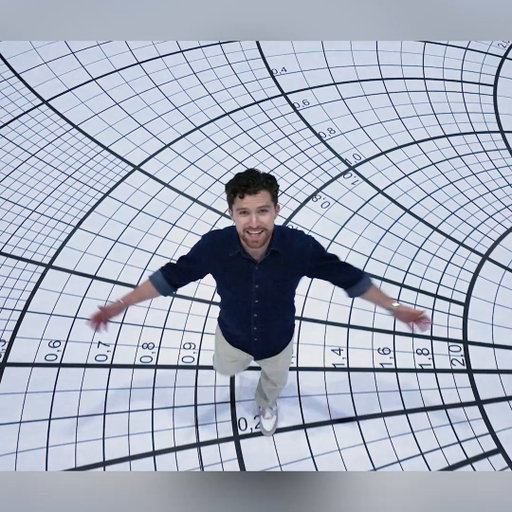
This is the world’s largest spiderweb.

Entirely underground, it’s home to an entire ecosystem. 

But how?

Written by @arckopolo 

Hosted by @casper_mebius 

#science #veritasium #physics #biology #spider
4.27M
228K
1.4K
2w ago
veritasium_daily
This is the world’s largest spiderweb. Entirely underground, it’s home to an entire ecosystem. But how? Written by @arckopolo Hosted by @casper_mebius #science #veritasium #physics #biology #spider
There are 96 million black balls on this reservoir

Written and hosted by Derek Muller

#science #veritasium #physics #engineering #biology #shadeballs #reservoir #la
3.79M
23.9K
731
8mo ago
veritasium_daily
There are 96 million black balls on this reservoir Written and hosted by Derek Muller #science #veritasium #physics #engineering #biology #shadeballs #reservoir #la
How does a sewing machine work?

Written by @sciencepetr, Derek Muller and Felicity Nelson

Directed and produced by @sciencepetr 

#science #veritasium #physics #engineering #sewing #sewingmachine #machine
3.56M
27.5K
76
5mo ago
veritasium_daily
How does a sewing machine work? Written by @sciencepetr, Derek Muller and Felicity Nelson Directed and produced by @sciencepetr #science #veritasium #physics #engineering #sewing #sewingmachine #machine
How to solve any maze

The Fastest Maze Solving Competition in the World - Part 3

Written by Tom Lum and @emilylinzhang 

Produced by Derek Muller, @sciencepetr and @emilylinzhang 

Hosted by Derek Muller 

#science #veritasium #physics #engineering #biology #mice #racing #robot
3.5M
141K
170
6mo ago
veritasium_daily
How to solve any maze The Fastest Maze Solving Competition in the World - Part 3 Written by Tom Lum and @emilylinzhang Produced by Derek Muller, @sciencepetr and @emilylinzhang Hosted by Derek Muller #science #veritasium #physics #engineering #biology #mice #racing #robot
The Stickiest Non-Sticky Substance

How do Geckos stick to walls? And how does this substance work? 

Hosted by Derek Muller

Written by Derek Muller and @sciencepetr 

#science #veritasium #physics #engineering #biology #material #gecko
3.07M
200K
566
9mo ago
veritasium_daily
The Stickiest Non-Sticky Substance How do Geckos stick to walls? And how does this substance work? Hosted by Derek Muller Written by Derek Muller and @sciencepetr #science #veritasium #physics #engineering #biology #material #gecko
Why do all animals jump to about the same height? 

This is exactly what Alfonso Borrelli, the father of biomechanics, looked at in the 17th century. As he put it, in the same conditions, smaller and lighter animals make bigger jumps relative to their body. If the other conditions are equal, and indeed the limbs and the other organs are in the same proportion, the dog will jump as far as the horse.

Now, sure, there is variation.

A species whose survival depends on jumping will be optimized for it, while others, like turtles and elephants, they don’t jump at all. But when you consider the huge variations in size, I mean a horse is 1500 times heavier than a squirrel. It’s incredible that they jump to around the same height. And it’s not because squirrels are super muscly or something. Horses and squirrels have similar muscle to weight percentages, and insects have even less muscle relative to their weight.

So how are small things so strong?

Well if you look closely at a muscle. It’s made up of tiny units called sarcomeres. They act like miniature springs. How far a muscle compresses depends on how many of these springs are in series. But the strength of a muscle depends only on how many are working in parallel. The thicker the muscle, the more springs in parallel, and the greater the strength. Therefore strength depends on the cross-sectional area of a muscle. And as animals shrink, this cross-sectional area scales down with the square of their height.

But an animal’s weight is proportional to its volume, so that scales with the cube of their height. So as you scale down, weight decreases faster than strength, and as a result, smaller animals have much higher strength to weight ratios.

Hosted by Derek Muller

Written and directed by @henry.vandyck 

#science #veritasium #physics #math #biology #animals #muscle #jumping #nature
3.05M
150K
256
12mo ago
veritasium_daily
Why do all animals jump to about the same height? This is exactly what Alfonso Borrelli, the father of biomechanics, looked at in the 17th century. As he put it, in the same conditions, smaller and lighter animals make bigger jumps relative to their body. If the other conditions are equal, and indeed the limbs and the other organs are in the same proportion, the dog will jump as far as the horse. Now, sure, there is variation. A species whose survival depends on jumping will be optimized for it, while others, like turtles and elephants, they don’t jump at all. But when you consider the huge variations in size, I mean a horse is 1500 times heavier than a squirrel. It’s incredible that they jump to around the same height. And it’s not because squirrels are super muscly or something. Horses and squirrels have similar muscle to weight percentages, and insects have even less muscle relative to their weight. So how are small things so strong? Well if you look closely at a muscle. It’s made up of tiny units called sarcomeres. They act like miniature springs. How far a muscle compresses depends on how many of these springs are in series. But the strength of a muscle depends only on how many are working in parallel. The thicker the muscle, the more springs in parallel, and the greater the strength. Therefore strength depends on the cross-sectional area of a muscle. And as animals shrink, this cross-sectional area scales down with the square of their height. But an animal’s weight is proportional to its volume, so that scales with the cube of their height. So as you scale down, weight decreases faster than strength, and as a result, smaller animals have much higher strength to weight ratios. Hosted by Derek Muller Written and directed by @henry.vandyck #science #veritasium #physics #math #biology #animals #muscle #jumping #nature
Why do we spin a football when throwing it? 

The mystery of spin, explained by Veritasium.

Watch our latest video on YouTube for more with @tombrady! 

Hosted by Derek Muller, Co Hosted by @henry.vandyck 

Directed and Produced by @henry.vandyck 

Written by @henry.vandyck and Derek Muller

#science #veritasium #physics #math #experiment #football #tombrady #americanfootball #nfl #sport
2.85M
82.2K
192
8mo ago
veritasium_daily
Why do we spin a football when throwing it? The mystery of spin, explained by Veritasium. Watch our latest video on YouTube for more with @tombrady! Hosted by Derek Muller, Co Hosted by @henry.vandyck Directed and Produced by @henry.vandyck Written by @henry.vandyck and Derek Muller #science #veritasium #physics #math #experiment #football #tombrady #americanfootball #nfl #sport
This is why we can’t have nice things - Part 2

In Geneva just before Christmas 1924, Big Electric had a secret meeting…

Part 3 Tomorrow! 

Hosted by Derek Muller

Written by Derek Muller and @sciencepetr 

#science #veritasium #physics #engineering #light #lightbulbs #conspiracy #electricity
2.74M
108K
1.15K
10mo ago
veritasium_daily
This is why we can’t have nice things - Part 2 In Geneva just before Christmas 1924, Big Electric had a secret meeting… Part 3 Tomorrow! Hosted by Derek Muller Written by Derek Muller and @sciencepetr #science #veritasium #physics #engineering #light #lightbulbs #conspiracy #electricity
What happens if you keep zooming in?

Hosted by Derek Muller 

Written and directed by @gregor_cavlovic 

#science #veritasium #physics #microscopes #electrons #atoms #micro #electronmicroscope
2.67M
119K
177
4mo ago
veritasium_daily
What happens if you keep zooming in? Hosted by Derek Muller Written and directed by @gregor_cavlovic #science #veritasium #physics #microscopes #electrons #atoms #micro #electronmicroscope
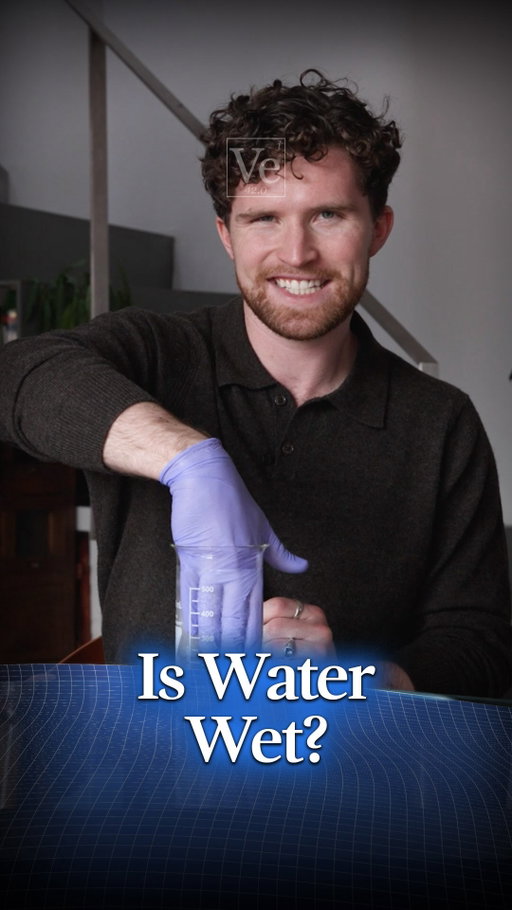
The Small World Paradox

How can we be connected in 6 steps  if we spend our lives in clusters? 

Written by @_james_moore_1990, @casper_mebius & Derek Muller

Produced and directed by @_james_moore_1990 

Hosted by Derek Muller and @casper_mebius 

#science #veritasium #physics #math #networks #6degreesofseparation #smallworld #connections
2.63M
115K
228
2mo ago
veritasium_daily
The Small World Paradox How can we be connected in 6 steps if we spend our lives in clusters? Written by @_james_moore_1990, @casper_mebius & Derek Muller Produced and directed by @_james_moore_1990 Hosted by Derek Muller and @casper_mebius #science #veritasium #physics #math #networks #6degreesofseparation #smallworld #connections

Veritasium (@veritasium_daily) Instagram Stats & Analytics

Veritasium (@veritasium_daily) has 1.06M Instagram followers with a 3.52% engagement rate over the past 12 months. Across 277 posts, Veritasium received 8.14M total likes and 231M impressions, averaging 30.7K likes per post. This page tracks Veritasium's performance metrics, top content, and engagement trends — updated daily.

Veritasium (@veritasium_daily) Instagram Analytics FAQ

How many Instagram followers does Veritasium have?+
Veritasium (@veritasium_daily) has 1.06M Instagram followers as of February 2026.
What is Veritasium's Instagram engagement rate?+
Veritasium's Instagram engagement rate is 3.52% over the last 12 months, based on 277 posts.
How many likes does Veritasium get on Instagram?+
Veritasium received 8.14M total likes across 277 posts in the last year, averaging 30.7K likes per post.
How many Instagram impressions does Veritasium get?+
Veritasium's Instagram content generated 231M total impressions over the last 12 months.