NewGet @nasaartemis's full report

instagram analytics
Similar Accounts:
instagram analytics
Similar Accounts:
followers
5.57M
impressions
2.17B
likes
94.5M
comments
506K
posts
275
engagement
4.96%
emv
$67.6M
Average per post
7.88M
Key Metrics
Impressions
monthly
Distributions
Content
113M
4.52M
12.4K
6mo ago

nasaartemis
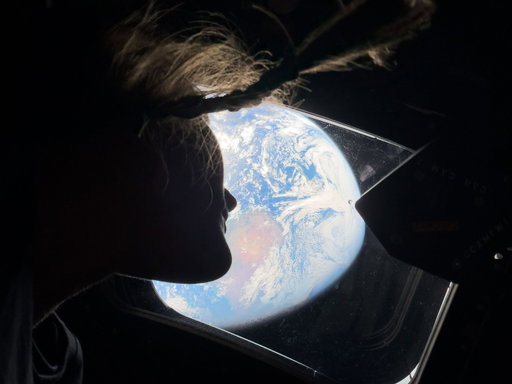
Seeing home from space hits different
@astro_christina and @astro_reid take some time to look back at Earth from one of Orion's windows as the Artemis II astronauts continue their journey to the Moon. They're deep in space, on this mission for all of us back home.
Image description: Each image is inside a dimly lit Orion spacecraft, a window takes up most of the image with a brightly lit Earth, Christina Koch and Reid Wiseman's faces both lit up while looking back at Earth.
Credit: NASA
#NASA #Artemis #Space
102M
6.52M
51.0K
6mo ago

nasaartemis
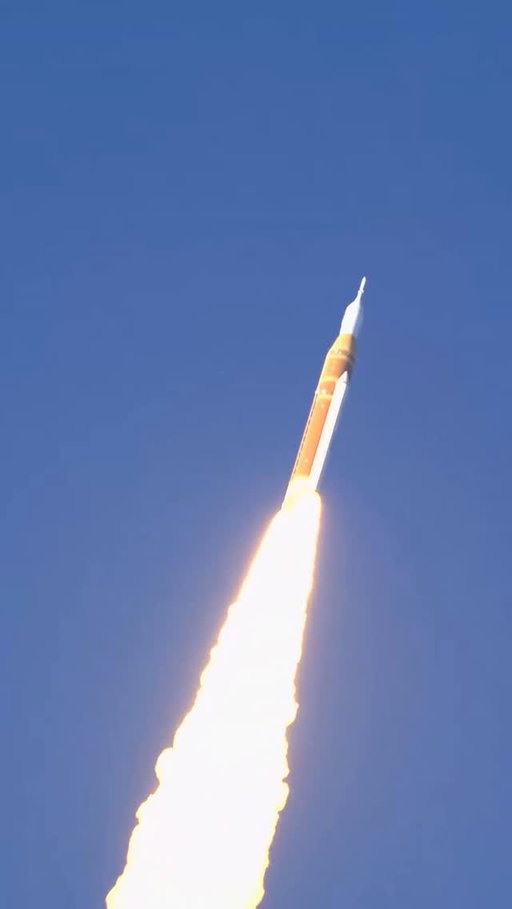
Liftoff. The Artemis II mission launches from @NASAKennedy at 6:35 p.m. EDT (2235 UTC), propelling four astronauts on a journey around the Moon. Artemis II will pave the way for future Moon landings, as well as the next giant leap — astronauts on Mars.
Credit: NASA
#Liftoff #Launch #Artemis #Moon #Astronauts
86.5M
3.46M
21.1K
6mo ago
nasaartemis
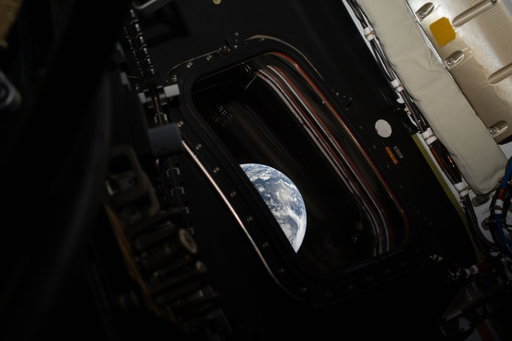
New photos from space dropping NOW.
Pause for a moment with the crew of @NASAArtemis II as they look back at our home planet, seen through the window of the Orion capsule. That’s us, together, looking back at the astronauts journeying to the Moon, for all of humanity.
In the first image, Earth peeks through the capsule window, reminding us that a view like this relies on the ingenuity and hard work of countless people back home.
In the second image, we see our home planet as a whole, lit up in spectacular blues and browns. A green aurora even lights up the atmosphere in the north.
Image descriptions:
1: One-third of Earth peeking through the window of the Orion capsule. The planet is a dreamy pale blue, swirling with white clouds and reflected sunlight. Although Earth only fills a fraction of the image it is the brightest object in the image by far. The capsule window is surrounded by a thick frame held in place with bolts, reminiscent of a heavy duty airplane window. It is dark in the capsule, but the outlines of straps and various components of the capsule are visible. Brighter white components are visible in the upper right corner. Credit: NASA
2: A full disk image of Earth, as seen from the Orion capsule. The planet is a pale blue, swirling with white clouds and glowing slightly lighter blue in place from reflected light. From about 8 to 9 o’clock, a large brown landmass is Africa, with the Iberian peninsula twinkling with lights just where the planet curves. At the 1 o’clock spot, aurora glow in a thin green glow, just barely separated from the planet’s surface. Earth is set against the black of space. Credit: NASA
73.2M
2.93M
11.2K
6mo ago
nasaartemis
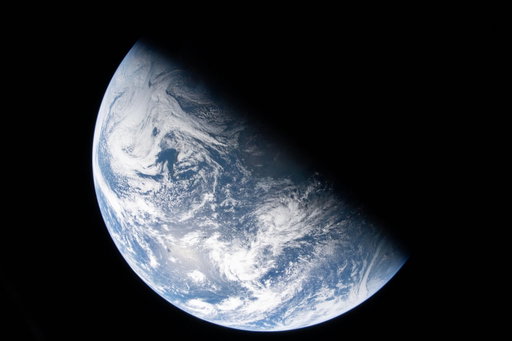
More new Earth images dropped! 🤩
In this new image from the Artemis II crew, we see the divide between night and day, known as the terminator, cutting across Earth. Whether awake or fast asleep, we’re all here on this planet together.
In the second image, also taken from the Orion capsule, we can see ourselves represented by the electric lights of human activity. In the lower right, sunlight illuminates the limb of the planet.
The Artemis II crew’s schedule is designed around the requirements of the mission. While many in the U.S. were preparing for bed on April 2, the crew had just completed translunar injection, putting them officially on course for the Moon.
Credit: NASA
Image descriptions:
1: Earth as seen from the Orion capsule. It is divided sharply in half, with a line running diagonally from the 11 o'clock to the 4 o'clock. The lower left half is a bright pale blue. Its surface is covered with swirly, puffy white clouds, with texture indicating different thicknesses. The upper right half is dark, with no illumination from the Sun. Earth is set against the black of space.
2: A full disk image of Earth at night, as seen from the Orion capsule. The planet is a dark midnight blue. Swirling white clouds are visible against the darker surface. From about 8 to 9 o'clock, a large, very brown landmass is Africa, with the Iberian peninsula twinkling with lights just where the planet curves. Other tiny yellow dots of electric lights are sprinkled across the planet's surface. From the 3 to the 6 o'clock spot, a very thin crescent of blue light hugs the edge of the planet. Earth is set against the black of space.
69.9M
2.80M
6.93K
6mo ago
nasaartemis
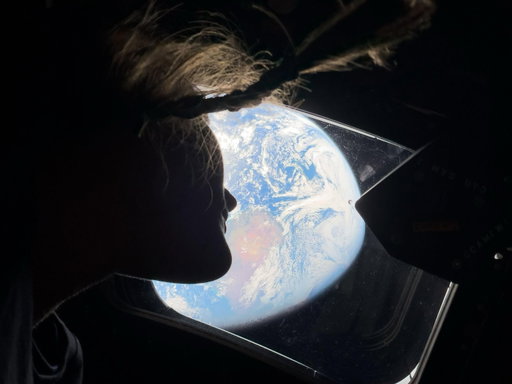
First braids to leave Earth orbit. (unconfirmed)
68.4M
3.85M
46.0K
6mo ago
nasaartemis
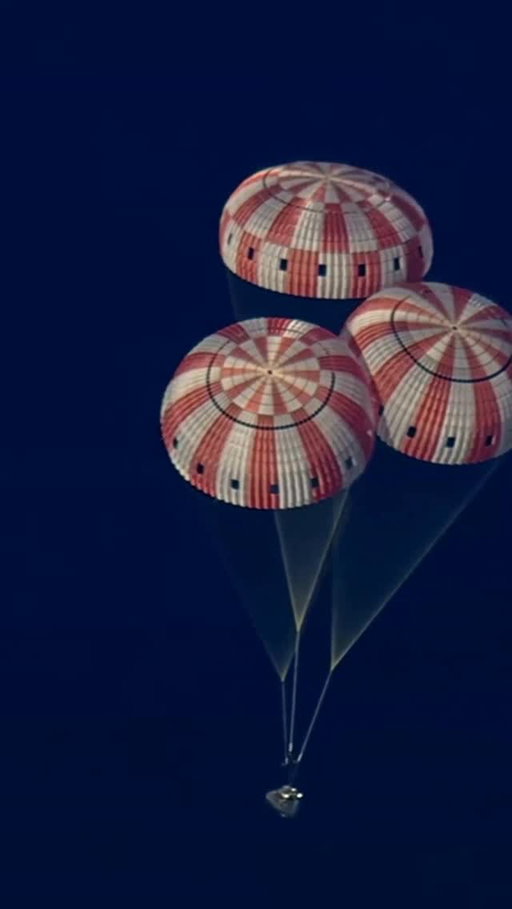
Around the Moon and back.
The Artemis II crew has splashed down off the coast of San Diego on Friday, April 10, at 8:07 p.m. EDT (0007 UTC April 11 UTC) after approximately 10 days in space. The crew includes NASA astronauts @Astro_Reid, @AstroVicGlover, and @Astro_Christina, and @CanadianSpaceAgency astronaut @AstroJeremy.
A combined NASA and U.S. military recovery team will soon extract the astronauts from the Orion spacecraft and fly them to the USS Murtha. Once aboard, the astronauts will undergo post‑mission medical evaluations before returning to shore where awaiting aircraft will take them to @NASAJohnson in Houston.
Teams will also retrieve the spacecraft and transport it to Naval Base San Diego, where it will be offloaded and prepared for a return to @NASAKennedy.
Credit: NASA
59.6M
2.38M
8.29K
6mo ago
nasaartemis
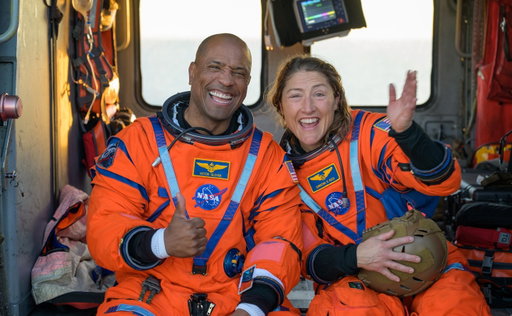
The Artemis II astronauts were all smiles on the flight deck of USS John P. Murtha after they were extracted from their Orion spacecraft following splashdown.
Image descriptions:
1. NASA astronaut Victor Glover (@AstroVicGlover), Artemis II pilot, left, and NASA astronaut Christina Koch (@Astro_Christina), Artemis II mission specialist are seen sitting on a Navy MH-60 Seahawk from Helicopter Sea Combat Squadron (HSC) 23 on the flight deck of USS John P. Murtha.
2. NASA astronaut Reid Wiseman (@Astro_Reid), Artemis II commander, left, and CSA (@CanadianSpaceAgency) astronaut Jeremy Hansen (@AstroJeremy), Artemis II mission specialist, are seen sitting on a Navy MH-60 Seahawk from Helicopter Sea Combat Squadron (HSC) 23 on the flight deck of USS John P. Murtha
Credit: NASA/Bill Ingalls
58.8M
2.73M
16.5K
6mo ago
nasaartemis
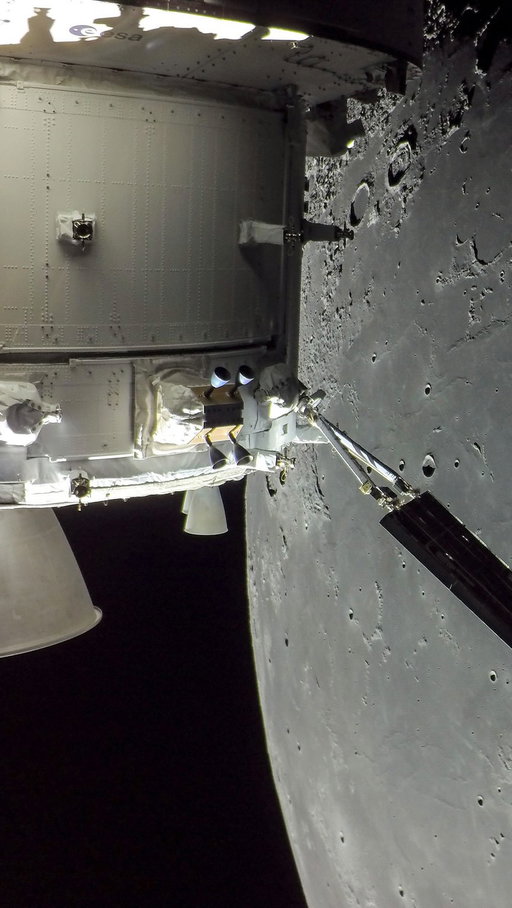
Our Artemis II crew will be going around the Moon... but they’ll always find their way back home 🌎
During this complex and far-reaching journey, the four crew members will travel ~685,000 miles looping around the Moon and back to Earth in a span of about 10-days. The mission follows a free-return trajectory that uses the gravity of the Earth and Moon to naturally guide the crew home.
During the mission, the astronauts are going to get a unique perspective of the Moon while testing Orion’s systems and performing science operations.
Visual description: This artist’s concept depicts the trajectory for NASA’s Artemis II test flight, an approximately 10-day mission that will send four astronauts around the Moon and back. The agency’s SLS (Space Launch System) rocket and Orion spacecraft will launch from Kennedy Space Center in Florida. Orion will fly an orbit around Earth and then venture around the Moon before returning to Earth.
Credit: @NASAGoddard

58.5M
3.95M
22.0K
6mo ago
nasaartemis
Jesse, Steve, Laddy, and Vlad….such an incredible feeling to welcome you aboard Integrity after a nearly 700,000 mile journey. Forever thankful for your service to our crew and the nation.
50.8M
1.14M
3.56K
7mo ago
nasaartemis
NASA is increasing the cadence of future Artemis missions.
The Artemis III mission, now in 2027, will be designed to test out systems and operational capabilities in low Earth orbit as preparation for an Artemis IV landing in 2028. This new mission will endeavor to include a rendezvous and docking with one or both commercial landers from SpaceX and Blue Origin.
This change will accelerate the flight rate of the Artemis missions and enable a safer and more reliable launch cadence.
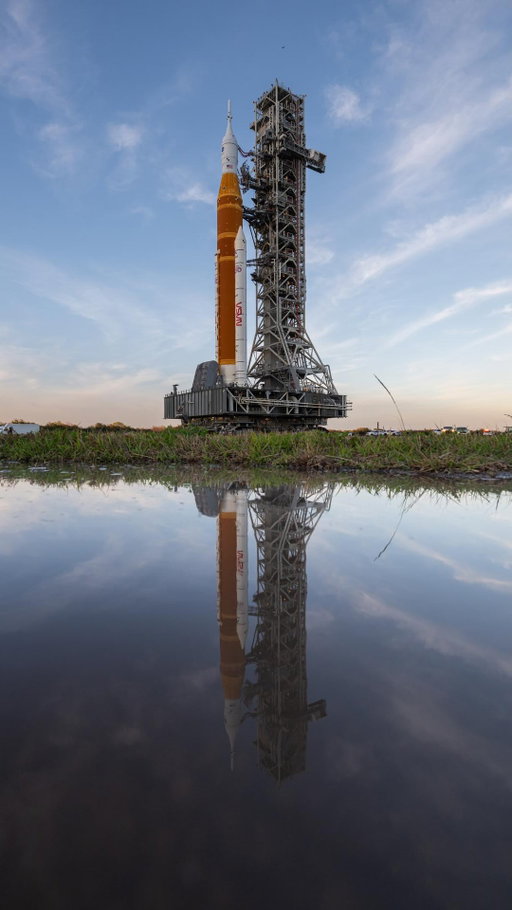
There will be no changes to the Artemis II mission. In this video, we see a timelapse of the Artemis II rocket and spacecraft rolling back to the Vehicle Assembly Building at @NASAKennedy atop of the crawler-transporter on Wednesday, Feb. 25. Teams will conduct work and repairs on the Artemis II vehicle before returning it to Launch Pad 39B to launch on its crewed mission around the Moon no earlier than April 2026.
Credit: NASA
Thumbnail Credit: NASA/John Kraus
48.0M
1.92M
9.55K
6mo ago
nasaartemis
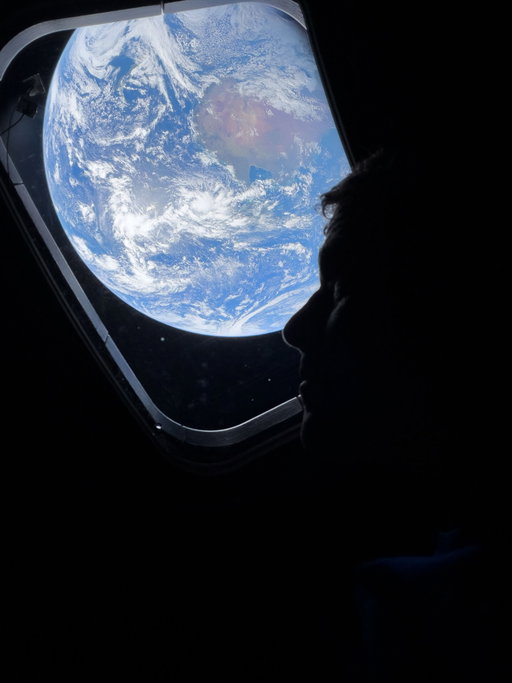
There are no words.
43.1M
1.72M
7.91K
6mo ago
nasaartemis
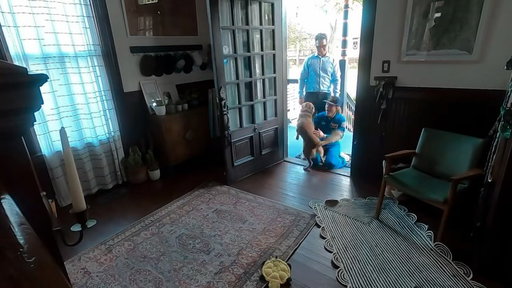
In order: 🌍 🤗 🐕🏖️
I’m still pretty sure I was the happier side of this reunion. Sadie taught me everything I needed to know about being an emotional support animal. Didn’t expect that would come in handy.
42.8M
1.71M
9.65K
6mo ago
nasaartemis
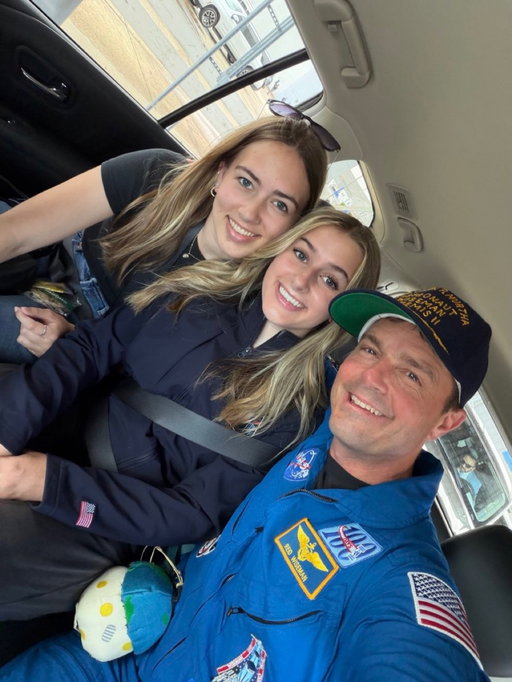
Mission complete ❤️❤️❤️
41.2M
1.65M
7.56K
6mo ago
nasaartemis
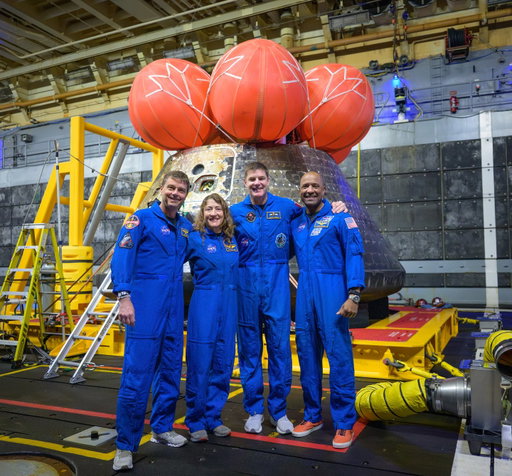
The astronauts. Their ride around the Moon.
The Artemis II astronauts pose for a group photo after viewing their Orion spacecraft — which they named Integrity — in the well deck of USS John P. Murtha following their splashdown.
Image description: NASA astronauts Reid Wiseman (@Astro_Reid), commander; left, Christina Koch (@Astro_Christina), mission specialist; CSA (@CanadianSpaceAgency) astronaut Jeremy Hansen (@AstroJeremy), mission specialist; and NASA astronaut Victor Glover (@AstroVicGlover), Artemis II pilot, right, pose for a group photo after viewing the Orion spacecraft in the well deck of USS John P. Murtha, Saturday, April 11, 2026, in the Pacific Ocean off the coast of California.
Credit: NASA/Bill Ingalls
39.3M
1.57M
5.26K
6mo ago
nasaartemis
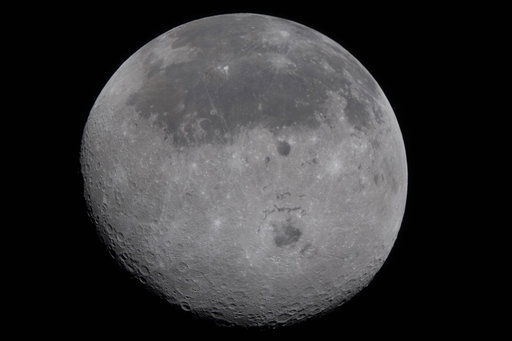
Approaching the near side of the Moon.
The Artemis II astronauts have surpassed the record for the distance from Earth at 1:56 p.m. EDT (1756 UTC). This record was previously set during the Apollo 13 mission when the astronauts traveled 248,655 miles from Earth. The Moon continues to grow larger and larger in the windows of the Orion spacecraft as the Artemis II mission gears up to observe the far side. The astronauts are predicted to make their closest approach of the Moon around 7:02 p.m. EDT (2302 UTC).
Image description: In this view of the Moon, the near side (the hemisphere we see from Earth), is visible at the top half of the Moon disk. It is identifiable by the dark splotches. These are ancient lava flows from a time early in the Moon’s history when it was volcanically active. The large crater that appears below the lava flows, dark in the center, is Orientale basin, a nearly 600-mile-wide crater that straddles the Moon’s near and far sides as is partly visible from Earth on the edge of the Moon. In this image, we have a full view of the crater. Everything below the crater is the far side, the hemisphere we don’t get to see from Earth because the Moon rotates on its axis at the same rate that it orbits round us.
Credit: NASA
37.7M
1.51M
5.56K
6mo ago
nasaartemis
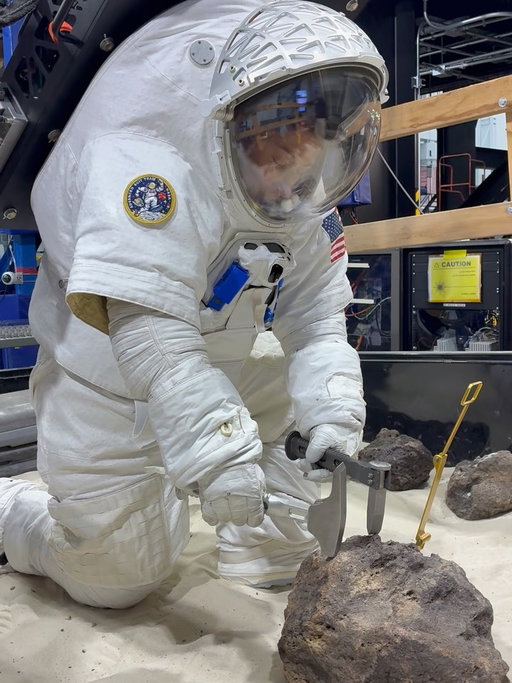
We didn’t walk on the Moon until we got back to Earth.
To understand how to optimize lunar surface spacewalks on future Artemis missions, we do simulated runs as soon as we are back. Spoiler alert: It felt great.
37.7M
3.39M
20.3K
6mo ago
nasaartemis
Only one chance in this lifetime…
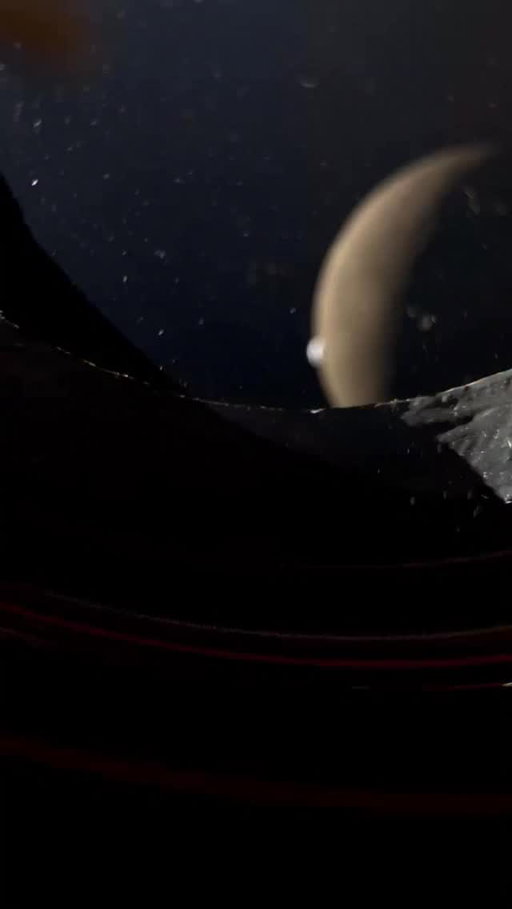
Like watching sunset at the beach from the most foreign seat in the cosmos, I couldn’t resist a cell phone video of Earthset. You can hear the shutter on the Nikon as @astro_christina is hammering away on 3-shot brackets and capturing those exceptional Earthset photos through the 400mm lens. @astrovicglover was in window 3 watching with @astrojeremy next to him.
I could barely see the Moon through the docking hatch window but the iPhone was the perfect size to catch the view…this is uncropped, uncut with 8x zoom which is quite comparable to the view of the human eye. Enjoy.
36.7M
1.47M
3.66K
6mo ago
nasaartemis
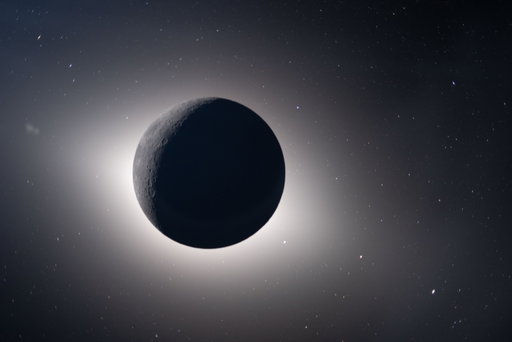
The most ominous thing I’ve ever loved.
It wasn’t just an eclipse with the Sun hidden behind the Moon...we could also see earthshine, the Sun’s light reflecting off Earth, wrapping the Moon in a soft, borrowed glow.
33.7M
1.35M
2.48K
6mo ago
nasaartemis
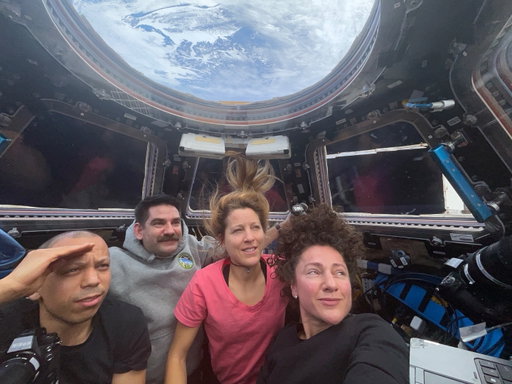
Eyes peeled in the cupola awaiting the safe return of our @nasaartemis friends. Our trajectory on @iss will be passing nearby over the Pacific, so we hope to catch a glimpse!
33.5M
1.18M
5.06K
6mo ago
nasaartemis
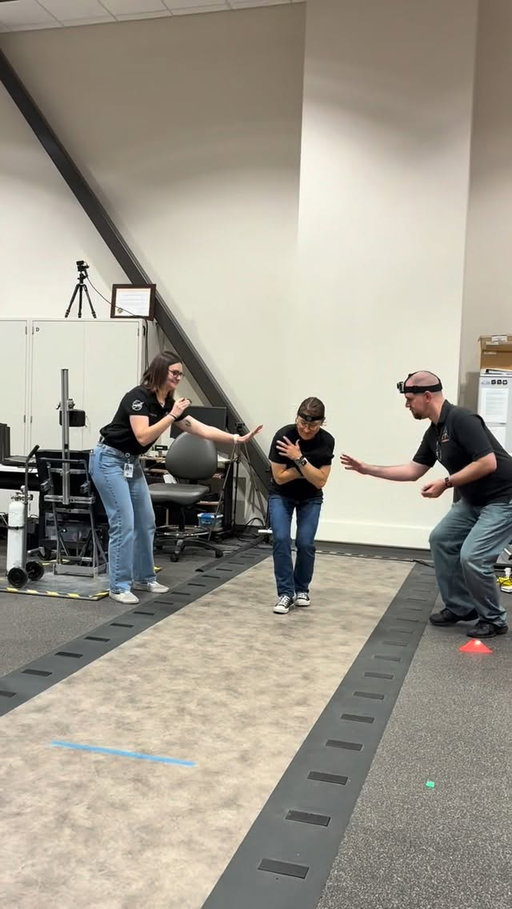
Guess I’ll be waiting a minute to surf again.
When people live in microgravity, the systems in our body that have evolved to tell our brains how we’re moving, the vestibular organs, don’t work correctly. Our brains learn to ignore those signals and so when we first get back to gravity, we are heavily reliant on our eyes to orient ourselves visually. A tandem walk with eyes closed can be quite the challenge! Learning about this can help inform how we treat vertigo, concussions and other neuro-vestibular conditions on Earth.
Luckily we’re already adapting back to gravity at 7 days post-splashdown!
NASA Artemis (@nasaartemis) Instagram Stats & Analytics
NASA Artemis (@nasaartemis) has 5.57M Instagram followers with a 4.96% engagement rate over the past 12 months. Across 275 posts, NASA Artemis received 94.5M total likes and 2.17B impressions, averaging 344K likes per post. This page tracks NASA Artemis's performance metrics, top content, and engagement trends — updated daily. To benchmark @nasaartemis against other accounts, use Socialpruf's Instagram competitor analysis tool.
NASA Artemis (@nasaartemis) Instagram Analytics FAQ
How many Instagram followers does NASA Artemis have?+
NASA Artemis (@nasaartemis) has 5.57M Instagram followers as of October 2026.
What is NASA Artemis's Instagram engagement rate?+
NASA Artemis's Instagram engagement rate is 4.96% over the last 12 months, based on 275 posts.
How many likes does NASA Artemis get on Instagram?+
NASA Artemis received 94.5M total likes across 275 posts in the last 12 months, averaging 344K likes per post.
How many Instagram impressions does NASA Artemis get?+
NASA Artemis's Instagram content generated 2.17B total impressions over the last 12 months.
Can I compare NASA Artemis with other Instagram accounts?+
Yes. Add @nasaartemis to a competitor set with Socialpruf's Instagram competitor analysis tool and benchmark it side by side with any other public accounts on views, engagement rate and follower growth, with history back to each account's first post.