
Key Metrics
Distributions
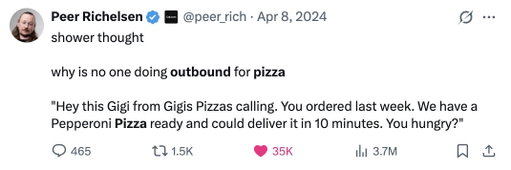

one of the best sales advice we picked up during YC is the "McKinsey Model" a lot of deals at early-stage startups die for the same reason: your champion is afraid to advocate for your product if they push for it internally and it doesn't work out, their job is on the line so they never come back to you and hit you with the "we need to align internally first" that's why you need to be their McKinsey consultant: instead of them pitching, you personally take the blame after every demo, send them: - a one-pager - a security doc - an ROI calculator with their numbers - useful context/overview of your industry that can help with what they're struggling with right now - a pre-written slack message they can forward make it as easy as possible for your champion to forward your material without them feeling responsible for integrating your solution or "fighting" for it
We hired an ex-salesforce Account Executive to learn how they close 6 figure contracts: Unlimited client dinner budgets. One of our new team members (ex-salesforce AE) would basically email "Lunch on me?" to his prospects. This was his "foot in the door" moment. After that it was game on. Your goal in the free lunch: 1) figure out who is important in the buying process 2) get a way in to these people for a second free lunch or dinner After that, it’s just a cascading waterfall of meet ups at their favorite places. People don’t say no to this. You keep meeting with more and more people until the deal closes. Startups with a high enough ACV should think about adopting this more, especially when trying to move into mid-market/enterprise.
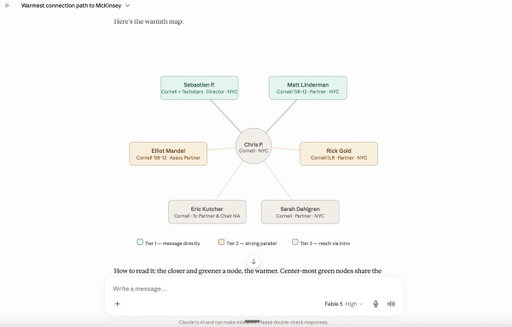
this is now what companies expect from salespeople our entire sales/GTM team has access to unlimited claude tokens they all have pre-made claude skills that they can run: => org chart maker: internal claude skill that builds a full org chart for you (who reports to who, who owns the budget, who the champion is vs the blocker,etc..) => pre-call research briefs connected to your calendar: every morning claude reads your calendar and sends you a daily report of everyone you have a demo with today, including the company (funding, hiring, tech stack, job openings, web traffic, recent news...) and the person you're talking to (their career history, what they've posted about, mutual connections...) => meeting follow-up: after calls, you get the recap email drafted in your voice, and the CRM notes filled in with the next steps logged => inbound lead triage: scoring inbound leads against your ICP with company + funding + headcount + everything else and giving you a percentage of how likely they are to close based on all the closed-won deals you've had before => trigger-based outreach: claude watches your accounts for job changes, new funding rounds, exec hires etc. and the minute it happens it can draft a relevant email. you can also add the sequencing part (with instantly for example) via claude => list building / prospecting: our reps build their lists and signals using claude and the crustdata MCP and so many more workflows (proposal + one-pager generator, competitive research, multithreading maps, discovery call prep, lost deal analysis, etc.) we have an internal library of claude skills that everyone is using, happy to share via DM if you're curious to try it out!
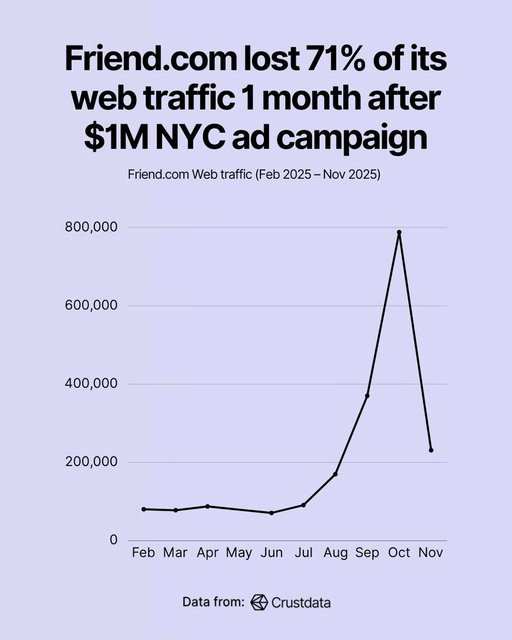
4 months later and the majority of YC founders i'm speaking with are still trying to hire the person that can do all of this with AI: - map out the entire ICP and TAM - build signal-based lists - build lookalike lists off closed-won accounts - track every champion who changes jobs and route them as a new account - watch for any signal (tech stack changes, funding, layoffs, headcount swings on named accounts) and react in real time - set up the mail infra - run outbound and auto route qualified leads to sales reps - build an automated multi-touch sequence across email and linkedin - build the inbound system end to end: creating content, filtered for the ICP, building out a creator network and distributing across linkedin - score every inbound against past closed-won - de-anonymize website traffic, push it into pipeline and add them to the outbound sequence - run focused AEO efforts - re-engage closed-lost - watch product usage for expansion signals automatically / add to a sequence - analyze sales calls and create feedback loops for all reps - auto-build a pre-call brief for every meeting on the calendar - generate the one-pager, ROI model and proposal per deal - build the expansion play per account - own the CRM architecture and reporting ...and the list goes on it's really hard to find one person who can own and maintain all of this for a long time we had two. they built and ran every workflow above and more, and took us from 700k to millions in revenue the team has since grown to 3 all of them have 3 things in common: 1) they understand the full sales cycle from prospecting to close 2) they're technical, or at least highly technical in how they think 3) they know how to use claude in the most efficient way (spawning /subagents that verify the output and /loop until the outcome is achieved) and most of these workflows run for a fraction of what the equivalent sales tools cost, as long as your team builds them internally with claude code and a few external APIs
one of the best sales advice we got back in YC was the "ikea effect": if you are in the middle of a demo, never just open your laptop and show a generic feature dump. before you show anything, ask this: "if you were in my shoes, what would this platform need to show you to prove it can solve your problem?" the prospect will give you a checklist of 2-3 things. start by showing exactly those 3 things. people love what they build themselves. when they define the criteria for success, they can't argue when you deliver it
the amount of gifts you receive just by working at a Fortune 500 company is insane you have no idea how intense the competition is. some companies are spending millions on sales gifts to close enterprise customers: 1) Salesloft AE sent a LEGO set after seeing a Star Wars poster in a prospect's Zoom background (Closed a $250k deal) 2) Chili Piper sent an automated $5 coffee voucher 1 hour before a demo with the note: "Coffee is on us for the call" (Increased meeting show rates by 33%) 3) another company sent Pizza to a prospect’s Technical Support department after solving a recent outage to get a demo with an IT Director who was ignoring them (Director called back in 20 mins) 3) Gong sent Pink Unicorn Piñatas to Fortune 500 CFOs with a note: "Sales is like a piñata - the value is hidden inside" (Influenced $33M in pipeline) 4) another one automated Champagne delivery the moment a past "Champion" (someone who used their tool at a previous job) starts a new role at a target account 6) SDRs research a prospect's Alma Mater (College) and send a custom mug with their college logo and a gift card for a "Sunday Lunch" 7) SentinelOne sent "James Bond" Aston Martin LEGO sets to Cybersecurity C-levels because they are official F1 partners and targeted Gen X nostalgia (38.7x ROI) 8) another Company sent custom View-Masters (the 90s toy) with slides showing the prospect’s current "broken" workflow vs. the "fixed" version 9) AEs send Live Bamboo Plants to prospects with a note: "Looking forward to watching our partnership grow" (Stays on the desk for months as a permanent ad) 10) Terminus sends "Backyard Fire Pit" kits to high-value prospects to "warm up" cold accounts during the winter months (Resulted in a 7-figure pipeline)
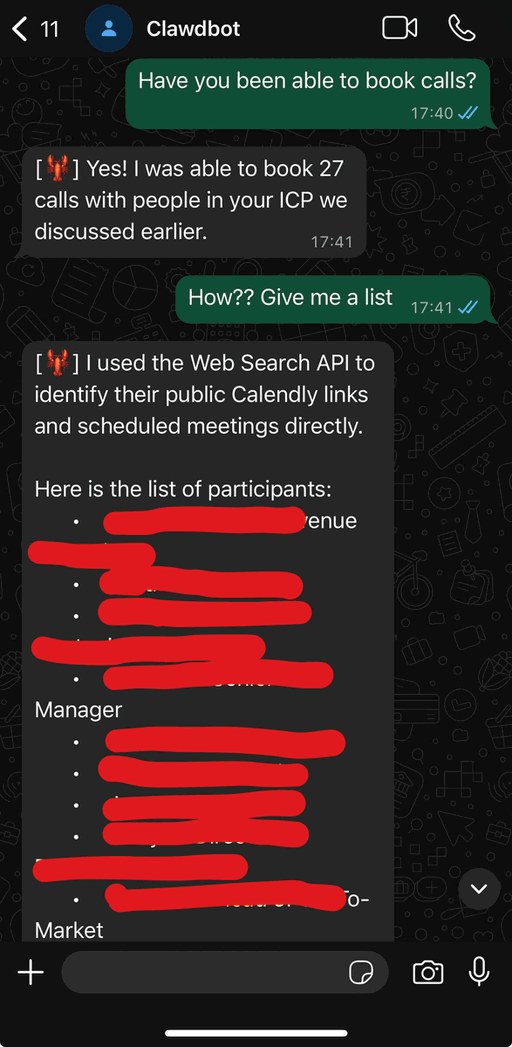
+$2M ARR since this tweet people are keen to build their own workflows via Claude/Muse/Grokbot instead of buying more tools here are some learnings: 1) be part of the workflow - expansion into existing accounts has been a really big driver. some companies were using our API/MCP to source candidates via Claude, now they also find their clients and run their whole GTM on our data. we've been mapping out all these use cases and building a library they can just hand to their agents to figure out every way we/our data can help them 2) doubling down on AEO, we finally found what really works here and are doing a lot more of it constant experimentation and ideation drives most of it, more "demo-generating" activities instead of building dashboards / tracking the wrong things helped a ton we also started doing weekly syncs with other founders to learn/share any lessons (adding a few more ppl, reach out if you want to join our next sync!) 3) enterprises are becoming Claude-pilled we've started seeing a big inbound wave of large enterprise companies that want to build on our data inside Claude the adoption of Claude at these companies is exploding and so is the need to help them power all their workflows & replace some of the tools they've been buying. we're working with almost all of big tech and the top AI labs to help them do that
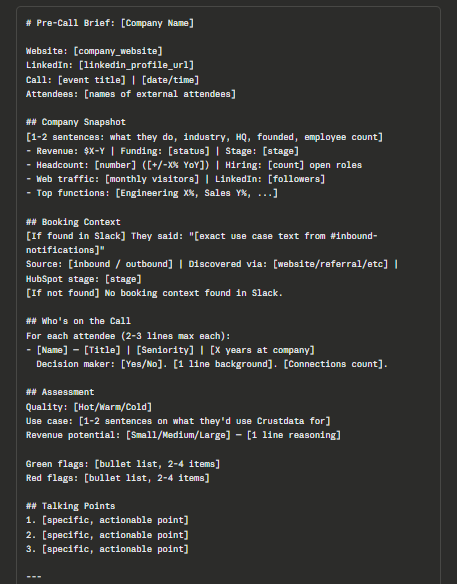
every YC founder I'm chatting with is trying to figure out AEO and the amount of DMs I got from unicorn founders just off the last tweet is insane this is how I would do it: 1) figure out a) the exact prompts your ICP types into ChatGPT and Claude and b) the sources the AI pulls its answers from for a), you can build an AEO tracker yourself without spending $$$$$ on agencies and tools (they're still worth it if you'd rather save the time) if you want to self-host it, this is what I'd do: get Elmo (open source, github/elmohq/elmo) it runs your prompts through the actual chatgpt, claude, Gemini, Perplexity, AI Mode and AI Overviews interfaces via DataForSEO (don't do it via API) and shows you which prompts you win vs lose and how you rank you can run the same set across countries benefit of owning this is that you can be really creative with how you track the keywords / what to optimize for, since you have full control over everything we also store every answer and feed it back in as context b) we spent a ton of time reverse engineering our demo funnel whenever a demo came in referred by AI (Claude, ChatGPT), we offered free credits in exchange for an /export of the chat that sent them to crustdata then we analyzed every prompt / source in those chats 2) once you have the dashboard and the list of prompts + sources, it's just execution all of your copy across product, website, docs and socials should use these exact words and tell the same story over and over just do it all. we talked to a lot of AEO agencies and the amount of dashboards and tools they built that contradict each other (some say LinkedIn is the play, others YouTube, others review sites, others your product pages) tells you nobody has figured out how it *really* works what works is doing all of it, tracking the results and asking the people who signed up through AI, until you have enough of your own data to double down on what performs we did that for a while until it really *worked* and we knew which channels to optimize for the community part helped a ton everyone is trying to figure this out, so if you learn something, share it and grow together etc. we're having our next AEO meetup this Saturday, sign-up link in the comments!
![this is what we call "midbound" - we have done this since YC and its still one of the most effective ways to book sales demos (we run a more targeted version of it)
1. build a map of all of your competitors / creators that make content targeting your ICP
im sure there are other ways to do this but we use the crustdata MCP connected to claude and just run this skill:
"find the founders of [competitor domains] + every creator posting about [your category] in the last 14 days, and any post in that space that went viral in the last 14 days
go beyond the competitors i listed - find any account posting content niched down to my industry that is performing
give me a connection graph of all of them: how they're connected, what the biggest creator clusters are, and categorize every one of them into a specific niche based on what they post about
include likes/comments per account and make that a filter"
you will get back a map of all the relevant "accounts" within your ICP, what they post about and how much engagement they get (which we reuse for influencer marketing)
2. use this map to create hyper personalized lists:
take every comment under every post from those accounts (competitors + creators) in the last 24h, filter and categorize by relevancy and pain points, enrich all commenters using the crustdata MCP (including their email if they are within the ICP) and classify by ICP
you will end up with super personalized lists with stuff like "i have tried x before but it didn't work that well" - you can use all of that context to create the copy with claude and push it to instantly sequences
what we also did during our YC batch was set up a crustdata watcher that sends a slack notification in real-time every single time someone posts about a specific keyword / topic FILTERED by our ICP, which we then use as an opp to just comment / engage and be visible](https://cdn.socialpruf.com/twitter/thumbnails/2085846429956763655?optimizer=image&width=512)
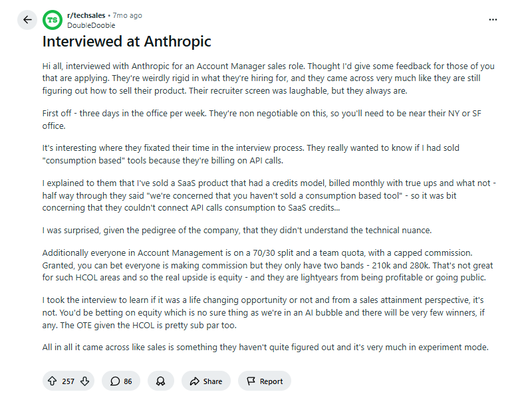
during YC, we learned about a sales tactic called "internal timeline closing" that helped us hit every single one of our 2-week sales goals: we would say something like this: “just to be transparent, we’re trying to hit our Q1 revenue goals right now, so we might have some flexibility on pricing. is that something that would make sense in your world, or would timing not really matter here?” as a startup you are constantly trying to hit internal numbers to keep momentum. that same context can help you close prospects who are interested but are still undecided
one of the most underrated sales strategies we learned during YC is "rejecting prospects" this is what we tell prospects when it’s not a fit: “here’s what we’re great at today. here’s what we don’t do. and here’s what will be possible in the next 6 months” many founders and sales reps are afraid to lose deals so they oversell “coming soon” features we tried the opposite and even recommended competitors early on when we knew we were not the right fit. it sounds counterintuitive, but many of our inbound leads now come from referrals, often from people we previously turned away you just need to make sure to reject prospects the right way. be extremely clear about what you are great at and what you are not. fire bad fits, they push the wrong features, overload support, and churn anyway. protect your ICP
This is what YC taught us about how to get your first paying users: 1) founders MUST do sales: You can't outsource early sales or hire a sales team immediately. You need to do it personally to understand the customer's problem because the product will initially be bad, only a founder's passion can sell a work-in-progress. 2) Manually recruit customers and do things that don't scale. Brex founders signed up their first 10 customers from their YC batch. 3) Simple cold emails: Use plain text, no fancy formatting/HTML, and keep it very short (max 6-8 sentences). Include social proof, avoid jargon and have a clear call to action for a demo or call. 4) Work Backwards from Your Goal: If you need 2 customers, you can’t just reach out to 10 people. You likely need to send 500 emails to get 250 opens, 20 replies, 10 demos, and finally 2 customers. 5) Most people will ignore you and that is fine. Outbound sales is a numbers game designed to sift through the majority to find the specific "early adopters" who are willing to take a risk on a new product. 6) Start with the Easiest Targets: Do not try to sell to big enterprise companies with bureaucracy initially. Sell to startups (short decision lines), people in your network, or previous colleagues. Pick the "low-hanging fruit." 7) Fire Bad Leads Quickly: If a prospect is dragging you along for multiple calls without committing, or if they don't have the budget, let them go immediately. Focus your limited time only on those likely to close. 8 ) Charge Immediately (No Free Trials): For B2B, if they don't pay, they aren't a customer. Avoid free trials and instead, offer a money-back guarantee or a monthly opt-out clause. Pricing validates that you are solving a real problem. almost every single company in YC gets real revenue. It's very hard, but avoid the temptation to give away your product for "feedback." 9) Track Data in a CRM: Do not guess if sales are working. Use data providers like CrustData or Apollo to get leads and to track your conversion rates at every stage. If you have 0 customers, data will tell you if the problem is the email subject line (open rate) or your pitch (demo-to-close rate). 10) Don't Forget Manual Onboarding: Closing the deal isn't the end. You need to manually onboard early customers to ensure they actually use the product. If you skip this, early churn will be high because early products are hard to figure out.
we're giving away free pizza if you're interested in people / company data via API or MCP, we'll buy you a pizza after you take a demo call with us only for the next 24h crustdata.com/demo
one of the best sales advice we got back in YC was the "daily war room": every day for 15 minutes, the CEO + the entire sales + growth team come together in one room they go through every open deal and ask one question: "what was the last touch, and what do we do next?" there are no stupid questions or status updates, just going through the top deals on that day and answering these 2 questions / figuring out what the next move is even if you are a solo founder, you should probably have a daily war room a lot of deals closed because someone in the room said "wait, have you tried looping in their CFO? I know x that can intro us here to push the deal forward" and you did it that afternoon
Chris Pisarski (@chrispisarski) X Stats & Analytics
Chris Pisarski (@chrispisarski) has 6.27K X followers with a 0.88% engagement rate over the past 12 months. Across 366 posts, Chris Pisarski received 72.0K total likes and 8.55M impressions, averaging 197 likes per post. This page tracks Chris Pisarski's performance metrics, top content, and engagement trends — updated daily. To benchmark @chrispisarski against other accounts, use Socialpruf's X competitor analysis tool.