tiktok analytics
Last Year02/21/25 - 02/21/26
Comparable Performance:
followers
337K
impressions
31.6M
likes
1.92M
comments
55.7K
posts
417
engagement
6.25%
emv
$1.18M
Avg. per post
75.8K

Key Metrics

Distributions

Top Content

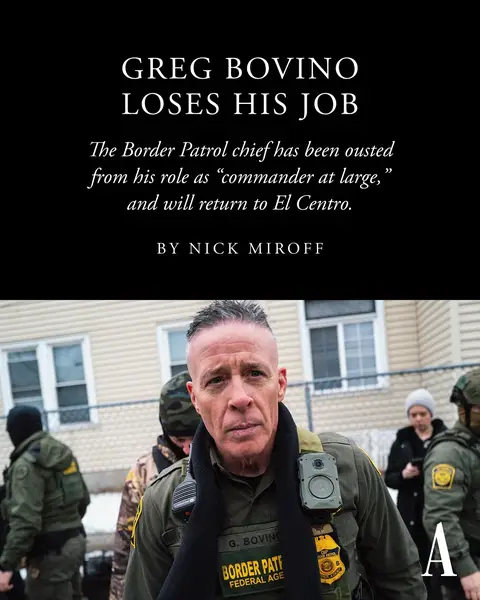
Gregory Bovino has been removed from his role as Border Patrol “commander at large” and will return to his former job in El Centro, California, where he is expected to retire soon, according to a DHS official and two people with knowledge of the change who spoke with Nick Miroff. “Bovino’s sudden demotion is the clearest sign yet that the Trump administration is reconsidering its most aggressive tactics after the killing Saturday of 37-year-old Alex Pretti by Border Patrol agents under Bovino’s command,” Miroff writes. For more than half a year, Bovino has been the public face of a traveling immigration crackdown on cities governed by Democrats. Trump officials gave Bovino the “commander” title, and “he became a MAGA social-media star as he traveled the country with his own film crew and used social media to hit back at Democratic politicians and random critics online.” “DHS and U.S. Customs and Border Protection officials did not immediately respond to questions about Bovino’s departure from Minnesota and his current role,” Miroff writes, and when asked about Bovino and Homeland Security Secretary Kristi Noem, a White House spokesperson referred to press secretary Karoline Leavitt’s statement today that Noem has the president’s “utmost confidence and trust.” Read more at the link. 📸: Stephen Maturen / Getty

5.9M
130K
3.04K
3w ago
theatlantic
Gregory Bovino has been removed from his role as Border Patrol “commander at large” and will return to his former job in El Centro, California, where he is expected to retire soon, according to a DHS official and two people with knowledge of the change who spoke with Nick Miroff. “Bovino’s sudden demotion is the clearest sign yet that the Trump administration is reconsidering its most aggressive tactics after the killing Saturday of 37-year-old Alex Pretti by Border Patrol agents under Bovino’s command,” Miroff writes. For more than half a year, Bovino has been the public face of a traveling immigration crackdown on cities governed by Democrats. Trump officials gave Bovino the “commander” title, and “he became a MAGA social-media star as he traveled the country with his own film crew and used social media to hit back at Democratic politicians and random critics online.” “DHS and U.S. Customs and Border Protection officials did not immediately respond to questions about Bovino’s departure from Minnesota and his current role,” Miroff writes, and when asked about Bovino and Homeland Security Secretary Kristi Noem, a White House spokesperson referred to press secretary Karoline Leavitt’s statement today that Noem has the president’s “utmost confidence and trust.” Read more at the link. 📸: Stephen Maturen / Getty
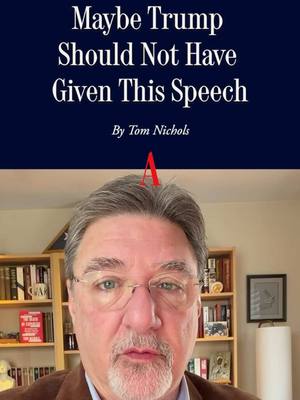
Donald Trump’s televised speech last night was a “presidential address unworthy of the American people and the American nation and its democracy,” Tom Nichols argues.  Read more at the link in our bio.
3.05M
385K
4.17K
2mo ago
theatlantic
Donald Trump’s televised speech last night was a “presidential address unworthy of the American people and the American nation and its democracy,” Tom Nichols argues. Read more at the link in our bio.
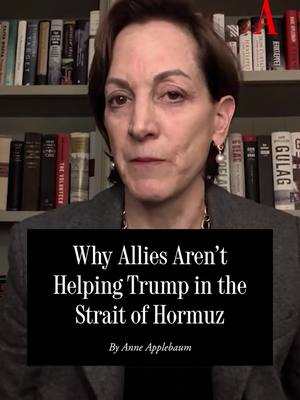
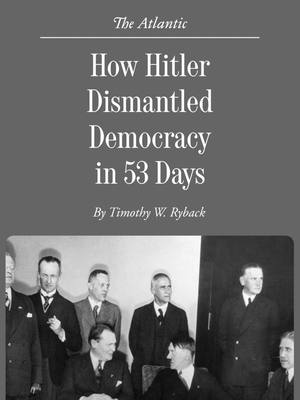
In the 1920s and early ’30s, Adolf Hitler’s “brand” was anathema to capitalists and corporate elites, Timothy Ryback writes. But shortly after assuming absolute power over the government, Hitler began openly courting the industrialists, bankers, and financiers he and his party had formerly derided. In turn, the corporate leaders who had once shunned Hitler now welcomed him as an effective force against left-wing movements. “Once Hitler was in power, there was no longer need for secrecy or subterfuge,” Ryback writes. “German corporations, large and small, helped retool the Weimar Republic as the Third Reich,” Ryback continues. “Ferdinand Porsche designed the Volkswagen, a ‘car for the people.’ Mercedes-Benz provided Hitler and his chief lieutenants with bulletproof sedans. Hugo Boss designed the black uniforms for the SS. Miele produced munitions. Allianz provided insurance for concentration camps. J.A. Topf & Sons manufactured crematoria ovens.” For the industrialists who helped finance and supply the Hitler government, an unexpected return on their investment was slave labor, Ryback writes; one electronics company employed more than 80,000 slave laborers by the 1940s. The leaders of the giant chemical and pharmaceutical conglomerate I.G. Farben had been staunchly pro-democracy, pro–Weimar Republic, and anti–National Socialist during Hitler’s rise. Yet the company availed itself of slave labor, and, through a chemical subsidiary, produced a cyanide-based pesticide known as Zyklon B, a homicidal agent used at Nazi extermination facilities. Twenty-three I.G. Farben directors were eventually charged with war crimes and crimes against humanity; 13 of them were convicted and sentenced to prison. Gustav Krupp von Bohlen, known as “the cannon king” who supplied the Reich with armaments, was too ill to stand trial; his son and 11 Krupp corporate directors were charged with crimes against humanity and war crimes. At the link in our bio, Ryback lays out the catastrophic consequences that befell the corporate leaders and companies who aided Hitler’s rise, and explores their role in abetting a moral calamity. 📸: Sueddeutsche Zeitung Photo / Alamy
1.56M
128K
3.55K
11mo ago
theatlantic
In the 1920s and early ’30s, Adolf Hitler’s “brand” was anathema to capitalists and corporate elites, Timothy Ryback writes. But shortly after assuming absolute power over the government, Hitler began openly courting the industrialists, bankers, and financiers he and his party had formerly derided. In turn, the corporate leaders who had once shunned Hitler now welcomed him as an effective force against left-wing movements. “Once Hitler was in power, there was no longer need for secrecy or subterfuge,” Ryback writes. “German corporations, large and small, helped retool the Weimar Republic as the Third Reich,” Ryback continues. “Ferdinand Porsche designed the Volkswagen, a ‘car for the people.’ Mercedes-Benz provided Hitler and his chief lieutenants with bulletproof sedans. Hugo Boss designed the black uniforms for the SS. Miele produced munitions. Allianz provided insurance for concentration camps. J.A. Topf & Sons manufactured crematoria ovens.” For the industrialists who helped finance and supply the Hitler government, an unexpected return on their investment was slave labor, Ryback writes; one electronics company employed more than 80,000 slave laborers by the 1940s. The leaders of the giant chemical and pharmaceutical conglomerate I.G. Farben had been staunchly pro-democracy, pro–Weimar Republic, and anti–National Socialist during Hitler’s rise. Yet the company availed itself of slave labor, and, through a chemical subsidiary, produced a cyanide-based pesticide known as Zyklon B, a homicidal agent used at Nazi extermination facilities. Twenty-three I.G. Farben directors were eventually charged with war crimes and crimes against humanity; 13 of them were convicted and sentenced to prison. Gustav Krupp von Bohlen, known as “the cannon king” who supplied the Reich with armaments, was too ill to stand trial; his son and 11 Krupp corporate directors were charged with crimes against humanity and war crimes. At the link in our bio, Ryback lays out the catastrophic consequences that befell the corporate leaders and companies who aided Hitler’s rise, and explores their role in abetting a moral calamity. 📸: Sueddeutsche Zeitung Photo / Alamy
David Letterman to Jeffrey Goldberg on Jimmy Kimmel’s suspension: “You can’t go around firing somebody because you’re fearful or trying to suck up to an authoritarian—a criminal—administration in the Oval Office. That’s just not how this works.” Click the link in our bio to watch the full conversation.
861K
65.3K
1.6K
5mo ago
theatlantic
David Letterman to Jeffrey Goldberg on Jimmy Kimmel’s suspension: “You can’t go around firing somebody because you’re fearful or trying to suck up to an authoritarian—a criminal—administration in the Oval Office. That’s just not how this works.” Click the link in our bio to watch the full conversation.
Montchavin, a small French mountain village, became a hot spot for the rare neurodegenerative disease ALS. Shayla Love traveled there to investigate how the cluster formed: “ALS, also known as Lou Gehrig’s disease, occurs in roughly two to three people out of every 100,000 in Europe,” Love writes. “But every so often, hot spots emerge. Elevated ALS rates have been observed around a lagoon in France, surrounding a lake in New Hampshire, within a single apartment building in Montreal, and on the eastern—but not western—flank of Italy’s Mount Etna. Such patterns have confounded scientists, who have spent 150 years searching for what causes the disease.” In the 2000s, advancements in DNA sequencing led to a swell of research that found that most cases in which a patient has a family member with ALS are connected to a handful of genetic mutations. But only one in 10 cases of ALS in which patients have no family history of the disease can be connected to genetic abnormalities. Much of the recent research has focused on the genetics of ALS, but clusters, such as the one in Montchavin, provocatively suggest that environmental factors have a leading role. “And each new cluster offers scientists a rare chance to clarify what those environmental influences may be—if they can study it fast enough. Many clusters fade away as mysteriously as they once appeared,” Love continues. “Once you start looking, the sheer variety of potential environmental catalysts for ALS becomes overwhelming: pesticides, heavy metals, air pollution, bodies of water with cyanobacteria blooms,” Love writes. “Because of how wide-ranging these findings are, some researchers doubt the utility of environmental research for people with ALS. Maybe the causes are too varied to add up to a meaningful story about ALS, and each leads to clusters in a different way.” But because doctors can’t do much to stop ALS once it starts, one neurologist told Love that it “would be naive to throw out any new ideas” about how to prevent it from occurring in the first place. Read more at the link.
747K
49.1K
585
10mo ago
theatlantic
Montchavin, a small French mountain village, became a hot spot for the rare neurodegenerative disease ALS. Shayla Love traveled there to investigate how the cluster formed: “ALS, also known as Lou Gehrig’s disease, occurs in roughly two to three people out of every 100,000 in Europe,” Love writes. “But every so often, hot spots emerge. Elevated ALS rates have been observed around a lagoon in France, surrounding a lake in New Hampshire, within a single apartment building in Montreal, and on the eastern—but not western—flank of Italy’s Mount Etna. Such patterns have confounded scientists, who have spent 150 years searching for what causes the disease.” In the 2000s, advancements in DNA sequencing led to a swell of research that found that most cases in which a patient has a family member with ALS are connected to a handful of genetic mutations. But only one in 10 cases of ALS in which patients have no family history of the disease can be connected to genetic abnormalities. Much of the recent research has focused on the genetics of ALS, but clusters, such as the one in Montchavin, provocatively suggest that environmental factors have a leading role. “And each new cluster offers scientists a rare chance to clarify what those environmental influences may be—if they can study it fast enough. Many clusters fade away as mysteriously as they once appeared,” Love continues. “Once you start looking, the sheer variety of potential environmental catalysts for ALS becomes overwhelming: pesticides, heavy metals, air pollution, bodies of water with cyanobacteria blooms,” Love writes. “Because of how wide-ranging these findings are, some researchers doubt the utility of environmental research for people with ALS. Maybe the causes are too varied to add up to a meaningful story about ALS, and each leads to clusters in a different way.” But because doctors can’t do much to stop ALS once it starts, one neurologist told Love that it “would be naive to throw out any new ideas” about how to prevent it from occurring in the first place. Read more at the link.
Today marked one of the grimmest days in the history of American diplomacy, Tom Nichols writes. The Oval Office meeting today between Donald Trump and Volodymyr Zelensky “reeked of a planned attack,” Nichols continues, “with Trump unloading Russian talking points on Zelensky (such as blaming Ukraine for risking global war), all of it designed to humiliate the Ukrainian leader on national television and give Trump the pretext to do what he has indicated repeatedly he wants to do: side with Russian President Vladimir Putin and bring the war to an end on Russia’s terms. Trump is now reportedly considering the immediate end of all military aid to Ukraine because of Zelensky’s supposed intransigence during the meeting.” “Vance’s presence at the White House also suggests that the meeting was a setup,” Nichols adds. “The Ukrainian leader did his best to stand up to the bullying, but Trump and Vance were playing to the cameras and the MAGA gallery at home.” “Today’s meeting and America’s shameful vote in the United Nations on Monday confirmed that the United States is now aligned with Russia and against Ukraine, Europe, and most of the planet. I felt physically sick watching the president of the United States yell at a brave ally, fulminating in the Oval Office as if he were an addled old man shaking his fist at a television. Zelensky has endured tragedies, and risked his life, in ways that men such as Trump and Vance cannot imagine,” Nichols continues. “But no matter how disgusted anyone might be at Trump and Vance’s behavior, the strategic reality is that this meeting is a catastrophe for the United States and the free world.” Read more at the link in our bio. 📸: Jim Lo Scalzo / EPA / Getty
641K
34.8K
3.63K
11mo ago
theatlantic
Today marked one of the grimmest days in the history of American diplomacy, Tom Nichols writes. The Oval Office meeting today between Donald Trump and Volodymyr Zelensky “reeked of a planned attack,” Nichols continues, “with Trump unloading Russian talking points on Zelensky (such as blaming Ukraine for risking global war), all of it designed to humiliate the Ukrainian leader on national television and give Trump the pretext to do what he has indicated repeatedly he wants to do: side with Russian President Vladimir Putin and bring the war to an end on Russia’s terms. Trump is now reportedly considering the immediate end of all military aid to Ukraine because of Zelensky’s supposed intransigence during the meeting.” “Vance’s presence at the White House also suggests that the meeting was a setup,” Nichols adds. “The Ukrainian leader did his best to stand up to the bullying, but Trump and Vance were playing to the cameras and the MAGA gallery at home.” “Today’s meeting and America’s shameful vote in the United Nations on Monday confirmed that the United States is now aligned with Russia and against Ukraine, Europe, and most of the planet. I felt physically sick watching the president of the United States yell at a brave ally, fulminating in the Oval Office as if he were an addled old man shaking his fist at a television. Zelensky has endured tragedies, and risked his life, in ways that men such as Trump and Vance cannot imagine,” Nichols continues. “But no matter how disgusted anyone might be at Trump and Vance’s behavior, the strategic reality is that this meeting is a catastrophe for the United States and the free world.” Read more at the link in our bio. 📸: Jim Lo Scalzo / EPA / Getty
Research indicates that the number of teens experiencing romantic relationships has dropped. In one 2023 poll, 56 percent of Gen Z adults said they’d been in a romantic relationship at any point in their teen years, compared with 76 percent of Gen Xers and 78 percent of Baby Boomers. A whole lot of American adults are withdrawing from romance—not just young people, writes Atlantic staff writer Faith Hill. But the trend seems to be especially pronounced for Gen Z. “Of course, you can grow into a perfectly mature and healthy adult without ever having had a romantic relationship; some research even suggests you might be better off that way,” Hill writes. “You can flirt; you can kiss; you can dance. You can have a crush so big it takes up all the space in your brain; you can care about someone deeply; you can get hurt—badly. Plenty of young people, then, could be having transformative romantic encounters and still reporting that they’ve never been in a relationship. It could be the label, not the emotional reality, that’s changing,” Hill continues. “In the aggregate, though, this shift could be concerning: a sign, researchers told me, of a generation struggling with vulnerability,” Hill writes. “A first love, for so many, has been a milestone on the path to adulthood—a challenging, thrilling, world-expanding experience that can help people understand who they are and whom they’re looking for.” What’s lost if that rite of passage disappears? Read the full story at the link. Photo Credit: Geoffrey Clements, Camerique, Jamie Casper, GraphicaArtis, iStock, Maskot, E Plus, Carl Iwasaki, Justin Paget, ClassicStock, Yellow Dog Productions, Design Pics Editorial, Hulton Fine Art Collection, John Pratt, Harold M. Lambert / Getty
570K
39.8K
447
10mo ago
theatlantic
Research indicates that the number of teens experiencing romantic relationships has dropped. In one 2023 poll, 56 percent of Gen Z adults said they’d been in a romantic relationship at any point in their teen years, compared with 76 percent of Gen Xers and 78 percent of Baby Boomers. A whole lot of American adults are withdrawing from romance—not just young people, writes Atlantic staff writer Faith Hill. But the trend seems to be especially pronounced for Gen Z. “Of course, you can grow into a perfectly mature and healthy adult without ever having had a romantic relationship; some research even suggests you might be better off that way,” Hill writes. “You can flirt; you can kiss; you can dance. You can have a crush so big it takes up all the space in your brain; you can care about someone deeply; you can get hurt—badly. Plenty of young people, then, could be having transformative romantic encounters and still reporting that they’ve never been in a relationship. It could be the label, not the emotional reality, that’s changing,” Hill continues. “In the aggregate, though, this shift could be concerning: a sign, researchers told me, of a generation struggling with vulnerability,” Hill writes. “A first love, for so many, has been a milestone on the path to adulthood—a challenging, thrilling, world-expanding experience that can help people understand who they are and whom they’re looking for.” What’s lost if that rite of passage disappears? Read the full story at the link. Photo Credit: Geoffrey Clements, Camerique, Jamie Casper, GraphicaArtis, iStock, Maskot, E Plus, Carl Iwasaki, Justin Paget, ClassicStock, Yellow Dog Productions, Design Pics Editorial, Hulton Fine Art Collection, John Pratt, Harold M. Lambert / Getty
“Donald Trump has lost control of the Jeffrey Epstein situation,” Charlie Warzel says. Trump is normally savvy at diverting focus, directing news cycles, and speaking to what his supporters care about, Warzel continues, “but here, he’s completely misjudged it.” “Whatever happens next,” Warzel says, “we’re going to learn a lot about Trump’s ability to control attention.” Read more at the link. Photo/video: Alex Wroblewski, Anna Moneymaker, Win McNamee, Samuel Corum, Bryan Woolston, Ben Montgomery, Saul Loeb, Handout // all via Getty Images Illustration sources: Rick Friedman / Getty; subjug / Getty, Aaron Schwartz / CNP / Bloomberg / Getty; Patrick McMullan / Getty; fotograzia / Getty; FBI Memo / Department of Justice, Sezeryadigar / Getty; Rick Friedman / Corbis / Getty
556K
58.8K
808
7mo ago
theatlantic
“Donald Trump has lost control of the Jeffrey Epstein situation,” Charlie Warzel says. Trump is normally savvy at diverting focus, directing news cycles, and speaking to what his supporters care about, Warzel continues, “but here, he’s completely misjudged it.” “Whatever happens next,” Warzel says, “we’re going to learn a lot about Trump’s ability to control attention.” Read more at the link. Photo/video: Alex Wroblewski, Anna Moneymaker, Win McNamee, Samuel Corum, Bryan Woolston, Ben Montgomery, Saul Loeb, Handout // all via Getty Images Illustration sources: Rick Friedman / Getty; subjug / Getty, Aaron Schwartz / CNP / Bloomberg / Getty; Patrick McMullan / Getty; fotograzia / Getty; FBI Memo / Department of Justice, Sezeryadigar / Getty; Rick Friedman / Corbis / Getty
A measles outbreak in Seminole, Texas, has caused the death of a child, the disease’s first victim in the United States in a decade. Tom Bartlett traveled to the area, spoke with the child’s father, and visited a vaccine clinic where almost nobody is showing up to receive shots. “In Gaines County, where Seminole is located, the measles-vaccination rate among kindergartners is just 82 percent, well short of the estimated 95 percent threshold for maintaining herd immunity,” Bartlett reports. Even that alarming figure would appear to undersell the local problem, as many residents are children from the county’s Mennonite community who are unvaccinated but are not attending schools that get included in state tallies. “Even in the midst of a measles crisis, persuading parents in rural West Texas to vaccinate their children, or just to get tested for the virus, is an uphill battle,” Bartlett writes. A local public-health official has been trying to get the word out, particularly to the Low German–speaking Mennonite community. “He asked three local churches if he could set up a mobile testing site on their property,” Bartlett reports; they all refused. “I think there’s some sentiment that they’re being targeted,” the official told Bartlett. Weeks into the outbreak, the Department of Health and Human Services directed 2,000 doses of vaccine to be sent to Texas, but HHS Secretary Robert F. Kennedy has continued to emphasize that using them is a personal choice. Bartlett visited the vaccination center set up across the street from a hospital to interview those who came to get a vaccine or a booster; no one did. “Before the measles shot was introduced in 1963, the number of deaths caused by the disease in the United States each year was somewhere from 400 to 500,” Bartlett writes. “The CDC puts the mortality rate for childhood measles at one to three in 1,000, with one in five cases requiring hospitalization. Thanks to vaccines, the memory of that suffering has largely faded from public consciousness, at least in the developed world. What happened in Seminole, though, was a grim reminder.” Read more at the link.
526K
19.3K
1.5K
11mo ago
theatlantic
A measles outbreak in Seminole, Texas, has caused the death of a child, the disease’s first victim in the United States in a decade. Tom Bartlett traveled to the area, spoke with the child’s father, and visited a vaccine clinic where almost nobody is showing up to receive shots. “In Gaines County, where Seminole is located, the measles-vaccination rate among kindergartners is just 82 percent, well short of the estimated 95 percent threshold for maintaining herd immunity,” Bartlett reports. Even that alarming figure would appear to undersell the local problem, as many residents are children from the county’s Mennonite community who are unvaccinated but are not attending schools that get included in state tallies. “Even in the midst of a measles crisis, persuading parents in rural West Texas to vaccinate their children, or just to get tested for the virus, is an uphill battle,” Bartlett writes. A local public-health official has been trying to get the word out, particularly to the Low German–speaking Mennonite community. “He asked three local churches if he could set up a mobile testing site on their property,” Bartlett reports; they all refused. “I think there’s some sentiment that they’re being targeted,” the official told Bartlett. Weeks into the outbreak, the Department of Health and Human Services directed 2,000 doses of vaccine to be sent to Texas, but HHS Secretary Robert F. Kennedy has continued to emphasize that using them is a personal choice. Bartlett visited the vaccination center set up across the street from a hospital to interview those who came to get a vaccine or a booster; no one did. “Before the measles shot was introduced in 1963, the number of deaths caused by the disease in the United States each year was somewhere from 400 to 500,” Bartlett writes. “The CDC puts the mortality rate for childhood measles at one to three in 1,000, with one in five cases requiring hospitalization. Thanks to vaccines, the memory of that suffering has largely faded from public consciousness, at least in the developed world. What happened in Seminole, though, was a grim reminder.” Read more at the link.
The richest university in the world has decided that some things are more important than money, Rose Horowitch writes. Earlier this month, Donald Trump’s administration threatened to revoke $9 billion in federal grants and contracts if Harvard did not agree to a long list of demands, including screening foreign applicants “hostile to the American values and institutions” and allowing an external body to audit university departments for viewpoint diversity. Harvard had initially attempted to avoid trouble by preemptively making moves in line with the administration’s priorities. But yesterday, Harvard announced that it would not agree to the government’s terms. “In making this decision, Harvard appears to have learned a lesson from the Trump administration’s tangle with another Ivy League school—just not the lesson the government intended,” Horowitch writes. When the administration canceled $400 million in federal funding to Columbia University—ostensibly because of the school’s handling of campus anti-Semitism—it outlined a set of far-reaching changes as a precondition for getting the funding back. Columbia acquiesced with minor changes. The university was publicly pilloried, and the administration “seems to have taken the capitulation as permission to make more demands,” Horowitch writes. “Now the Trump administration is reportedly planning to pursue federal oversight of the university.” “With its escalating punishments, the government was trying to send a message about what happens to ‘woke’ schools that defy Donald Trump’s will,” Horowitch notes at the link in our bio. “But by continuing to punish Columbia even after the school gave in to its demands, the administration also appears to have overplayed its hand. If cooperation and even capitulation don’t get you anywhere, why should other universities give in?” 🎨: Erica Denhoff / IconSportswire / Getty
521K
50.4K
832
10mo ago
theatlantic
The richest university in the world has decided that some things are more important than money, Rose Horowitch writes. Earlier this month, Donald Trump’s administration threatened to revoke $9 billion in federal grants and contracts if Harvard did not agree to a long list of demands, including screening foreign applicants “hostile to the American values and institutions” and allowing an external body to audit university departments for viewpoint diversity. Harvard had initially attempted to avoid trouble by preemptively making moves in line with the administration’s priorities. But yesterday, Harvard announced that it would not agree to the government’s terms. “In making this decision, Harvard appears to have learned a lesson from the Trump administration’s tangle with another Ivy League school—just not the lesson the government intended,” Horowitch writes. When the administration canceled $400 million in federal funding to Columbia University—ostensibly because of the school’s handling of campus anti-Semitism—it outlined a set of far-reaching changes as a precondition for getting the funding back. Columbia acquiesced with minor changes. The university was publicly pilloried, and the administration “seems to have taken the capitulation as permission to make more demands,” Horowitch writes. “Now the Trump administration is reportedly planning to pursue federal oversight of the university.” “With its escalating punishments, the government was trying to send a message about what happens to ‘woke’ schools that defy Donald Trump’s will,” Horowitch notes at the link in our bio. “But by continuing to punish Columbia even after the school gave in to its demands, the administration also appears to have overplayed its hand. If cooperation and even capitulation don’t get you anywhere, why should other universities give in?” 🎨: Erica Denhoff / IconSportswire / Getty
Last month, dairy farmer Nicholas Gilbert received a delivery of grain for the 1,400 cows he tends at his dairy farm in Potsdam, New York, 20 miles from the Ontario border. The feed came with a surprise tariff of $2,200 tacked on.⁠ ⁠ “Gilbert cannot increase the price of the milk he sells, which is set by the local co-op,” Annie Lowrey writes. “He cannot feed his cows less food. He cannot buy feed from another supplier; there aren’t any nearby, and getting it from farther away would be more expensive. When he got the delivery, he stared at the tariff for a while. Shouldn’t his Canadian supplier have been responsible for paying it? ‘I’m not even sure it’s legal! We contracted for the price on delivery! If your price of fuel goes up or your truck breaks down, that’s not my problem! That’s what the contract’s for.’”⁠ ⁠ Gilbert “is one of tens of thousands of American business owners caught in a spiraling trade war,” Lowrey continues. And he “lives in one area of the United States that might already be tipping into a recession because of it. Businesses near the Canadian border are particularly vulnerable to the rising costs and falling revenue caused by tariffs, and are delaying projects, holding off on hiring, raising prices, letting workers go, or wondering how they are going to keep feeding their cows as a result.”⁠ ⁠ Trump’s tariffs “are capricious, haphazard, and weird,” Lowrey writes. They take into account only trade in goods, not services. They apply to nations that have long-standing free-trade agreements with Washington; countries that have trade surpluses with the U.S.; and unpopulated islands. “The nonsensical policy will nevertheless have real effects … Thousands of American firms, mostly small businesses, will go under. The United States risks collapsing into an astonishing voluntary recession, caused solely by a few powerful ideologues’ erroneous beliefs about trade.”⁠ ⁠ “If you want to understand where the American economy is heading,” Lowrey continues at the link in our bio, “head to the border.” 📸: Katsarov Luna / Bloomberg / Getty
506K
6.54K
1.16K
10mo ago
theatlantic
Last month, dairy farmer Nicholas Gilbert received a delivery of grain for the 1,400 cows he tends at his dairy farm in Potsdam, New York, 20 miles from the Ontario border. The feed came with a surprise tariff of $2,200 tacked on.⁠ ⁠ “Gilbert cannot increase the price of the milk he sells, which is set by the local co-op,” Annie Lowrey writes. “He cannot feed his cows less food. He cannot buy feed from another supplier; there aren’t any nearby, and getting it from farther away would be more expensive. When he got the delivery, he stared at the tariff for a while. Shouldn’t his Canadian supplier have been responsible for paying it? ‘I’m not even sure it’s legal! We contracted for the price on delivery! If your price of fuel goes up or your truck breaks down, that’s not my problem! That’s what the contract’s for.’”⁠ ⁠ Gilbert “is one of tens of thousands of American business owners caught in a spiraling trade war,” Lowrey continues. And he “lives in one area of the United States that might already be tipping into a recession because of it. Businesses near the Canadian border are particularly vulnerable to the rising costs and falling revenue caused by tariffs, and are delaying projects, holding off on hiring, raising prices, letting workers go, or wondering how they are going to keep feeding their cows as a result.”⁠ ⁠ Trump’s tariffs “are capricious, haphazard, and weird,” Lowrey writes. They take into account only trade in goods, not services. They apply to nations that have long-standing free-trade agreements with Washington; countries that have trade surpluses with the U.S.; and unpopulated islands. “The nonsensical policy will nevertheless have real effects … Thousands of American firms, mostly small businesses, will go under. The United States risks collapsing into an astonishing voluntary recession, caused solely by a few powerful ideologues’ erroneous beliefs about trade.”⁠ ⁠ “If you want to understand where the American economy is heading,” Lowrey continues at the link in our bio, “head to the border.” 📸: Katsarov Luna / Bloomberg / Getty
The Trump administration is pretending to comply with the Supreme Court’s order to “facilitate” the return of Kilmar Abrego Garcia from El Salvador’s infamous Centro de Confinamiento del Terrorismo (CECOT) while refusing to actually do so, Adam Serwer writes. During an on-camera Oval Office meeting with Salvadoran President Nayib Bukele today, President Donald Trump said the decision to return Abrego Garcia was Bukele’s. Bukele, for his part, called Abrego Garcia a “terrorist,” saying to a reporter who asked whether he would return him, “I hope you’re not suggesting that I smuggle a terrorist into the United States.” “This rhetorical game the administration is playing, where it pretends it lacks the power to ask for Abrego Garcia to be returned while Bukele pretends he doesn’t have the power to return him, is an expression of obvious contempt for the Supreme Court—and for the rule of law,” Serwer continues. “The administration is maintaining that it has the power to send armed agents of the state to grab someone off the street and then, without a shred of due process, deport them to a gulag in a foreign country and leave them there forever. The crucial point here is that the administration’s logic means that it could do the same to American citizens.” Trump is already contemplating this possibility. Aside from numerous public statements to that effect, Trump told Bukele, in an exchange posted on Bukele’s X feed, “Homegrowns are next. The homegrowns. You gotta build about five more places.” Loud laughter filled the Oval Office. “If the Trump administration can defy court orders with impunity, and Congress is unwilling to act, there is no reason for it to respect the constitutional rights of American citizens either,” Serwer continues at the link in our bio. “The Roberts Court will now have to decide whether to side with the Constitution or with a lawless president asserting the power to disappear people at will. This is not a power that any person, much less an American president, is meant to have.” 📸: Pool Photo / AP
505K
46.6K
2.23K
10mo ago
theatlantic
The Trump administration is pretending to comply with the Supreme Court’s order to “facilitate” the return of Kilmar Abrego Garcia from El Salvador’s infamous Centro de Confinamiento del Terrorismo (CECOT) while refusing to actually do so, Adam Serwer writes. During an on-camera Oval Office meeting with Salvadoran President Nayib Bukele today, President Donald Trump said the decision to return Abrego Garcia was Bukele’s. Bukele, for his part, called Abrego Garcia a “terrorist,” saying to a reporter who asked whether he would return him, “I hope you’re not suggesting that I smuggle a terrorist into the United States.” “This rhetorical game the administration is playing, where it pretends it lacks the power to ask for Abrego Garcia to be returned while Bukele pretends he doesn’t have the power to return him, is an expression of obvious contempt for the Supreme Court—and for the rule of law,” Serwer continues. “The administration is maintaining that it has the power to send armed agents of the state to grab someone off the street and then, without a shred of due process, deport them to a gulag in a foreign country and leave them there forever. The crucial point here is that the administration’s logic means that it could do the same to American citizens.” Trump is already contemplating this possibility. Aside from numerous public statements to that effect, Trump told Bukele, in an exchange posted on Bukele’s X feed, “Homegrowns are next. The homegrowns. You gotta build about five more places.” Loud laughter filled the Oval Office. “If the Trump administration can defy court orders with impunity, and Congress is unwilling to act, there is no reason for it to respect the constitutional rights of American citizens either,” Serwer continues at the link in our bio. “The Roberts Court will now have to decide whether to side with the Constitution or with a lawless president asserting the power to disappear people at will. This is not a power that any person, much less an American president, is meant to have.” 📸: Pool Photo / AP
As the Trump administration devastates foreign-aid programs, the U.S. is both making survival less likely for people with tuberculosis and risking the disease becoming far more treatment-resistant, John Green writes. “After decades of improvement, we could return to something more like the world before the cure.” For most of human history, tuberculosis has been the world’s deadliest infectious disease. But “the cure for TB—roughly half a year on antibiotics—has existed since the 1950s, and works for most patients,” Green explains. “Yet, in the decades since, more than 100 million people have died of tuberculosis because the drugs are not widely available in many parts of the world. The most proximate cause of contemporary tuberculosis deaths is not M. tuberculosis, but Homo sapiens.” A quarter of all humans living now, including an estimated 13 million Americans, have been infected with TB; although active disease begins in 5 to 10 percent of infections, “tuberculosis is great at exploiting any advantage that humans hand it,” Green writes. “In some ways, at the beginning of this year, the fight against tuberculosis had never looked more promising. High-quality vaccine candidates were in late-stage trials. In December, the World Health Organization made its first endorsement of a TB diagnostic test, and global health workers readied to deploy it.” Now that progress could be erased. The Trump administration’s dismantling of USAID massively eliminated foreign-aid funding and programs. “By revoking money from global-health efforts, the U.S. has created the conditions for the health of people around the world to deteriorate, which will give tuberculosis even more opportunities to kill,” Green continues. “For billions of people, TB is already a nightmare disease, both because the bacterium is unusually powerful and because world leaders have done a poor job of distributing cures,” Green writes at the link in our bio. “And yet, to the extent that one hears about TB at all in the rich world, it’s usually in the context of a looming crisis … The Trump administration’s current policies are making such a future more plausible.” #health #news #worldnews  📸: Akshita Chandra / The Atlantic. Source: CDC / Smith Collection / Gado / Getty.
457K
40.9K
536
11mo ago
theatlantic
As the Trump administration devastates foreign-aid programs, the U.S. is both making survival less likely for people with tuberculosis and risking the disease becoming far more treatment-resistant, John Green writes. “After decades of improvement, we could return to something more like the world before the cure.” For most of human history, tuberculosis has been the world’s deadliest infectious disease. But “the cure for TB—roughly half a year on antibiotics—has existed since the 1950s, and works for most patients,” Green explains. “Yet, in the decades since, more than 100 million people have died of tuberculosis because the drugs are not widely available in many parts of the world. The most proximate cause of contemporary tuberculosis deaths is not M. tuberculosis, but Homo sapiens.” A quarter of all humans living now, including an estimated 13 million Americans, have been infected with TB; although active disease begins in 5 to 10 percent of infections, “tuberculosis is great at exploiting any advantage that humans hand it,” Green writes. “In some ways, at the beginning of this year, the fight against tuberculosis had never looked more promising. High-quality vaccine candidates were in late-stage trials. In December, the World Health Organization made its first endorsement of a TB diagnostic test, and global health workers readied to deploy it.” Now that progress could be erased. The Trump administration’s dismantling of USAID massively eliminated foreign-aid funding and programs. “By revoking money from global-health efforts, the U.S. has created the conditions for the health of people around the world to deteriorate, which will give tuberculosis even more opportunities to kill,” Green continues. “For billions of people, TB is already a nightmare disease, both because the bacterium is unusually powerful and because world leaders have done a poor job of distributing cures,” Green writes at the link in our bio. “And yet, to the extent that one hears about TB at all in the rich world, it’s usually in the context of a looming crisis … The Trump administration’s current policies are making such a future more plausible.” #health #news #worldnews 📸: Akshita Chandra / The Atlantic. Source: CDC / Smith Collection / Gado / Getty.
“What I worry about most is the long-term consequence of losing a generation of young scientists,” former NIH director Francis Collins tells Jeffrey Goldberg. At The Atlantic’s On the Future event, Collins discussed his worry that many students in Ph.D. and medical programs could leave the United States to work abroad: “This is the brain drain reversing its direction,” he said. Watch his full conversation with Goldberg at the link in our bio.
380K
54.9K
595
9mo ago
theatlantic
“What I worry about most is the long-term consequence of losing a generation of young scientists,” former NIH director Francis Collins tells Jeffrey Goldberg. At The Atlantic’s On the Future event, Collins discussed his worry that many students in Ph.D. and medical programs could leave the United States to work abroad: “This is the brain drain reversing its direction,” he said. Watch his full conversation with Goldberg at the link in our bio.
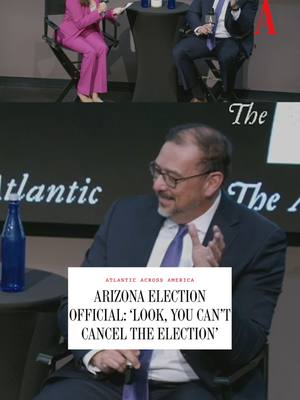
President Trump has made comments questioning the necessity of midterm elections. Arizona’s secretary of state talked about this threat earlier this week, telling Yvonne Wingett Sanchez “you can’t cancel the election.” “But here’s the problem,” he said. “The fact that we’re running through these scenarios in the first place should tell you something about the health of our democracy.”
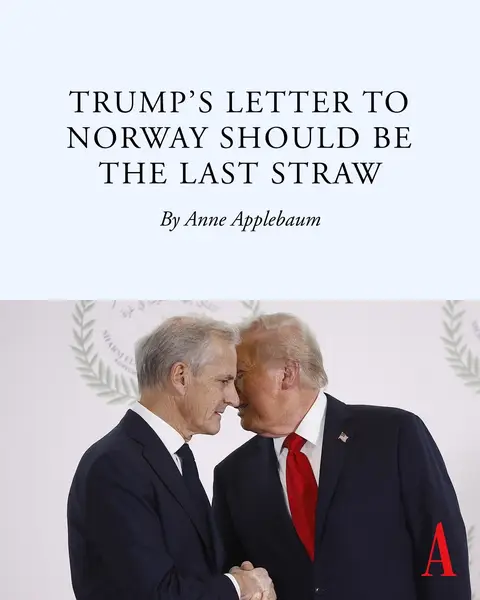
340K
22.8K
862
1mo ago
theatlantic
President Trump has made comments questioning the necessity of midterm elections. Arizona’s secretary of state talked about this threat earlier this week, telling Yvonne Wingett Sanchez “you can’t cancel the election.” “But here’s the problem,” he said. “The fact that we’re running through these scenarios in the first place should tell you something about the health of our democracy.”
When Adolf Hitler was appointed the 15th chancellor of the Weimar Republic on January 30, 1933, he set about destroying a constitutional republic through constitutional means. It would take him a mere 53 days to disable and then dismantle his country’s democratic structures and processes. “We have come to perceive Hitler’s appointment as chancellor as part of an inexorable rise to power,” Timothy W. Ryback writes. But Hitler’s ascendancy and his smashing of constitutional guardrails “are stories of political contingency rather than historical inevitability.” “The Führer was a man who was possible in Germany only at that very moment,” Hans Frank, the Nazi party’s legal strategist, once said. “He came at exactly this terrible transitory period when the monarchy had gone and the republic was not yet secure.” At the link, read Ryback’s step-by-step account of what happened. 📸: Everett Collection / Alamy; Bettmann / Contributor; Hulton Deutsch / Contributor; Keystone-France / Contributor; Photo 12 / Contributor; Bettmann / Contributor; Bettmann / Contributor; Universal History Archive / Contributor; Mondadori Portfolio / Contributor; FPG / Staff; Topical Press Agency; Ullstein Bild / Contributor; Hulton Archive; Universal Images Group / Contributor; Corbis Historical / Contributor; Keystone-France / Contributor; Hulton Archive; Keystone; Keystone-France / Contributor; Mondadori Portfolio / Contributor; Bettmann / Contributor; Keystone / Staff; Hulton Archive; Heritage Images / Contributor; Ullstein Bild / Contributor; United Archives / Contributor; Margaret Chute; Boyer / Contributor; FPG / Staff; Historical / Contributor; Keystone-France / Contributor; Sueddeutsche Zeitung Photo / Alamy
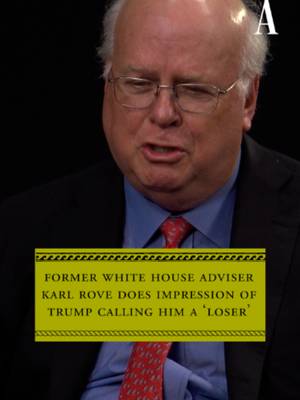
320K
17.8K
726
11mo ago
theatlantic
When Adolf Hitler was appointed the 15th chancellor of the Weimar Republic on January 30, 1933, he set about destroying a constitutional republic through constitutional means. It would take him a mere 53 days to disable and then dismantle his country’s democratic structures and processes. “We have come to perceive Hitler’s appointment as chancellor as part of an inexorable rise to power,” Timothy W. Ryback writes. But Hitler’s ascendancy and his smashing of constitutional guardrails “are stories of political contingency rather than historical inevitability.” “The Führer was a man who was possible in Germany only at that very moment,” Hans Frank, the Nazi party’s legal strategist, once said. “He came at exactly this terrible transitory period when the monarchy had gone and the republic was not yet secure.” At the link, read Ryback’s step-by-step account of what happened. 📸: Everett Collection / Alamy; Bettmann / Contributor; Hulton Deutsch / Contributor; Keystone-France / Contributor; Photo 12 / Contributor; Bettmann / Contributor; Bettmann / Contributor; Universal History Archive / Contributor; Mondadori Portfolio / Contributor; FPG / Staff; Topical Press Agency; Ullstein Bild / Contributor; Hulton Archive; Universal Images Group / Contributor; Corbis Historical / Contributor; Keystone-France / Contributor; Hulton Archive; Keystone; Keystone-France / Contributor; Mondadori Portfolio / Contributor; Bettmann / Contributor; Keystone / Staff; Hulton Archive; Heritage Images / Contributor; Ullstein Bild / Contributor; United Archives / Contributor; Margaret Chute; Boyer / Contributor; FPG / Staff; Historical / Contributor; Keystone-France / Contributor; Sueddeutsche Zeitung Photo / Alamy
Young people’s apparent lurch right is not an American-only trend, Derek Thompson writes. Around the globe, young voters are swinging their support toward anti-establishment far-right parties. “Maybe the entire world is casting a protest vote after several years of inflation,” Thompson writes. “Last year was the largest wipeout for political incumbents in the developed world since the end of the Second World War. One level deeper, it wasn’t inflation on its own, but rather the combination of weak real economic growth and record immigration that tilled the soil for far-right upstarts, who can criticize progressive governments on both sides of the Atlantic for their failure to look out for their own citizens first.” The pandemic is another potential driver of the global rightward shift. “Pandemics might not initially seem to cash out in any particular political direction,” Thompson writes. “But political science suggests that pandemics are more likely to reduce rather than build trust in scientific authorities … This loss of trust persists for years, even decades, in part because political ideology tends to solidify in a person’s 20s.” COVID also dramatically reduced young people’s physical-world socializing, which led to increases in social-media time that boys and girls spent alone. By trading gender-blended hangouts in basements and restaurants for gender-segregated online spaces, young men’s politics became more distinctly pro-male, according to the Norwegian researcher Ruben B. Mathisen—and, more to the point, anti-feminist. (Mathisen noted that his research built on a body of survey literature showing that “the ideological distance between young men and women has accelerated across several countries.”) “New ideologies are messy to describe and messier still to name,” Thompson continues at the link in our bio. “But in a few years, what we’ve grown accustomed to calling Generation Z may reveal itself to contain a subgroup: Generation C, COVID-affected and, for now, strikingly conservative.” #covid #politics 📷: Zack Wittman
308K
13.3K
2.59K
12mo ago
theatlantic
Young people’s apparent lurch right is not an American-only trend, Derek Thompson writes. Around the globe, young voters are swinging their support toward anti-establishment far-right parties. “Maybe the entire world is casting a protest vote after several years of inflation,” Thompson writes. “Last year was the largest wipeout for political incumbents in the developed world since the end of the Second World War. One level deeper, it wasn’t inflation on its own, but rather the combination of weak real economic growth and record immigration that tilled the soil for far-right upstarts, who can criticize progressive governments on both sides of the Atlantic for their failure to look out for their own citizens first.” The pandemic is another potential driver of the global rightward shift. “Pandemics might not initially seem to cash out in any particular political direction,” Thompson writes. “But political science suggests that pandemics are more likely to reduce rather than build trust in scientific authorities … This loss of trust persists for years, even decades, in part because political ideology tends to solidify in a person’s 20s.” COVID also dramatically reduced young people’s physical-world socializing, which led to increases in social-media time that boys and girls spent alone. By trading gender-blended hangouts in basements and restaurants for gender-segregated online spaces, young men’s politics became more distinctly pro-male, according to the Norwegian researcher Ruben B. Mathisen—and, more to the point, anti-feminist. (Mathisen noted that his research built on a body of survey literature showing that “the ideological distance between young men and women has accelerated across several countries.”) “New ideologies are messy to describe and messier still to name,” Thompson continues at the link in our bio. “But in a few years, what we’ve grown accustomed to calling Generation Z may reveal itself to contain a subgroup: Generation C, COVID-affected and, for now, strikingly conservative.” #covid #politics 📷: Zack Wittman
“I’m Turtleboy.” That’s how the blogger Aidan Kearney introduced himself to an onlooker during a protest in support of Karen Read, a 45-year-old Massachusetts financial analyst accused of killing her police-officer boyfriend by backing into him with her car. The Free Karen Read movement is largely the work of Turtleboy, who discovered Read’s case in 2023 and instantly became devoted to seeing her exonerated. Kearney’s efforts have totaled nearly 500 blog posts, hundreds of lengthy YouTube broadcasts—and multiple felony charges of witness intimidation; he has pleaded not guilty. Read’s murder case had mostly faded from public consciousness, until Turtleboy inserted himself into the story. His work on Read’s behalf has brought him an estimated $45,000 to $50,000 in advertising and subscription income a month. It has also made him infamous. He’s recognized around town, sometimes in the midst of reenactments of the alleged crime; his family has been harassed; his father once found a dead turtle hanging by its neck from the porch railing. “When Kearney sometimes talks about the cause of defending Read’s innocence as a kind of calling, he can sound jarringly grandiose,” Heath continues. “If he were to allow his arrest on ‘trumped-up, ridiculous charges’ to cause him to back off, he told me one day, ‘I feel like I would be almost disrespecting everything our Founding Fathers believed in and risked their lives for.’” After it was revealed that Kearney had been speaking directly and at length with Read herself, many of his critics suggested “that he’s either knowingly or unknowingly being exploited by a murderer to sway public opinion and bolster her defense—that, as Kearney put it, ‘the dastardly Karen Read was like the grand puppet master of this whole thing.’ Or maybe even, in a more nuanced way, that Read had managed to find a patsy smart and motivated enough—but also credulous enough—to carry her water farther than she could have ever dreamed possible. All she’d needed to do was sketch out a plausible framework within which she might be innocent; with his unstoppable drive, Kearney had filled in the gaps.” Read more at the link in our bio. 📷: Lila Barth
303K
10.6K
364
11mo ago
theatlantic
“I’m Turtleboy.” That’s how the blogger Aidan Kearney introduced himself to an onlooker during a protest in support of Karen Read, a 45-year-old Massachusetts financial analyst accused of killing her police-officer boyfriend by backing into him with her car. The Free Karen Read movement is largely the work of Turtleboy, who discovered Read’s case in 2023 and instantly became devoted to seeing her exonerated. Kearney’s efforts have totaled nearly 500 blog posts, hundreds of lengthy YouTube broadcasts—and multiple felony charges of witness intimidation; he has pleaded not guilty. Read’s murder case had mostly faded from public consciousness, until Turtleboy inserted himself into the story. His work on Read’s behalf has brought him an estimated $45,000 to $50,000 in advertising and subscription income a month. It has also made him infamous. He’s recognized around town, sometimes in the midst of reenactments of the alleged crime; his family has been harassed; his father once found a dead turtle hanging by its neck from the porch railing. “When Kearney sometimes talks about the cause of defending Read’s innocence as a kind of calling, he can sound jarringly grandiose,” Heath continues. “If he were to allow his arrest on ‘trumped-up, ridiculous charges’ to cause him to back off, he told me one day, ‘I feel like I would be almost disrespecting everything our Founding Fathers believed in and risked their lives for.’” After it was revealed that Kearney had been speaking directly and at length with Read herself, many of his critics suggested “that he’s either knowingly or unknowingly being exploited by a murderer to sway public opinion and bolster her defense—that, as Kearney put it, ‘the dastardly Karen Read was like the grand puppet master of this whole thing.’ Or maybe even, in a more nuanced way, that Read had managed to find a patsy smart and motivated enough—but also credulous enough—to carry her water farther than she could have ever dreamed possible. All she’d needed to do was sketch out a plausible framework within which she might be innocent; with his unstoppable drive, Kearney had filled in the gaps.” Read more at the link in our bio. 📷: Lila Barth
Mike Pence tells Tim Alberta at The Atlantic Festival that he respects ABC’s right to suspend Jimmy Kimmel, but “I would have preferred that the chairman of the FCC had not weighed in.” Watch more at the link in our bio. #TAF25
298K
5.23K
1.05K
5mo ago
theatlantic
Mike Pence tells Tim Alberta at The Atlantic Festival that he respects ABC’s right to suspend Jimmy Kimmel, but “I would have preferred that the chairman of the FCC had not weighed in.” Watch more at the link in our bio. #TAF25
Xochitl Gonzalez, a trustee of Brown University, was met on campus last fall by two students who had spun off from a larger group protesting Brown’s decision not to divest from Israel. Recognizing her as a trustee, they followed her for a block or two, filming her and calling her a hypocrite. She recognized one of them. “The war in Gaza was not some cause du jour that he’d picked up from TikTok,” she writes. “He has Palestinian relatives on the ground.” “Understandably, some of my colleagues who were singled out by protesters were more rattled by the experience,” Gonzalez writes—but these students are “using their rights to free speech and free assembly to engage with issues they are passionate about.” No one likes to be called a hypocrite, “but I never for a moment felt that these students were a threat to me, let alone to America’s national security,” Gonzalez continues. “And yet, that is the justification the United States government is offering for its decision to revoke the visas and green cards of international students who have spoken out against the war in Gaza.” The Tufts doctoral student Rümeysa Öztürk was “seized in the street, handcuffed like a criminal, and put inside the back of an unmarked car … She came from Turkey at the invitation of an American university, an invitation made possible by the State Department through the student-visa program.” Öztürk was apparently detained because she co-wrote an op-ed for “The Tufts Daily” last year. Secretary of State Marco Rubio has said that the government has the right to remove people who are “involved in doing things like vandalizing universities, harassing students, taking over buildings, creating a ruckus.” But “no one has alleged that Öztürk vandalized or took over any buildings,” Gonzalez writes. Rubio has been leaning on a Cold War–era law that he says allows him to personally revoke green cards and visas, and that has not been applied since 1997. “Welcome to Donald Trump’s America,” Gonzalez continues at the link in our bio, “where the Cabinet texting about war plans on a nongovernmental messaging app is ‘not a big deal,’ but an op-ed in a school paper is a threat to national security.” 📸: Sophie Park / The New York Times / Redux
279K
20.5K
257
10mo ago
theatlantic
Xochitl Gonzalez, a trustee of Brown University, was met on campus last fall by two students who had spun off from a larger group protesting Brown’s decision not to divest from Israel. Recognizing her as a trustee, they followed her for a block or two, filming her and calling her a hypocrite. She recognized one of them. “The war in Gaza was not some cause du jour that he’d picked up from TikTok,” she writes. “He has Palestinian relatives on the ground.” “Understandably, some of my colleagues who were singled out by protesters were more rattled by the experience,” Gonzalez writes—but these students are “using their rights to free speech and free assembly to engage with issues they are passionate about.” No one likes to be called a hypocrite, “but I never for a moment felt that these students were a threat to me, let alone to America’s national security,” Gonzalez continues. “And yet, that is the justification the United States government is offering for its decision to revoke the visas and green cards of international students who have spoken out against the war in Gaza.” The Tufts doctoral student Rümeysa Öztürk was “seized in the street, handcuffed like a criminal, and put inside the back of an unmarked car … She came from Turkey at the invitation of an American university, an invitation made possible by the State Department through the student-visa program.” Öztürk was apparently detained because she co-wrote an op-ed for “The Tufts Daily” last year. Secretary of State Marco Rubio has said that the government has the right to remove people who are “involved in doing things like vandalizing universities, harassing students, taking over buildings, creating a ruckus.” But “no one has alleged that Öztürk vandalized or took over any buildings,” Gonzalez writes. Rubio has been leaning on a Cold War–era law that he says allows him to personally revoke green cards and visas, and that has not been applied since 1997. “Welcome to Donald Trump’s America,” Gonzalez continues at the link in our bio, “where the Cabinet texting about war plans on a nongovernmental messaging app is ‘not a big deal,’ but an op-ed in a school paper is a threat to national security.” 📸: Sophie Park / The New York Times / Redux

The Atlantic (@theatlantic) TikTok Stats & Analytics

The Atlantic (@theatlantic) has 337K TikTok followers with a 6.25% engagement rate over the past 12 months. Across 417 videos, The Atlantic received 1.92M total likes and 31.6M views, averaging 4.61K likes per video. This page tracks The Atlantic's performance metrics, top content, and engagement trends — updated daily.

The Atlantic (@theatlantic) TikTok Analytics FAQ

How many TikTok followers does The Atlantic have?+
The Atlantic (@theatlantic) has 337K TikTok followers as of February 2026.
What is The Atlantic's TikTok engagement rate?+
The Atlantic's TikTok engagement rate is 6.25% over the last 12 months, based on 417 videos.
How many likes does The Atlantic get on TikTok?+
The Atlantic received 1.92M total likes across 417 videos in the last year, averaging 4.61K likes per video.
How many TikTok views does The Atlantic get?+
The Atlantic's TikTok content generated 31.6M total views over the last 12 months.