NewGet @sharkallies's full report

instagram analytics
Similar Accounts:
instagram analytics
Similar Accounts:
followers
38.7K
impressions
304K
likes
14.3K
comments
200
posts
38
engagement
9.25%
emv
$9.91K
Average per post
7.99K
Key Metrics
Impressions
monthly
Distributions
Content
46.9K
1.87K
5
1mo ago

sharkallies
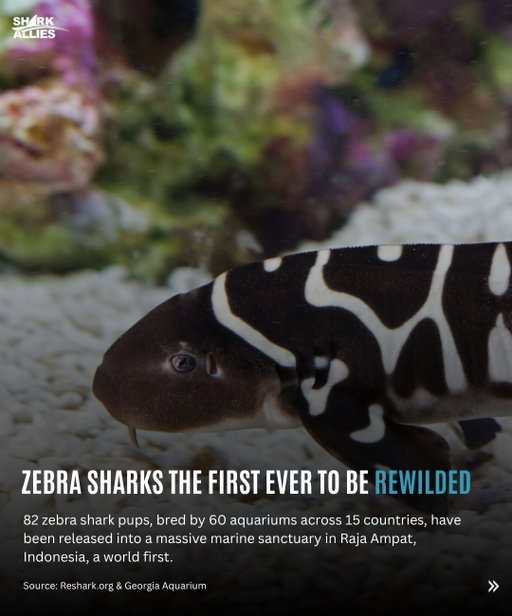
82 zebra shark pups just got released into a protected sanctuary in Raja Ampat, Indonesia. First time sharks have ever been rewilded, anywhere.
It took 3 years and 60 aquariums across 15 countries working together, breeding the sharks in captivity and raising the pups until they were ready.
Now they’re out there foraging on their own and sticking to the sanctuary boundaries, just like they’re supposed to.
If this works long term, it could be a model for saving other egg-laying shark species too.
Click the link in bio for the full story.
35.4K
3.51K
26
4mo ago

sharkallies
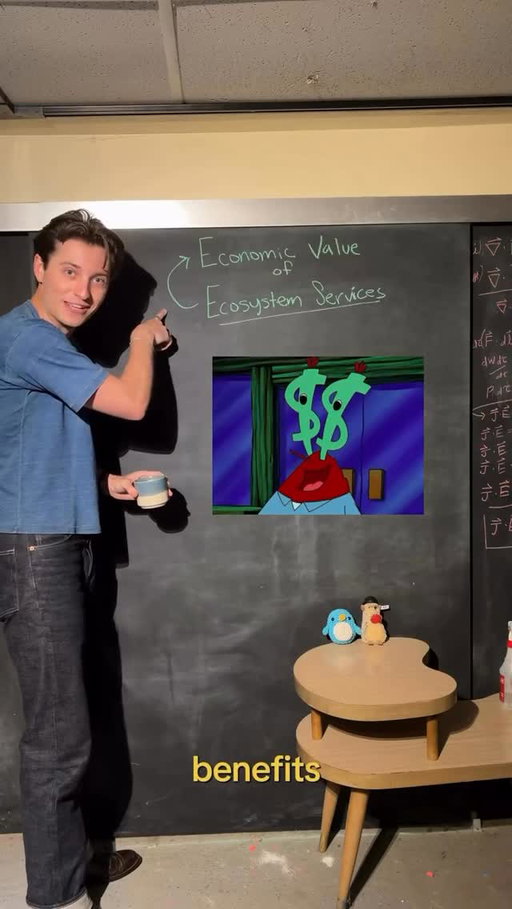
This video is a great explainer of the important role keystone species play in natural systems. Sharks are keystone species. When they are removed from the system, as is happening around the world, the whole ecosystem suffers.
Allowing the overfishing of sharks is a short-sighted policy benefiting only the extractive industries.
A huge thank you to @basementbiology for letting us share his great video!
22.4K
894
9
6mo ago
sharkallies
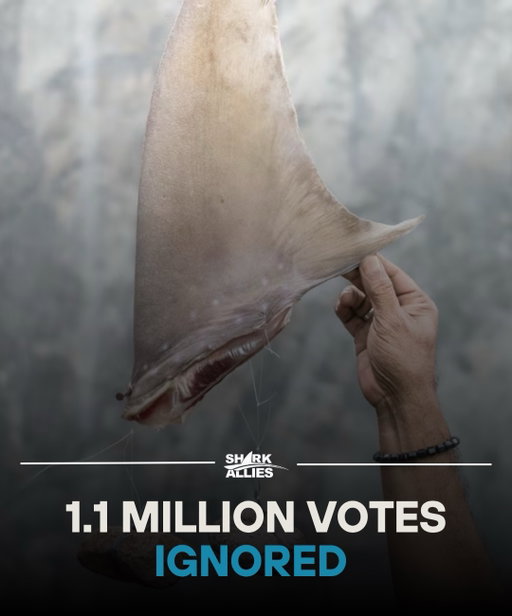
Stop Finning – Stop the Trade has filed a formal complaint with the European Ombudsman against the European Commission for maladministration in handling the European Citizens Initiative STOP FINNING – STOP THE TRADE.
More than 1.1 million Europeans voted for a shark fin trade ban. And yet — the European Commission is delaying the process beyond what is reasonable, continually moving the bar and keeping the process nebulous.
This is a failure of what the EU Government values so much: Transparency, democracy, and the equal treatment of all stakeholders. We are not trying to escape the regular political process or asking for special treatment. We knew this process would be a marathon, and have been navigating every deadline and requirement, have delivered all that was asked of us for consultation events and public comments, and yet, the Commission is failing to meet its own commitments and timelines. In addition, they have treated other European Citizens Initiatives in the same manner, which doesn’t bode well in the public view. The lack of transparency also creates suspicion, fear, and confusion, causing advocates to assume the worst and either loose hope and give up, or get frustrated and lash out. No one likes to end up in court, but their actions have left the ECI campaigns no other choice.
We do not expect the Commission to be on our side. But we did count on them being neutral and fair. It’s time to take the ECI process seriously and support what more than a million citizens asked for.
@stopfinningeu @thegoodlobby
20.5K
819
52
1mo ago
sharkallies
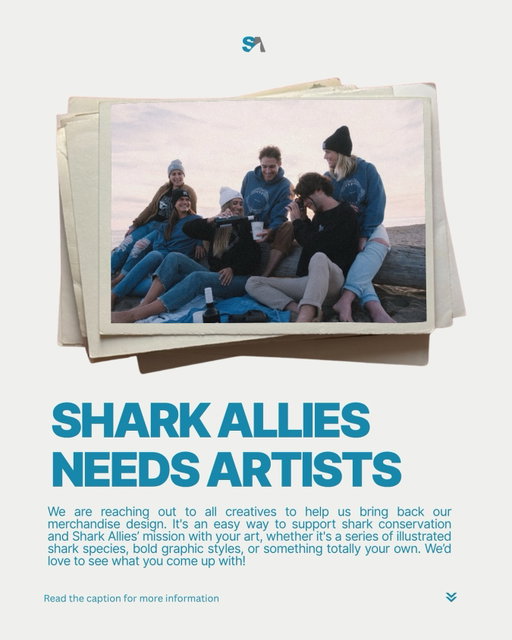
In 2026 we lost all of our designs and inventory in the Palisades fires. We had to shut down our online store “The Shark Cafe” because we needed to focus on recovery and on the most pressing campaigns. We are now ready to start fresh, to bring new designs to our community. This time we will go with a POD on Bonfire, which will enable us to feature many artists, and play with new concepts and designs. We also welcome anyone that has marketing and general merchandise related insight, or can assist with the establishment or running of the store.
This is not a paid position or employment. We are unable to offer that at this time. It is a call for volunteers and people that would like to help Shark Allies with their creative talents.
If you are keen and able to help, please DM us a link to your artwork or ideas, or contact us on email: info@sharkallies.com.
13.1K
524
11
8mo ago
sharkallies
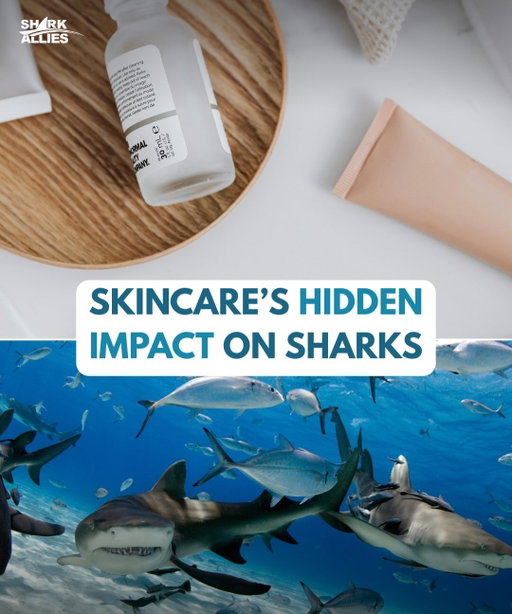
Squalene is a common ingredient found in skincare and cosmetic products we use every day, but its connection to sharks is often hidden. Millions of sharks are killed each year for their liver oil, which is used to produce squalene for beauty and personal care products. Making this a growing conservation issue that is largely in the hands of the suppliers of ingredients and manufacturers of these products.
The good news is that squalene does not have to come from sharks. Plant-based alternatives, such as sugarcane-derived squalene, are widely available and just as effective.
To learn more about squalene, shark conservation, and how to make informed choices, visit our website at www.sharkallies.org
📸 Photo Credits: @biminisharkgirl
12.8K
511
0
10mo ago
sharkallies
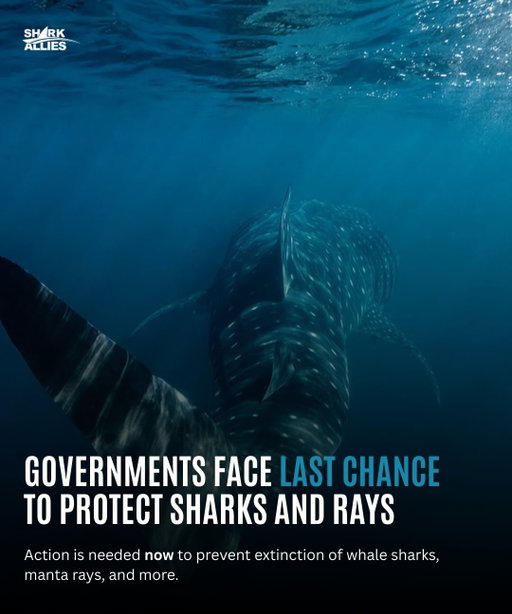
Sharks and rays are disappearing faster than most of us realize. Over a third of all species are now threatened with extinction, and illegal and unreported trade is putting even more pressure on these iconic ocean predators. Pelagic sharks have lost over 70% of their populations in the last 50 years, while reef sharks are functionally extinct on many coral reefs. These animals are not just charismatic, they are ecosystem engineers, helping maintain healthy oceans and the fisheries people rely on. Without them, marine ecosystems unravel, and the impacts ripple far beyond the sea.
The 20th meeting of the Conference of the Parties to CITES (CoP20) is a crucial opportunity to prevent these extinctions. Proposed listings could ban international trade for whale sharks, manta rays, devil rays, and others, while increasing protections for hundreds of additional species. The science is clear, and the tools to enforce these protections already exist, but action is needed now. Support global shark and ray conservation by learning more about CITES and advocating for these protections before it’s too late.
For the full article and more information, check out the link in our bio or @forbes
#CitesConservation
12.7K
509
8
9mo ago
sharkallies
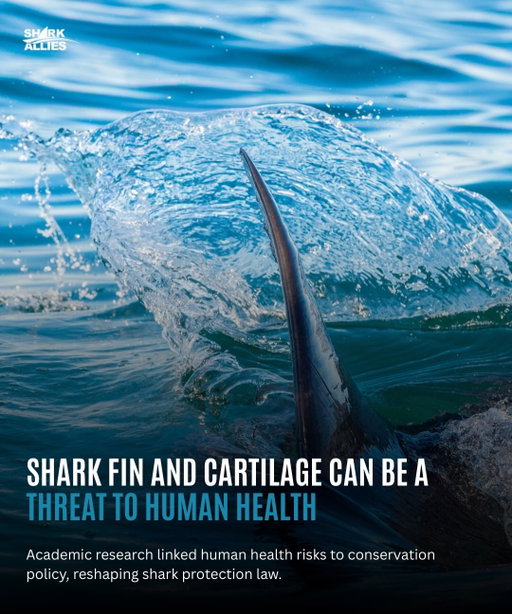
Over the past two decades, academic medicine has played a critical role in shaping shark conservation policy in the United States by grounding legislation in public health evidence. Research highlighted in this Review shows how shark fins and cartilage bioaccumulate harmful substances such as methylmercury and the neurotoxin BMAA, which has been linked to Alzheimer’s disease, ALS, and other neurodegenerative conditions. These findings reframed shark finning not only as a conservation crisis but also as a human health issue, strengthening the scientific case behind landmark legislation including the Shark Finning Prohibition Act, the Shark Conservation Act, and the Shark Fin Sales Elimination Act.
The Review also documents how rigorous clinical research dismantled long standing medical myths that fueled demand for shark products. Multiple peer-reviewed studies and clinical trials demonstrated that shark cartilage offers no benefit in cancer treatment and may cause significant adverse health effects, including gastrointestinal issues, low blood pressure, and neurological risks. By debunking these claims, academic medical institutions helped remove a key driver of the shark fin trade, reinforcing evidence-based medicine while supporting comprehensive conservation outcomes.
Thank you to Michael Turtz, MPA, and Michael Dobbs, MD, MHCM for their important work, and we encourage everyone to read the full Review using the link in our bio.
10.0K
400
2
1w ago
sharkallies
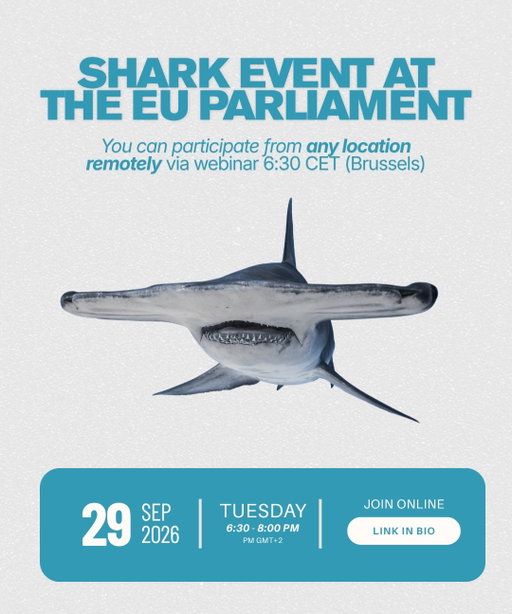
Not in Brussels? Not a problem! - Join the event remotely via Webinar (link in bio). “Shark Protection for Healthy Oceans” is an event hosted by Members of Parliament, Manuela Ripa (EPP) and Michal Wiezik (RENEW).
The program will focus on the critical impacts of the international shark fin trade on biodiversity and ocean health, the EU’s role in this trade, and the socioeconomic impacts on coastal communities and fisheries resulting from declining shark populations and the threats marine ecosystems are experiencing.
The link to join remotely as well as in person event registration can be found using the link in Bio. Only guests who have completed the registration process will be able to enter the parliament building and attend the event in person.
7.63K
305
1
5mo ago
sharkallies
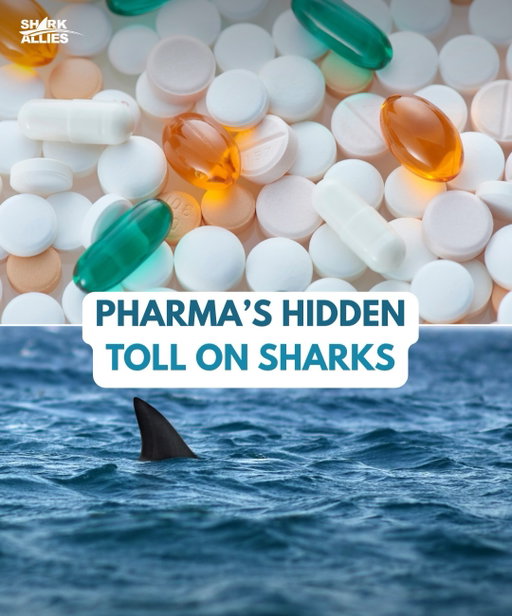
Most people don’t realize that some pharmaceutical products still rely on ingredients derived from sharks. Squalene, taken from shark liver oil, is used in certain treatments and as a vaccine adjuvant, quietly driving demand for deep-water species that are already vulnerable. The lack of transparency in sourcing means patients are often unaware of the environmental cost tied to their care.
This isn’t a necessity, it’s a choice. Plant-based and lab produced squalene alternatives are widely available, equally effective, and often more refined. Moving away from shark derived sources is not a scientific challenge, it’s a decision, one that has real consequences for ocean ecosystems.
7.30K
292
4
12mo ago
sharkallies
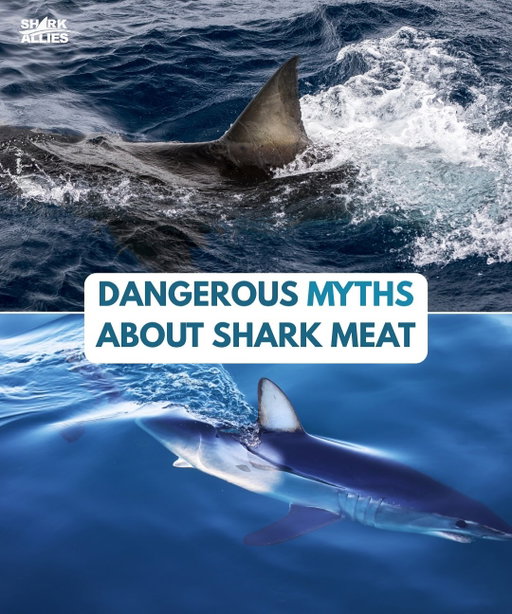
Shark meat is often used to justify the global fin trade, the argument being that fins are a by product of the meat trade and that sharks represent an important protein source. Furthermore, it’s claimed that all of this is sustainable because every part of the shark is used. But long-standing scientific evidence tells a different story, and recent events further prove that point.
Just this past month, 24 students and a teacher in Indonesia were hospitalized after eating fried shark contaminated with mercury, arsenic, and lead. Experts explained that sharks, as apex predators, accumulate these toxins through biomagnification, making their meat especially unsafe for children and vulnerable populations.
This case is not unique. Studies have repeatedly shown that shark meat can contain levels of heavy metals far exceeding safe limits for human consumption. Therefore, protecting the shark meat industry by keeping it profitable through fin sales is an extremely flawed concept.
When the argument for fin sales depends on a product that’s unsafe, unsustainable, and poorly regulated, it’s time to rethink the system, not defend it.
7.28K
291
2
8mo ago
sharkallies
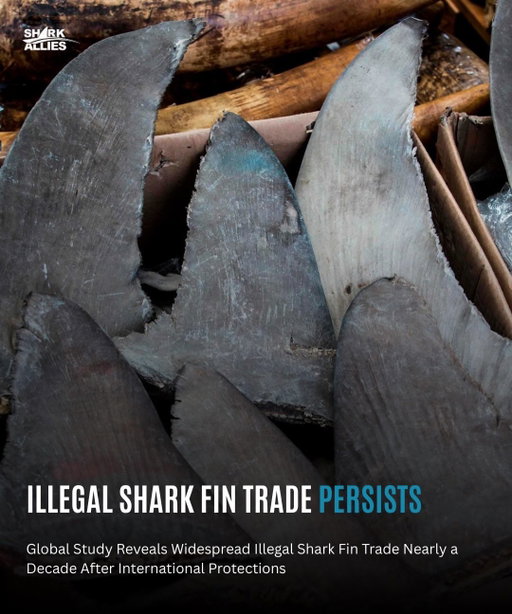
Nearly a decade after international protections were put in place, illegal shark fin trade is still happening at a massive scale. A new peer-reviewed study published in Science Advances found fins from protected shark species appearing year after year in Hong Kong markets, despite little to no legal trade being reported since 2014. DNA evidence reveals a clear gap between what is written into law and what is actually happening in the global market.
Even more concerning, the research red-flagged several countries as likely major players in illegal shark fin exports, including Spain, Taiwan, the UAE, China, the Philippines, Ghana, and Brazil. Spain’s inclusion underscores that this crisis is not limited to one region or level of development, but reflects widespread enforcement failures across the globe.
Sharks are already facing population collapse, and continued illegal trade pushes many species closer to extinction. Stronger enforcement, transparency, and accountability are essential if these protections are going to mean anything. Protecting sharks means protecting ocean ecosystems and ultimately, our own future.
For more information, check out the full report using the link in our bio.
6.88K
275
8
11mo ago
sharkallies
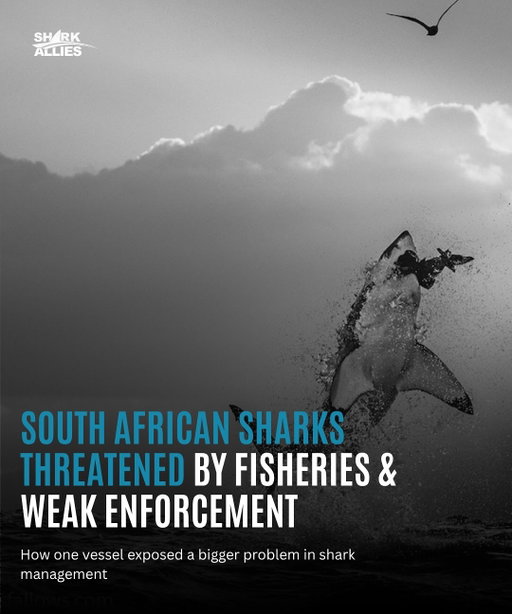
The only vessel licensed to catch sharks in South African waters has been caught breaching permit rules, processing fins and heads at sea, fishing inside protected areas, and targeting endangered species.
The demersal shark longline fishery targets critically endangered soupfin and endangered smoothhound sharks, both vital to healthy ocean ecosystems. Almost the entire catch of shark meat and fins is exported overseas, while local enforcement remains weak.
Marine biologist Enrico Gennari warns the impact extends far beyond these species. South Africa’s white shark numbers are falling, driven by both the killing of white sharks and the overfishing of their prey. In a recent documentary, Gennari and fellow researchers revealed that Mossel Bay’s white sharks prey on smaller species like smoothhound and spotted gully sharks, not just seals.
The fin and meat trade is driving sharks toward extinction. Without stronger regulation and enforcement, these species could vanish from South African waters within our lifetime.
📖 Read the full story by Victoria Schneider via @mongabay : “South African sharks threatened by fisheries, weak enforcement” with the link in our bio.
6.35K
254
0
10mo ago
sharkallies
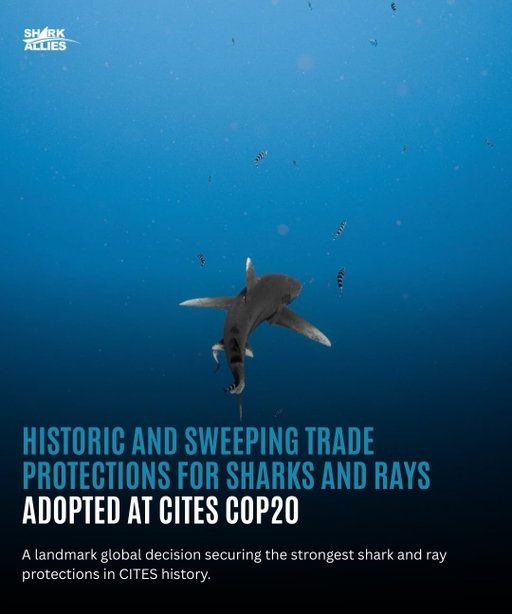
A historic moment for shark and ray conservation. At CITES CoP20 in Samarkand, every single proposal to strengthen global trade protections passed, the most comprehensive advance for sharks and rays in the convention’s history. More than 50 governments backed listings that cover over 70 species, from whale sharks and oceanic whitetips to manta and devil rays, wedgefish, giant guitarfish, gulper sharks, smoothhounds, and tope sharks.
These decisions arrive at a critical time. Over 37 percent of shark and ray species are threatened with extinction, pelagic sharks have declined by more than 70 percent in 50 years, and reef sharks are now functionally extinct on one in five surveyed reefs. CITES remains the only global agreement with the legal authority to restrict the international trade driving these losses. Today’s votes close major loopholes in fin, gill plate, and meat markets, offering species in freefall a genuine chance at recovery.
As Luke Warwick of WCS said, “The world chose action over extinction today.” Now the momentum must carry through final plenary and into rapid implementation.
Read the full article through the link in our bio.
6.33K
253
0
2mo ago
sharkallies
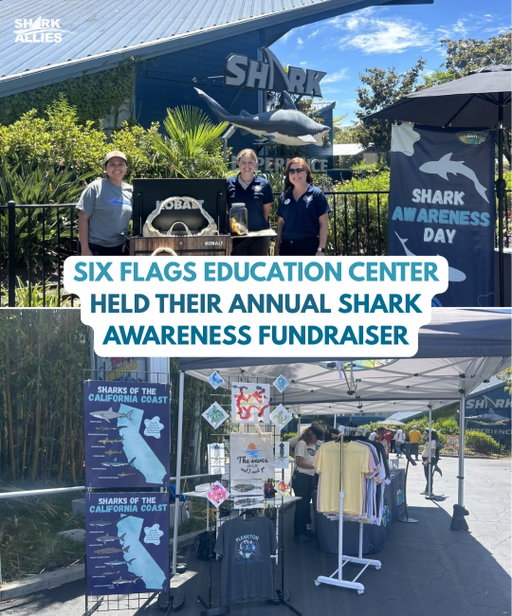
The wonderful team from the Six Flags Education Center held their annual shark awareness event & fundraiser, with the funds generously offered to Shark Allies. We appreciate it so much!!
The team created a “Sharks of California” poster for guests to learn about shark species that can be found off the CA coast to raise awareness of the great diversity. Most people know about leopard sharks and great whites, but there are many more species in California waters. They also turned this concept into a shirt design, which was so popular with visitors that it sold out early in the day. They also created a “Shark Senses” and “Chondrichthyes Vs. Osteichthyes” interactive display.
They logged over 4000 interactions with our tables/activities, and we had a lot of guests eager to learn more about sharks!
Congratulations to the team!
6.03K
241
6
4d ago
sharkallies
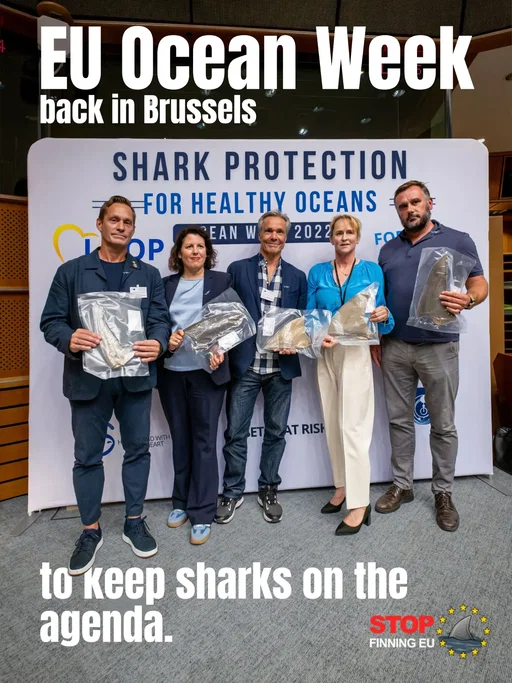
October = EU Ocean Week time! 🌊🦈
On-site visibility is crucial. That’s why we take every opportunity to raise awareness of sharks in the EU Parliament.
Thanks to the invaluable support of MEP @manuela.ripa and her colleague @michal_wiezik, we were able to raise the issue of banning the trade in loose shark fins again in Parliament this year.
Alongside Swedish filmmaker and TV host @joakimodelberg and German filmmaker and actor @hannesjaenicke_official , we held a panel discussion exploring the impact of the international fin trade, the consequences of declining shark populations for marine ecosystems and coastal communities, and the wider implications.
The event enabled us to engage in deeper discussions with other Members of Parliament and EU officials, shine a spotlight on sharks, and forge new connections that will bring us closer to achieving our European Citizens’ Initiative goal of a #FinTradeBan.
None of this would be possible without your support and donations — thank you so much! 💙🦈
#StopFinning #FinTradeBan #sharkconservation #EU
@seasatrisk_ngo @sharkallies @elasmoceanorg @meeresschutz_org @gallifreyfoundation @sharkproject_international @stopfinningde @pelorus.jack.foundation @a_fragile_hope @sharkguardian

6.00K
240
13
2mo ago
sharkallies
As the shark community is celebrating SharkWeek, SharkFest, and SharkCon this whole month of July, let’s consider the fact that all of these shows are based on people swimming with sharks, whether that is researchers studying sharks, production companies filming sharks, film makers making shark movies, or celebrities getting to know sharks. And yet, diving with sharks is still not recognized as a valid industry worthy of consideration, as efforts are underway to shut down shark diving operations.
Much of this is based on the fishing industry pushing their agenda. As everyone is blissfully enjoying shark programming this summer, please be aware that many of the locations that provide the opportunity to see sharks are under threat to be outlawed. Years ago it happened in Hawaii, and now it is happening in Florida.
Please take some time to learn about this urgent issue by visiting SaveFloridaSharkDiving.com (or link in Bio).
#SharkWeek #SharkFest #SharkCon
5.83K
233
0
6mo ago
sharkallies
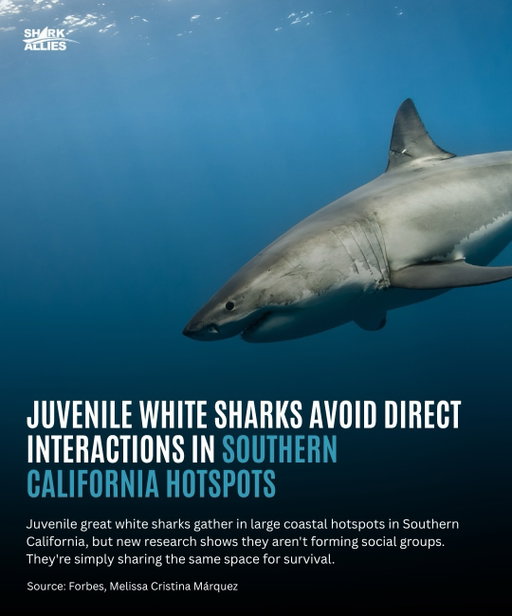
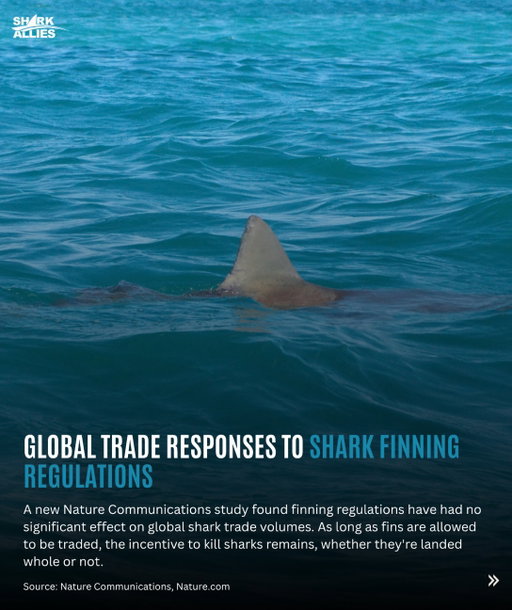
Juvenile great white sharks have been gathering in large coastal hotspots in Southern California for years now, sometimes in groups of 30 to 50. But new research shows they aren’t forming social groups. They’re simply sharing the same space for survival.
While juvenile white sharks don’t form tightly bonded groups, the potential for indirect interactions and shared environmental responses hints at subtle behavioral complexity. How much do these incidental encounters or information-sharing events influence growth, survival, or long-term movement patterns? And perhaps these dynamics scale up in adult populations, where competition and predation pressures are higher.
Ultimately, this new work prompts shark scientists to ask some deeper questions, such as “What does it mean to be ‘social’ in a species traditionally seen as solitary?” and “How can these insights inform the way we protect marine species whose lives are intricately tied to dynamic, ever-changing habitats?” Analyzing the data at such fine resolution reveals the quiet complexity of the marine world. What remains uncertain is whether we are learning these lessons quickly enough in an ocean already being transformed by climate change.
To check out the full article click the link in our bio.
5.78K
231
4
2w ago
sharkallies
This article emphasizes the value and potential of shark eco-tourism. It is exactly the point we are trying to make when we fight against the proposals that are trying to shut down shark diving operations in Florida, or any bills that are being shaped that would essentially aim to reduce shark numbers based on hype that sharks are harming fishing industries. Eco tourism businesses should not be dismissed. They are economic engines just as any other small business, with massive potential for growth. It is essentially an evergreen industry that does not extract resources, but generates income. If policymakers only listen to fisheries agencies and interests when it comes to shark management decisions, then they are ignoring important stakeholders.
This is the most important message of this article:
“Shark tourism is becoming an increasingly visible part of the United States travel landscape, giving coastal destinations a powerful way to combine adventure, marine wildlife, education and conservation. From Hawaii’s North Shore to Massachusetts and California, tourism businesses are building experiences around sharks while increasingly placing safety, science and responsible wildlife viewing at the centre of the visitor proposition.”
(full story in link in bio)
5.75K
230
13
7mo ago
sharkallies
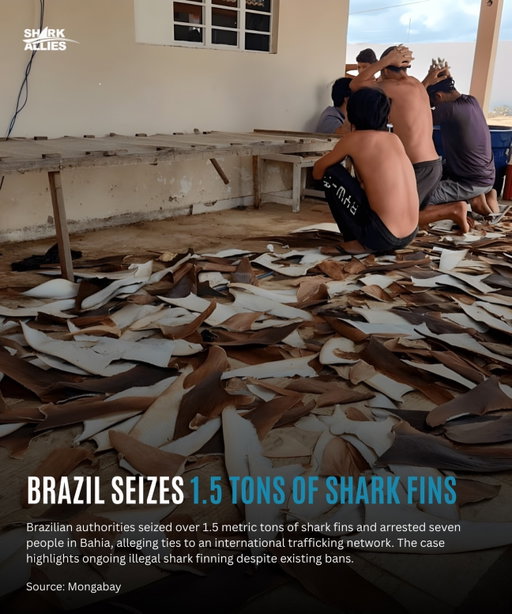
Brazilian authorities seized more than 1.5 metric tons of shark fins during a raid on a rural processing site in Bahia state, arresting seven people, including three Chinese nationals suspected of coordinating an international trafficking network. Officials say the fins likely came from species such as the Atlantic nurse shark and blue shark, though genetic testing is still underway. Authorities allege that the Brazilian suspects were low-paid workers hired to process the fins without knowing the full scope of the operation.
Shark finning is illegal in Brazil and widely condemned for its cruelty, as sharks are often mutilated and thrown back into the ocean alive. Conservationists say the case highlights ongoing loopholes in Brazil’s laws that allow fins to be exported if the sharks were caught as bycatch, a system critics argue can be used to hide illegal trade.
5.38K
215
5
3mo ago
sharkallies
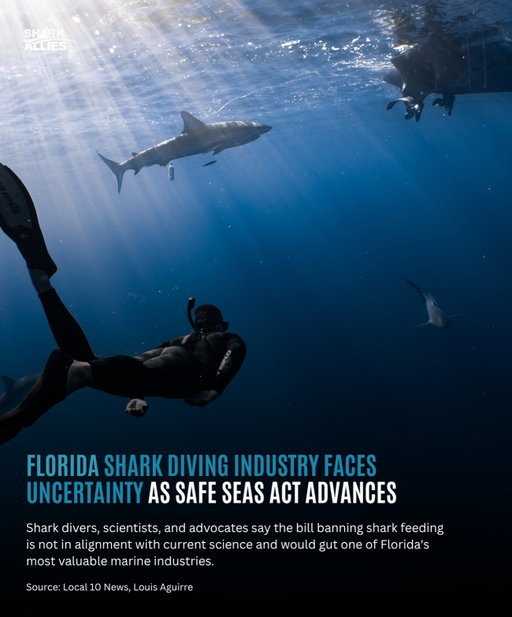
Thank you, @louisaguirre for reporting on this issue. It is indeed appalling that the fishing industry is going after sharks and shark tours, once again. Chumming for fishing (and killing) of sharks all over the state and even from the shore is ok, but feeding small amounts in one location, far offshore, is somehow detrimental? The double standard is beyond logic. And the science doesn’t support this “spin”. Fishing grounds have been depleted by overfishing by the super predator - HUMANS, not by natural predators.
What used to be “normal” has been forgotten - normal would have been sharks on every dive and every fishing trip. Calling it a “Save Seas Act” is an attempt to wrap this in a digestible argument to fool people into thinking this is in the interest of the public. Far from it. If chumming is a safety issue, then banning shore fishing would be the logical place to start.
Add your name to the petition and find the link to the bill HR 3821 (shark feeding and tours) and S.2314 SHARKED Act of 2025 (shark depredation) in the link in bio.
Contact your senator to express your support for shark tours and opposition to bills aimed at reducing shark populations.
Shark Allies (@sharkallies) Instagram Stats & Analytics
Shark Allies (@sharkallies) has 38.7K Instagram followers with a 9.25% engagement rate over the past 12 months. Across 38.0 posts, Shark Allies received 14.3K total likes and 304K impressions, averaging 377 likes per post. This page tracks Shark Allies's performance metrics, top content, and engagement trends — updated daily. To benchmark @sharkallies against other accounts, use Socialpruf's Instagram competitor analysis tool.
Shark Allies (@sharkallies) Instagram Analytics FAQ
How many Instagram followers does Shark Allies have?+
Shark Allies (@sharkallies) has 38.7K Instagram followers as of October 2026.
What is Shark Allies's Instagram engagement rate?+
Shark Allies's Instagram engagement rate is 9.25% over the last 12 months, based on 38.0 posts.
How many likes does Shark Allies get on Instagram?+
Shark Allies received 14.3K total likes across 38.0 posts in the last 12 months, averaging 377 likes per post.
How many Instagram impressions does Shark Allies get?+
Shark Allies's Instagram content generated 304K total impressions over the last 12 months.
Can I compare Shark Allies with other Instagram accounts?+
Yes. Add @sharkallies to a competitor set with Socialpruf's Instagram competitor analysis tool and benchmark it side by side with any other public accounts on views, engagement rate and follower growth, with history back to each account's first post.