NewGet @nasa's full report

instagram analytics
Similar Accounts:
instagram analytics
Similar Accounts:
followers
104M
impressions
5.70B
likes
237M
comments
1.16M
posts
436
engagement
4.59%
emv
$175M
Average per post
13.1M
Key Metrics
Impressions
monthly
Distributions
Content
277M
11.1M
46.4K
6mo ago

nasa
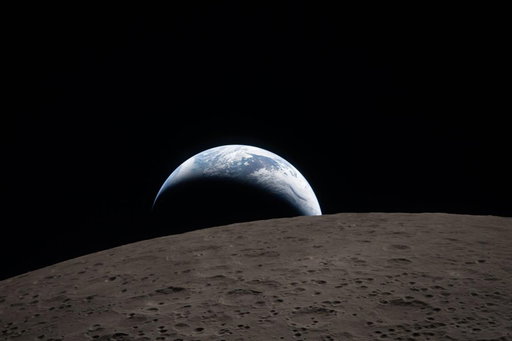
Hello, Moon. It’s great to be back.
On April 6, 2026, the Artemis II astronauts flew around the Moon, seeing parts of it that had never been viewed by human eyes. They captured what they saw in words and in photos—swipe through to see what they shared.
Image credit: NASA
#NASA #Artemis #Earthrise #Moon
113M
4.52M
12.4K
6mo ago
nasa
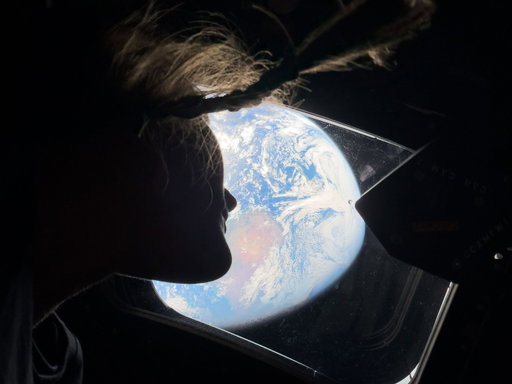
Seeing home from space hits different
@astro_christina and @astro_reid take some time to look back at Earth from one of Orion's windows as the Artemis II astronauts continue their journey to the Moon. They're deep in space, on this mission for all of us back home.
Image description: Each image is inside a dimly lit Orion spacecraft, a window takes up most of the image with a brightly lit Earth, Christina Koch and Reid Wiseman's faces both lit up while looking back at Earth.
Credit: NASA
#NASA #Artemis #Space
102M
6.52M
51.0K
6mo ago

nasa
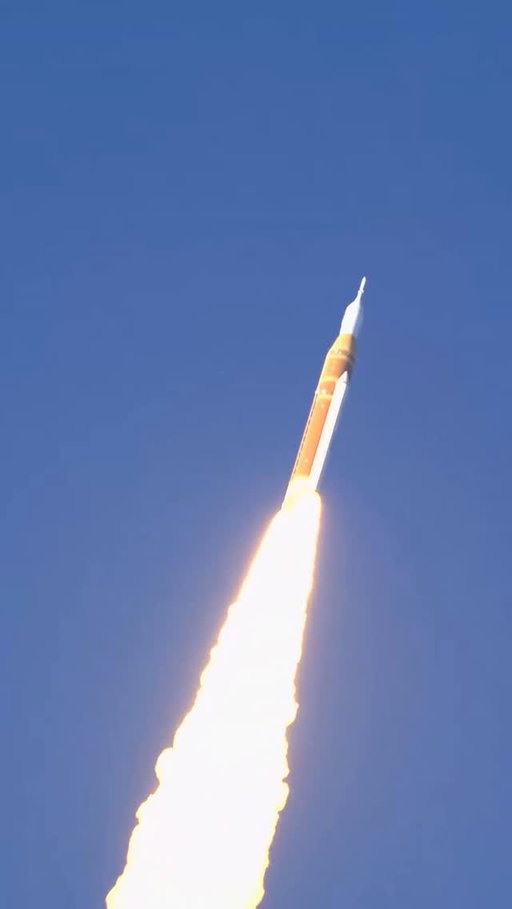
Liftoff. The Artemis II mission launches from @NASAKennedy at 6:35 p.m. EDT (2235 UTC), propelling four astronauts on a journey around the Moon. Artemis II will pave the way for future Moon landings, as well as the next giant leap — astronauts on Mars.
Credit: NASA
#Liftoff #Launch #Artemis #Moon #Astronauts
86.5M
3.46M
21.1K
6mo ago
nasa
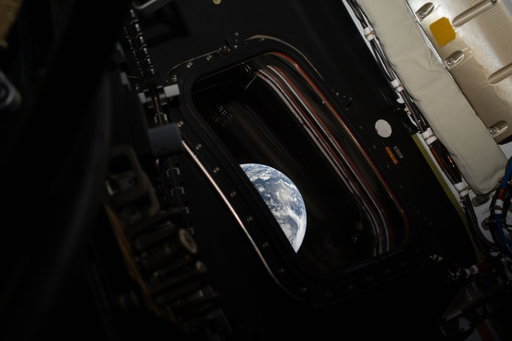
New photos from space dropping NOW.
Pause for a moment with the crew of @NASAArtemis II as they look back at our home planet, seen through the window of the Orion capsule. That’s us, together, looking back at the astronauts journeying to the Moon, for all of humanity.
In the first image, Earth peeks through the capsule window, reminding us that a view like this relies on the ingenuity and hard work of countless people back home.
In the second image, we see our home planet as a whole, lit up in spectacular blues and browns. A green aurora even lights up the atmosphere in the north.
Image descriptions:
1: One-third of Earth peeking through the window of the Orion capsule. The planet is a dreamy pale blue, swirling with white clouds and reflected sunlight. Although Earth only fills a fraction of the image it is the brightest object in the image by far. The capsule window is surrounded by a thick frame held in place with bolts, reminiscent of a heavy duty airplane window. It is dark in the capsule, but the outlines of straps and various components of the capsule are visible. Brighter white components are visible in the upper right corner. Credit: NASA
2: A full disk image of Earth, as seen from the Orion capsule. The planet is a pale blue, swirling with white clouds and glowing slightly lighter blue in place from reflected light. From about 8 to 9 o’clock, a large brown landmass is Africa, with the Iberian peninsula twinkling with lights just where the planet curves. At the 1 o’clock spot, aurora glow in a thin green glow, just barely separated from the planet’s surface. Earth is set against the black of space. Credit: NASA
77.2M
3.09M
14.7K
6mo ago
nasa
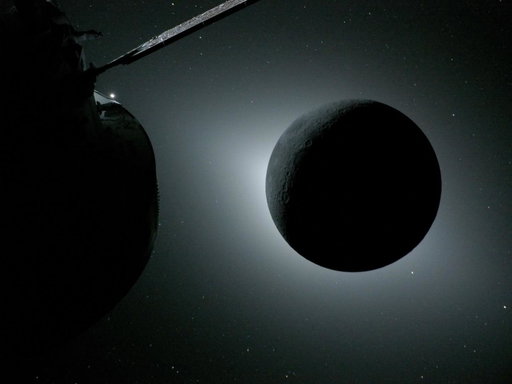
Moon joy!
While flying around the far side of the Moon, the Artemis II astronauts experienced a solar eclipse aboard the Orion spacecraft.
They took time to enjoy the view in the moment, coming prepared with eclipse glasses. Safety first!
#NASA #Eclipse #Artemis
73.2M
2.93M
11.2K
6mo ago
nasa
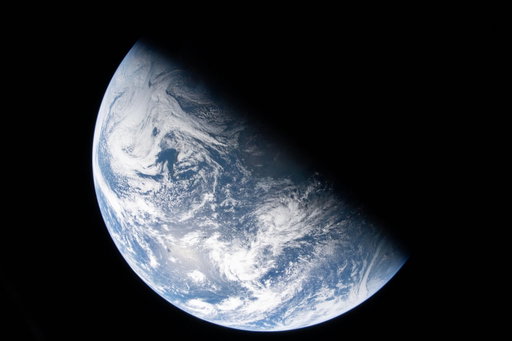
More new Earth images dropped! 🤩
In this new image from the Artemis II crew, we see the divide between night and day, known as the terminator, cutting across Earth. Whether awake or fast asleep, we’re all here on this planet together.
In the second image, also taken from the Orion capsule, we can see ourselves represented by the electric lights of human activity. In the lower right, sunlight illuminates the limb of the planet.
The Artemis II crew’s schedule is designed around the requirements of the mission. While many in the U.S. were preparing for bed on April 2, the crew had just completed translunar injection, putting them officially on course for the Moon.
Credit: NASA
Image descriptions:
1: Earth as seen from the Orion capsule. It is divided sharply in half, with a line running diagonally from the 11 o'clock to the 4 o'clock. The lower left half is a bright pale blue. Its surface is covered with swirly, puffy white clouds, with texture indicating different thicknesses. The upper right half is dark, with no illumination from the Sun. Earth is set against the black of space.
2: A full disk image of Earth at night, as seen from the Orion capsule. The planet is a dark midnight blue. Swirling white clouds are visible against the darker surface. From about 8 to 9 o'clock, a large, very brown landmass is Africa, with the Iberian peninsula twinkling with lights just where the planet curves. Other tiny yellow dots of electric lights are sprinkled across the planet's surface. From the 3 to the 6 o'clock spot, a very thin crescent of blue light hugs the edge of the planet. Earth is set against the black of space.
69.9M
2.80M
6.93K
6mo ago
nasa
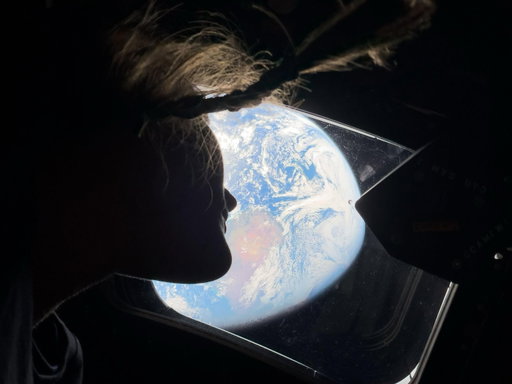
First braids to leave Earth orbit. (unconfirmed)
68.4M
3.85M
46.0K
6mo ago
nasa
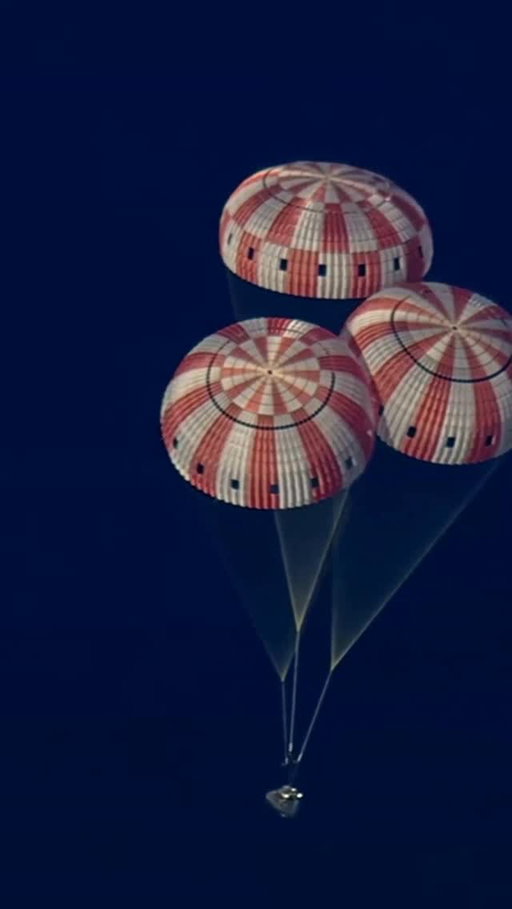
Around the Moon and back.
The Artemis II crew has splashed down off the coast of San Diego on Friday, April 10, at 8:07 p.m. EDT (0007 UTC April 11 UTC) after approximately 10 days in space. The crew includes NASA astronauts @Astro_Reid, @AstroVicGlover, and @Astro_Christina, and @CanadianSpaceAgency astronaut @AstroJeremy.
A combined NASA and U.S. military recovery team will soon extract the astronauts from the Orion spacecraft and fly them to the USS Murtha. Once aboard, the astronauts will undergo post‑mission medical evaluations before returning to shore where awaiting aircraft will take them to @NASAJohnson in Houston.
Teams will also retrieve the spacecraft and transport it to Naval Base San Diego, where it will be offloaded and prepared for a return to @NASAKennedy.
Credit: NASA
61.1M
2.44M
4.68K
2mo ago
nasa
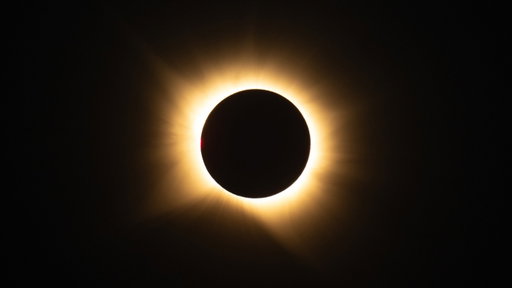
When the Moon and Sun align
This rare sight — a total solar eclipse — was photographed in San Millán de los Caballeros, Spain, on Aug. 12.
The Sun is 400 times wider than the Moon, but in a cosmic coincidence, it's also 400 times further away. This means that they appear to be the same size in our sky — and when the Moon passes in front, it can perfectly block the Sun.
Credit: NASA
#NASA #Eclipse #TotalSolarEclipse
59.6M
2.38M
8.29K
6mo ago
nasa
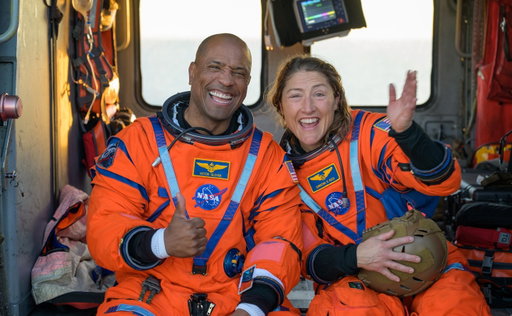
The Artemis II astronauts were all smiles on the flight deck of USS John P. Murtha after they were extracted from their Orion spacecraft following splashdown.
Image descriptions:
1. NASA astronaut Victor Glover (@AstroVicGlover), Artemis II pilot, left, and NASA astronaut Christina Koch (@Astro_Christina), Artemis II mission specialist are seen sitting on a Navy MH-60 Seahawk from Helicopter Sea Combat Squadron (HSC) 23 on the flight deck of USS John P. Murtha.
2. NASA astronaut Reid Wiseman (@Astro_Reid), Artemis II commander, left, and CSA (@CanadianSpaceAgency) astronaut Jeremy Hansen (@AstroJeremy), Artemis II mission specialist, are seen sitting on a Navy MH-60 Seahawk from Helicopter Sea Combat Squadron (HSC) 23 on the flight deck of USS John P. Murtha
Credit: NASA/Bill Ingalls

58.5M
3.95M
22.0K
6mo ago
nasa
Jesse, Steve, Laddy, and Vlad….such an incredible feeling to welcome you aboard Integrity after a nearly 700,000 mile journey. Forever thankful for your service to our crew and the nation.
57.3M
2.29M
8.40K
9mo ago
nasa
I'll see you on the far side of the Moon
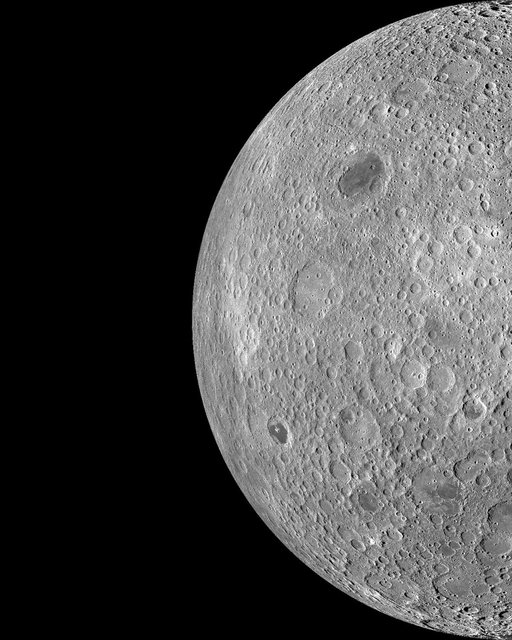
Our Moon takes about four weeks to rotate on its axis: exactly as long as it takes to orbit once around Earth. This phenomenon, known as tidal locking, means that we only ever see one side of the Moon (the near side) in the sky.
The other side of the Moon is often incorrectly called the "dark side"—it spends just as much time in the Sun, so calling it the far side is more accurate. Still, we had no idea what it looked like until spacecraft flew around the Moon in the 1950s and 1960s.
With images like this high-res mosaic taken by NASA's Lunar Reconnaissance Orbiter (between 2009 and 2011), we're getting a close-up look into the far side's mysteries. For example, the far side's surface has many more craters than the near side, with fewer lunar 'seas' of cooled lava.
Soon, our @NASAArtemis II astronauts will blast off on their mission around the Moon, where they'll get a firsthand look at the far side. We'll be bringing you their journey live; keep an eye on nasa.gov/artemis for the latest updates!
Image description: This two-image carousel shows off the Moon's far side, with one hemisphere in each image. Its gray surface is pockmarked with countless craters of various sizes. The background is completely black.
Credits: NASA/GSFC/Arizona State University
#NASA #Space #Moon #WishYouWereHere
54.8M
2.19M
7.31K
6mo ago
nasa
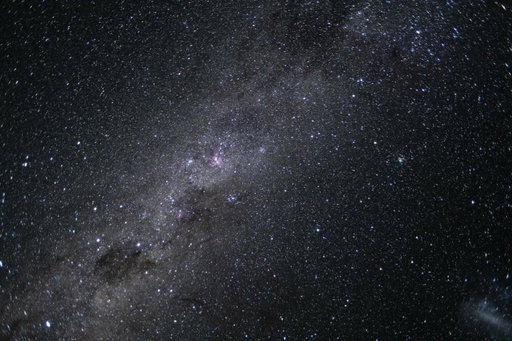
Sky full of stars.
Following a successful lunar flyby, the Artemis II astronauts captured this breathtaking photo of our galaxy, the Milky Way, on April 7, 2026.
Alt text: A starfield filled with thousands of stars and shining clouds of dust. The Milky Way’s elegant spiral structure is dominated by just two arms wrapping off the ends of a central bar of stars. Spanning more than 100,000 light-years, Earth is located along one of the galaxy’s spiral arms, about halfway from the center.
Credit: NASA
54.4M
2.18M
8.70K
6mo ago
nasa
Unbeatable aura 😎
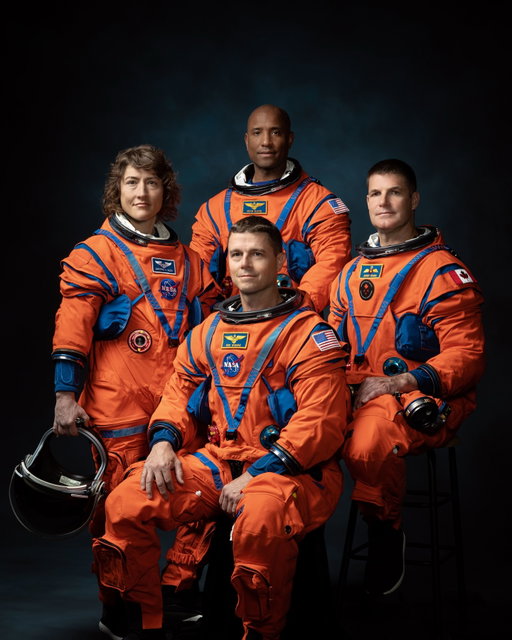
Swipe right to meet our Artemis II astronauts!
Up first is Reid Wiseman, the mission’s commander. As commander, he’s responsible for leading the crew aboard the flight. @astro_reid flew previously as a flight engineer aboard the International Space Station for Expedition 41.
Next is Victor Glover, the Artemis II pilot. He’s in charge of executing all spacecraft maneuvers. @astrovicglover previously served as pilot on NASA’s SpaceX Crew-1 mission and flight engineer aboard the space station for Expedition 64.
Third is Christina Koch, one of the two mission specialists. As mission specialist, she has trained for all roles to jump into action wherever needed. @astro_christina is a well-seasoned astronaut, having served as flight engineer for Expeditions 59, 60, and 61, and set the record for longest single spaceflight by a woman at 328 days.
Last, but not least, is Canadian Space Agency (CSA) astronaut Jeremy Hansen. Like Koch, he is a mission specialist, meaning he has trained for all roles. Artemis II is his first spaceflight, and @astrojeremy is the first Canadian to fly to the Moon.
Want to learn more about each member of the crew? Click the link in our bio!
Credit: NASA
#NASA #Artemis #Astronauts #AuraFarming
52.6M
2.11M
12.5K
6mo ago
nasa
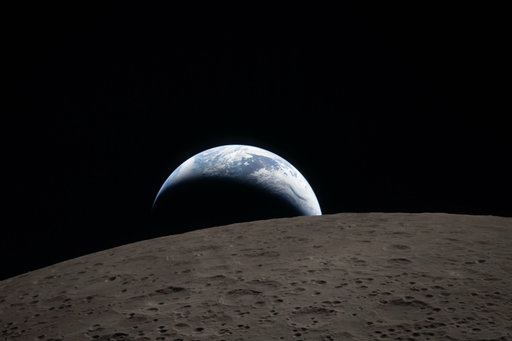
EARTHSET.
April 6, 2026.
Humanity, from the other side. First photo from the far side of the Moon. Captured from Orion as Earth dips beyond the lunar horizon. Photo: NASA
50.8M
1.14M
3.56K
7mo ago
nasa
NASA is increasing the cadence of future Artemis missions.
The Artemis III mission, now in 2027, will be designed to test out systems and operational capabilities in low Earth orbit as preparation for an Artemis IV landing in 2028. This new mission will endeavor to include a rendezvous and docking with one or both commercial landers from SpaceX and Blue Origin.
This change will accelerate the flight rate of the Artemis missions and enable a safer and more reliable launch cadence.
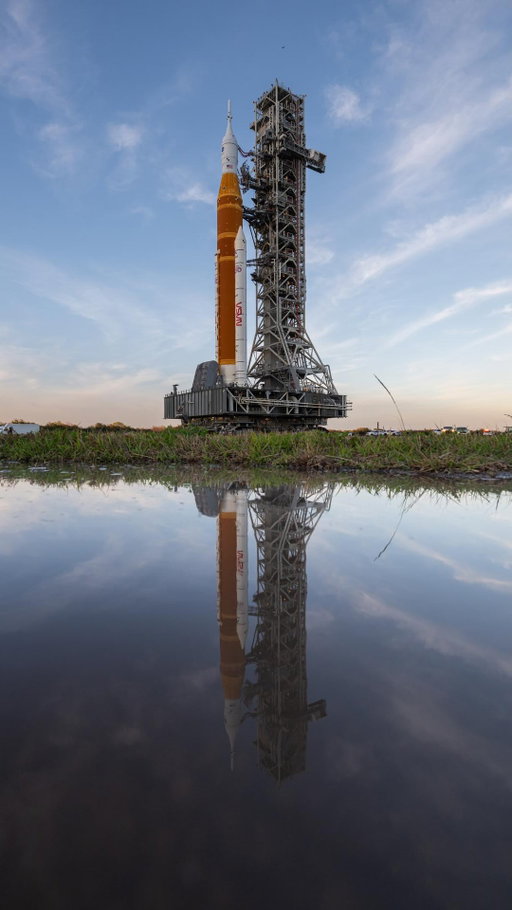
There will be no changes to the Artemis II mission. In this video, we see a timelapse of the Artemis II rocket and spacecraft rolling back to the Vehicle Assembly Building at @NASAKennedy atop of the crawler-transporter on Wednesday, Feb. 25. Teams will conduct work and repairs on the Artemis II vehicle before returning it to Launch Pad 39B to launch on its crewed mission around the Moon no earlier than April 2026.
Credit: NASA
Thumbnail Credit: NASA/John Kraus
48.0M
1.92M
9.55K
6mo ago
nasa
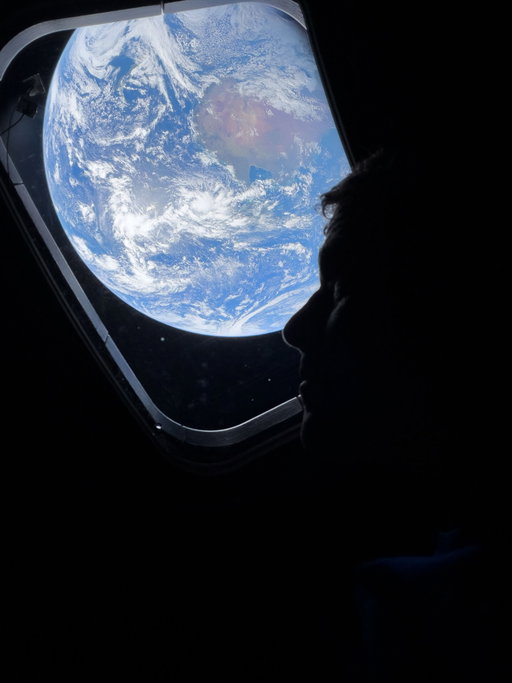
There are no words.
47.7M
3.97M
16.1K
6mo ago
nasa
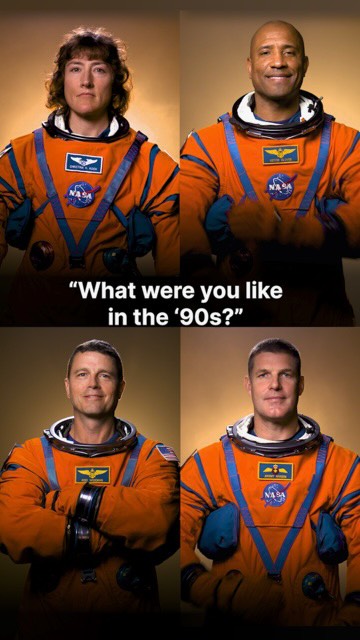
Tapping into the #90sChallenge with our Moon astronauts 🚀✨
As soon as April 1, the @NASAArtemis crew will journey around the Moon and back in their Orion spacecraft on an approximately 10-day mission. Artemis II will be the first crewed test of Space Launch System rocket and Orion spacecraft, testing the technologies we’ll need for long-term lunar exploration and human missions to Mars.
Credit: NASA
47.4M
1.90M
5.98K
4d ago
nasa
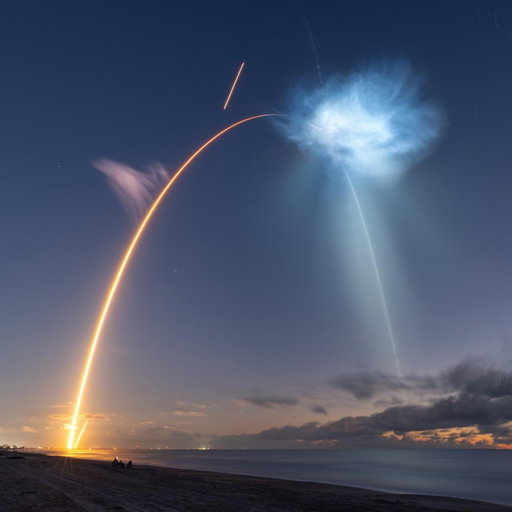
Space jellyfish! 🪼
When our SpaceX CRS-35 cargo mission launched the morning of Oct. 13, the exhaust plume became brightly lit by the Sun, creating a glowing jellyfish-like shape. This can also happen with a launch near sunset. Swipe through for more.
#NASA #Launch #Jellyfish
47.3M
1.89M
3.47K
2mo ago
nasa
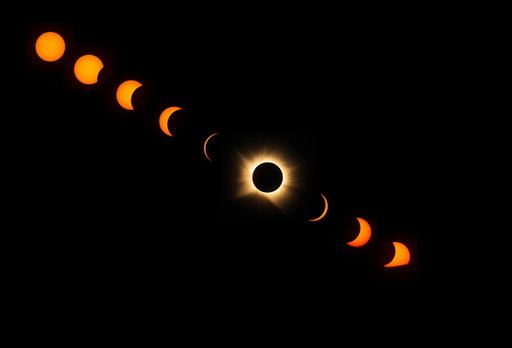
A dance of darkness and light
This composite image shows the total solar eclipse from beginning to end, as seen in San Millán de los Caballeros, Spain on Aug. 12, 2026.
While eclipses are beautiful and magical to experience, they're also a great opportunity for science. Total solar eclipses are particularly important because they allow scientists to see a part of the Sun’s atmosphere known as the corona. The corona is too faint to see except when the bright light of the Sun is blocked.
Studying the corona is key to answering important questions about how heat and energy are transferred from the Sun out into the solar wind, the constant stream of particles that the Sun spews into the solar system.
Credit: NASA
#NASA #Sun #SolarEclipse #Moon
NASA (@nasa) Instagram Stats & Analytics
NASA (@nasa) has 104M Instagram followers with a 4.59% engagement rate over the past 12 months. Across 436 posts, NASA received 237M total likes and 5.70B impressions, averaging 543K likes per post. This page tracks NASA's performance metrics, top content, and engagement trends — updated daily. To benchmark @nasa against other accounts, use Socialpruf's Instagram competitor analysis tool.
NASA (@nasa) Instagram Analytics FAQ
How many Instagram followers does NASA have?+
NASA (@nasa) has 104M Instagram followers as of October 2026.
What is NASA's Instagram engagement rate?+
NASA's Instagram engagement rate is 4.59% over the last 12 months, based on 436 posts.
How many likes does NASA get on Instagram?+
NASA received 237M total likes across 436 posts in the last 12 months, averaging 543K likes per post.
How many Instagram impressions does NASA get?+
NASA's Instagram content generated 5.70B total impressions over the last 12 months.
Can I compare NASA with other Instagram accounts?+
Yes. Add @nasa to a competitor set with Socialpruf's Instagram competitor analysis tool and benchmark it side by side with any other public accounts on views, engagement rate and follower growth, with history back to each account's first post.