NewGet @scottdclary's full report

instagram analytics
Similar Accounts:
instagram analytics
Similar Accounts:
followers
2.14M
impressions
143M
likes
5.02M
comments
120K
posts
1.47K
engagement
2.91%
emv
$4.27M
Average per post
97.3K
Key Metrics
Impressions
monthly
Distributions
Content
5.72M
229K
452
7mo ago

scottdclary
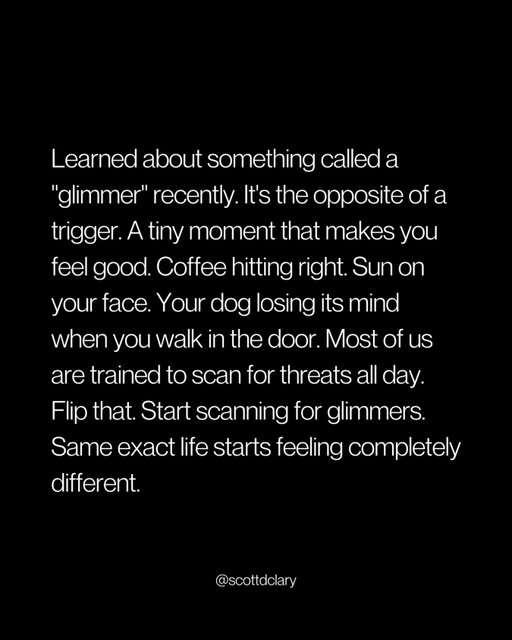
I used to think being sharp meant spotting every problem in the room.
Turns out I was just training my brain to find things wrong with my life.
Then someone told me about “glimmers.” The opposite of triggers. Tiny moments that quietly make everything feel fine.
Not big wins. Not milestones.
Your first sip of coffee. Sun cutting through the window. Your dog acting like you’ve been gone for six months.
You don’t need a new life.
You need new pattern recognition.
—
I write a weekly newsletter where I unpack these ideas.
→ newsletter.scottdclary.com
4.96M
52.5K
452
9mo ago

scottdclary
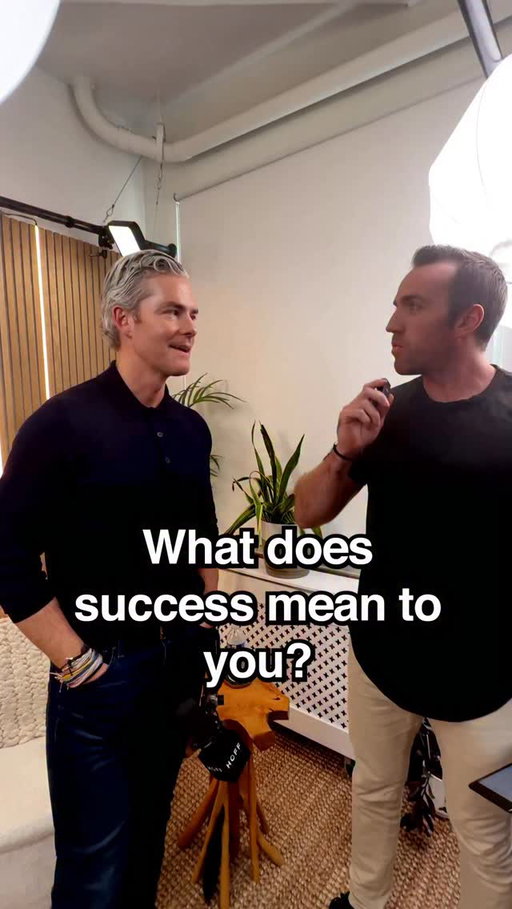
Ryan Serhant has sold $20 billion in real estate. Here’s what he learned along the way.
Comment SERHANT to watch the full podcast.
#realestate #entrepreneur #success
3.18M
127K
560
11mo ago
scottdclary
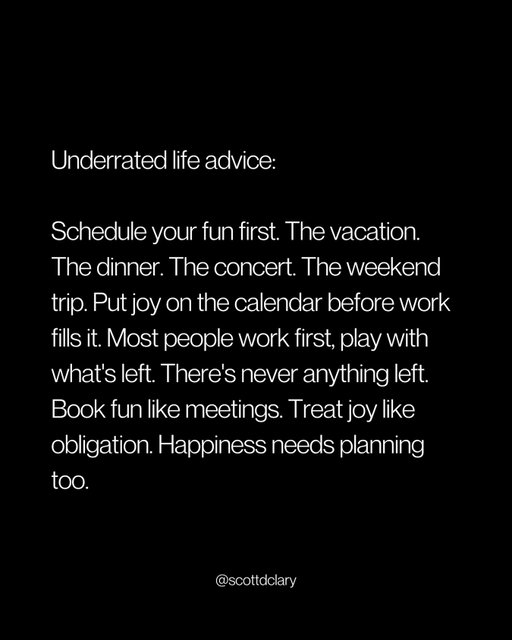
Most people work first and play with what’s left.
There’s never anything left.
That’s not an accident. That’s the default.
Work will always expand to fill the space you give it.
So stop giving it all the space.
Schedule the fun first:
→ Book the vacation
→ Buy the concert tickets
→ Plan the weekend trip
→ Lock in the dinner
Then let work figure itself out around it.
I used to do this backwards.
“I’ll take time off when things slow down.”
Things never slowed down.
Now I book the trip first. Work adjusts.
Because here’s what actually happens:
If fun isn’t on the calendar, it doesn’t happen.
You tell yourself “next month” until next month becomes next year.
Treat joy like a meeting.
Put it in the calendar. Protect it. Show up for it.
Happiness doesn’t happen in the gaps.
It happens when you plan for it.
Book fun like it’s mandatory.
Because it is.
—
I write a weekly newsletter where I unpack these ideas.
Comment “newsletter” and I’ll DM you the link.
→ newsletter.scottdclary.com

2.09M
11.4K
124
10mo ago
scottdclary
Jules Coley (JustJules) has built 5 million subscribers and 5 billion views in less than two years — not from some viral strategy or lucky algorithm break, but from posting 2,300+ videos since April 2023 while most 16-year-olds are just figuring out high school. She’s tested formats, stayed relentlessly consistent, and kept creating when nobody was watching more times than most creators ever upload once. That’s not talent. That’s just what happens when you start at 14 and refuse to stop.
Comment JULES to watch the full podcast.
#youtube #contentcreator #entrepreneur
1.89M
75.5K
655
12mo ago
scottdclary
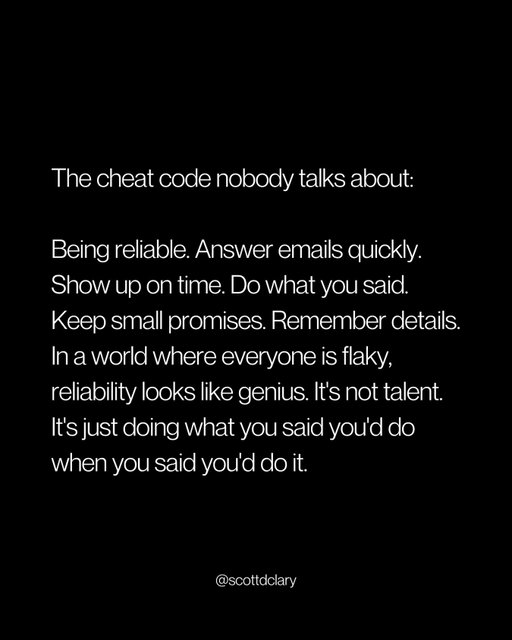
The actual cheat code:
Be reliable.
That’s it.
Answer emails quickly. Show up on time. Do what you said. Keep the small promises. Remember the details.
Everyone else is flaky.
They’re late. They forget. They disappear. They say they’ll do something and then just... don’t.
So when you actually do what you said you’d do, you look like a genius.
You’re not.
You’re just reliable.
I’ve gotten more opportunities from being on time than from being talented.
More trust from following through than from being smart.
More respect from remembering someone’s name than from any credential.
Reliability isn’t sexy. Nobody’s making courses about it.
But in a world where everyone overpromises and underdelivers, just doing what you said becomes your unfair advantage.
Show up. Follow through. Remember.
That’s the whole strategy.
—
I write a weekly newsletter where I unpack these ideas.
Comment “newsletter” and I’ll DM you the link.
→ newsletter.scottdclary.com
1.87M
74.9K
261
9mo ago
scottdclary
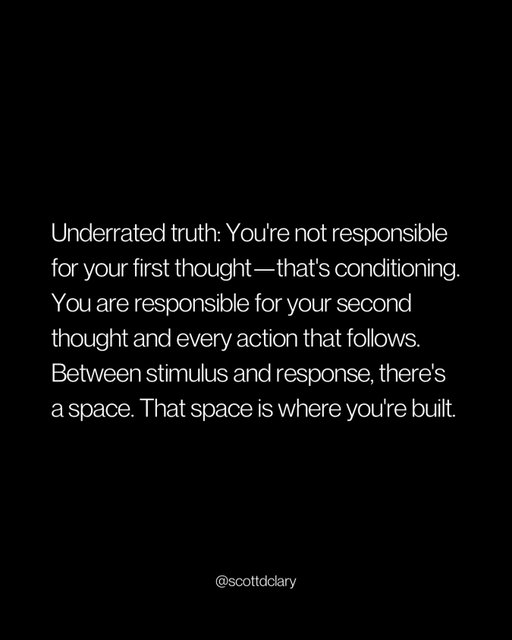
Your first thought isn’t really yours.
It’s your parents. Your environment. Every experience that shaped you before you had a say in it.
The angry reaction. The jealous impulse. The insecure assumption. That’s just programming running on autopilot.
You didn’t choose it. You’re not responsible for it.
But the second thought? That one’s on you.
That’s the moment where you decide whether to follow the impulse or override it. React or respond. Be the person you were conditioned to be or the person you’re trying to become.
Most people never realize there’s a gap there. Stimulus happens, reaction follows, and they assume that’s just “who they are.”
It’s not. It’s just who they were trained to be.
The gap between the first thought and the second is small. Maybe a few seconds. But that’s where everything gets decided. That’s where you’re actually built.
You can’t control what shows up in your head. You can control what you do next.
—
I write a weekly newsletter where I unpack these ideas.
Comment “newsletter” and I’ll DM you the link.
→ newsletter.scottdclary.com
1.84M
73.7K
353
11mo ago
scottdclary
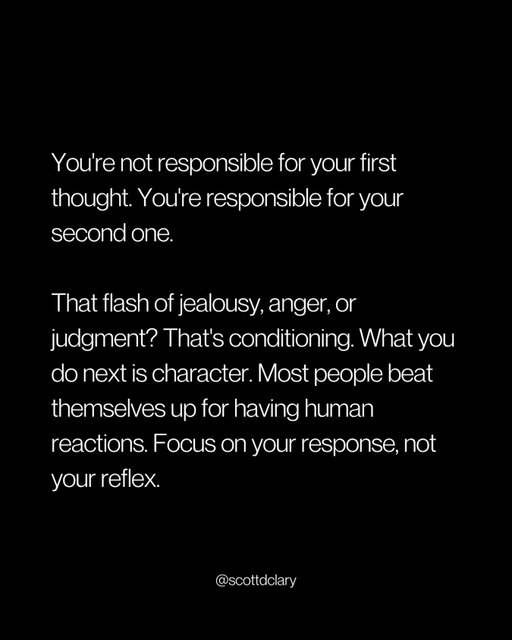
I used to feel guilty about negative thoughts.
Jealousy. Anger. Judgment.
Then I realized something:
You’re not responsible for your first thought. You’re responsible for your second one.
That flash of jealousy when someone wins? That’s conditioning. Years of it.
What you do next is character.
Most people beat themselves up for having human reactions.
That’s a waste of energy.
You can’t control the reflex. You can control the response.
Focus on the second thought. That’s the only one that matters.
—
I write a weekly newsletter where I unpack these ideas.
Comment “newsletter” and I’ll DM you the link.
→ newsletter.scottdclary.com
1.72M
68.7K
184
6mo ago
scottdclary
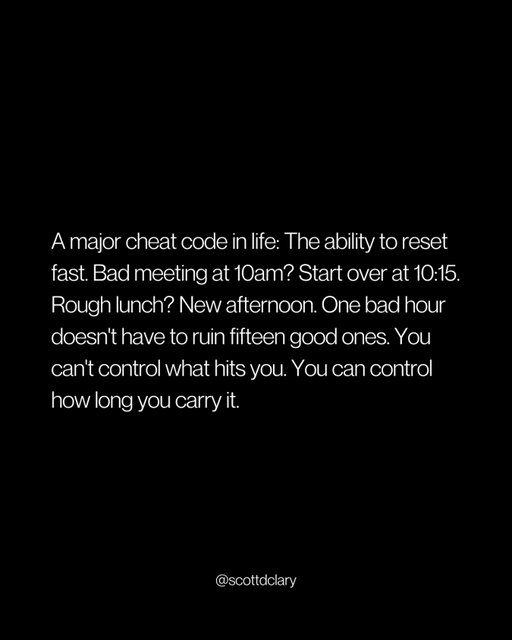
Most people let one bad hour bleed into the next fifteen.
A tough call at 10am becomes a wasted morning.
A rough lunch becomes a thrown-away afternoon.
The highest performers I know do something different.
They reset fast.
Not because they don’t feel it.
Because they refuse to let one moment set the tone for every moment after it.
Bad meeting? Start fresh at the next one.
Awkward conversation? New chapter begins when it ends.
You can’t control what hits you.
You can control how long you carry it.
That skill alone will separate you from 95% of people.
—
I write a weekly newsletter where I unpack these ideas.
Comment “newsletter” and I’ll DM you the link.
→ newsletter.scottdclary.com
1.55M
62.2K
334
11mo ago
scottdclary
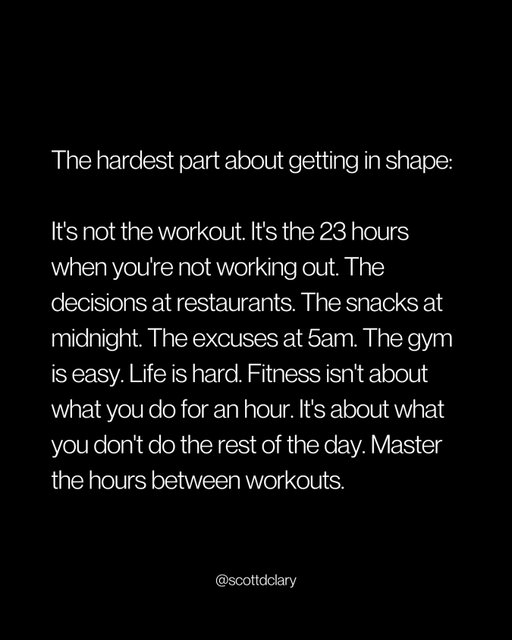
Getting in shape isn’t hard because of the workout.
It’s hard because of the other 23 hours.
The restaurant menu. The midnight snack. The 5am excuse.
The gym is the easy part.
It’s one hour. You show up. You lift. You leave.
Life is the hard part.
→ Saying no at dinner
→ Not eating the thing at 11pm
→ Getting up when you don’t want to
I can get anyone to work out.
Getting them to not fuck it up the rest of the day? That’s the real work.
Fitness isn’t what you do for an hour.
It’s what you don’t do for the other 23.
Master the hours between workouts.
That’s where you actually get in shape.
—
I write a weekly newsletter where I unpack these ideas.
Comment “newsletter” and I’ll DM you the link.
→ newsletter.scottdclary.com
1.46M
58.3K
365
11mo ago
scottdclary
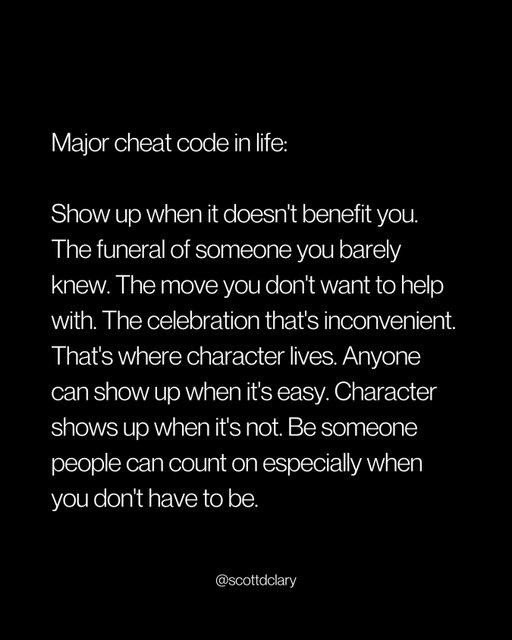
Character shows up when there’s nothing in it for you.
The funeral of someone you barely knew.
The friend’s move you don’t want to help with.
The celebration that messes up your weekend.
That’s where you find out who you actually are.
Showing up when it benefits you is easy. Everyone does that.
Showing up when it costs you something? That’s different.
I’ve skipped things I should’ve shown up for.
Told myself I was too busy. That it didn’t really matter. That they’d understand.
They did understand. But they also remembered.
And I’ve had people show up for me when they didn’t have to.
Drove three hours for something that meant nothing to them but everything to me.
I never forgot that either.
Here’s what most people miss:
→ Relationships aren’t built in the convenient moments
→ They’re built in the inconvenient ones
Anyone can show up when it’s easy.
Be someone people can count on when it’s not.
That’s the whole reputation.
—
I write a weekly newsletter where I unpack these ideas.
Comment “newsletter” and I’ll DM you the link.
→ newsletter.scottdclary.com
1.43M
44.3K
1.24K
11mo ago
scottdclary
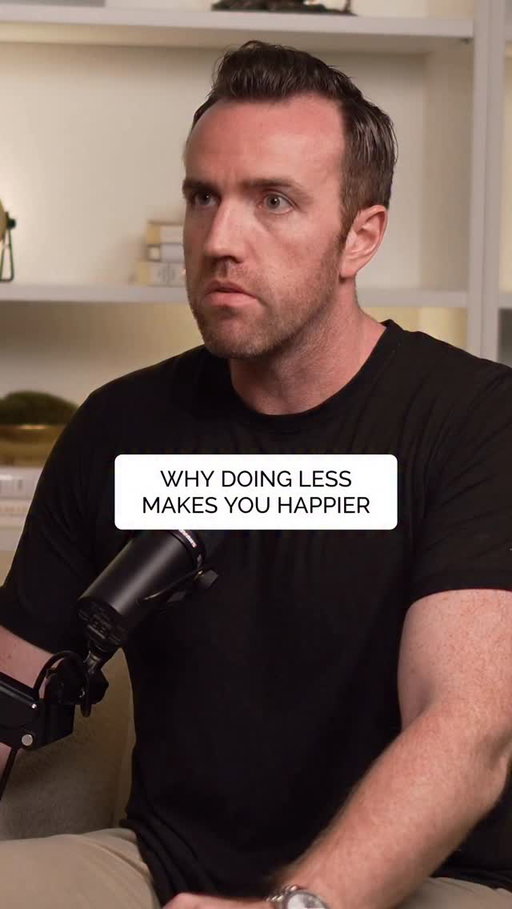
For years I thought the answer was more.
More goals. More habits. More systems.
Then I looked at the happiest people I know.
They weren’t doing more. They were doing less.
Fewer goals. Fewer appointments. Fewer obligations.
I used to think that was lazy.
Now I realize they just understood something I didn’t.
Most of what I was chasing didn’t actually move the needle. It just made me feel busy.
So I started subtracting.
I cut goals that looked good but didn’t matter. I stopped saying yes to things I’d later resent. I deleted apps, commitments, and “opportunities” that were really just distractions.
Here’s what happened:
Less anxiety. More clarity. Better output on the stuff that actually counts.
Busy is a choice. Peace is too.
One looks successful. The other actually is.
If your calendar is full but your life feels empty, you don’t need a better system.
You need less.
—
I write a weekly newsletter where I unpack these ideas.
Comment “newsletter” and I’ll DM you the link.
→ newsletter.scottdclary.com
1.42M
56.9K
458
9mo ago
scottdclary
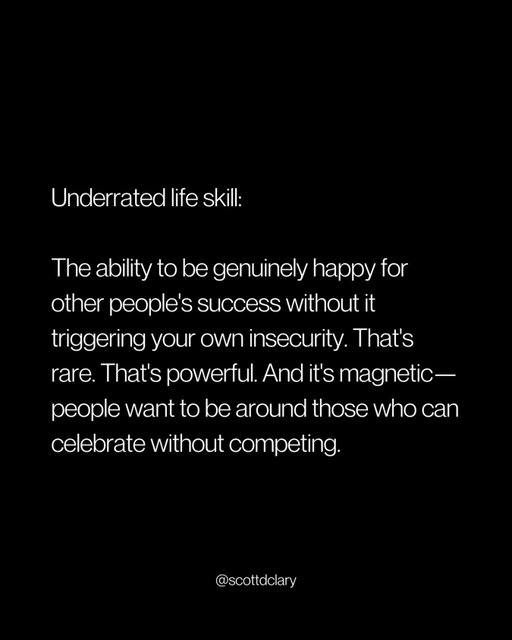
Being happy for other people’s success is a skill most people never develop.
Someone gets the promotion, the deal, the win—and instead of celebrating, you feel that little twist in your stomach. You smile, say congrats, but internally you’re doing math on why it should’ve been you.
That reaction is normal. It’s also expensive.
Here’s what I’ve noticed. The most successful people I know are genuinely excited when others win. No performance. No hidden resentment. They actually mean it.
Why? Because they’re not playing a finite game. Someone else winning doesn’t mean they lose. There’s not a limited supply of success being handed out.
When you can celebrate without competing, something shifts.
→ People tell you about opportunities
→ People want to collaborate with you
→ People root for you back
Resentment repels. Genuine support attracts.
It’s not about being selfless. It’s about understanding that bitter people end up alone and optimistic people end up connected.
The ability to clap for others without keeping score is rare. That’s exactly why it’s valuable.
—
I write a weekly newsletter where I unpack these ideas.
Comment “newsletter” and I’ll DM you the link.
→ newsletter.scottdclary.com
1.40M
56.0K
353
10mo ago
scottdclary
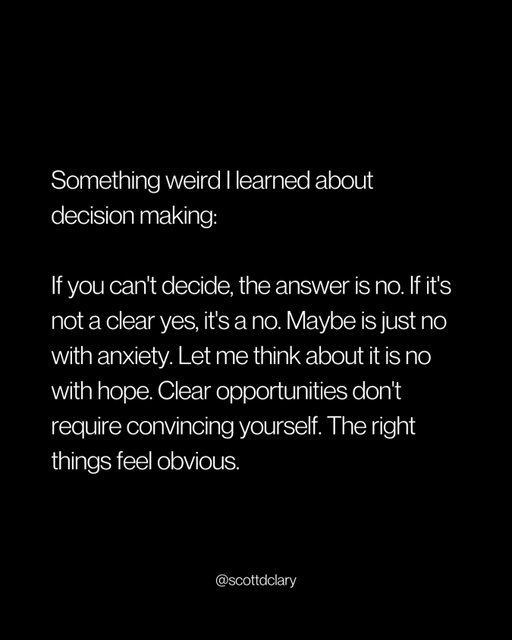
The best decision-making filter I’ve found:
If it’s not a clear yes, it’s a no.
“Maybe” is just no with anxiety.
“Let me think about it” is no with false hope.
“I’m not sure” is no dressed up as open-mindedness.
Real opportunities don’t require convincing yourself. You don’t lay awake weighing pros and cons. You don’t need a spreadsheet.
The right things feel obvious. The wrong things feel like negotiation.
If you’re trying to talk yourself into it, you already have your answer.
—
I write a weekly newsletter where I unpack these ideas.
Comment “newsletter” and I’ll DM you the link.
→ newsletter.scottdclary.com
1.27M
50.7K
179
7mo ago
scottdclary
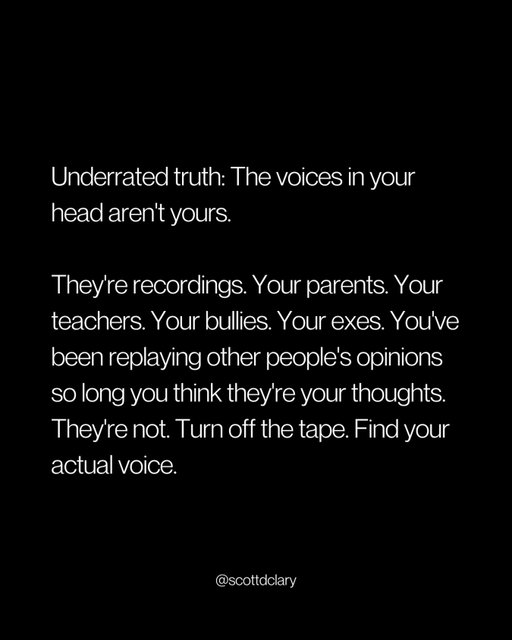
Most people think they have an inner critic.
They don’t.
They have an inner playlist of everyone who ever made them feel small.
Parents. Teachers. Exes. Bosses.
Hit pause.
Ask yourself one question:
“If no one had ever told me who to be, what would I choose right now?”
That answer is your real voice.
Start listening to it.
—
I write a weekly newsletter where I unpack these ideas.
→ newsletter.scottdclary.com
1.23M
49.3K
289
10mo ago
scottdclary
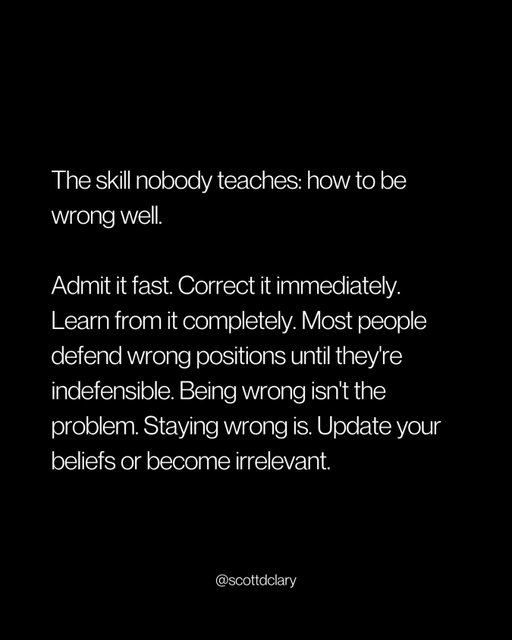
Being wrong isn’t the problem.
Staying wrong is.
I watch people defend bad decisions for years.
Relationships they know aren’t working.
Opinions they formed at 22 and never updated.
Beliefs they hold just because admitting they changed feels like losing.
It’s not losing. It’s growing.
But most people never learned how to be wrong well.
So they do it badly:
→ Deny it
→ Deflect it
→ Defend it until it’s embarrassing
The best people I know do the opposite.
Wrong on Monday. Corrected by Tuesday. Moved on by Wednesday.
No ego. No drama.
Just: “That was wrong. Here’s what’s next.”
I held onto opinions for years just because they were mine.
Defended them past the point of reason.
Then finally changed my mind and realized nobody cared.
They only noticed I was smarter now.
Your beliefs should update as fast as new information comes in.
That’s the advantage.
Not being right more often.
Being wrong for shorter.
—
I write a weekly newsletter where I unpack these ideas.
Comment “newsletter” and I’ll DM you the link.
→ newsletter.scottdclary.com
1.10M
44.1K
328
11mo ago
scottdclary
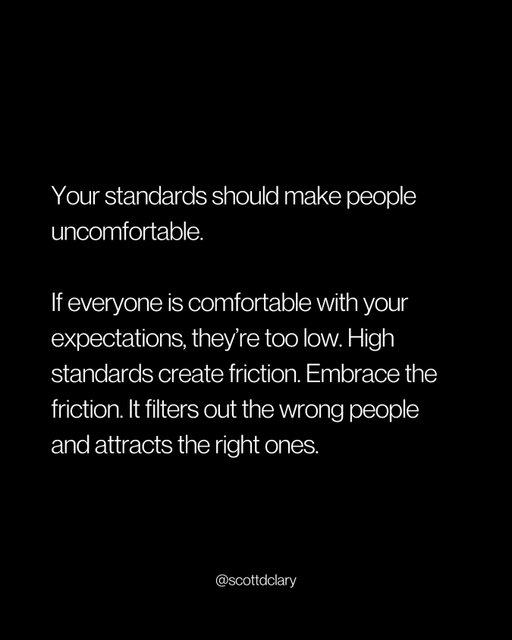
Your standards should make some people uncomfortable.
If everyone loves your expectations, they’re too low.
High standards aren’t mean. They’re just a filter.
Most people spend their whole lives lowering standards to keep the peace.
Accepting mediocre work. Tolerating flakiness. Letting things slide.
Then they wonder why they’re surrounded by mediocre, flaky people.
Your standards don’t just affect the work.
They determine who sticks around.
Low standards attract people who want to do the minimum.
High standards attract people who want to do their best work.
It’s that simple.
Some people will call you demanding. Unreasonable. Too much.
Let them.
They were never going to meet the standard anyway.
The people who can rise to it don’t complain about the bar being high.
They just clear it.
Stop apologizing for expecting excellence.
The right people appreciate it.
—
I write a weekly newsletter where I unpack these ideas.
→ newsletter.scottdclary.com
1.08M
43.1K
226
9mo ago
scottdclary
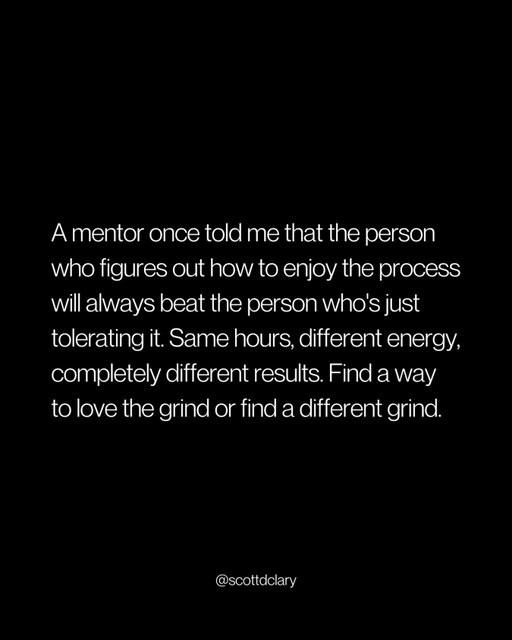
Hating your work is an expensive problem.
Not just emotionally. Strategically.
Two people can put in identical hours on identical tasks. One drags through it waiting for Friday. The other is genuinely curious about getting better.
After a year, they’re not even in the same category anymore.
The person tolerating the work does the minimum required. The person enjoying it tinkers on weekends. Reads about it for fun. Notices things others miss.
That gap compounds fast.
And here’s what most people get wrong. They think discipline fixes this. Just push harder. Want it more.
It doesn’t. Discipline is a patch, not a solution. You can’t outwork someone who’s having fun.
If the daily reality of your work drains you, that’s not a mindset problem. That’s a fit problem.
The goal isn’t to tolerate a better life. It’s to build one you don’t need to tolerate.
—
I write a weekly newsletter where I unpack these ideas.
Comment “newsletter” and I’ll DM you the link.
→ newsletter.scottdclary.com
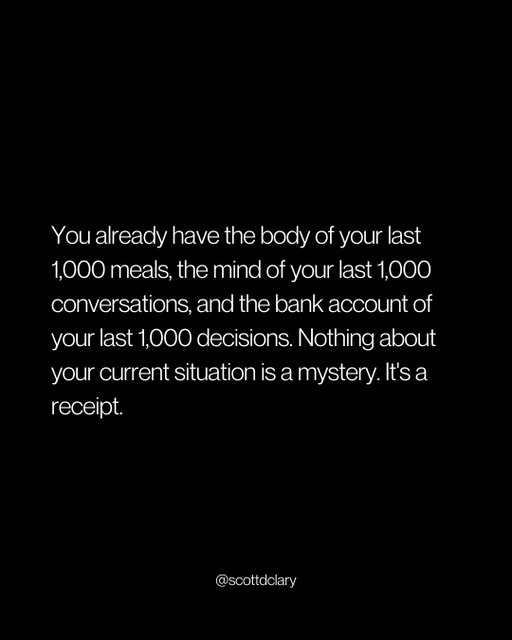
1.06M
42.6K
483
2mo ago
scottdclary
Nobody's stuck. Nobody's unlucky. You just haven't changed the inputs yet.
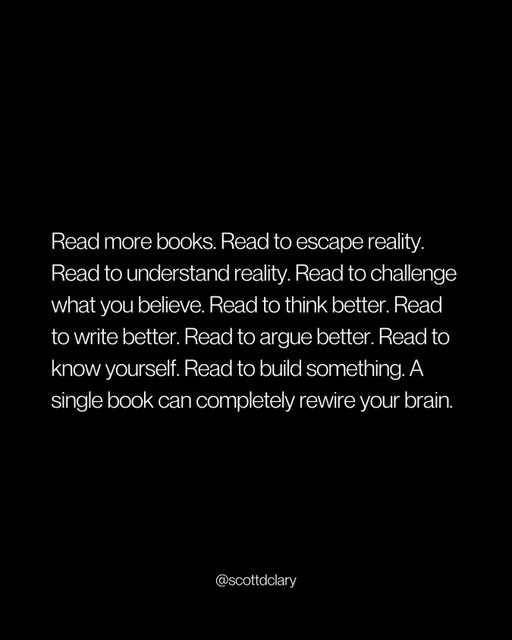
1.05M
41.9K
184
6mo ago
scottdclary
Read more books.
Read to escape reality.
Read to understand reality.
Read to challenge what you believe.
Read to think better.
Read to write better.
Read to argue better.
Read to know yourself.
Read to build something.
A single book can completely rewire your brain.
Not because it gives you answers. Because it gives you better questions.
Better questions lead to better decisions. Better decisions compound over years. That’s how one book at the right time changes everything.
Stop scrolling. Start reading.
—
I write a weekly newsletter where I unpack these ideas.
→ newsletter.scottdclary.com
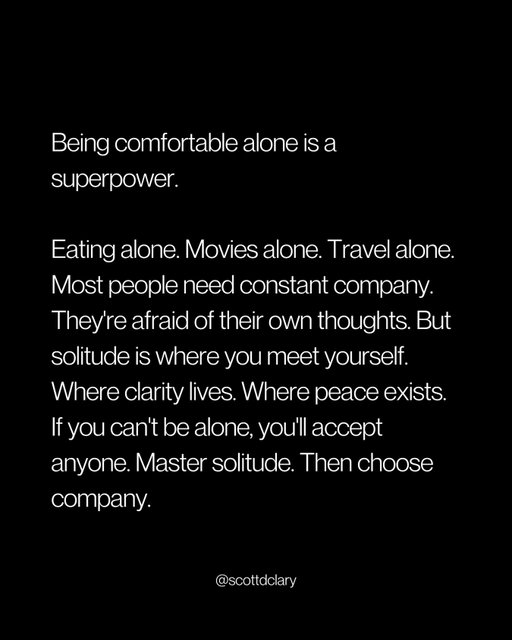
1.04M
41.5K
478
12mo ago
scottdclary
If you can’t be alone, you’ll settle for anyone.
Not a metaphor. Just math.
People who can’t eat dinner alone stay in bad relationships.
People who need constant company accept shitty friends.
People who can’t travel solo never learn what they actually want.
You’re not avoiding loneliness. You’re avoiding yourself.
And that avoidance costs you:
• You tolerate people who drain you
• You need validation for every choice
• You confuse “not alone” with “happy”
I spent years like this. Always had plans. Always had people around.
Took me way too long to realize I was just scared of my own thoughts.
Here’s the test: Can you spend Saturday alone without feeling like something’s wrong?
If not, you don’t have a social life. You have a distraction habit.
Being comfortable alone doesn’t make you antisocial.
It makes you selective.
The best relationships I have now? Started after I stopped needing them.
Master being alone.
Then pick people who make it better, not just different.
Scott Clary | Success Story Podcast (@scottdclary) Instagram Stats & Analytics
Scott Clary | Success Story Podcast (@scottdclary) has 2.14M Instagram followers with a 2.91% engagement rate over the past 12 months. Across 1.47K posts, Scott Clary | Success Story Podcast received 5.02M total likes and 143M impressions, averaging 3.42K likes per post. This page tracks Scott Clary | Success Story Podcast's performance metrics, top content, and engagement trends — updated daily. To benchmark @scottdclary against other accounts, use Socialpruf's Instagram competitor analysis tool.
Scott Clary | Success Story Podcast (@scottdclary) Instagram Analytics FAQ
How many Instagram followers does Scott Clary | Success Story Podcast have?+
Scott Clary | Success Story Podcast (@scottdclary) has 2.14M Instagram followers as of October 2026.
What is Scott Clary | Success Story Podcast's Instagram engagement rate?+
Scott Clary | Success Story Podcast's Instagram engagement rate is 2.91% over the last 12 months, based on 1.47K posts.
How many likes does Scott Clary | Success Story Podcast get on Instagram?+
Scott Clary | Success Story Podcast received 5.02M total likes across 1.47K posts in the last 12 months, averaging 3.42K likes per post.
How many Instagram impressions does Scott Clary | Success Story Podcast get?+
Scott Clary | Success Story Podcast's Instagram content generated 143M total impressions over the last 12 months.
Can I compare Scott Clary | Success Story Podcast with other Instagram accounts?+
Yes. Add @scottdclary to a competitor set with Socialpruf's Instagram competitor analysis tool and benchmark it side by side with any other public accounts on views, engagement rate and follower growth, with history back to each account's first post.