Americans are carrying a record $1.25 trillion in credit-card debt, the highest Q1 balance since tracking began in 1999.
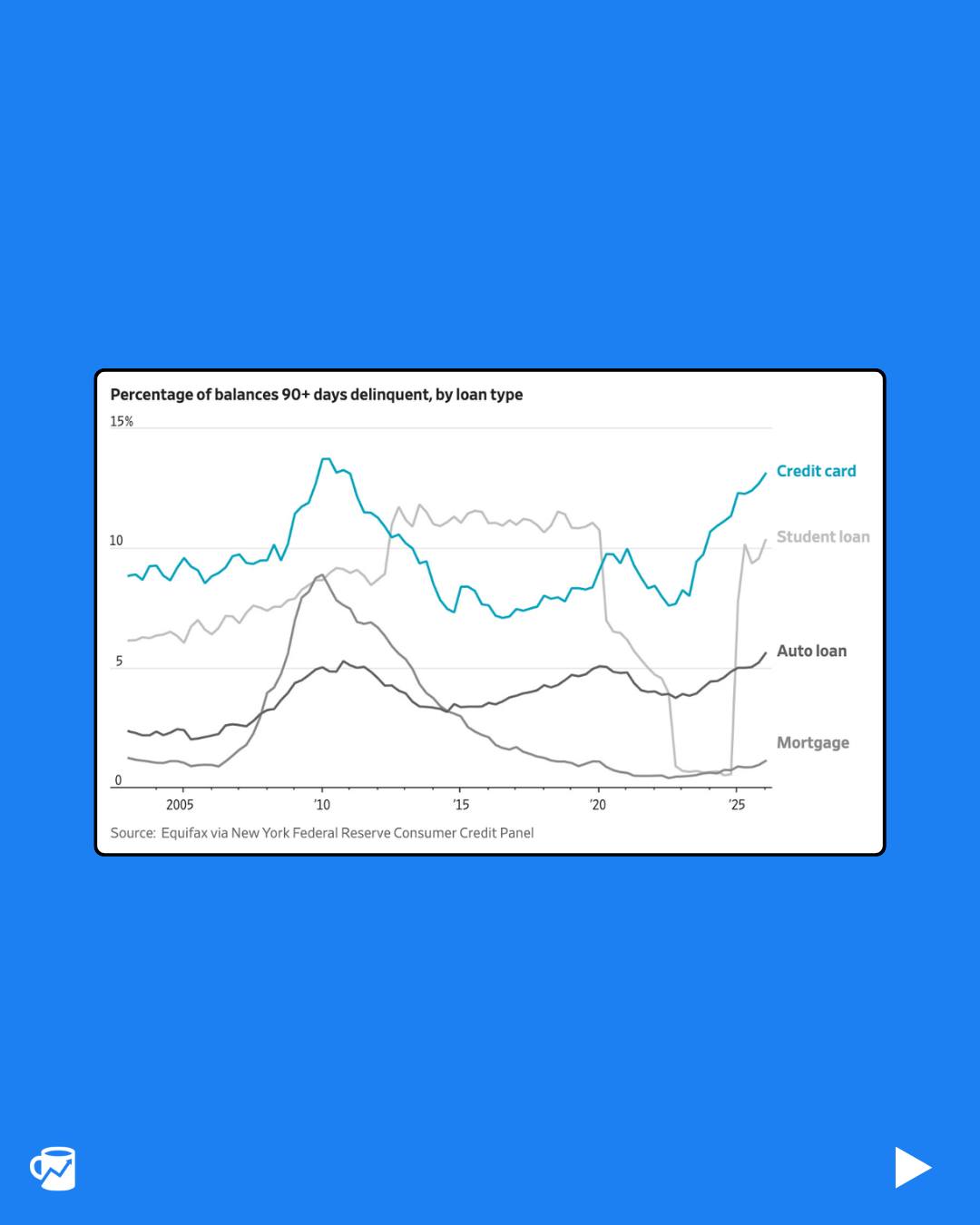
And more of them are falling behind on payments than at any point since the aftermath of the 2008 financial crisis, per NY Fed data. The share of credit-card balances that are at least 90 days delinquent hit 13.1% in Q1, while average card interest rates have climbed from 14.6% in early 2022 to roughly 21% today, per a WSJ report. As inflation continues to squeeze household budgets, many consumers are prioritizing rent, mortgages, car payments, and utilities, leaving credit-card bills at the bottom of the pile.
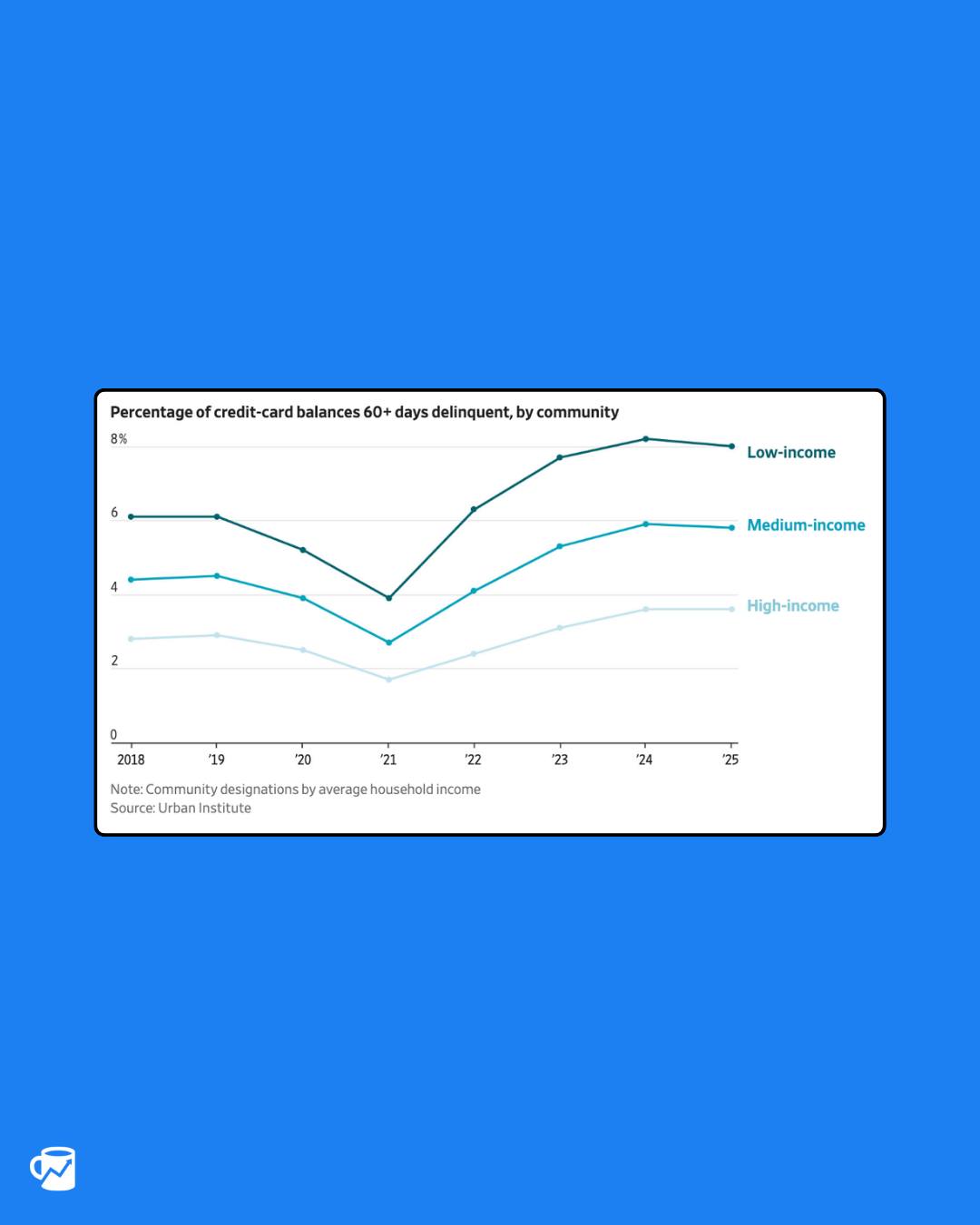
And the problem isn't confined to low-income households. Delinquency rates have risen across income brackets, and credit counselors say more middle-class families are using credit cards to cover everyday expenses rather than discretionary spending.
There is a silver lining, though. Many borrowers have found relief through credit-counseling programs that negotiated lower interest rates and structured repayment plans. But even those who paid off their balances say the experience left them feeling financially fragile, a reminder that for many Americans, one unexpected expense could reignite the debt cycle.
📸: Walt Disney Studios Motion Pictures, WSJ
Americans are carrying a record $1.25 trillion in credit-card debt, the highest Q1 balance since tracking began in 1999.
And more of them are falling behind on payments than at any point since the aftermath of the 2008 financial crisis, per NY Fed data. The share of credit-card balances that are at least 90 days delinquent hit 13.1% in Q1, while average card interest rates have climbed from 14.6% in early 2022 to roughly 21% today, per a WSJ report. As inflation continues to squeeze household budgets, many consumers are prioritizing rent, mortgages, car payments, and utilities, leaving credit-card bills at the bottom of the pile.
And the problem isn't confined to low-income households. Delinquency rates have risen across income brackets, and credit counselors say more middle-class families are using credit cards to cover everyday expenses rather than discretionary spending.
There is a silver lining, though. Many borrowers have found relief through credit-counseling programs that negotiated lower interest rates and structured repayment plans. But even those who paid off their balances say the experience left them feeling financially fragile, a reminder that for many Americans, one unexpected expense could reignite the debt cycle.
📸: Walt Disney Studios Motion Pictures, WSJ