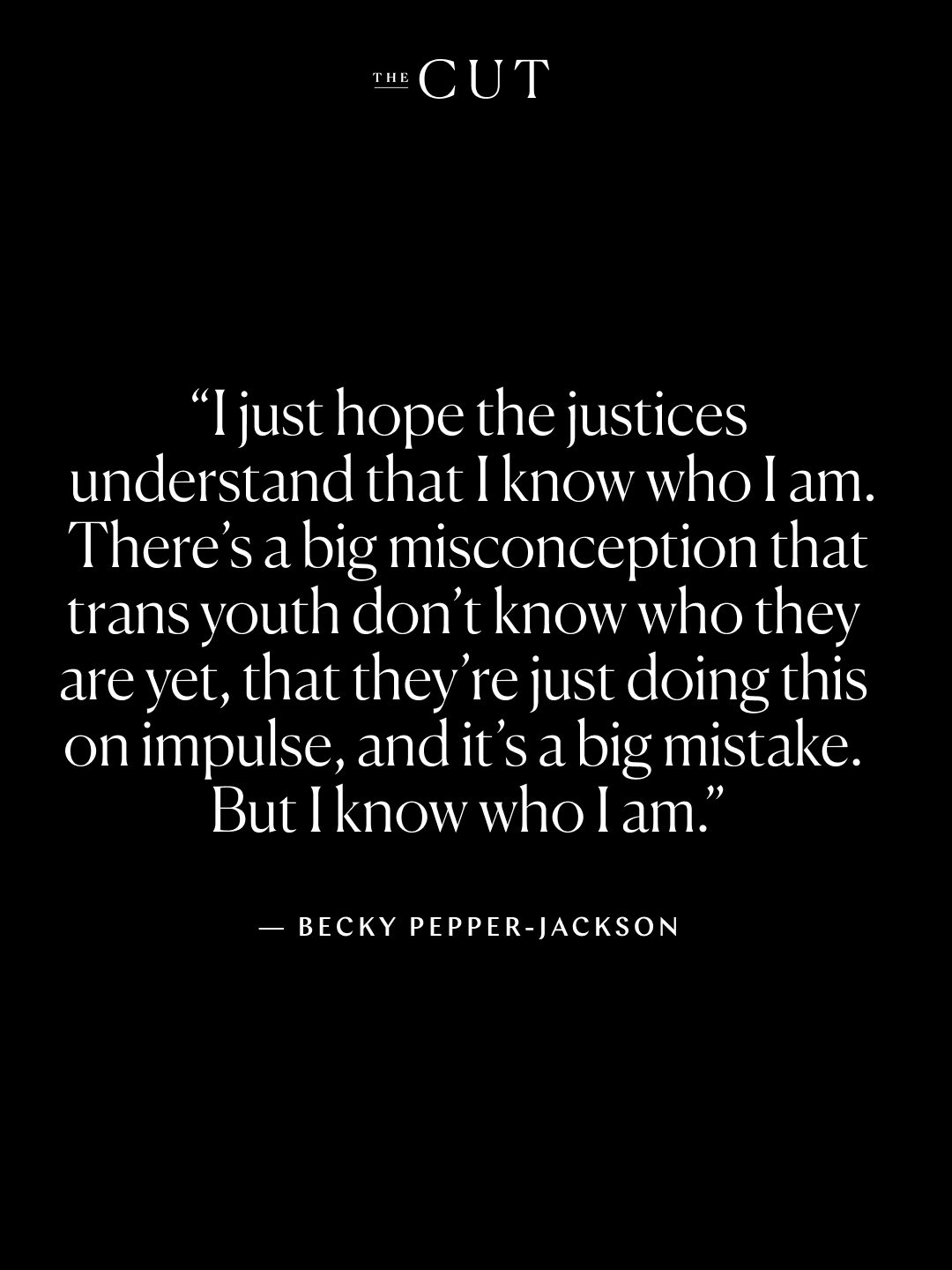
This morning, the Supreme Court ruled that states can ban trans athletes from participating in girls’ and women’s sports teams. The ruling comes six months after 15-year-old Becky Pepper-Jackson sat before the Court while the justices debated whether she should be allowed to participate on her West Virginia high-school girls’ track-and-field team.
It was the climax of a nearly five-year-long legal battle that Pepper-Jackson has been fighting since her home state passed HB 3293, which banned trans girls and women from participating on sports teams that align with their gender identity. In practice, that law has affected exactly one known athlete: Pepper-Jackson.
At the link in bio, revisit Molly Longman’s (@mollythemess) January interview with Pepper-Jackson about what it feels like to be at the center of such an intensely political case, the surreality of watching the Supreme Court argue about her ability to do the sport she loves, and what comes next for her.
This morning, the Supreme Court ruled that states can ban trans athletes from participating in girls’ and women’s sports teams. The ruling comes six months after 15-year-old Becky Pepper-Jackson sat before the Court while the justices debated whether she should be allowed to participate on her West Virginia high-school girls’ track-and-field team.
It was the climax of a nearly five-year-long legal battle that Pepper-Jackson has been fighting since her home state passed HB 3293, which banned trans girls and women from participating on sports teams that align with their gender identity. In practice, that law has affected exactly one known athlete: Pepper-Jackson.
At the link in bio, revisit Molly Longman’s (@mollythemess) January interview with Pepper-Jackson about what it feels like to be at the center of such an intensely political case, the surreality of watching the Supreme Court argue about her ability to do the sport she loves, and what comes next for her.