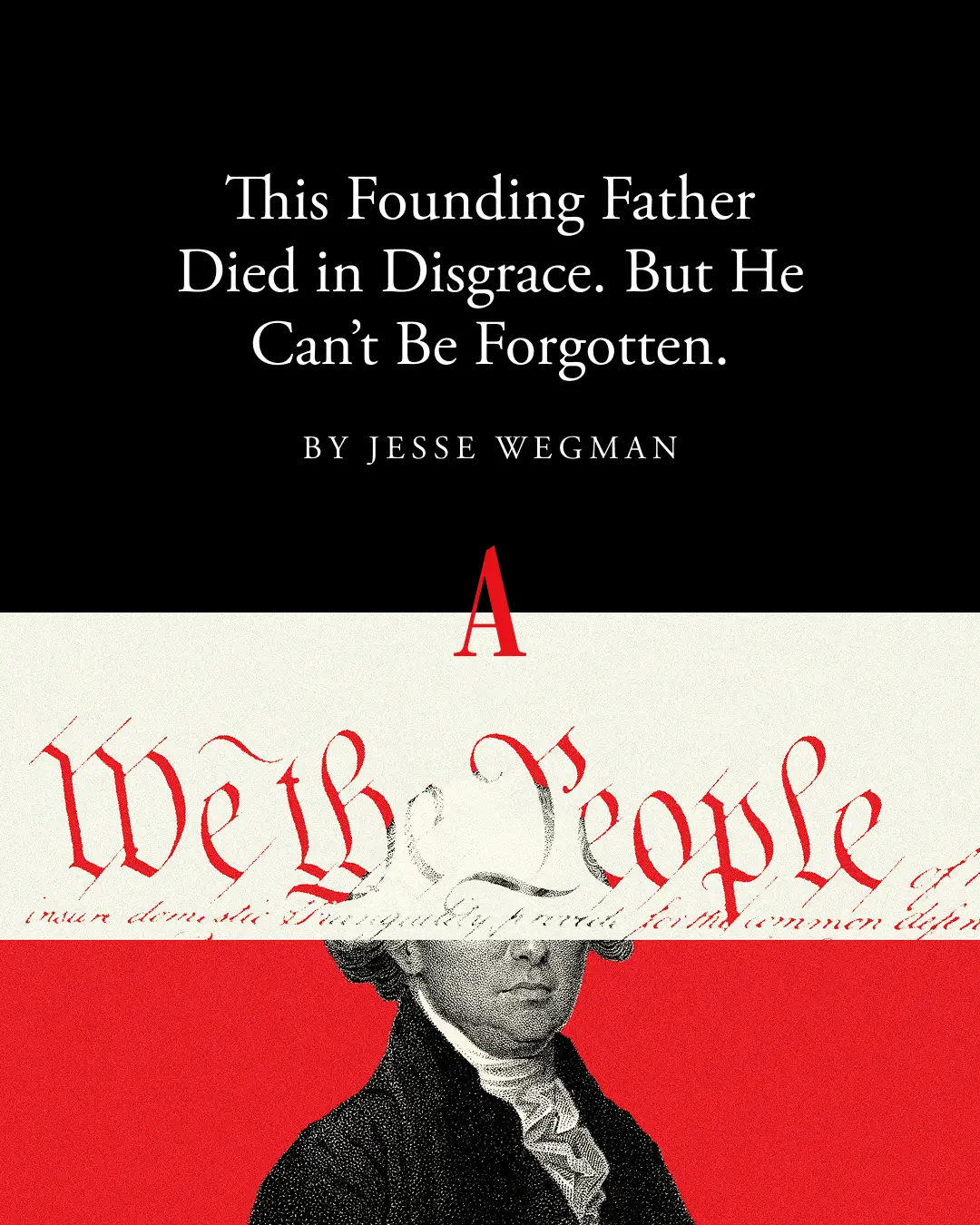
James Wilson was arguably the most influential, prescient, and democratic drafter of the Constitution—but despite this, the Scottish American lawyer who would eventually sit on the Supreme Court died a pariah, Jesse Wegman argues. Wilson spoke more than all but one of his fellow delegates at the 1787 Constitutional Convention. From the start, his guiding principle was the power of regular people, whom he saw as “the legitimate source of all authority.” Wilson declared that “the general government is not an assemblage of states, but of individuals,” adding that individuals, “not the States, ought to be represented in it.” But to many of Wilson’s fellow delegates, “this was unconscionable,” Wegman writes. When Wilson died, in August 1798, he had been holed up in a sparsely furnished boarding room for nearly a year while avoiding creditors, to whom he owed unspeakable debts from land speculation. There was no public announcement of his death. “It was an ignominious end to a man who was not only a Supreme Court justice” but also one of only six men to sign both the Constitution and the Declaration of Independence, Wegman writes. Wilson, unlike the other Founders, had no acolytes who promoted his legacy and preserved his record. This “kept him out of history books as the conventional narrative of the founding took shape,” Wilson continues. But 250 years since the signing of the Declaration of Independence, “recovering his role in creating America is essential if the nation is to recommit itself to the ideals of democracy and popular sovereignty, which he championed with greater force than any of his contemporaries did.” 📷: The Atlantic. Sources: Douglas Sacha / Getty; Universal History Archive / Getty.
James Wilson was arguably the most influential, prescient, and democratic drafter of the Constitution—but despite this, the Scottish American lawyer who would eventually sit on the Supreme Court died a pariah, Jesse Wegman argues. Wilson spoke more than all but one of his fellow delegates at the 1787 Constitutional Convention. From the start, his guiding principle was the power of regular people, whom he saw as “the legitimate source of all authority.” Wilson declared that “the general government is not an assemblage of states, but of individuals,” adding that individuals, “not the States, ought to be represented in it.” But to many of Wilson’s fellow delegates, “this was unconscionable,” Wegman writes. When Wilson died, in August 1798, he had been holed up in a sparsely furnished boarding room for nearly a year while avoiding creditors, to whom he owed unspeakable debts from land speculation. There was no public announcement of his death. “It was an ignominious end to a man who was not only a Supreme Court justice” but also one of only six men to sign both the Constitution and the Declaration of Independence, Wegman writes. Wilson, unlike the other Founders, had no acolytes who promoted his legacy and preserved his record. This “kept him out of history books as the conventional narrative of the founding took shape,” Wilson continues. But 250 years since the signing of the Declaration of Independence, “recovering his role in creating America is essential if the nation is to recommit itself to the ideals of democracy and popular sovereignty, which he championed with greater force than any of his contemporaries did.” 📷: The Atlantic. Sources: Douglas Sacha / Getty; Universal History Archive / Getty.