Pruf Logo

Post Analytics

cosmopolitan
May 28, 2026
While the phrase "male gaze" started as media criticism, it has become a way to judge real people’s clothing choices, and when you think about it, nothing any of us wear should be willingly categorized in this way.

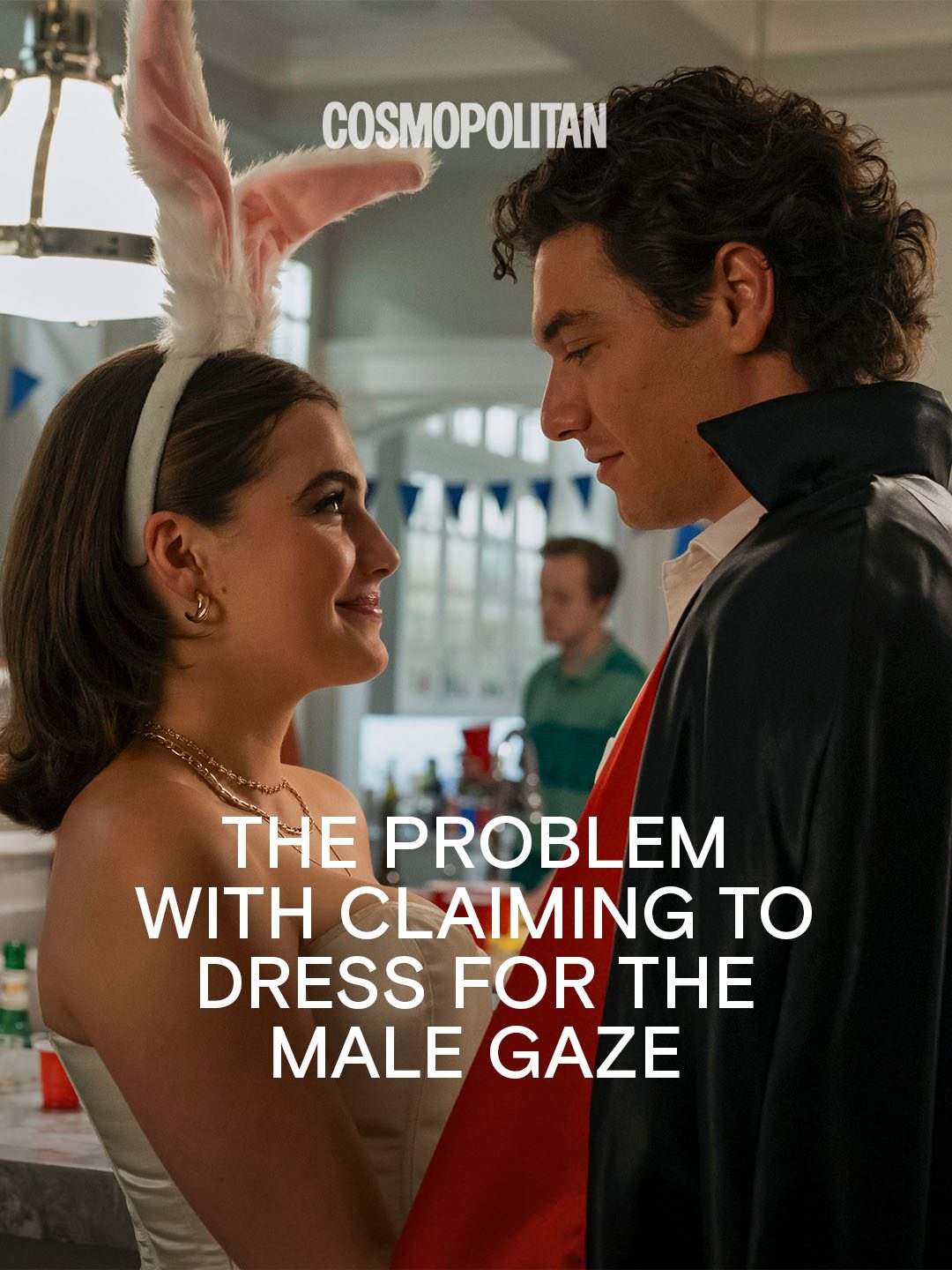
On the internet, phrases catch on like wildfire, and one phrase in particular that’s made it's way into the lexicon is “dressing for the male gaze.” It's so popular that even 'Off Campus,' tapped into this discourse. While getting ready for a Halloween party, main character Hannah Wells states, “Not all the women I know want to get dressed for the male gaze,” to which Garrett Graham says, “The women I know do.” Her best friend Allie agrees with Garrett, claiming that there’s a difference between “girl hot” and “boy hot,” which determines the (decidedly “boy hot”) outfit Hannah ends up wearing to the party.

While the term was initially popularized back in 1975 by Laura Mulvey to describe how visual arts, media, and literature  historically transforming women into sexual objects for male pleasure rather than active subjects with agency, the term is now thrown around in punchy soundbites. The thing is, claiming a person is dressing for the male gaze oversimplifies the complex reasons people choose what to wear. Do we not see the direct comparison to the “well, what was she wearing when it happened?” types of discussions that lie ahead? For more head to the link in bio.

Photo: Amazon Prime
Video: ninaxfx (via TikTok)
0:00 /0:00
While the phrase "male gaze" started as media criticism, it has become a way to judge real people’s clothing choices, and when you think about it, nothing any of us wear should be willingly categorized in this way.

On the internet, phrases catch on like wildfire, and one phrase in particular that’s made it's way into the lexicon is “dressing for the male gaze.” It's so popular that even 'Off Campus,' tapped into this discourse. While getting ready for a Halloween party, main character Hannah Wells states, “Not all the women I know want to get dressed for the male gaze,” to which Garrett Graham says, “The women I know do.” Her best friend Allie agrees with Garrett, claiming that there’s a difference between “girl hot” and “boy hot,” which determines the (decidedly “boy hot”) outfit Hannah ends up wearing to the party.

While the term was initially popularized back in 1975 by Laura Mulvey to describe how visual arts, media, and literature  historically transforming women into sexual objects for male pleasure rather than active subjects with agency, the term is now thrown around in punchy soundbites. The thing is, claiming a person is dressing for the male gaze oversimplifies the complex reasons people choose what to wear. Do we not see the direct comparison to the “well, what was she wearing when it happened?” types of discussions that lie ahead? For more head to the link in bio.

Photo: Amazon Prime
Video: ninaxfx (via TikTok)

While the phrase "male gaze" started as media criticism, it has become a way to judge real people’s clothing choices, and when you think about it, nothing any of us wear should be willingly categorized in this way.

On the internet, phrases catch on like wildfire, and one phrase in particular that’s made it's way into the lexicon is “dressing for the male gaze.” It's so popular that even 'Off Campus,' tapped into this discourse. While getting ready for a Halloween party, main character Hannah Wells states, “Not all the women I know want to get dressed for the male gaze,” to which Garrett Graham says, “The women I know do.” Her best friend Allie agrees with Garrett, claiming that there’s a difference between “girl hot” and “boy hot,” which determines the (decidedly “boy hot”) outfit Hannah ends up wearing to the party.

While the term was initially popularized back in 1975 by Laura Mulvey to describe how visual arts, media, and literature  historically transforming women into sexual objects for male pleasure rather than active subjects with agency, the term is now thrown around in punchy soundbites. The thing is, claiming a person is dressing for the male gaze oversimplifies the complex reasons people choose what to wear. Do we not see the direct comparison to the “well, what was she wearing when it happened?” types of discussions that lie ahead? For more head to the link in bio.

Photo: Amazon Prime
Video: ninaxfx (via TikTok)
204K
8.15K
20

While the phrase "male gaze" started as media criticism, it has become a way to judge real people’s clothing choices, and when you think about it, nothing any of us wear should be willingly categorized in this way. On the internet, phrases catch on like wildfire, and one phrase in particular that’s made it's way into the lexicon is “dressing for the male gaze.” It's so popular that even 'Off Campus,' tapped into this discourse. While getting ready for a Halloween party, main character Hannah Wells states, “Not all the women I know want to get dressed for the male gaze,” to which Garrett Graham says, “The women I know do.” Her best friend Allie agrees with Garrett, claiming that there’s a difference between “girl hot” and “boy hot,” which determines the (decidedly “boy hot”) outfit Hannah ends up wearing to the party. While the term was initially popularized back in 1975 by Laura Mulvey to describe how visual arts, media, and literature historically transforming women into sexual objects for male pleasure rather than active subjects with agency, the term is now thrown around in punchy soundbites. The thing is, claiming a person is dressing for the male gaze oversimplifies the complex reasons people choose what to wear. Do we not see the direct comparison to the “well, what was she wearing when it happened?” types of discussions that lie ahead? For more head to the link in bio. Photo: Amazon Prime Video: ninaxfx (via TikTok)
Key Metrics

Impressions
204K
Likes
8.15K
Comments
20

Historical Performance

Last refreshed: 34 minutes ago