
Post Analytics

theatlantic
Feb 11, 2026
26.6K
298
26
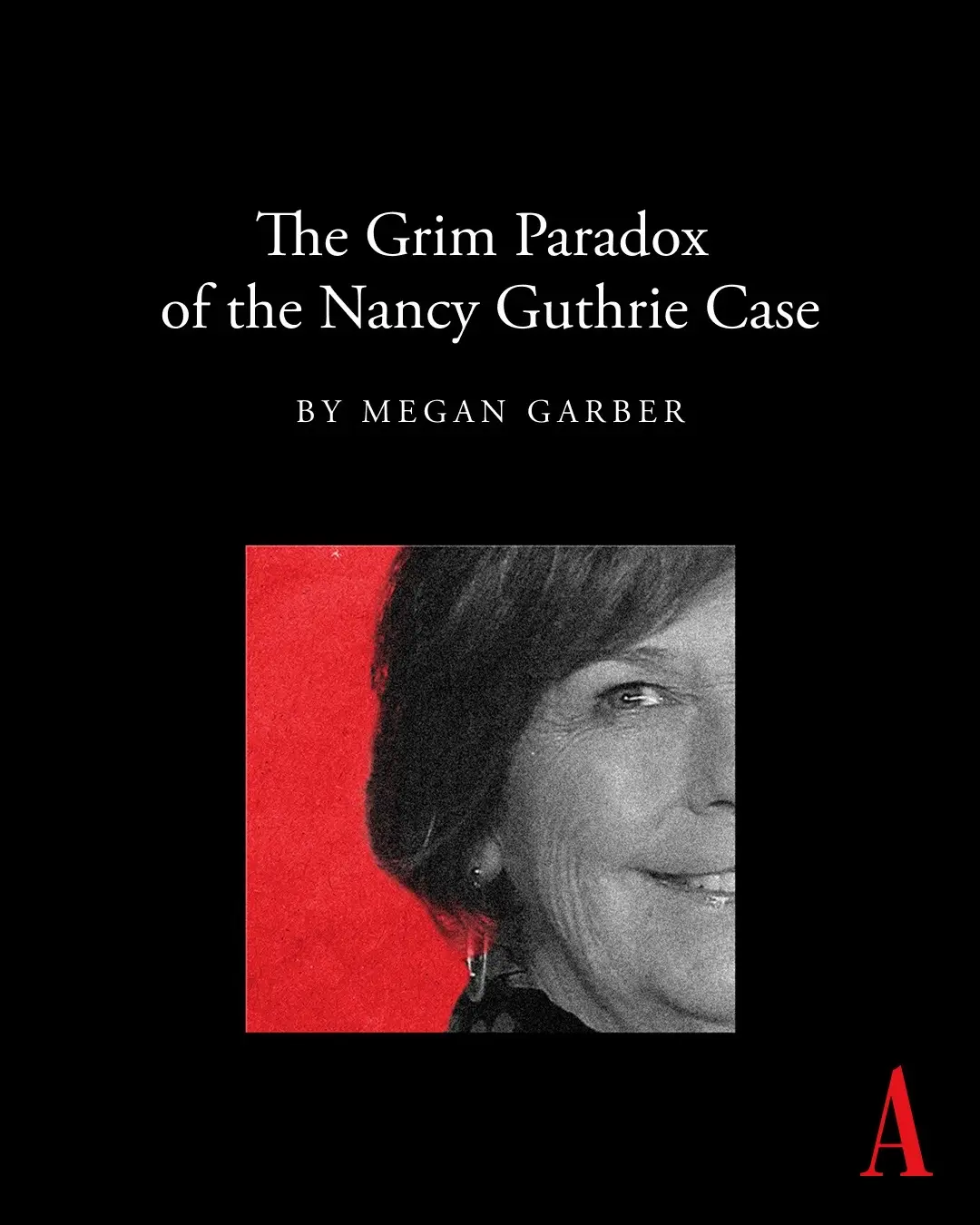
The disappearance of Nancy Guthrie has become a spectacle that blurs the line between public interest and collective voyeurism, Megan Garber argues. “Nancy’s disappearance, as a human circumstance—a grandmother taken from her house in the middle of the night, held by someone unknown—is unthinkable. As a story, though, the case’s dynamics are all too familiar. Public interest changes the terms of any tragedy. The longer this one has gone on, the more its horrors have hewed to the demands of the show.” Much of the attention to Guthrie’s case has played out through television: People claiming to be her kidnappers have allegedly communicated with her family through notes sent to TV stations. The responses from Guthrie’s daughter, the “Today” show co-host Savannah Guthrie, and her other children “embody the same split-screen reality as many other elements of the case: Their ostensible aim is to bring things to a conclusion, but each new post … also adds to the spectacle, providing fodder for viewers and narrative momentum,” Garber writes. The Guthrie case has also “attracted its own coterie of self-professed ‘experts,’” Garber continues—and while some may be well intentioned, others “seem more craven; understanding that tragedies are also trending topics, they have found new ways to transform public concern into personal clout.” “Attention is currency,” Garber argues, but “when one family’s nightmare becomes nationally syndicated … attention can become a demand—for more detail, for more drama, for a cathartic conclusion.” 🎨: The Atlantic. Source: Don Arnold / WireImage / Getty.
The disappearance of Nancy Guthrie has become a spectacle that blurs the line between public interest and collective voyeurism, Megan Garber argues. “Nancy’s disappearance, as a human circumstance—a grandmother taken from her house in the middle of the night, held by someone unknown—is unthinkable. As a story, though, the case’s dynamics are all too familiar. Public interest changes the terms of any tragedy. The longer this one has gone on, the more its horrors have hewed to the demands of the show.” Much of the attention to Guthrie’s case has played out through television: People claiming to be her kidnappers have allegedly communicated with her family through notes sent to TV stations. The responses from Guthrie’s daughter, the “Today” show co-host Savannah Guthrie, and her other children “embody the same split-screen reality as many other elements of the case: Their ostensible aim is to bring things to a conclusion, but each new post … also adds to the spectacle, providing fodder for viewers and narrative momentum,” Garber writes. The Guthrie case has also “attracted its own coterie of self-professed ‘experts,’” Garber continues—and while some may be well intentioned, others “seem more craven; understanding that tragedies are also trending topics, they have found new ways to transform public concern into personal clout.” “Attention is currency,” Garber argues, but “when one family’s nightmare becomes nationally syndicated … attention can become a demand—for more detail, for more drama, for a cathartic conclusion.” 🎨: The Atlantic. Source: Don Arnold / WireImage / Getty.
Key Metrics
Plays
26.6K
Likes
298
Comments
26
Engagement
1.22%
Historical Performance
Plays
Last refreshed: 15 hours ago